NeuroAstra

by Avinya NeuroTech  · Based in India → — AI-Powered Neurological Monitoring Solutions
Critical Care Neurology Neurosurgery

Overview

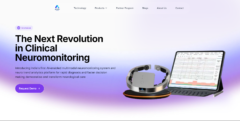
Avinya NeuroTech, an Indian company, is at the forefront of revolutionizing clinical neuromonitoring with its AI-enabled multimodal system and neuro trend analytics platform. The company aims to empower healthcare providers with faster diagnosis and decision-making for improved patient outcomes. Their product line includes NeuroPaahi, a high-fidelity neurological monitoring device with rapid 3-minute setup for critical care, and NeuroAstra, an AI-driven multimodal monitoring software that predicts neural events and integrates seamlessly into hospital workflows with cloud connectivity for remote care. Avinya NeuroTech addresses the critical gaps in clinical neuromonitoring, such as accessibility and availability of rapid EEG monitoring and trained neuro healthcare professionals, which often lead to delays in neurological assessments and interpretation. The company’s technology focuses on providing real-time brain insights, enabling swift, evidence-based clinical decisions, and standardizing reporting to overcome variability between readers in high-pressure care settings.

Reviewed by Pouyan Golshani, MD — Interventional Radiologist

Key Features

  • AI-powered predictive neural event detection
  • Seamless cloud connectivity for remote monitoring
  • Advanced multimodal analytics dashboard
  • Co-Pilot AI interpretation for seizure, spike, and abnormal brain pattern detection
  • Interactive EEG visualization tools with customizable montages and filters
  • Automated standardized EEG reports with clinical insights and trend analysis
  • Real-time EEG monitoring with continuous AI analysis and instant alert systems
  • Comprehensive offline EEG analysis with AI-powered seizure detection and spike pattern recognition
  • Secure telemedicine capabilities with collaborative tools for multi-specialist consultations
  • IoT-enabled remote monitoring for continuous data streaming over the cloud

Use Cases

  • Post Monitoring Analysis (offline EEG analysis, report generation)
  • Live Monitoring (real-time EEG monitoring, instant alerts)
  • Remote Monitoring (cloud-based EEG analysis, telemedicine)
  • ICU Care (critical care neurological monitoring)
  • Emergency Response (rapid deployment portable neuromonitoring)
  • Outpatient Care (IoT-enabled remote patient monitoring)

What Physicians Need to Know

Evidence Base
NeuroAstra is an AI-powered EEG analysis and reporting software that utilizes AI for interpreting EEG data to detect seizures, spikes, and abnormal brain patterns with high accuracy. The system's AI algorithms continuously analyze multimodal brain signals, identifying patterns and anomalies instantly.
Clinical Validation Studies
NeuroAstra is built on a multimodal clinical EEG web platform with Co-Pilot AI, designed to assist neuro care teams in detecting abnormal trends faster and standardizing reporting. The platform supports ongoing real-world evaluation and clinical validation. While specific details on NeuroAstra's clinical validation studies are limited, AI models for EEG interpretation have undergone diagnostic accuracy studies, demonstrating human expert performance in automated interpretation of routine clinical EEGs. Such studies often involve independent test datasets not used in the development phase.
Alert Fatigue Management
NeuroAstra offers real-time EEG monitoring with continuous AI analysis and instant alert systems. The system is designed to track ongoing brain activity patterns, detect seizure events as they occur, and provide immediate notifications to healthcare teams for rapid intervention. While the platform provides instant alerts, general strategies for managing alert fatigue in clinical decision support systems include optimizing alert settings, reducing the number of irrelevant notifications, and improving alert presentation to be concise and easy to understand.
Differential Diagnosis Support
NeuroAstra's AI-powered interpretation assists clinicians in detecting seizures, spikes, and abnormal brain patterns. This capability can contribute to differential diagnosis by highlighting specific neurological abnormalities. The system generates detailed clinical reports with trend analysis and historical pattern comparison for informed decision-making. In general, differential diagnosis support tools prioritize likely diagnoses and highlight less common but potentially fatal disorders.
Clinical Workflow Integration
NeuroAstra is designed to seamlessly integrate into hospital workflows with cloud connectivity for remote care. It is a cloud-based platform enabling secure remote access for telemedicine consultations and collaborative care across locations. The system aims to help neuro care teams standardize reporting and collaborate remotely. Clinical workflow integration with AI connects various healthcare systems into a unified, real-time data flow, aiming to reduce administrative workload and improve efficiency.
Decision Audit Trail
The NeuroAstra platform is designed to maintain strict role-based access and auditability. This suggests that actions and decisions within the system are recorded. General AI audit trail requirements emphasize recording every agent action as a computer-generated, time-stamped entry, including who acted, under which permissions, on which inputs and model version, what was produced, and who approved it.
Physician Tip

When using NeuroAstra, leverage the Co-Pilot AI for initial interpretation of EEG data to quickly identify potential seizures, spikes, and abnormal patterns. Always review the automated reports, utilizing the trend analysis and historical pattern comparison features to gain comprehensive insights for informed decision-making. The remote accessibility of the platform facilitates telemedicine consultations and collaborative care, allowing for efficient review and discussion of cases with colleagues. Pay attention to the instant alerts for real-time monitoring, but also understand the context to avoid alert fatigue. Remember that while the AI provides powerful assistance, clinical judgment remains paramount.

NeuroAstra is a cloud-based platform designed for seamless integration into existing hospital workflows. Its remote accessibility and collaborative tools suggest potential for integration with Electronic Health Records (EHRs) and telemedicine platforms to streamline data flow and enhance multi-specialist consultations. The system's focus on standardized reporting also implies compatibility with various reporting frameworks. Effective integration can lead to reduced administrative workload and improved efficiency in managing neurological care.

Details

Category Clinical Decision Support & Reference, Neurology AI
Pricing Unknown — unknown
DeploymentCloud-based
Compliance
BAA AvailableUnknown
HIPAA CompliantUnknown
FDA Status Unknown

While the website mentions clinical trials and partnerships, there is no explicit claim of FDA clearance for NeuroAstra. Other companies with similar names, such as Neuronetics' NeuroStar and Neurophet, have received FDA clearances for their respective devices and software for neurological conditions.

Integrations
EHR Not specified
Specialties Critical Care, Neurology, Neurosurgery

What the Web Says

NeuroAstra, developed by Avinya NeuroTech, is an AI-powered multimodal continuous neuromonitoring solution designed for critical care and ambulatory setups. It offers AI-powered interpretation for detecting seizures, spikes, and abnormal brain patterns, advanced visualization tools for EEG analysis, and automated report generation. The system aims to address gaps in clinical neuromonitoring by providing rapid and accurate neurological assessments, with real-time AI analysis and instant alert systems.

Overall: Mixed

Strengths

  • AI-powered interpretation for accurate detection of neurological patterns.
  • Advanced visualization tools for comprehensive EEG analysis.
  • Automated standardized EEG report generation with clinical insights.
  • Remotely accessible for broader patient care.
  • Real-time neuro insights and continuous AI analysis for faster decision-making.
  • Rapid and reliable setup (under 3 minutes) with pre-positioned sensors.

Limitations

  • No specific reviews from physicians, healthcare IT, or tech reviewers were found for NeuroAstra.
  • No reviews were found on G2 or Capterra specifically for NeuroAstra.
  • General Reddit searches for 'NeuroAstra' did not yield relevant product reviews.

Based on reviews from: Avinya NeuroTech Website, Reddit, G2, Capterra

Last updated: 2026-10-19

Ratings & Reviews

No reviews yet. Be the first to review this tool!

Rate NeuroAstra

Clinical Value
Ease of Use
Integration
Support & Docs
Value for Money

Press & Coverage

The Times of India
Hyderabad women drive innovation and purpose into entrepreneurship
Avinya NeuroTech, founded by Sowmya Darapaneni, won the Hyderabad round of the TiE Women Global Summit for its AI-powered brain monitoring tools, NeuroAstra and NeuroPaahi, aiming to make advanced neuro care accessible. NeuroAstra analyzes EEG readings using AI to provide instant reports, significantly reducing the time it would otherwise take.
2025-11
Avinya NeuroTech Blog
EEG Foundation Models: How AI Learned to Read the Brain
This article discusses how large EEG foundation models, pre-trained on extensive brain recordings, are transforming the interpretation of brainwaves, enabling detection and forecasting of seizures, early Alzheimer's screening, and brain-computer interfaces.
2026-07
Avinya NeuroTech Blog
The Rise of Wearable Neurotech: How Everyday EEG Is Transforming Brain Health
This article explores the emergence of wearable neurotechnology, such as smart headbands and earbuds, that enable continuous EEG monitoring at home, facilitating applications like seizure forecasting and home-based therapy for ADHD and PTSD.
2026-07
Avinya NeuroTech Official Website
Avinya NeuroTech - AI-Powered Neurological Monitoring Solutions
Avinya NeuroTech offers India's first AI-powered multimodal continuous neuromonitoring solution, featuring NeuroAstra for EEG analysis and NeuroPaahi monitoring devices for critical care and ambulatory setups.
unknown
CIE IIIT Hyderabad
Monthly Newsletter - August 2025 - CIE IIITH
Avinya NeuroTech, with its AI-powered brain monitoring tools NeuroAstra and NeuroPaahi, was highlighted as the winner of the Hyderabad Round of the TiE Global Summit, aiming to make advanced neuro care more accessible.
2025-11
IP India
New Applications_May_2025.xlsx
Avinya NeuroTech Pvt Ltd. applied for copyright for 'NeuroAstra' as a Literary/Dramatic work on May 7, 2025.
2025-05
BIRAC (Biotechnology Industry Research Assistance Council)
BIRAC Exhibitor Directory
NeuroAstra is being developed to remotely capture, display, and interpret live brain signals using AI/ML trained on high-quality patient datasets, with a current technology readiness level (TRL) of 3.
2024-09
IITI DRISHTI CPS Foundation
DISHA 1.0 RESULT MARCH 2025
Avinya Neurotech Pvt. Ltd. was selected for the DISHA 1.0 program for NeuroPaahi & NeuroAstra, an AI-powered, multimodal neuromonitoring system designed for real-time EEG, ECG, and EMG monitoring in ICUs.
2025-03

Videos

Product demos, reviews, and walkthroughs for NeuroAstra.

Loading videos...

View all on YouTube

Frequently Asked Questions

NeuroAstra is a clinical decision support system designed to assist physicians in diagnosing and managing neurological conditions. It integrates by providing evidence-based recommendations and insights directly within your electronic health record (EHR) system, leveraging patient data to offer personalized guidance at the point of care.
NeuroAstra's recommendations are based on a comprehensive analysis of peer-reviewed literature, clinical trials, and established neurological guidelines, updated regularly to reflect the latest advancements. The system includes built-in mechanisms to flag deviations from best practices and provides direct links to supporting evidence, promoting guideline compliance.
NeuroAstra distinguishes itself through its advanced AI algorithms and extensive neurological knowledge base, offering a higher degree of diagnostic accuracy and more comprehensive treatment recommendations compared to generic CDS tools. While traditional methods rely on individual physician expertise, NeuroAstra augments this with real-time, evidence-based insights across a vast array of neurological conditions.
While highly advanced, NeuroAstra's limitations include its reliance on the quality and completeness of inputted patient data and its inability to replace direct clinical judgment. The system is designed to highlight complex cases and encourages physician override when necessary, providing a framework for nuanced decision-making rather than a definitive solution.
NeuroAstra offers flexible pricing models, including subscription tiers tailored for individual practitioners, small clinics, and large hospital networks. These models typically vary based on the number of users, integration complexity, and the scope of features required, with detailed quotes available upon consultation.
NeuroAstra adheres to strict data privacy and security protocols, complying with all relevant healthcare regulations like HIPAA. It employs advanced encryption, access controls, and anonymization techniques to protect sensitive patient health information, ensuring data integrity and confidentiality.
Comprehensive training programs are offered for physicians and their staff, including onboarding sessions, online tutorials, and user manuals. Ongoing support is available through a dedicated help desk, regular software updates, and access to a knowledge base to ensure optimal utilization and address any queries.

Related Tools

Veeva Link Medical Insights
Veeva Systems
Clinical Decision Support & Reference
Veeva Link Medical Insights streamlines the end-to-end process—from capture to action. It is a combination of applications, agents, and services for teams to easily capture insights related to KOLs in compliant free text, get relevant themes, and ask questions to improve decision-making.
Semantic Clinical Artificial Intelligence (SCAI)
University at Buffalo (UB)
Clinical Decision Support & Reference
Semantic Clinical Artificial Intelligence (SCAI) is a clinical AI tool developed by University at Buffalo researchers that can respond to medical questions, demonstrating high accuracy on medical licensing exams and augmenting physician decision-making.
Prenaital
Prenaital
Clinical Decision Support & Reference
Prenaital uses AI to detect and manage high-risk pregnancies, enhancing the detection of conditions like abnormal fetal growth, preterm birth, and stillbirth.
PHQ Screeners (Pfizer)
Pfizer
Clinical Decision Support & Reference
PHQ Screeners is a free, open-access resource providing validated Patient Health Questionnaire (PHQ) and Generalized Anxiety Disorder (GAD-7) screening instruments for depression and anxiety, widely used for diagnosis and monitoring.
NeurixaHealthAI™
NeurixaHealthAI™
Clinical Decision Support & Reference
NeurixaHealthAI™ unifies fragmented patient data into a living population health engine to identify risk, close care gaps, and drive preventive interventions.
Lumonus AI
Lumonus
Clinical Decision Support & Reference
Lumonus AI is an AI-powered software that assists healthcare providers with prescriptions, dosing, and treatment for cancer patients, with a module (Sigma) that suggests treatment protocols based on prior plans for similar patients.

See all Clinical Decision Support & Reference tools →

Suggest an Edit → | Report an issue | Last Verified: 2026-10-16 | First Added: 2026-10-16
AI Tool Finder
AI-powered search. Results may not be comprehensive.