DEEPVESSEL FFR

by Keya Medical  · Based in China → — AI CT FFR: Precise Diagnosis of Coronary Artery Disease
Cardiology Radiology

FDA Cleared
Regulatory Status Disclosed

Quick answers

What is DEEPVESSEL FFR?

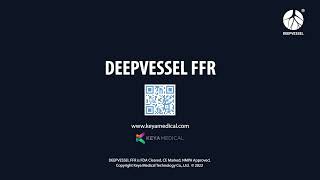
DEEPVESSEL FFR: AI CT FFR: Precise Diagnosis of Coronary Artery Disease Made by Keya Medical.

Is DEEPVESSEL FFR FDA cleared?

Yes. DEEPVESSEL FFR is on FDA’s list of AI-enabled medical devices: 510(k) K213657, cleared April 1, 2022.

Overview

DEEPVESSEL FFR (DVFFR) is a software medical device that utilizes deep learning technology to perform a non-invasive physiological functional assessment of the coronary arteries using coronary computed tomography angiography (CCTA) scans. It processes CCTA images semi-automatically, generating a three-dimensional model of the coronary artery tree and estimating CT-derived fractional flow reserve (FFR) values. This analysis is intended to support the functional evaluation of coronary artery disease (CAD) and aid in treatment decisions.

The software applies Keya Medical’s proprietary deep learning technologies, built on advancements in computer vision and medical image analysis, to integrate key technologies in artificial intelligence, medical imaging, and biomedical engineering. This approach aims to improve diagnostic accuracy, robustness of segmentation, and processing speed. DEEPVESSEL FFR can help clinicians assess myocardial ischemia caused by coronary artery stenosis without the need for invasive procedures, potentially reducing unnecessary invasive coronary angiography and stent implantation.

The results, including an interactive 3D model of the coronary arteries and a PDF report with mapped FFR values, are electronically delivered to clinicians and can be viewed on PCs, tablets, and mobile devices. It is clinically applicable to patients with stable coronary heart disease (SCAD) with 30-90% coronary stenosis based on CTA examination.

Reviewed by Pouyan Golshani, MD — Interventional Radiologist

Key Features

  • Non-invasive FFR calculation from CCTA images
  • Deep learning technology for analysis
  • Generation of 3D coronary artery tree model
  • Quantitative analysis of myocardial ischemia
  • Auxiliary assessment for treatment decisions and intervention effects
  • Functional assessment without adenosine and pressure guide wire
  • Fast processing speed and accurate FFR analysis
  • Comprehensive FFR values at any location in the coronary tree
  • Electronic delivery of interactive 3D model and PDF report
  • Applicable for stable CAD patients with 30-90% stenosis

Use Cases

  • Functional evaluation of Coronary Artery Disease (CAD)
  • Diagnosis of vessel-specific ischemia
  • Guiding decision-making for coronary revascularization
  • Reducing unnecessary invasive coronary angiography procedures
  • Reducing unnecessary stent implantation for CAD diagnosis and treatment
  • Triage of patients with chest pain and suspected CAD

What Physicians Need to Know

Cardiac CT/MRI Analysis
DEEPVESSEL FFR is deep-learning-based software that calculates CT-derived Fractional Flow Reserve (FFR) values from previously acquired Coronary Computed Tomography Angiography (CCTA) data. It processes CCTA images semi-automatically to generate a 3D coronary model and provides branch-level FFR results. The software also integrates with quantitative plaque assessment, characterizing and quantifying coronary plaque and stenosis from CCTA data. It can identify functional ischemia and severe calcifications, optimizing patient outcomes. The software uses deep learning neural networks to extract 3D coronary tree structures and generate CT-derived FFR values from CCTA images.
Coronary Artery Assessment
DEEPVESSEL FFR provides a non-invasive physiological functional assessment of coronary arteries. It is intended to support the functional evaluation of coronary artery disease (CAD) by identifying potential narrowing that may impact blood flow to the heart. The tool is clinically applicable for patients with stable CAD with 30-90% coronary stenosis based on CTA examination. It helps reduce unnecessary invasive procedures by precisely identifying patients with unimpaired coronary blood flow (FFR > 0.8). The software can also predict the risk of Acute Coronary Syndrome (ACS) when integrating CT FFR analysis with plaque features.
AHA/ACC Guideline Alignment
The 2021 ACC and AHA Guidelines for the Evaluation and Diagnosis of Chest Pain highlight the use of Coronary CTA + FFR CT as a front-line pathway. These guidelines encourage CCTA as a first-line test for patients with stable heart pain, and for some, the addition of CT-derived FFR simulation algorithms to non-invasively assess functional ischemia.
Heart Failure Risk Prediction
The integration of CT FFR analysis with plaque features holds promise in predicting the risk of Acute Coronary Syndrome (ACS). Studies focusing on risk prediction models and explorations into the clinical value of Perivascular Fat Attenuation Index (FAI) and CT-FFR in identifying culprit lesions leading to subsequent ACS underscore its potential in risk prediction. In a study, DVFFR combined with plaque analysis indices yielded valuable predictions for Major Adverse Cardiac Events (MACE).
Real-Time Alert Capability
The software provides quick and accessible results electronically, including a 3D interactive model and a PDF report, to physicians. The analysis is accessible on stationary or mobile devices. The deep learning algorithm significantly reduces computation time, leading to near real-time assessment of FFR.
Physician Tip

DEEPVESSEL FFR offers a non-invasive approach to assess coronary artery disease, potentially reducing the need for invasive procedures. It is particularly useful for patients with stable CAD and 30-90% coronary stenosis. The integration of FFR analysis with plaque features can aid in predicting the risk of Acute Coronary Syndrome. The quick and accessible electronic results, including 3D models and PDF reports, facilitate efficient clinical decision-making. The tool aligns with AHA/ACC guidelines recommending CCTA + FFR CT as a front-line pathway for chest pain evaluation.

DEEPVESSEL FFR integrates with existing image post-processing expertise and offers a seamless workflow for CT-derived FFR analysis through cloud platforms like PIA Cloud. Studies can be securely uploaded, automatically directed to the DEEPVESSEL FFR system for analysis, and comprehensive reports, including interactive 3D models and FFR values, are routed back to the client's Picture Archiving and Communication System (PACS). The analysis is also accessible on stationary or mobile devices.

Details

Category Cardiology AI, Radiology & Imaging AI
Pricing Unknown
Compliance
BAA AvailableUnknown
HIPAA CompliantUnknown
FDA Status Cleared FDA-listed

DEEPVESSEL FFR is FDA-cleared, deep-learning-based software. DEEPVESSEL Plaque is FDA-cleared, AI-assisted software.

GDPR Yes AI-estimated
Integrations
EHR Not specified
Specialties Cardiology, Radiology

FDA clearance history

This product’s FDA authorization. From FDA’s list of AI-enabled medical devices; each number links to FDA’s record.

Decision dateNumberName as listed by FDA
2022-04-01K213657 510(k)DEEPVESSEL FFR

Ratings & Reviews

No reviews yet. Be the first to review this tool!

Rate DEEPVESSEL FFR

Clinical Value
Ease of Use
Integration
Support & Docs
Value for Money
No press coverage or publications on file yet. Know of some? Suggest an edit →

Videos

Product demos, reviews, and walkthroughs for DEEPVESSEL FFR.

View all on YouTube

Frequently Asked Questions

DEEPVESSEL FFR is a software medical device that uses deep learning technology to perform a non-invasive physiological functional assessment of coronary arteries using Coronary Computed Tomography Angiography (CCTA) scans. It processes CCTA images semi-automatically to generate a 3D model of the coronary artery tree and estimates CT-derived Fractional Flow Reserve (FFR) values, which helps in the functional evaluation of coronary artery disease.
DEEPVESSEL FFR has received U.S. Food and Drug Administration (FDA) clearance, CE Mark certification for Europe, China NMPA approval, and HSA certification.
Clinical studies have shown DEEPVESSEL FFR to have high diagnostic performance. For instance, one multicenter study reported per-vessel sensitivity of 86.9%, specificity of 86.7%, and accuracy of 86.8% when compared to invasive FFR as the reference standard. Another study indicated an overall per-vessel diagnostic accuracy of over 88.73%.
While highly accurate, DEEPVESSEL FFR has some limitations. It is not currently applied through stented segments in the same manner as native coronary vessels, though CCTA can still assess stents for restenosis. Additionally, diagnostic certainty can diminish near the ischemic threshold, with borderline lesions (0.76–0.80 FFR) potentially showing discordance with invasive FFR. Early studies also noted a relatively small number of patients, which could incur selection bias.
Yes, as of January 1, 2024, a new Category I CPT code (75580) was implemented for non-invasive FFR estimates derived from coronary CT angiography software analysis, replacing four prior Category III codes. This code is applicable in hospital outpatient facilities, physician offices, and imaging centers, with CMS increasing hospital outpatient payment for FFR-CT services.
DEEPVESSEL FFR utilizes a deep learning-based approach, which significantly reduces computation time compared to traditional computational fluid dynamics (CFD)-based FFR-CT platforms, delivering results in minutes rather than hours. A head-to-head comparison study showed that DeepVessel FFR matched the diagnostic performance of HeartFlow FFRct, another FFR-CT technology, in identifying flow-limiting stenoses.
For DEEPVESSEL FFR analysis, images must be acquired by a high-resolution CT machine with a minimum of 64 rows. The imaging area should encompass all coronary arteries and the adjacent ascending aorta, and the reconstructed CT layers should be free from any abnormalities.

Related Tools

Stethophone Pro
Sparrow Acoustics
Cardiology AI
Stethophone Pro transforms smartphones into advanced cardiac screening tools, enabling clinicians to capture, interpret, and visualize heart sounds for early detection of cardiovascular diseases.
ACUSON Sequoia Diagnostic Ultrasound System, ACUSON Sequoia Select Diagnostic Ultrasound System, ACUSON Origin Diagnostic Ultrasound System, ACUSON Origin ICE Diagnostic Ultrasound System
Siemens Medical Solutions, USA
Cardiology AI
Siemens Healthineers offers advanced AI-powered ultrasound systems, including the ACUSON Origin for comprehensive cardiovascular care and the ACUSON Sequoia for high-performance general imaging with BioAcoustic™ technology.
syngo.via MI Workflows, syngo MBF
Siemens Medical Solutions USA
Cardiology AI
syngo.via MI Workflows, syngo MBF is an intelligent, integrated imaging software that helps address the challenges of interpreting, managing, and sharing complex data from molecular imaging scanners, providing automated workflows and advanced visualization for various clinical applications.
syngo.via MI WorkFlows, Scenium, syngo MBF
Siemens Medical Solutions USA
Cardiology AI
syngo.via MI Workflows, Scenium, and syngo MBF are medical diagnostic post-processing applications for viewing, manipulation, quantification, analysis, and comparison of PET or nuclear-medicine functional data with CT or MR anatomical data across timepoints, supporting disease management and radiotherapy treatment planning by trained healthcare professionals.
ACUSON Sequoia Diagnostic Ultrasound System, ACUSON Sequoia Select Diagnostic Ultrasound System, ACUSON Origin Diagnostic Ultrasound System
Siemens Medical Solutions USA
Cardiology AI
Siemens Healthineers offers the ACUSON Sequoia, ACUSON Sequoia Select, and ACUSON Origin ultrasound systems, providing advanced imaging for various medical needs. The Sequoia line focuses on high-resolution imaging with deep penetration and reduced variability, while the AI-powered ACUSON Origin specializes in comprehensive cardiovascular diagnostics and interventions.
R30 Diagnostic Ultrasound System
Samsung Medison Co.
Cardiology AI
The Samsung Medison R30 Diagnostic Ultrasound System is a general-purpose, mobile, software-controlled diagnostic ultrasound system that offers a wide range of imaging capabilities and analysis tools for various clinical applications.

See all Cardiology AI tools →

Suggest an Edit → | Report an issue | Last Verified: 2026-11-08 | First Added: 2026-04-18
AI Tool Finder
AI-powered search. Results may not be comprehensive.