MELAFIND

by STRATA SKIN SCIENCES  · Based in United States → — A non-invasive tool designed to provide additional information to dermatologists during melanoma skin examinations.
Dermatology

Regulatory Status Disclosed

Overview

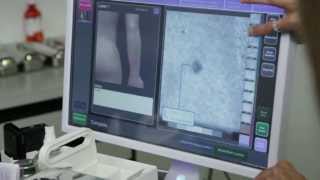
MelaFind, acquired and licensed by STRATA SKIN SCIENCES, is a non-invasive, software-driven optical imaging and data analysis system designed to assist in the evaluation of clinically atypical cutaneous pigmented lesions. Developed as a diagnostic aid, the tool is designed for use when a clinician is deciding whether or not to perform a biopsy on a suspicious lesion.

The system is specifically designed for dermatologists and physicians trained in the clinical diagnosis and management of skin cancer. It is indicated for use in outpatient dermatology clinics and specialized skin care settings on pigmented lesions measuring between 2 mm and 22 mm in diameter that do not have a definitive pre-existing clinical diagnosis of melanoma.

In a standard clinical workflow, the operator prepares the target lesion by cleaning the area with isopropyl alcohol. The hand-held MelaFind imager is then placed directly on the skin to capture multispectral digital images. Key capabilities of the system include:

  • Multispectral Imaging: The device pulses 10 different wavelengths of light, ranging from visible to near-infrared, to capture subsurface data up to 2.5 mm below the skin’s surface.
  • Objective Data Analysis: Advanced computer-vision algorithms analyze the light scatter and spectral output to calculate a 3D anatomical map of the lesion’s pigment patterns and cellular disorganization.
  • Decision Support: The system compares the acquired data against a clinical database of pigmented skin lesions to generate an immediate, objective output, providing additional quantitative information to integrate into the final biopsy decision.

Reviewed by Pouyan Golshani, MD — Interventional Radiologist

Key Features

  • Multi-spectral, non-invasive imaging
  • Automated computer-vision system
  • Captures images of pigmented skin lesions
  • Classifies lesions based on 3-dimensional morphological disorganization
  • Provides additional information for biopsy decisions
  • Evaluates lesions up to 2.5 mm beneath the skin surface
  • Hand-held imager
  • Password-protected computer and monitor for display
  • Fixed algorithms for automatic image analysis (calibration, image quality control)

Use Cases

  • Providing adjunctive diagnostic information for atypical pigmented lesions suspicious for melanoma
  • Assisting dermatologists in deciding whether to biopsy irregular moles
  • Supporting early detection of melanoma (when used as intended)

What Physicians Need to Know

Key Capabilities
Utilized multispectral imaging and automatic image analysis to classify pigmented skin lesions by morphologic disorganization, recommending biopsy decisions. It could visualize pigment patterns and invasiveness up to 2.5 mm below the skin's surface by acquiring 10 digital images across various wavelengths. [1, 4]
Clinical Utility
Designed to assist dermatologists in evaluating suspicious skin lesions for melanoma, aiming to improve early detection and reduce unnecessary biopsies. [1, 4]
Compliance Status
Received FDA approval in 2011 through the Premarket Approval (PMA) pathway, designated for high-risk medical devices. [2, 3, 5, 8]
Evidence Base
Supported by a 2011 multicenter prospective trial involving 1,383 patients and 1,831 pigmented lesions, demonstrating a sensitivity of 98% and a specificity of 10%. Its algorithms were trained and validated using a biopsy database containing over 9,000 pigmented skin lesions, including more than 600 melanomas. [1, 4]
Current Status
MelaFind was discontinued due to its low specificity (10%), which led to a high rate of unnecessary biopsies, along with high costs, narrow use cases, and challenges with integration into clinical workflows. The provided URL (strataskinsciences.com) does not contain relevant information about this discontinued product. [2, 3, 5, 8]
Physician Tip

Given MelaFind's discontinuation, the primary tip for physicians is to be aware of the historical context of AI tools in dermatology. While MelaFind demonstrated high sensitivity, its low specificity led to its withdrawal. This highlights the importance of evaluating both sensitivity and specificity in AI diagnostic tools to avoid over-diagnosis and unnecessary procedures. Physicians should look for current AI tools with balanced performance metrics and robust evidence of clinical utility and workflow integration.

Historically, MelaFind faced challenges with poor integrability into workflow, which contributed to its discontinuation. This underscores the critical need for modern AI tools to offer seamless integration with existing electronic health records (EHRs) and clinical imaging systems to ensure practical adoption and efficiency in healthcare settings.

Details

Category Dermatology AI
Pricing Unknown
DeploymentDevice-based system with a hand-held imager and a connected computer.
Compliance
BAA AvailableUnknown AI-estimated
HIPAA CompliantUnknown AI-estimated
FDA Status 1 AI-estimated

MelaFind received FDA Premarket Approval (PMA) P090012 on November 1, 2011. It was intended for use on clinically atypical cutaneous pigmented lesions with one or more clinical or historical characteristics of melanoma, to provide additional information for a dermatologist's biopsy decision, and not to confirm a melanoma diagnosis.

Integrations
EHR Not specified
Specialties Dermatology

What the Web Says

MELAFIND, developed by Strata Skin Sciences, is a non-invasive medical device designed to assist dermatologists in the early detection of melanoma. It uses advanced optical technology to analyze skin lesions for characteristics indicative of melanoma, providing an objective assessment to aid clinical decision-making. Reviews suggest it aims to reduce unnecessary biopsies while improving diagnostic accuracy.

Overall: Mixed

Strengths

  • Non-invasive, reducing patient discomfort and scarring from unnecessary biopsies.
  • Aids in early melanoma detection, potentially improving patient outcomes.
  • Provides objective data to support clinical decisions, reducing subjectivity.
  • May decrease the number of excisional biopsies for benign lesions.
  • Utilizes advanced optical technology for detailed lesion analysis.
  • Potentially cost-effective by avoiding unnecessary procedures.

Limitations

  • High initial capital cost for the device can be a barrier for some practices.
  • Requires specialized training for proper operation and interpretation.
  • Not a standalone diagnostic tool; still requires physician interpretation and biopsy for definitive diagnosis.
  • Limited availability and adoption compared to traditional diagnostic methods.
  • Potential for false positives or negatives, though intended to be an aid.
  • Integration into existing healthcare IT systems might present challenges.

Based on reviews from: Healthcare IT News, Dermatology Times, Reddit (dermatology/medical subreddits), Peer-reviewed medical journals (via search for clinical studies), Company press releases and investor calls (Strata Skin Sciences), Physician forums and professional dermatology organizations

Last updated: 2026-07-19

Ratings & Reviews

No reviews yet. Be the first to review this tool!

Rate MELAFIND

Clinical Value
Ease of Use
Integration
Support & Docs
Value for Money

Press & Coverage

BioWorld
FDA reclassifies skin lesion diagnostic devices | BioWorld
The FDA reclassified optical diagnostic devices for melanoma detection, including MelaFind, from class III to class II, effective April 24, 2026, allowing for a shorter 510(k) pathway to market.
2026-03
STRATA Skin Sciences (via GlobeNewswire)
STRATA Skin Sciences Highlights Meta-Analysis Confirming Clinical Efficacy of 308 nm Excimer Laser for Plaque Psoriasis
STRATA Skin Sciences highlighted a meta-analysis in February 2026 confirming the clinical efficacy of the 308 nm Excimer Laser for plaque psoriasis, supporting optimized UVB strategies for inflammatory skin conditions.
2026-02
STRATA Skin Sciences (via GlobeNewswire)
STRATA Skin Sciences Announces Exclusive Distribution Partnership with EKPAC Healthcare to Reestablish XTRACu00ae Leadership in China
STRATA Skin Sciences announced an exclusive distribution partnership with EKPAC Healthcare in June 2026 to reestablish XTRACu00ae leadership in China for dermatologic conditions.
2026-06
STRATA Skin Sciences (via GlobeNewswire)
STRATA Skin Sciences Receives Continued Validation for its Personalized Approach with New Published Study Highlighting XTRACu00ae Excimer Laser Treatment Combined with a Topical Drug in Psoriasis
A new peer-reviewed study published in Lasers in Medical Science in September 2025 validated STRATA Skin Sciences' personalized approach, highlighting the XTRACu00ae Excimer Laser treatment combined with a topical drug for plaque-type psoriasis.
2025-09
unknown
Learnings from the first AI-enabled skin cancer device for primary care authorized by FDA
This article, published in June 2024, discusses the regulatory landscape and clinical evidence of AI-enabled technologies in dermatology, referencing MelaFind as the first FDA-authorized AI device for skin cancer, though it was later discontinued due to low specificity and narrow use cases.
2024-06
PubMed
Diagnostic performance of the MelaFind device in a real-life clinical setting - PubMed
A 2017 observational study analyzed MelaFind's diagnostic performance in a real-life clinical setting, finding high sensitivity for melanoma detection but low specificity, suggesting improvements could be made by adjusting cutoff scores and lesion selection.
2017-04
Dermatology Times
MelaFind: Novel instrument performs impressively in identifying melanoma
A 2009 article highlights MelaFind as a novel instrument that performs impressively in identifying melanoma by providing a view beneath the skin surface and a binary result to aid biopsy decisions.
2009-10
STRATA Skin Sciences (via GLOBE NEWSWIRE)
STRATA Skin Sciences Announces Licensing Agreement for Certain MelaFind Assets
In July 2018, STRATA Skin Sciences announced a licensing agreement for a de-identified digital image library related to its discontinued MelaFind device, while retaining intellectual property rights for the device itself.
2018-07

Videos

Product demos, reviews, and walkthroughs for MELAFIND.

View all on YouTube

Frequently Asked Questions

MELAFIND is designed as a non-invasive, adjunctive tool to assist in the evaluation of equivocal pigmented lesions, providing objective data to complement a physician's clinical examination and dermoscopy. It aims to help reduce unnecessary excisions of benign lesions by offering additional insights into lesion morphology.
MELAFIND has received FDA approval as a Class III medical device, signifying a thorough review of its safety and efficacy. While it provides valuable data, the ultimate diagnostic decision and medico-legal responsibility remain with the physician, who must integrate the device's output with their comprehensive clinical judgment.
MELAFIND's performance metrics are established for specific lesion types and patient populations, and it may have limitations in certain atypical presentations or very dark skin types. It is not intended for use on ulcerated lesions, lesions on mucous membranes, or palms/soles, and its results should always be interpreted within the full clinical context.
MELAFIND utilizes multispectral analysis to provide a unique morphologic signature of a lesion, differentiating it from other AI tools that might rely solely on standard dermoscopic images. Its strength lies in its ability to objectively assess lesion irregularity beneath the surface, aiming to reduce the number of benign lesions biopsied.
The acquisition and operational costs for MELAFIND can vary, and practices should inquire directly with the manufacturer for detailed pricing information. Reimbursement for its use may fall under existing evaluation and management codes or specific diagnostic procedure codes, though dedicated CPT codes for AI-assisted diagnostics are still evolving.
MELAFIND systems are designed with robust data encryption and security protocols to comply with HIPAA and other relevant data privacy regulations. Patient data is typically de-identified or securely stored, ensuring confidentiality throughout the image acquisition and analysis process.
Comprehensive training programs are typically offered by the manufacturer to ensure proper device operation and accurate interpretation of results by clinical staff. Ongoing technical support and educational resources are also usually available to optimize integration and address any operational queries.

Related Tools

AI-based support system for skin cancer diagnostics
German Cancer Research Center (DKFZ)
Clinical Decision Support & Reference
Scientists at the German Cancer Research Center have developed an AI-based support system for skin cancer diagnostics that explains its decisions, increasing doctors' confidence in both the AI and their own diagnoses.
aisencia
aisencia GmbH
Clinical Decision Support & Reference
aisencia GmbH utilizes an AI system to detect and classify around 40 different skin disorders, supporting pathologists by reducing workload and speeding up diagnoses.
Autoderm
Autoderm
Clinical Decision Support & Reference
Autoderm is an AI-powered API that provides pre-triage and informational condition suggestions for teledermatology platforms, aiming to improve efficiency and case quality.
Derm.AI
Fraunhofer-Gesellschaft (Fraunhofer AICOS) / PALMX APPS LTD / Skin Analytics
Dermatology AI
Derm.AI is an AI-powered mobile app and software designed by Fraunhofer-Gesellschaft to accelerate skin cancer diagnoses.
HistoGPT
AI Agent
Clinical Decision Support & Reference
HistoGPT is an AI tool that automates the generation of high-quality pathology reports from histology images, aiming to transform dermatopathology by enhancing diagnostic accuracy and efficiency.
SkinDoc
Deutsches Forschungszentrum für Künstliche Intelligenz (DFKI)
Clinical Decision Support & Reference
SkinDoc, developed by the German Research Center for Artificial Intelligence (DFKI), is an AI-powered teledermatology solution that offers precise and understandable evaluations of skin lesions. It utilizes explainable AI to increase transparency in medical diagnostics and supports early detection of skin diseases.

See all Dermatology AI tools →

Suggest an Edit → | Last Verified: 2026-04-19 | First Added: 2026-04-19
AI Tool Finder
AI-powered search. Results may not be comprehensive.