PubMed.ai
About PubMed.ai
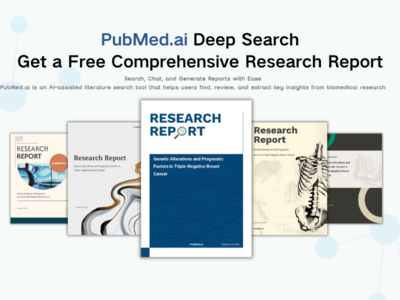
PubMed.ai is an AI-assisted literature search tool designed to make biomedical research more accessible and efficient for physicians, researchers, and students. It leverages publicly available open-access biomedical literature indexed in PubMed to provide research overviews and summarized key findings. The platform optimizes search queries for improved retrieval accuracy and offers AI-assisted analysis to summarize research content and extract key information, supporting literature reviews and academic writing.
With a chat-based interface, PubMed.ai allows users to ask questions related to literature content and explore research topics for deeper understanding. It also automatically generates structured PDF research summaries and literature lists, complete with citations in established styles. This functionality aims to enhance academic productivity by streamlining the process of literature discovery, analysis, and reporting, allowing users to research smarter, not harder.
Focus Areas
Business Intelligence
| Technology | AI, large language models (LLMs), MeSH (Medical Subject Headings)-based logic, cloud-native (implied), integrates with publicly available PubMed data |
What Physicians Need to Know
PubMed.ai is designed for research purposes and is not intended for clinical use. It can help physicians stay updated on the latest biomedical literature, summarize research findings efficiently, and explore complex topics through AI-assisted search and analysis.
The provided text does not specify any direct integrations with other platforms or EMR systems.
Videos
News, demos, and interviews about PubMed.ai.
Videos load interactively. If none appear, search YouTube for PubMed.ai →
Frequently Asked Questions
Related Companies
Stanford University, through its online learning platform Stanford Online (online.stanford.edu), provides a wide array of educational opportunities, including those focused on Artificial Intelligence (AI) in healthcare. Stanford Online aims to extend the university’s academic excellence and breakthrough research to a global audience, offering programs taught by Stanford faculty and industry experts. These offerings range from […]
Trainio is an AI roleplay training platform specifically designed for healthcare teams. It allows medical staff, including front desk personnel, call center agents, caregivers, nurses, and pharmacists, to practice challenging patient and family conversations with realistic AI avatars. These scenarios cover a wide range of situations, such as de-escalation of angry patients, communication with individuals […]
MedVision is a global leader in medical simulation, dedicated to advancing healthcare training through cutting-edge technology. The company provides patient simulators, surgical simulators, ultrasound simulators, and 3D anatomy solutions. These tools are designed for realistic, hands-on learning for medical professionals and students. With a commitment to innovation and excellence, MedVision empowers educators and institutions to […]
GHAPP (Gastroenterology & Hepatology Advance Practice Providers) is a digital learning hub dedicated to advancing the professional development of advanced practice providers (APPs) in gastroenterology and liver care. The platform is committed to developing educational programs, curating resources, and providing content that is guided by APPs themselves. It serves as a central point for APPs […]
Theator is a surgical intelligence platform designed to transform surgical video into actionable insights. It functions as an enterprise AI platform that captures, understands, and structures surgical video data. This process aims to enhance documentation accuracy, improve quality and safety standards, and ultimately lead to better patient outcomes. The platform’s proprietary AI model has been […]
CMEfy is a Reflective Host Platform designed for healthcare professionals to earn Continuing Medical Education (CME) credits through their everyday learning moments. It allows clinicians to “CMEfy” various activities such as Grand Rounds, virtual meetings, podcasts, webinars, curbside consults, group chats, and in-person events, converting them into opportunities for earning AMA PRA Category 1 credits. […]