
QLAB Advanced Quantification
Overview
Philips QLAB Advanced Quantification software is a comprehensive suite of advanced clinical tools designed to enhance the value of ultrasound imaging by providing quantifiable, reproducible, and consistent results. It is built upon proven algorithms and leverages Anatomical Intelligence Ultrasound (AIUS) with advanced organ modeling, image slicing, and quantification to make exams easier to perform and deliver new levels of clinical information. QLAB offers various Q-Apps that utilize anatomical intelligence, some featuring ZeroClick technology for automated analysis with minimal user interaction. The software supports both 2D and 3D quantification, including color Doppler quantification, and aids in the review and analysis of contrast studies. It can be deployed as a stand-alone product on a standard PC, a dedicated workstation, or directly on Philips ultrasound systems, and integrates with Philips’ Xcelera, Q-Station, and IntelliSpace PACS for streamlined departmental workflow.
Reviewed by Pouyan Golshani, MD — Interventional Radiologist
Key Features
- Advanced organ modeling, image slicing, and proven quantification for 2D and 3D data sets
- 2D and 3D quantification and color Doppler quantification
- Anatomical Intelligence Ultrasound (AIUS) with ZeroClick technology for automated analysis
- Elastography Quantification (EQ) for breast lesion stiffness analysis
- Tools for monitoring tumor response to therapy
- Accurate and fast ejection fraction calculations (e.g., aCMQ, 3DQA, Dynamic HeartModel)
- Vascular Plaque Quantification (VPQ) and Intima Media Thickness (IMT) measurement
- 3D interrogation and volume measurements for OB/GYN applications
- Integration with Philips ultrasound systems (EPIQ, Affiniti, Lumify, CX50, Sparq, iE33, iU22, HD15, HD11XE)
- Compatibility with Q-Station, Xcelera, and IntelliSpace PACS for off-cart analysis
Use Cases
- Assessing and managing cardiovascular disease, ischemia, heart failure, and structural heart disease
- Monitoring oncology patients, including those receiving cardio-toxic chemotherapy
- Diagnosing and monitoring COVID-19 related lung and cardiac complications
- Analyzing breast health and OB/GYN issues, including fetal heart navigation
- Predicting the risk of cardiovascular disease and monitoring kidney transplants
- Structural measurements and monitoring of Abdominal Aortic Aneurysms (AAA)
What Physicians Need to Know
Leverage QLAB's automated segmentation and machine learning for cardiac assessments, particularly for right ventricle analysis, to improve efficiency and reliability. Utilize the software's integration with PACS to access quantification features directly within your workflow, reducing the need for manual data transfer. Explore the various Q-Apps for specific clinical applications in cardiac, vascular, and women's healthcare to enhance diagnostic confidence and streamline reporting. The 'ZeroClick' technology and AI-driven automation can significantly reduce repetitive tasks, allowing more focus on complex cases. For 3D echocardiography, the automated quantification can help overcome time-consuming analysis, making it more feasible for routine clinical practice.
QLAB Advanced Quantification Software is designed for integration with Philips ultrasound systems (e.g., EPIQ, Affiniti, Lumify, CX50, Sparq) and can function as a stand-alone product on a standard PC or dedicated workstation. It integrates with Philips' Xcelera, Q-Station, and IntelliSpace PACS, allowing for seamless transfer and population of image databases. The software supports DICOM standards for image import, storage, query, and retrieve, facilitating interoperability with external DICOM systems. MediMatic has also integrated Philips QLAB analysis modules into their ComPACS CV-PACS product line to improve echocardiography workflow. The Ultrasound Workspace, which replaces QLAB cardiovascular ultrasound quantification software, offers vendor-neutral application and data source capabilities, and can be deployed stand-alone or integrated into PACS and EMR echocardiography reading workflows.
Details
| Category | Radiology & Imaging AI |
| Pricing | Unknown |
| Free Trial | Unknown |
| Deployment | Can be deployed as a stand-alone product on a standard PC, a dedicated workstation, or on-board Philips' ultrasound systems. |
| Data Export | Unknown |
| Training | Unknown |
| Compliance | |
| BAA Available | Unknown |
| HIPAA Compliant | Unknown |
| FDA Status | Cleared AI-estimated |
| Integrations | |
| EHR | Not specified |
| Specialties | Cardiology, Obstetrics & Gynecology, Radiology |
Support & Reliability
| Training Provided | Unknown |
What the Web Says
Philips QLAB Advanced Quantification is a software package designed to enhance the analysis of ultrasound images, particularly for cardiac assessments and oncology. It aims to provide more objective and quantifiable data, improving diagnostic accuracy and workflow efficiency for clinicians. The software integrates advanced automatic segmentation and machine learning algorithms, especially for cardiac imaging, and offers various customizable tools for different medical applications.
Overall: PositiveStrengths
- Automated and semi-automated quantification tools reduce manual effort and improve efficiency.
- Provides objective and quantifiable results, increasing confidence in diagnoses.
- Integrates advanced technologies like AIUS (Anatomical Intelligence Ultrasound) and machine learning for improved accuracy and reproducibility.
- Customizable tools cater to various medical applications, including cardiac, breast, and oncology imaging.
- Can be used as a standalone product or integrated with Philips ultrasound systems and other healthcare IT solutions.
- Aids in monitoring tumor response to therapy and assessing global and regional cardiac function.
Limitations
- The software is not portable and runs only on Windows platforms.
- Requires the purchase of licenses from the vendor, potentially leading to vendor lock-in.
- Does not use a VA-preferred database to store data.
- Certain protocols and technologies (like SSL and Q-Station) are unapproved or require a Plan of Action & Milestones (POA&M) for use on some networks (e.g., VA network).
- Section 508 compliance has not been assessed.
- Some users on Reddit, discussing QLab in a different context (live sound/theatre), have mentioned a desire for simpler crossfade functionality and occasional troubleshooting challenges, though these may not directly apply to the medical quantification software.
Based on reviews from: RadAISlice, Veterans Affairs, Catalogs Medicalexpo, Philips, Capterra, AuntMinnie, Transparency Registry, FDA 510(k), YouTube, ResearchGate, Instagram, Scribd, Radiology Business, Reddit, G2
Last updated: 2026-10-25
Ratings & Reviews
No reviews yet. Be the first to review this tool!
Rate QLAB Advanced Quantification
Press & Coverage
Videos
Product demos, reviews, and walkthroughs for QLAB Advanced Quantification.
How To Perform 3D Quantification Using Philips QLAB 3DQA Application
Philips Healthcare

u041au0430u043a u0432u044bu043fu043eu043bu043du0438u0442u044c u043au043eu043bu0438u0447u0435u0441u0442u0432u0435u043du043du044bu0439 3D-u0430u043du0430u043bu0438u0437 u0441 u043fu043eu043cu043eu0449u044cu044e u043fu0440u0438u043bu043eu0436u0435u043du0438u044f 3DQA
Philips Healthcare
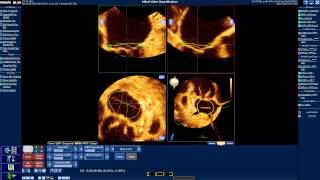
How to use Mitral Valve Quantification (MVQ) software of Q-Lab
CIC - Hani Mahmoud

AutoStrain LV (GLS) with USG PHILIPS - EPIQ CVx 3D
Riyan Herdiyana Rohman

How to Perform a Full Volume Acquisition on a Philips EPIQ Ultrasound
Philips Healthcare

GE cSound True Confocol Imaging
Lynn Medical
Frequently Asked Questions
Compare QLAB Advanced Quantification
 VS

 VS
 VS
 VS