Affiniti Series Diagnostic Ultrasound Systems

by Philips Ultrasound  · Based in Netherlands → — Designed for everyday ultrasound workflow, delivering diagnostic confidence and reproducibility.
Cardiology Obstetrics & Gynecology Radiology

Varies by model and condition (new/refurbished). generally considered a 'mid tier' or 'budget' shared service ultrasound with rich image quality at an affordable price point compared to premium models.
Regulatory Status Disclosed

Overview

The Philips Affiniti Series Diagnostic Ultrasound Systems are a range of advanced diagnostic imaging devices engineered for a variety of clinical settings. The series, including models like Affiniti 30, 50, 70, and CVx, aims to provide a balance of superb image quality, breakthrough performance, and efficient workflow.

These systems incorporate innovative Philips technologies such as PureWave crystal technology for deeper penetration, Tissue Specific Presets (TSPs) that automatically adjust over 7500 parameters for optimal transducer performance, and Anatomical Intelligence for enhanced imaging and workflow.

Key features like xMatrix technology enable versatile data acquisition with multiple interrogation capabilities, while NextGen Auto Scan adaptively adjusts image brightness for improved uniformity and reduced user adjustments. For OB/GYN imaging, TrueVue delivers photorealistic images and FlexVue allows visualization of technically difficult anatomical views. The Affiniti series also supports advanced quantification with QLAB and offers elastography (ShearWave and Strain) for tissue stiffness assessment.

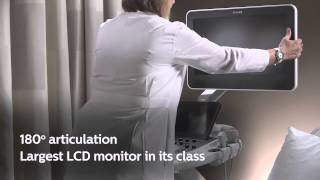
Designed for user comfort and efficiency, the systems feature a 21.5-inch articulating fold-down LCD monitor and a tablet-like touchscreen user interface, reducing repetitive tasks and button pushes. The modular design enhances reliability and allows for rapid repair, contributing to a low total cost of ownership.

Reviewed by Pouyan Golshani, MD — Interventional Radiologist

Key Features

  • PureWave crystal technology
  • Tissue Specific Presets (TSPs)
  • Anatomical Intelligence Ultrasound (AIUS)
  • xMatrix transducer technology (for versatile data acquisition)
  • NextGen Auto Scan (adaptive image optimization)
  • TrueVue and FlexVue (photorealistic OB/GYN imaging)
  • Flow Viewer and MicroFlow Imaging (MFI)
  • ShearWave and Strain elastography
  • SmartExam guided workflow
  • 21.5-inch articulating fold-down LCD monitor and touchscreen interface
  • Four probe ports
  • QLAB onboard quantification set

Use Cases

  • General diagnostic imaging
  • Cardiology (echocardiography, stress echo, cardiac complications)
  • OB/GYN (fetal imaging, women's health, complex gynecological cases)
  • Vascular imaging (full range of applications)
  • Musculoskeletal imaging
  • Liver health assessment (elastography, CEUS)
  • Management of COVID-19 related lung and cardiac complications

What Physicians Need to Know

ECG/EKG Analysis Capability
While primarily an ultrasound system, the Affiniti Series integrates with Philips' broader cardiac care ecosystem. Philips offers Diagnostic ECG solutions with actionable insights and streamlined workflows, including the Cardiologs AI engine for deep neural network-based ECG analysis, which has shown a 42% reduction in Holter analysis time. The R-trigger algorithm is planned for workflow enhancement in transthoracic clinical applications on Affiniti systems, supporting AutoStrain and AutoMeasure.
Echocardiography AI Features
The Affiniti CVx boasts powerful AI-based capabilities, including AI-driven Segmental Wall Motion Scoring for faster analysis and throughput, and Dynamic Heart Model utilizing 3D speckle technology for frame-tracking and rapid 3D ejection fraction (3DEF) measurements. AutoStrain LV provides fast, reproducible 2D strain quantification for the LV, LA, and RV, along with automated EF and mid-layer strain, reducing analysis time by up to 70%. Smart View Select uses AI to automatically select optimal images for 2D LV assessment. Philips offers an extensive suite of 26 FDA-cleared cardiovascular ultrasound AI applications, fully integrated into the Transcend Plus platform for Affiniti CVx systems, including 2D Auto EF and 2D Auto EF Advanced for both contrast and non-contrast imaging studies. Philips Anatomical Intelligence Ultrasound (AIUS) provides automatic anatomy recognition and quantification for adult and pediatric exams.
Arrhythmia Detection Accuracy
Philips' Cardiologs AI algorithm has demonstrated improved specificity for atrial fibrillation detection while maintaining comparable sensitivity, reducing the false positive rate from 17.2% to 1.5%. The Philips DXL Algorithm also interprets resting ECGs for rhythm and morphology.
Heart Failure Risk Prediction
AI algorithms co-developed with Philips accurately detect regional wall motion abnormalities (RWMA) on echocardiography, which are indicators of adverse cardiovascular events and death in patients with cardiovascular diseases. AutoStrain and Dynamic HeartModel contribute to comprehensive LV assessment, aiding in the early detection of heart function changes, with research suggesting Global Longitudinal Strain (GLS) may become a new gold standard for heart failure assessment. The new AI applications integrated into Affiniti CVx are designed to help detect heart failure.
Coronary Artery Assessment
As an ultrasound system, the Affiniti Series excels in vascular imaging, including carotid, arterial, and venous exams. Features like Flow Viewer provide 3D-like rendering of flow imaging data for vessel and fetal cardiac identification, and MicroFlow Imaging (MFI) detects slow and weak blood flow anatomy in tissue. While these enhance vascular assessment, direct coronary artery plaque burden or stenosis assessment is typically performed with other modalities like CT angiography.
Cardiac Monitoring Integration
The Affiniti Series is part of Philips' connected cardiology ecosystem. It supports integration with Philips' cardiac monitoring solutions, including ambulatory monitors, and connects with enterprise ECG management systems. Collaboration Live enables remote communication and collaboration with colleagues or Philips support during exams. The Affiniti CVx shares a common cardiac-focused user interface and transducer capabilities with the EPIQ CVx, facilitating standardization across healthcare facilities.
AHA/ACC Guideline Alignment
While specific AHA/ACC guideline alignment is not explicitly detailed in the provided information, Philips' advanced quantification tools, such as AutoStrain and 3D assessment of LV and RV volumes and function, align with current cardiology guidelines for diagnosing and monitoring heart failure. The system's support for cardio-oncology assessments also aligns with European Society of Cardiology (ESC) Guidelines.
Real-Time Alert Capability
The system features SmartExam protocols that can alert users to missed views, enhancing workflow efficiency. Real-time iSCAN (AutoSCAN) continuously optimizes image gain and TGC, reducing manual adjustments. The integrated AI applications are designed to provide faster, more actionable insights, supporting timely, evidence-based clinical decisions.
Physician Tip

Leverage the AI-driven automation features like AutoStrain LV and Auto Segmental Wall Motion Scoring to enhance consistency and reproducibility in echocardiographic assessments, especially for technically challenging patients. Utilize the extensive suite of FDA-cleared AI applications to streamline workflows and reduce measurement variability. Integrate the Affiniti's data with Philips' broader cardiac care solutions for a comprehensive patient view and remote collaboration. For heart failure risk, pay close attention to the AI-powered detection of regional wall motion abnormalities and global longitudinal strain measurements. Remember that while the Affiniti excels in ultrasound, for detailed coronary artery assessment or comprehensive cardiac tissue characterization, complementary modalities like CT or MRI within the Philips portfolio may be necessary.

The Affiniti Series is designed for seamless integration within the Philips cardiovascular ultrasound platform, sharing a common user interface and transducers with the EPIQ CVx systems for standardized workflows across facilities. It supports connectivity with Philips' Diagnostic ECG systems, Cardiac Workstations, and ambulatory monitoring solutions. The Philips Ultrasound Workspace facilitates multi-vendor data viewing, analysis, and reporting. Collaboration Live enables real-time remote consultation and support. The system is built on the latest Microsoft Windows 10 OS for performance, data security, and future support. Integration with EMR/HIS systems is a key aspect of Philips' overall cardiology solutions.

Details

Category Cardiology AI, OB/GYN AI, Radiology & Imaging AI
Pricing Varies by model and condition (new/refurbished). generally considered a 'mid tier' or 'budget' shared service ultrasound with rich image quality at an affordable price point compared to premium models.
  • Refurbished Affiniti 50: $12,990 - $37,269; Refurbished Affiniti 70: From $77,226; Refurbished Affiniti CVx: Average $42,295
DeploymentOn-premise (console hardware system)
Compliance
BAA AvailableUnknown AI-estimated
HIPAA CompliantUnknown AI-estimated
FDA Status 1 AI-estimated

The Affiniti Series Diagnostic Ultrasound Systems are cleared under FDA 510(k) K250886 for general diagnostic ultrasound imaging. Additionally, in May 2020, the Affiniti series received 510(k) clearance for managing COVID-19 related lung and cardiac complications.

Integrations
EHR Not specified
Specialties Cardiology, Obstetrics & Gynecology, Radiology

What the Web Says

The Philips Affiniti Series Diagnostic Ultrasound Systems are generally well-regarded by clinicians for their image quality, ease of use, and versatile applications across various medical specialties. The systems are designed to enhance workflow efficiency and provide reliable diagnostic images, even for technically challenging patients. Recent FDA clearances also highlight continuous software advancements, including AI/ML-enabled features for automated measurements and improved performance in electrically noisy environments.

Overall: Positive

Strengths

  • Excellent image quality and penetration, particularly for cardiovascular and general imaging.
  • Easy to use with intuitive design and walk-up usability.
  • Versatile, supporting a wide range of applications including cardiology, vascular, OB/GYN, and general imaging.
  • Advanced features like PureWave transducers, xMatrix technology, and AI-driven tools for faster analysis and improved workflow.
  • Seamless adjustment of cineloop length and accurate focal zone control.
  • Designed for efficiency and reliability, with robust performance.

Limitations

  • Bulky probes can limit use with smaller patients.
  • Image quality, while generally good, may not meet expectations compared to some competitors in the same price range, particularly for the Affiniti 50/70.
  • The Affiniti 70 lacks a physical keyboard, which some users may find inconvenient, relying instead on a touchscreen interface.

Based on reviews from: Philips Healthcare, FOVU (First Opinion Veterinary Ultrasound), Probo Medical, Strata Imaging, Marcroft Medical, Innolitics, FDA 510(k), Amazon S3, RegWatch - Regulatory Intelligence Dashboard, Radiology AI Tools Directory, beudamed

Last updated: 2026-07-20

Ratings & Reviews

No reviews yet. Be the first to review this tool!

Rate Affiniti Series Diagnostic Ultrasound Systems

Clinical Value
Ease of Use
Integration
Support & Docs
Value for Money

Press & Coverage

accessdata.fda.gov
Philips Affiniti Series Diagnostic Ultrasound Systems with R-Trigger software application receive FDA clearance
Philips received FDA clearance for the R-Trigger software application on its EPIQ and Affiniti Series Diagnostic Ultrasound Systems, which allows for event detection from the ECG signal or via a new R-Trigger algorithm if the ECG signal is unusable. This software application is supported by all EPIQ and Affiniti models running software version 13.0 or higher.
2025-05
accessdata.fda.gov
Philips Affiniti Series Diagnostic Ultrasound Systems with SVS v2 software applications receive FDA clearance
Philips received FDA 510(k) clearance for its EPIQ and Affiniti Series Diagnostic Ultrasound Systems with SVS v2 software applications. The systems are intended for diagnostic ultrasound imaging and fluid flow analysis of the human body across various clinical environments.
2025-06
X-ray Interpreter
Philips EPIQ and Affiniti Series Diagnostic Ultrasound Systems with AI-powered Auto Measure feature receive FDA approval
The Philips EPIQ and Affiniti Series Diagnostic Ultrasound Systems received FDA approval for an AI-powered Auto Measure feature that semi-automates 2D and Doppler measurements during echocardiography, aiming to enhance efficiency and standardization in cardiac assessments.
2021-09
X-ray Interpreter
Philips EPIQ and Affiniti Series Diagnostic Ultrasound Systems with Smart View Select and Segmental Wall Motion software receive FDA approval
Philips' EPIQ and Affiniti Series Diagnostic Ultrasound Systems received FDA approval for AI-powered software features, Smart View Select and Segmental Wall Motion, which assist clinicians in performing more efficient and precise cardiac assessments.
2024-04
accessdata.fda.gov
Philips EPIQ and Affiniti Series Diagnostic Ultrasound Systems with AI Auto Measure Abdomen feature receive FDA clearance
Philips received FDA 510(k) clearance for the addition of the AI Auto Measure Abdomen feature software application to its EPIQ and Affiniti Series Diagnostic Ultrasound Systems. This feature aims to improve workflow efficiency by automating selected measurements for routine abdominal and renal exams.
2026-03
accessdata.fda.gov
Philips EPIQ and Affiniti Series Diagnostic Ultrasound Systems with Remote Software Management (RSM) receive FDA clearance
Philips received FDA 510(k) clearance for the introduction of the Remote Software Management (RSM) software feature onto the EPIQ and Affiniti Series Diagnostic Ultrasound Systems. This workflow-enhancement feature supports automatic and scheduled software downloads and installations.
2025-04
RegWatch - Regulatory Intelligence Dashboard
Philips Ultrasound, LLC receives FDA 510(k) clearance for EPIQ Series Diagnostic Ultrasound Systems; Affiniti Series Diagnostic Ultrasound Systems
Philips Ultrasound, LLC received FDA 510(k) clearance (K260680) for its EPIQ Series Diagnostic Ultrasound Systems and Affiniti Series Diagnostic Ultrasound Systems. The product code for these devices is IYN, falling under the Radiology specialty.
2026-10
X-ray Interpreter
Philips Alturion Series Diagnostic Ultrasound System leverages Affiniti Series architecture
The new Philips Alturion Series Diagnostic Ultrasound System, which includes an AI Auto Measure Abdomen feature, utilizes common software architecture from the predicate Affiniti Series, with improved acoustic capabilities.
2026-06

Videos

Product demos, reviews, and walkthroughs for Affiniti Series Diagnostic Ultrasound Systems.

View all on YouTube

Frequently Asked Questions

The Philips Affiniti Series incorporates several AI-powered features to streamline workflows and boost diagnostic confidence. These include AI-enabled automated segmental wall motion scoring for cardiac assessments, AutoStrain for optimal image selection in quantification, and Auto Measure for automating routine cardiac measurements. Additionally, the Elevate software release offers AI-driven automation with over 100 new image quality presets, and Auto ElastQ can reduce liver shear wave elastography exam time significantly.
Philips Affiniti systems prioritize data security by offering patient data encryption at rest and in transit, utilizing DICOM with TLS for secure communication. The AI features are trained on anonymized patient data sets from real-life clinical environments to improve quality and reproducibility while adhering to privacy standards. Furthermore, Philips emphasizes best-in-class cybersecurity and data control, aligning with HIPAA requirements for permissible data use, minimum necessary standards, and de-identification.
While powerful, AI in ultrasound, including the Affiniti Series, faces limitations due to the inherent operator dependency and image variability of ultrasound. AI cannot compensate if a critical area is missed during the manual scan, and low specificity can lead to false positives, underscoring that AI should serve as a decision-support tool rather than a replacement for expert human interpretation. The effectiveness of AI also relies on diverse and robust training datasets, and limited data can lead to biased or inconsistent performance.
The AI-driven features in the Affiniti Series, such as automated segmental wall motion scoring and AutoStrain, are designed to enhance consistency and reduce inter-user variability, leading to more confident diagnoses. Philips' AI applications for cardiovascular imaging and diagnosis have received FDA 510(k) clearance, indicating they meet regulatory standards for safety and effectiveness. These tools aim to improve the quality and reproducibility of cardiac imaging and enhance operator efficiency.
The AI-based solutions in the Affiniti Series are designed to integrate seamlessly into everyday clinical workflows, augmenting user skills and speeding up analysis. Features like Quick Launch presets and automated image optimization reduce button pushes and setup time, streamlining routine procedures. The systems also offer advanced connectivity options for seamless integration with EMR and clinical data management systems, facilitating efficient data transfer and reporting.
Physicians considering alternatives with AI capabilities might look at other leading brands such as GE Healthcare's LOGIQ and Vivid lines, Samsung's HERA series, and Siemens Healthineers' ACUSON systems. Canon's Aplio a-series and i-series also feature workflow-enhancing AI. For more specialized or portable needs, options like the Butterfly iQ3 offer strong AI features, while Mindray's advanced console machines like the DC-88 provide competitive performance and value.
While specific pricing for AI features isn't detailed, the Affiniti Series is positioned as offering rich image quality and exceptional value at an affordable price point, especially compared to premium systems. The integration of AI aims to increase diagnostic confidence, improve workflow efficiency, and reduce exam times, which can lead to higher patient throughput and potentially better resource utilization. This enhanced efficiency and diagnostic accuracy contribute to the long-term value by optimizing operational costs and improving patient outcomes.

Related Tools

EchoMD AutoEF
Caption Health (formerly Bay Labs, now part of GE HealthCare)
Cardiology AI
EchoMD AutoEF is an FDA-cleared AI software that automates the selection of echocardiogram clips and calculates left ventricular ejection fraction (EF), enhancing efficiency and accuracy in cardiac assessments.
ECG-AI Cardiac Amyloidosis (CA) 12-Lead Algorithm
Anumana, Inc.
Cardiology AI
An AI algorithm for screening cardiac amyloidosis using standard 12-lead ECGs.
DEEPVESSEL Plaque
Keya Medical Technology Co., Ltd.
Cardiology AI
An AI software platform for coronary plaque analysis and quantification from CT angiography.
WatchMate Software
Anumana, Inc.
Cardiology AI
Anumana is an AI-driven health technology company from nference, developing and delivering ECG algorithms enabling early diagnosis and intervention.
syngo.CT Coronary Cockpit
Siemens Healthineers
Cardiology AI
syngo.CT Coronary Cockpit is an AI-powered software tool by Siemens Healthineers for efficient and accurate CT coronary angiography analysis.
HeartLung AI-CVD®
HeartLung Corporation
Cardiology AI
HeartLung AI-CVD® is an FDA-cleared AI-powered quantitative imaging tool that provides automated CT-derived measurements for assessing cardiovascular and multisystem risks opportunistically.

See all Cardiology AI tools →

More from Philips Ultrasound

EPIQ Series Diagnostic Ultrasound System
Philips Ultrasound
Cardiology AI
The Philips EPIQ Series Diagnostic Ultrasound System offers premium AI-powered imaging and advanced workflow solutions for enhanced diagnostic confidence across diverse clinical applications.
EPIQ Series Diagnostic Ultrasound Systems
Philips Ultrasound
Radiology & Imaging AI
The Philips EPIQ Series Diagnostic Ultrasound Systems offer premium image quality, advanced AI-powered features, and streamlined workflows for a wide range of clinical applications, enhancing diagnostic confidence and efficiency.
Lumify Diagnostic Ultrasound
Philips Ultrasound
Radiology & Imaging AI
Philips Lumify is an app-based, portable diagnostic ultrasound system that transforms compatible smart devices into a high-quality imaging solution for various medical specialties at the point of care. It offers advanced imaging, multiple transducers, and robust data security features.
The 5000 Compact Series Ultrasound Systems
Philips Ultrasound
Radiology & Imaging AI
The Philips 5000 Compact Series Ultrasound Systems offer premium diagnostic image quality and AI-powered automation in a portable design, facilitating versatile use across specialties and enhancing clinical collaboration through integrated telemedicine.

View company profile →

Suggest an Edit → | Last Verified: 2026-04-20 | First Added: 2026-04-20
AI Tool Finder
AI-powered search. Results may not be comprehensive.