Visionix AI Retina Screening
Overview
Visionix AI Retina Screening is an advanced solution designed to assist physicians in the early detection of various retinal pathologies. Leveraging deep learning algorithms, this tool analyzes retinal images captured by the Visionix VX 610 retinal camera to identify up to 13 potential conditions, including the four major ones: Diabetic Retinopathy (DR), Glaucoma, Age-related Macular Degeneration (AMD – both wet and dry), and retinal detachment risk.
The system is engineered for efficiency, providing rapid and accurate assessments within minutes. Its algorithms are trained on interpretations from expert ophthalmologists and retina specialists, ensuring consistency with international classifications and robust learning across diverse patient populations and camera types. This allows for precise customer assessment and follow-up without requiring a medical specialist on-site for initial screening.
A key feature is its integration with the Visionix Nexus platform, which offers an optional telehealth subscription. This allows practitioners to request external human grading from an off-site ophthalmologist for cases requiring further expert review. The ultimate goal of Visionix AI Retina Screening is to improve patient outcomes by facilitating the earliest possible detection of retinal conditions, thereby enabling timely intervention and management.
Reviewed by Pouyan Golshani, MD — Interventional Radiologist
Key Features
- AI-based retinal image analysis
- Detects up to 13 retinal pathologies
- Identifies DR, glaucoma, wet AMD, dry AMD, and retinal detachment risk
- Rapid assessment (less than 6 minutes)
- Automated image analysis
- Algorithms based on expert ophthalmologist knowledge
- Compatible with Visionix VX 610 retinal camera
- Optional telehealth for human grading via Visionix Nexus platform
Use Cases
- Early detection of diabetic retinopathy
- Screening for glaucoma
- Identification of age-related macular degeneration (wet and dry)
- Assessing retinal detachment risk
- Efficient patient assessment and follow-up in eye care practices
- Supporting telehealth workflows for ophthalmology
What Physicians Need to Know
The AI assessment is immediate, providing results as soon as the image is processed. Healthcare professionals need basic training on how to operate the AI software and interpret its results to effectively integrate AI tools into their clinical practice, understanding both benefits and limitations. If the AI system suspects a pathology, the AI report shows a yellow indication and a risk score. This outcome is not a diagnosis; referral to an ophthalmologist for human grading and further verification is advisable. The AI system focuses on a 45° angle, covering the central retina without pupil dilation; an ophthalmologist can explore the peripheral retina by dilating the pupil, which is beyond the current AI capability. If image quality is insufficient, a new image can be acquired; if it remains inadequate, refer the patient to an ophthalmologist for an in-person examination.
The Visionix AI Retina Screening solution is designed for use with the Visionix VX 610 retinal camera. It is also compatible with the Visionix Nexus platform, which allows for an optional telehealth subscription to request external human grading from an off-site ophthalmologist.
Details
| Category | Clinical Decision Support & Reference, Ophthalmology AI, Radiology & Imaging AI |
| Pricing | Inquire for a quote |
| Deployment | On-premise (with VX 610 retinal camera) and Cloud-based secure storage. |
| Compliance | |
| BAA Available | Unknown |
| HIPAA Compliant | Yes AI-estimated |
| FDA Status | Unknown |
| GDPR | Unknown AI-estimated |
| Integrations | |
| EHR | Not specified |
| Specialties | Ophthalmology |
Support & Reliability
Ratings & Reviews
No reviews yet. Be the first to review this tool!
Rate Visionix AI Retina Screening
Videos
Product demos, reviews, and walkthroughs for Visionix AI Retina Screening.
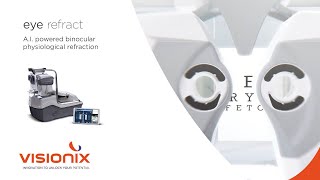
ES - SHORT - VX 610 AI retina screening
Visionix