PMcardio

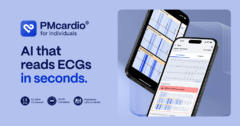
by Powerful Medical  · Based in Slovakia →AI that reads ECGs in seconds
Cardiology Emergency Medicine Internal Medicine

Freemium
Regulatory Status Disclosed

Overview

PMcardio, developed by Powerful Medical, is an AI-powered clinical assistant designed to digitize and interpret 12-lead electrocardiograms (ECGs). The platform is built for emergency physicians, general practitioners, cardiologists, paramedics, and nurses across diverse care settings, including emergency departments, ambulances, clinics, and hospital wards.

The tool integrates into clinical workflows by allowing providers to capture an image of any paper-based or digital 12-lead ECG using a smartphone. PMcardio’s AI models then analyze the image to detect over 50 distinct ECG findings, including arrhythmias, conduction blocks, and structural changes.

Notable Capabilities:

  • STEMI and OMI Detection: The “Queen of Hearts” model identifies acute ST-elevation myocardial infarctions (STEMI) and occlusive myocardial infarctions (OMI).
  • LVEF Screening: The “LVsense” model screens for reduced left ventricular ejection fraction (LVEF) directly from a standard ECG.
  • Explainability Heatmaps: The “ECGxplain” feature visually highlights the specific leads and segments influencing the AI’s diagnostic predictions.
  • Regulatory Status: PMcardio is certified as a Class IIb medical device under the EU Medical Device Regulation (MDR) and is registered with the UK MHRA. It has received FDA Breakthrough Device Designation for its STEMI AI model but is not yet cleared for marketing in the United States.

Reviewed by Pouyan Golshani, MD — Interventional Radiologist

Key Features

  • Instant AI-powered ECG interpretations
  • Detection of 50+ ECG findings (including STEMI/OMI, rhythms, reduced LVEF, conduction disorders)
  • Queen of Heartsu2122 - STEMI and OMI Detection
  • LVsenseu2122 - Reduced LVEF Detection
  • ECGxplainu2122 - Visual AI Explainability with heatmaps
  • Core AI - Detects 36 core diagnoses (arrhythmias, conduction blocks, heart blocks, chamber hypertrophies)
  • Automatic analysis of heart rate, axis, P wave, PR, QRS, and QT/QTc intervals
  • Culprit Artery AI confidence scores with 3D heart visualization
  • AI Confidence Scores for clinical decision-making
  • Digitize and share ECG reports

Use Cases

  • Rapid diagnosis at first patient contact
  • Early detection of reduced Left Ventricular Ejection Fraction (LVEF)
  • Detection of acute ST-elevation myocardial Infarction (STEMI) and STEMI-equivalent patterns
  • Screening for structural heart disease
  • Longitudinal monitoring of cardiac conditions
  • Streamlining patient management and referral to cardiovascular specialists

What Physicians Need to Know

ECG/EKG Analysis Capability
PMcardio offers CE-certified AI ECG Models that provide a complex assessment of over 50 ECG findings, including rhythms, arrhythmias, conduction disorders, ischemia, and infarction. It can digitize any 12-lead ECG (paper or screen) into a standardized digital waveform, even improving the quality of old or distorted ECGs. The AI provides instant interpretation, reducing the average diagnosis time to 2.1-2.5 seconds.
Echocardiography AI Features
PMcardio's Echo Screening Suite offers AI-powered screening for structural heart disease directly from a 12-lead ECG, detecting conditions such as reduced Left Ventricular Ejection Fraction (LVEF), aortic stenosis, and hypertrophic cardiomyopathy (HCM). The LVEF AI ECG model has demonstrated high performance (AUC 0.963) in detecting reduced heart function.
Cardiac CT/MRI Analysis
PMcardio's Angio Suite provides AI-powered analysis of coronary angiography, including automated stenosis quantification, TIMI frame count, guide wire detection, and myocardial blush grading in near real-time.
Arrhythmia Detection Accuracy
PMcardio identifies atrial fibrillation (and other arrhythmias) with 98.3% accuracy, comparable to board-certified cardiologists. In a study of COVID-19 patients, PMcardio achieved perfect diagnostic accuracy (sensitivity and specificity of 1.00) for AF detection.
Heart Failure Risk Prediction
PMcardio includes an AI-driven platform for predictive analysis of heart failure, leveraging machine-learning techniques to analyze ECGs for early diagnosis and management recommendations. The PM-Aalst heart failure mortality prediction system, developed in partnership with the Cardiovascular Center Aalst, has shown superior performance in predicting short and long-term mortality across various heart failure phenotypes.
Coronary Artery Assessment
The 'Queen of Hearts' (OMI AI Model) enables detection of Occlusion Myocardial Infarction (OMI) from any 12-lead ECG, even without typical ST elevation, and has received FDA Breakthrough Device Designation. It has demonstrated 2x higher sensitivity than traditional criteria for STEMI detection and can reduce false STEMI alarms by over 60%.
Cardiac Monitoring Integration
PMcardio offers a Remote Monitoring Suite for AI-powered analysis of ambulatory ECG recordings from Holter monitors, cardiac patches, and other continuous monitoring devices, providing automated findings and longitudinal tracking. It also has a Patient Suite for AI-powered ECG interpretation from consumer wearables.
AHA/ACC Guideline Alignment
PMcardio's treatment recommendations engine is built using decision trees constructed from official clinical practice guidelines published by the European Society of Cardiology (ESC). The platform aims to help meet the crucial 90-minute window from first medical contact as recommended by ACC/ESC/AHA guidelines for STEMI.
Real-Time Alert Capability
PMcardio provides real-time alerts and care routing, with instant notifications when a critical finding is detected and built-in escalation to the appropriate team member. This functionality enhances communication and accelerates care delivery.
Physician Tip

PMcardio can significantly enhance diagnostic confidence and efficiency, especially in acute care settings and primary care, by providing rapid, AI-powered ECG interpretations and guideline-adherent treatment recommendations. Its ability to detect subtle STEMI equivalents and reduced LVEF from ECGs can lead to earlier intervention and improved patient outcomes. For institutions, the platform offers integrated care coordination and real-time alerting, streamlining workflows and reducing false activations. While highly accurate for many conditions, be aware that its performance for signs of past or present ischemia might be more modest, and local calibration and prospective multicenter validation are important for widespread clinical implementation.

PMcardio is designed for enterprise-ready deployment, connecting to existing ECG devices, EHR/CVIS, EMS systems, angiographic systems, and communication tools. It supports seamless integration across hospital networks with a single integration, contract, and security review. The platform can be launched from the EHR with secure links and SSO, and it sends results back to clinical systems for documentation. PMcardio has also partnered with Roche to integrate AI-powered ECG interpretation into the cobasu00ae pulse point-of-care platform.

Details

Category Cardiology AI, Clinical Decision Support & Reference
Pricing Freemium
  • Free plan with 5 free ECG analyses per month; Pro Plan for unlimited ECG capacity, AI explainability, advanced ECG measurements, and extended report history
DeploymentMobile app (iOS and Android), Web platform, Enterprise integrations with EHR/CVIS and EMS systems
Compliance
BAA AvailableUnknown AI-estimated
HIPAA CompliantUnknown AI-estimated
FDA Status Pending AI-estimated

Powerful Medical's PMcardio STEMI AI ECG model has been granted Breakthrough Device Designation by the U.S. Food and Drug Administration (FDA). This designation recognizes it as a breakthrough technology for detecting ST-elevation myocardial infarction (STEMI) and STEMI equivalents, and provides an expedited review process towards market authorization. However, Powerful Medical technology has not yet been cleared by the US Food and Drug Administration (FDA) for marketing in the USA.

Integrations
EHR Not specified
Specialties Cardiology, Emergency Medicine, Internal Medicine

What the Web Says

PMcardio is an AI-powered medical device designed to assist healthcare professionals in interpreting 12-lead ECGs and diagnosing 38 cardiovascular diseases. It digitizes paper or screen-based ECGs and provides rapid, expert-level interpretations and guideline-adherent treatment recommendations. The app is CE-marked in Europe as a Class IIb medical device and has FDA Breakthrough Device Designation in the U.S., though it is not yet FDA-cleared for clinical decision-making in the US.

Overall: Positive

Strengths

  • Highly accurate in diagnosing cardiovascular diseases, often outperforming general practitioners and even expert cardiologists in subtle cases.
  • Saves time and money by providing rapid ECG interpretation and second opinions.
  • Can digitize and improve damaged or distorted ECG tracings.
  • Provides detailed treatment recommendations adhering to medical guidelines.
  • User-friendly interface and compatible with any 12-lead ECG (image or paperform).
  • Reduces false negative diagnoses of atrial fibrillation and myocardial infarctions, and can reduce false STEMI alarms.

Limitations

  • Not yet FDA-cleared for clinical decision-making in the U.S.
  • Some users reported inaccuracies, such as missing obvious ST elevation in continuous leads.
  • Only works with 12-lead ECGs, not single-lead or Apple Watch ECGs.
  • Can be expensive, and some users noted it was put behind a paywall.
  • Occasional login and account issues reported by users.
  • Diagnostic accuracy for indications of (past) ischemia was more modest in one study, with false-negatives potentially due to the algorithm's training in a higher-risk dataset.

Based on reviews from: Reddit, Product Hunt, Software Advice, Apple App Store, Powerful Medical (PMcardio website), YouTube (AI ECG App Review), Capterra, Google Play Store, PMcardio (AI vs MD ECG-Reading for Cath Lab Activation), PubMed Central (Diagnostic accuracy of the PMcardio smartphone application), GetApp, SGEM (Skeptics' Guide to Emergency Medicine), G2

Last updated: 2026-07-01

Ratings & Reviews

No reviews yet. Be the first to review this tool!

Rate PMcardio

Clinical Value
Ease of Use
Integration
Support & Docs
Value for Money

Press & Coverage

Powerful Medical
Powerful Medical Receives FDA Breakthrough Device Designation for PMcardio STEMI AI ECG Model
Powerful Medical's PMcardio STEMI AI ECG model has been granted Breakthrough Device Designation by the U.S. FDA, recognizing it as a breakthrough technology for detecting ST-elevation myocardial infarction (STEMI) and STEMI equivalents. This designation expedites the review process and facilitates collaboration with the FDA towards market authorization.
2025-03
Powerful Medical
AZORG Hospitals Cut Subtle Heart Attack Treatment Delays by Several Hours with PMcardio Platform
The Heart Center Aalst announced that implementing PMcardio across the AZORG Health System in Belgium resulted in a 48-minute average reduction in time to treatment for heart attack patients, with some complex cases seeing up to a 6-hour reduction. The AI-driven platform analyzed over 32,800 ECGs and identified more than 500 heart attacks over one year.
2026-06
Powerful Medical
PMcardio Reports Positive RCT Results and Late-Breaking Clinical Science for STEMI Detection
A new study presented at the Transcatheter Cardiovascular Therapeutics (TCT) 2025 conference and published in JACC: Cardiovascular Interventions demonstrated that PMcardio's AI-powered ECG technology significantly improves the detection of severe heart attacks (STEMI and STEMI equivalents) and reduces false-positive cath lab activations. The 'Queen of Hearts' AI model correctly identified 92% of true STEMIs and reduced false activations fivefold.
2025-10
Powerful Medical
European Heart Journal: Clinical Validation Study of the PMcardio OMI AI Model
A pivotal clinical validation study for PMcardio's OMI AI Model, 'Queen of Hearts,' was published in the European Heart Journal u2013 Digital Health, demonstrating superior accuracy in detecting acute Occlusion Myocardial Infarction (OMI) compared to traditional STEMI criteria. The model achieved an AUC of 0.938, with 80.6% sensitivity and 93.7% specificity.
2023-12
Powerful Medical
PMcardio Expands AI-Powered ECG Solution to Telemedicine for Pharmacy and Primary Care-Based Patient Screening
PMcardio, a CE-certified class IIb medical device, is now supporting telemedicine workflows to enhance ECG analysis and diagnosis for patients outside traditional hospital settings, including pharmacy and primary care.
2024-06
Powerful Medical
Powerful Medical Wins MedTech Innovator 2025
Powerful Medical was named the MedTech Innovator 2025, winning the Mid-Stage Grand Finals, the top honor from the world's largest medtech accelerator. The award recognizes PMcardio and its FDA Breakthrough-designated Queen of Heartsu2122 AI ECG technology.
2025-11
PubMed (Cardiovascular Digital Health Journal)
Diagnostic accuracy of the PMcardio smartphone application for artificial intelligence-based interpretation of electrocardiograms in primary care (AMSTELHEART-1)
This study validated the PMcardio smartphone application as a standalone interpretation tool for 12-lead ECGs in primary care, demonstrating high sensitivity and specificity for detecting major ECG abnormalities and atrial fibrillation. The study included 290 patients from 11 Dutch general practices.
2023-04
Powerful Medical
Powerful Medical Receives u20ac40 Million Non-Dilutive Grant to Accelerate Early Diagnosis of Cardiovascular Diseases with AI
Powerful Medical received a u20ac40 million non-dilutive grant to accelerate the early diagnosis of cardiovascular diseases using AI. This funding will support the development of AI-based ECG interpretation technology for acute coronary syndromes.
2025-07

Videos

Product demos, reviews, and walkthroughs for PMcardio.

View all on YouTube

Frequently Asked Questions

PMcardio employs AI algorithms to analyze ECGs, identifying patterns and anomalies that may be indicative of various cardiac conditions. This AI-powered interpretation aims to augment, not replace, physician analysis, potentially improving diagnostic speed and consistency, especially in high-volume settings or for less common presentations.
PMcardio is a CE-marked medical device under the Medical Device Regulation (MDR), signifying its compliance with European safety and performance requirements. It also adheres to stringent data privacy regulations like GDPR, ensuring patient data is handled securely and confidentially.
While several AI-powered ECG analysis tools are emerging, PMcardio differentiates itself through its comprehensive diagnostic capabilities, covering a wide range of cardiovascular diseases. It also emphasizes seamless integration with existing EHR systems, aiming to minimize disruption to clinical workflows.
PMcardio offers various pricing models, including subscription-based options, tailored to the needs of both individual practitioners and larger healthcare institutions. Specific details on pricing tiers and packages are typically provided upon direct inquiry to accommodate diverse operational scales and requirements.
While highly accurate, PMcardio's AI, like all AI, has limitations. Its performance might vary with extremely rare conditions or severely artifact-laden ECGs. The system is continuously updated and refined to improve its accuracy across diverse scenarios and patient populations, with ongoing research addressing these limitations.
PMcardio prioritizes data security and patient confidentiality through robust encryption protocols and adherence to international data protection regulations like GDPR. All data transmission and storage are secured to prevent unauthorized access and ensure compliance with healthcare privacy standards.
PMcardio provides comprehensive training and ongoing support for physicians to ensure effective utilization of the platform. This includes educational resources, user guides, and direct support channels to help clinicians integrate AI-generated insights with their clinical expertise for optimal patient care.

Related Tools

Cardiomatics
Cardiomatics
Cardiology AI
Cardiomatics is a cloud-based, AI-powered software for analyzing ambulatory (Holter) ECG tests, using clinically validated algorithms to provide accurate and high-quality results for cardiac diagnostics. It aims to streamline ECG analysis, reduce interpretation time, and improve diagnostic accuracy for various heart conditions.
SafeBeat Rx App
SafeBeat Rx, Inc.
Cardiology AI
An AI application designed to support safe pharmacological treatment and monitoring for cardiac arrhythmias.
PreemptiveAI Clinical SDK
Measure Labs, Inc. (Dba Preemptiveai, Inc.)
Cardiology AI
A clinical software development kit using AI to model and predict cardiovascular health metrics, aiming to shift healthcare from reactive to proactive by providing early health risk signals.
Clarius Ejection Fraction AI
Clarius Mobile Health Corp.
Cardiology AI
Clarius Ejection Fraction AI is an AI-powered ultrasound tool for automated left ventricular ejection fraction calculation, integrated into the Clarius Ultrasound App for real-time cardiac assessments.
Automated Aortic Stenosis Software (AutoAS)
Multiple companies are developing Automated Aortic Stenosis Software (AutoAS) or similar AI-powered solutions. Notable ones include iCardio.ai, Us2.ai, AccurKardia, HeartSciences Inc., and Echo IQ.
Cardiology AI
Automated Aortic Stenosis Software (AutoAS) is an ultrasound application by GE Medical Systems that provides automated assessment of aortic stenosis to enhance diagnostic efficiency and consistency.
ECG-AI Pulmonary Hypertension (PH) 12-Lead algorithm
Anumana
Cardiology AI
An AI algorithm that analyzes standard 12-lead ECG recordings to detect signs of pulmonary hypertension, aiming for earlier diagnosis and improved patient outcomes.

See all Cardiology AI tools →

Suggest an Edit → | Last Verified: 2026-07-01 | First Added: 2026-07-01

Investors who backed PMcardio

Funded through the company that built this tool.

AI Tool Finder
AI-powered search. Results may not be comprehensive.