AtomNet

by Atomwise  · Based in United States → — The AI Powering Smarter Small Molecule Discovery
Hematology Infectious Disease Oncology

Partnership agreements with pharma companies, biotech firms, and academic institutions.
Regulatory Status Disclosed

Overview

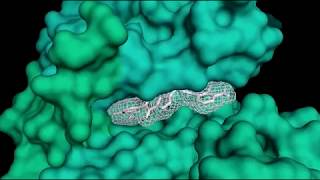
AtomNet by Atomwise is an AI-driven, structure-based drug discovery platform designed to predict how small molecules interact with target proteins. Utilizing a deep convolutional neural network (CNN), the platform analyzes three-dimensional molecular structures and simulates binding affinity to identify promising therapeutic candidates from massive virtual libraries.

Who It Is For:

  • Target Audience: Biopharmaceutical researchers, medicinal chemists, and academic investigators.
  • Specialties & Settings: Translational research labs, biotechnology companies, and pharmaceutical R&D departments focusing on oncology, neurology, infectious diseases, and rare conditions. It is not a direct-to-clinic tool for practicing physicians or patient care settings.

Workflow Integration:

  • Operates as an upstream research and development engine rather than a clinical EHR or records system.
  • Replaces or supplements traditional physical high-throughput screening (HTS) by prioritizing compounds in silico.
  • Integrates into early-stage discovery pipelines, allowing research teams to select and synthesize high-potential chemical matter for downstream wet-lab validation.

Notable Capabilities:

  • Applies deep learning to 3D structural biology to predict bioactivity and molecular binding without requiring physical compound libraries.
  • Capable of virtually screening billions of synthesizable compounds against target proteins in a highly compressed timeframe.
  • Identifies novel chemotypes and scaffolds for challenging or previously undruggable disease targets.

Reviewed by Pouyan Golshani, MD — Interventional Radiologist

Key Features

  • Structure-based deep learning platform (AtomNet)
  • Deep convolutional neural networks (CNNs) for molecular recognition
  • Virtual screening of billions of compounds against disease targets
  • Prediction of small molecule bioactivity and binding affinity
  • Accelerated lead identification and optimization
  • Ability to propose binders for targets with little or no prior ligand data
  • Analysis of 3D protein-ligand interactions
  • Proprietary chemical libraries and structural datasets
  • GPU-accelerated virtual screening engine
  • Integrated synthesis and wet-lab validation

Use Cases

  • Early-stage drug discovery and preclinical R&D
  • Hit identification and lead optimization
  • Exploring novel chemotypes around a target
  • Identifying drug candidates for 'undruggable' targets
  • Accelerating drug discovery for viral diseases (e.g., Ebola)
  • Developing therapies for inflammatory and autoimmune diseases

What Physicians Need to Know

Molecule Screening Capability
AtomNet is a deep convolutional neural network designed for structure-based virtual screening and small-molecule design at a massive scale. It can virtually screen billions of compounds, including an expanding chemical library of over 15 quadrillion synthesizable compounds, to predict bioactivity and identify novel hits. This approach significantly improves hit rates compared to traditional high-throughput screening (HTS), achieving approximately 74-75% project-level success with 5-7.6% hit rates on tested compounds, versus HTS rates of 0.01-0.1%. It can also predict new active molecules for targets with no previously known modulators.
Target Identification
AtomNet helps identify and prioritize compounds that are likely to bind to protein targets, functioning as a virtual screening and design engine for hit identification and lead refinement. It has demonstrated success in finding small molecule hits for challenging or 'undruggable' targets, even without target-specific training data. The platform has been applied to a wide breadth of protein classes relevant across major therapeutic areas, including oncology, neurology, and infectious diseases.
Collaboration Features
Atomwise frequently collaborates with pharmaceutical and agrochemical companies, academic institutions, and hospitals to advance research in diverse areas. The AIMS (Artificial Intelligence Molecule Screening) project, which utilized AtomNet, involved collaborations with over 250 academic labs across 30 countries. Atomwise has also established strategic research collaborations with major pharmaceutical companies like Sanofi for computational discovery and research of drug targets.
Publication Support
AtomNet's capabilities and results have been published in peer-reviewed journals such as Nature Scientific Reports and arXiv, showcasing its effectiveness in drug discovery. The platform's ability to identify novel chemical matter and its high success rates in virtual screening are well-documented in scientific literature.
Physician Tip

While AtomNet is primarily a preclinical drug discovery tool, its ability to rapidly identify novel and potent small molecule candidates for challenging targets can significantly accelerate the pipeline of potential new therapies. Physicians should be aware that this technology aims to bring higher-quality medicines to patients faster by making the drug discovery process more rational and efficient, especially for diseases with unmet needs or previously 'undruggable' targets. The focus on identifying structurally novel compounds also increases the probability of developing first-in-class or best-in-class medicines.

AtomNet operates as an upstream R&D engine and integrates into existing project workflows for target assessment, hit identification, and lead refinement. It leverages deep learning in three dimensions for molecular recognition and is built on engineering architecture and tools that include partners like WEKA and AWS for massive scale and speed. The platform is trained on millions of data points from public resources like ChEMBL and PDB, as well as commercial and proprietary databases. It can be integrated with molecular databases and research lab platforms.

Details

Category Drug Discovery & Research
Pricing Partnership agreements with pharma companies, biotech firms, and academic institutions.
  • Milestone-heavy R&D agreements with upfront access fees (typically $10M-$50M) and large clinical milestones; equity-sharing joint ventures; PaaS and dataset licensing; project-based or subscription models for mid-sized biotechs and startups; low-cost or subsidized access for academic & non-profit research
DeploymentCloud-based (AWS) with GPU-accelerated infrastructure
Compliance
BAA AvailableUnknown AI-estimated
HIPAA CompliantUnknown AI-estimated
FDA Status Not applicable AI-estimated

Atomwise positions its technology in early discovery and preclinical hit/lead optimization. There is no evidence that the AtomNet platform itself has undergone formal clinical validation as a medical device or CDSS, nor are regulatory filings or validation white papers available for AtomNet as a regulated system.

Integrations
EHR Not specified
Specialties Hematology, Infectious Disease, Oncology

What the Web Says

AtomNet, developed by Atomwise, is a pioneering deep convolutional neural network designed for structure-based drug discovery. It excels at virtually screening billions of compounds to predict binding affinity and identify novel small molecule candidates, significantly accelerating the early stages of drug discovery. The platform has demonstrated high success rates in identifying novel hits for various disease targets, even those considered difficult to drug.

Overall: Positive

Strengths

  • Pioneering deep learning for structure-based drug discovery.
  • Screens billions of compounds rapidly (over 16 billion in under 2 days).
  • High success rates (around 74-75%) in identifying novel hits.
  • Effective for historically difficult targets, including protein-protein interactions and allosteric sites.
  • Reduces wasted assays and chemistry compared to traditional high-throughput screening.
  • Extensive collaborations with over 250 partners, including major pharmaceutical companies and universities.

Limitations

  • Early-stage company with no FDA-approved drugs from the platform yet.
  • Shifting focus to proprietary pipeline adds execution risk.
  • Smaller team compared to larger AI drug discovery peers.
  • Revenue is modest, indicating a pre-commercial stage.
  • Long timelines before patient impact is realized due to deep tech focus.
  • Limited public documentation on tooling to monitor or mitigate AI-specific cyber threats.

Based on reviews from: HealthyData, AI Central Resources, Digital Trends, BioSpace, Welcome.AI, ResearchGate, arXiv

Last updated: 2026-10-04

Ratings & Reviews

No reviews yet. Be the first to review this tool!

Rate AtomNet

Clinical Value
Ease of Use
Integration
Support & Docs
Value for Money

Press & Coverage

Drug Discovery Trends (WTWH Media)
Atomwise's AI-driven drug screening heralds a generational shift
Atomwise's AtomNet platform, through its AIMS project, demonstrated a 74% success rate in identifying novel compounds across 318 targets in a multiyear study published in Nature Scientific Reports. This study, involving over 250 academic labs, suggests AI could be a viable alternative to traditional high-throughput screening.
2024-04
BioSpace
Atomwise Appoints Steve Worland, Ph.D. as Chief Executive Officer
Atomwise announced the appointment of Steve Worland as CEO in February 2025, bringing over 30 years of R&D experience to advance the company's proprietary pipeline and its AtomNet platform. This appointment follows breakthrough findings showcasing AtomNet's value in identifying novel chemical starting points for various biological targets.
2025-02
Endpoints News
Exclusive: AI biotech Atomwise hires new CEO, raises $45M Series C
Atomwise hired Steve Worland as CEO and raised approximately $45 million in Series C funding in March 2024, which was previously unreported. Worland aims to advance the AtomNet technology, a graph neural network for nominating molecules, and prioritize getting Atomwise's TYK2 inhibitor into human testing.
2025-02
Business Wire
Atomwise Signs Strategic Multi-Target Research Collaboration with Sanofi for AI-Powered Drug Discovery
Atomwise and Sanofi entered a strategic collaboration in August 2022 to leverage AtomNet for computational discovery and research of up to five drug targets. Sanofi will pay Atomwise $20 million upfront, with potential milestone payments exceeding $1 billion.
2022-08
MDPI (International Journal of Molecular Sciences)
AtomNet-Aided OTUD7B Inhibitor Discovery and Validation
This peer-reviewed article, published in January 2023, details the use of AtomNet for virtual screening to discover novel small molecule inhibitors of OTUD7B, an oncogenic deubiquitinase. The study identified a putative OTUD7B inhibitor with activity in both cells and in vitro.
2023-01
MDPI (International Journal of Molecular Sciences)
Artificial Intelligence-Based Computational Screening and Functional Assays Identify Candidate Small Molecule Antagonists of PTPmu-Dependent Adhesion
Published in February 2023, this peer-reviewed article describes using the AtomNet platform to screen millions of compounds and identify 76 candidates predicted to interact with PTPmu, a protein involved in cell adhesion. These candidates were then screened in cell-based assays.
2023-02
PMC (Future Medicinal Chemistry)
AI/ML methodologies and the future-will they be successful in designing the next generation of new chemical entities?
This article, published in April 2025, discusses Atomwise's extensive initiative using its AtomNet platform to demonstrate competitiveness with traditional virtual high-throughput screening methods. AtomNet, a graph convolution network, identified novel bioactive scaffold hits for a diverse set of targets.
2025-04
Taylor & Francis Online (Nanomedicine & Nanotechnology)
Advancing Drug Discovery with AI: Machine and Deep Learning Strategies for Target Identification and Precision Nanomedicine
This review from June 2026 highlights the AtomNet model by Atomwise, which uses convolutional neural networks to predict binding affinities and was able to identify potential inhibitors for the Ebola virus in less than a day. It emphasizes how such approaches accelerate drug discovery and reduce costs.
2026-06

Videos

Product demos, reviews, and walkthroughs for AtomNet.

View all on YouTube

Frequently Asked Questions

AtomNet is a deep convolutional neural network developed by Atomwise that's designed to predict the binding of small molecules to target proteins. In healthcare, this AI is primarily used in the early stages of drug discovery to rapidly identify potential drug candidates, accelerating the process of finding new therapies by computationally screening vast chemical libraries.
AtomNet's accuracy stems from its deep learning architecture, which learns complex patterns from large datasets of known molecular interactions. While it significantly improves the efficiency of identifying potential drug candidates, its predictions are still computational and require subsequent in vitro and in vivo validation to confirm their biological activity and safety.
As AtomNet is primarily used in the pre-clinical drug discovery phase, direct patient data compliance (like HIPAA) is less of a concern. However, intellectual property generated from its use, and the secure handling of proprietary chemical libraries and research data, are critical considerations that require robust data governance and legal frameworks.
Yes, several other AI platforms and computational methods exist for drug discovery, including other deep learning models, machine learning algorithms, and molecular docking simulations. While AtomNet is known for its convolutional neural network approach, alternatives may differ in their algorithmic approaches, data requirements, and specific strengths in areas like de novo design or lead optimization.
The pricing for using AtomNet or similar AI platforms in drug discovery can vary significantly. It often depends on the scope of the project, the duration of use, the size of the chemical libraries to be screened, and whether it's a collaborative partnership or a licensing agreement. Specific pricing models are typically discussed directly with the provider.
While powerful, AtomNet's limitations include its reliance on the quality and diversity of its training data; it may struggle with novel chemical spaces or protein targets not well-represented in its training. It also primarily predicts binding affinity and doesn't directly account for pharmacokinetics, toxicity, or complex biological pathways, which still require extensive experimental validation.
AtomNet is designed to integrate into existing drug discovery pipelines, typically at the hit identification and lead optimization stages. Effective utilization requires expertise in computational chemistry, medicinal chemistry, and structural biology to interpret its predictions, design follow-up experiments, and guide the iterative process of drug development.

Related Tools

AstraZeneca
AstraZeneca
Drug Discovery & Research
MILTON is an AI-powered platform by AstraZeneca focused on accelerating drug discovery and development through advanced data analysis.
DeepMind (Google)
Google DeepMind
Clinical Decision Support & Reference
AlphaFold is an AI system developed by DeepMind (Google) that accurately predicts protein structures and their interactions, significantly accelerating biological and medical research.
MyTrials.ai
MyTrials.ai
Drug Discovery & Research
MyTrials.ai is an AI-powered platform for clinical trial recruitment, combining a verified patient network, intelligent matching, and human navigators to accelerate enrollment.
HypeCheck
2 Minute Medicine
Clinical Decision Support & Reference
HypeCheck™ instantly evaluates health articles, wellness advice, and viral trends by cross-referencing them directly against peer-reviewed literature on PubMed, active clinical trials, and official health agency guidance.
Scite
Scite
Drug Discovery & Research
Scite is an AI research tool that shows how papers have been cited, providing context on whether findings are supported or contradicted by subsequent research, which is valuable for medical writers and researchers.
Google Bard
Google
Clinical Decision Support & Reference
Google Bard, now known as Gemini, is a generative AI model that can assist healthcare professionals with tasks such as summarizing medical records and research papers, generating hypotheses, and providing information on medical conditions.

See all Drug Discovery & Research tools →

Suggest an Edit → | Last Verified: 2026-07-03 | First Added: 2026-07-03

Investors who backed AtomNet

Funded through the company that built this tool.

AI Tool Finder
AI-powered search. Results may not be comprehensive.