Exscientia AI-driven
Overview
Recursion, which has integrated Exscientia’s platform, is at the forefront of AI-driven drug discovery, leveraging a unique blend of automated chemistry, deep learning models, and robotics. The company’s mission is to decode biology and accelerate the development of new medicines, addressing the high failure rates and inefficiencies of traditional drug discovery methods.
The Recursion OS drug discovery and development platform is built on a foundation of vast proprietary biological and chemical datasets, exceeding 50 petabytes. This data spans phenomics, transcriptomics, proteomics, ADME, and de-identified patient data, collected through an automated wet lab utilizing robotics and computer vision to conduct millions of cell experiments weekly. This continuous feedback loop allows for rapid iteration and optimization in the drug discovery process.
For physicians, this platform translates into the potential for faster development of novel, high-quality drug candidates, particularly for conditions with high unmet needs such as aggressive cancers and rare diseases. The platform has demonstrated significant improvements in speed, efficiency, and reduced costs from hit identification to IND-enabling studies compared to traditional pharmaceutical averages, aiming to bring better medicines to patients more quickly.
Recursion’s approach involves training intelligent machine learning models on their extensive datasets to rapidly identify new targets and design highly optimized molecules. This capability is further enhanced by strategic partnerships with industry leaders and computational titans, including NVIDIA, with whom they built BioHive-2, one of biopharma’s most powerful supercomputers.
Reviewed by Pouyan Golshani, MD — Interventional Radiologist
Key Features
- AI-driven drug design
- Automated chemistry and robotics
- Deep learning models for target identification
- Proprietary biological and chemical datasets (>50 petabytes)
- High-throughput screening and experimentation
- Integrated drug discovery and development platform (Recursion OS)
- Supercomputing capabilities (BioHive-2 with NVIDIA)
- Pipeline of potential first-in-class and best-in-class treatments
- Strategic partnerships for accelerated discovery
Use Cases
- Accelerated drug candidate identification
- Optimization of molecular design
- Discovery of treatments for oncology
- Development of therapies for rare diseases
- Reducing drug discovery timelines and costs
- Decoding complex biological pathways
What Physicians Need to Know
Exscientia's AI-driven platform aims to accelerate drug discovery and develop more effective and safer medicines. Physicians should be aware that this technology is designed to create highly optimized drug candidates, potentially leading to novel therapies with improved patient outcomes and reduced side effects. The integration of patient tissue samples and genomic data in early discovery phases suggests a move towards more personalized medicine approaches. While the platform focuses on early-stage drug development, the goal is to bring better-targeted medicines to patients faster.
Exscientia's platform is built on Amazon Web Services (AWS), leveraging generative AI models, active learning, machine learning, and physics-based systems. It integrates with automated robotic lab equipment for synthesis and testing, creating a closed-loop Design-Make-Test-Learn (DMTL) cycle. The platform also utilizes large language models (LLMs) through Amazon Bedrock. Exscientia's approach involves integrating diverse data sources, including publicly available pharmacology data, proprietary in-house data from patient tissue samples, genomics, single-cell transcriptomics, and medical literature.
Details
| Category | Drug Discovery & Research, Oncology AI |
| Pricing |
Varies by collaboration and milestones
|
| Deployment | Cloud-based (AWS) and on-premise robotic labs |
| Mobile App | None |
| Target Size | Large pharmaceutical companies, biotech companies, and research institutions |
| Compliance | |
| BAA Available | Unknown AI-estimated |
| HIPAA Compliant | Unknown AI-estimated |
| FDA Status |
Not applicable AI-estimated Exscientia's AI-designed drug candidates have entered clinical trials, which are a requirement for US Food and Drug Administration approval. Their first AI-designed molecule entered clinical trials in early 2020. As of February 2023, the company had helped develop three drug candidates in clinical trials. As of May 2026, six AI-designed molecules from Exscientia have entered clinical trials. |
| Integrations | |
| EHR | Not specified |
| Specialties | Oncology, Pharmacology, Rare Diseases |
Social Proof
| Customers | unknown |
| Notable | BayerTakedaNVIDIA |
What the Web Says
Exscientia's AI-driven platform is designed to revolutionize drug discovery by accelerating the identification and development of new therapies, aiming to make the process faster and more cost-effective than traditional methods. The company leverages AI and machine learning throughout the entire drug design and development cycle, from target identification to clinical trials. Exscientia has also formed strategic partnerships with major pharmaceutical companies and research institutions to advance its oncology and immunology programs.
Overall: MixedStrengths
- Accelerates drug discovery timelines significantly, potentially reducing years to months.
- Increases productivity and efficiency in delivering drug candidates.
- Reduces costs associated with traditional drug discovery methods.
- Enables the design of patient-centric drug candidates with an improved probability of success.
- Has successfully delivered AI-designed drugs into clinical trials.
- Utilizes a data-agnostic approach, incorporating various experimental information to build robust machine learning models.
Limitations
- AI models can depend on incomplete or biased datasets, potentially limiting reliability, especially for rare diseases or unpublished failed experiments.
- The technology is not a panacea, and traditional lab experiments and human trials cannot be entirely eliminated.
- Some Reddit discussions express skepticism about AI biotech companies, questioning their long-term success and financial viability.
- One Reddit user noted that AI is sometimes used as an excuse for failing development programs.
- There are concerns about job stability within AI biotech companies, with reports of layoffs.
- One trial for a solid tumor treatment was stopped to refocus the internal pipeline.
Based on reviews from: The Silicon Review, Axial, Reddit, Fierce Biotech, Darden Report, Seeking Alpha, AWS, Shimadzu UK, Pharmaceutical Technology, YouTube, MD Anderson Cancer Center, Cancer Discovery, Endpoints News, G2, Capterra
Last updated: 2026-10-04
Ratings & Reviews
No reviews yet. Be the first to review this tool!
Rate Exscientia AI-driven
Press & Coverage
Videos
Product demos, reviews, and walkthroughs for Exscientia AI-driven.
Exscientia's AI Generates Sixth Clinical-Stage Molecule - DSP-2342, a dual 5-HT2A/5-HT7 antagonist
Pharma News & Analysis
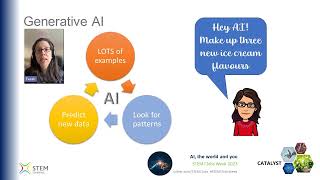
What's the difference between a pigeon and AI? Dr Farah Egby, Exscientia. Cat Mag Live!
STEM Learning

Pharmatech: The Art of AI-Driven Drug Design with Exscientia
AZoNetwork

All Drugs Will Be Designed Using Artificial Intelligence By 2030 with Exscientia
Ai4

Exscientia Company Overview: AI-Designed Drugs in Clinical Trials
HealthTech Explorers

Exscientia SCRIP 01
Informa Content & Media Support
Frequently Asked Questions


Investors who backed Exscientia AI-driven
Funded through the company that built this tool.