BodyGuardian Remote Monitoring System vs PMcardio

AI Verdict
Choose BodyGuardian Remote Monitoring System if…
Choose BodyGuardian Remote Monitoring System if you need continuous, long-term monitoring of ambulatory patients for non-lethal cardiac arrhythmias. This wearable device excels at collecting comprehensive physiological data (ECG, heart rate, respiration rate, activity level) over extended periods, allowing for flexible monitoring that combines mobile cardiac telemetry, event monitoring, and Holter monitoring in one device. It's ideal for detecting infrequent or transient arrhythmias that might be missed during shorter in-clinic observations, providing a constant connection between patients and their care teams.
View BodyGuardian Remote Monitoring System →Choose PMcardio if…
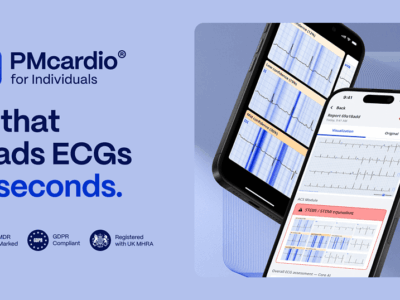
Choose PMcardio if you require rapid, AI-powered interpretation of 12-lead ECGs at the point of care for immediate assessment of over 50 cardiac conditions. This mobile and web-based platform is particularly well-suited for acute care settings, emergency medicine, and primary care where quick, expert-level ECG analysis is crucial for timely diagnosis and treatment decisions, including the detection of critical conditions like STEMI/OMI and reduced LVEF.
View PMcardio →Reviewed by Pouyan Golshani, MD — Interventional Radiologist
Quick Comparison
| Feature | BodyGuardian Remote Monitoring System | PMcardio |
|---|---|---|
| Pricing | Not publicly available | Freemium |
| Deployment | Cloud-based platform with wearable device and mobile application components. | Mobile app (iOS and Android), Web platform, Enterprise integrations with EHR/CVIS and EMS systems |
| FDA Status | 1 AI-estimated | Pending AI-estimated |
Head-to-Head
AI-generated assessment across six dimensions based on each tool's documented features and compliance posture. Grounded in public data — not a substitute for hands-on evaluation.
Usability
TieBodyGuardian Remote Monitoring System (Tool A) emphasizes a patient-centered design with a small, waterproof, and comfortable wearable sensor that allows for uninterrupted daily activities like showering and exercise. This focus on patient comfort and ease of wear likely leads to higher compliance and a better overall user experience for the patient. While PMcardio (Tool B) offers a user-friendly mobile app, the primary interaction is through taking photos of ECGs, which may introduce an extra step and potential for error compared to continuous, automatic data collection from a wearable device.
Clinical Value
TiePMcardio (Tool B) demonstrates superior clinical value by interpreting over 50 cardiac conditions, including advanced detection of STEMI/OMI and reduced LVEF, and has been validated in more than 25 clinical studies. Its AI explainability feature (ECGxplainu2122) also enhances clinician trust and understanding of the diagnoses. While BodyGuardian (Tool A) is FDA-cleared for detecting and monitoring non-lethal cardiac arrhythmias, its published clinical validation focuses primarily on heart rate and respiration rate accuracy, with some doubts regarding the clinical meaning and validity of activity and respiration data.
Pricing & Value
TiePMcardio (Tool B) offers a transparent freemium model, including a free plan with 5 ECG analyses per month and a Pro Plan for unlimited use and advanced features at a publicly available price. This allows users to try the product and choose a plan that fits their needs. BodyGuardian (Tool A) does not publicly disclose its pricing, requiring direct contact with the vendor, which can be a barrier to understanding its value proposition.
Enterprise Readiness
TiePMcardio (Tool B) explicitly offers enterprise integrations with EHR/CVIS and EMS systems, along with custom pricing and features for organizations, indicating a strong focus on large-scale deployment. It also highlights configurable user permissions and security protections for enterprise clients. BodyGuardian (Tool A) mentions a cloud-based platform and physician review via web portal or dedicated mobile application, and EMR integrations, suggesting enterprise capabilities, but PMcardio's offerings are more explicitly detailed for enterprise-level deployment.
Innovation
TiePMcardio (Tool B) showcases greater innovation with its AI explainability feature (ECGxplainu2122), providing visual heatmaps to illustrate the AI's decision-making process, which fosters trust and serves as an educational tool. It also focuses on advanced detection of subtle ECG patterns like Occlusion Myocardial Infarction (OMI) that can be missed by standard interpretation. BodyGuardian (Tool A) focuses on combining multiple monitoring technologies into a single wearable device and continuous data transmission, which is innovative in its own right, but PMcardio's explainable AI and advanced diagnostic capabilities represent a more cutting-edge AI innovation.
Support & Docs
TiePMcardio (Tool B) provides readily accessible resources such as a Help Center, FAQ, and blog, indicating a comprehensive approach to user support and documentation. They also offer direct support channels for individuals and organizations. BodyGuardian (Tool A) offers patient resources, including videos, guides, and FAQs, and mentions customer service for billing, but a comprehensive suite of documentation and support for clinicians or enterprise users is not as explicitly detailed.
Feature-by-Feature
Detail beyond the Quick Comparison summary. For pricing, deployment, BAA, FDA, and HIPAA see the Overview tab.
| Feature | BodyGuardian Remote Monitoring System | PMcardio |
|---|---|---|
| Company | Preventice Technologies (now Boston Scientific Cardiac Diagnostics) | Powerful Medical |
| Key Functionality | Wearable body sensor for continuous cardiac monitoring; Detects and monitors non-lethal cardiac arrhythmias; Collects ECG, heart rate, respiration rate, and activity level data; Combines mobile cardiac telemetry, event monitoring, and Holter monitoring in one device. | Instant AI-powered ECG interpretations; Detection of 50+ ECG findings (including STEMI/OMI, rhythms, reduced LVEF, conduction disorders); Automatic analysis of heart rate, axis, P wave, PR, QRS, and QT/QTc intervals. |
| Specialties | Cardiology, Pediatrics | Cardiology, Emergency Medicine, Internal Medicine |
| AI/Analytics | Sophisticated algorithms, including BeatLogic deep learning AI for accurate rhythm analysis | AI that reads ECGs in seconds; Queen of Heartsu2122 - STEMI and OMI Detection; LVsenseu2122 - Reduced LVEF Detection; ECGxplainu2122 - Visual AI Explainability with heatmaps; Core AI - Detects 36 core diagnoses |
Videos
Demos, reviews, and walkthroughs featuring BodyGuardian Remote Monitoring System and PMcardio.