
AI Workbench
Overview
Deep Genomics’ AI Workbench is an artificial intelligence-driven drug discovery platform focused on identifying and developing RNA-based therapies for genetic diseases.
The AI Workbench is primarily for researchers and pharmaceutical companies engaged in the preclinical discovery and development of genetic medicines. It is designed to accelerate the process of identifying therapeutic targets and designing oligonucleotide drug candidates. The platform has been applied to conditions such as Wilson disease, refractory gout, frontotemporal dementia, Niemann-Pick disease, pediatric epilepsy, and Parkinson’s disease.
In a research or drug development workflow, the AI Workbench integrates deep learning models with biological datasets to predict how genetic mutations cause disease at a molecular level. It then designs oligonucleotide therapies aimed at restoring normal cellular function by modulating RNA processing. This includes capabilities for analyzing vast genomic datasets, pinpointing underlying genetic mechanisms, and exploring billions of potential oligonucleotide sequences. The platform aims to reduce the time and cost associated with identifying drug candidates compared to traditional methods.
Notable capabilities include:
- Target Identification: Algorithms scan thousands of diseases and mutations to identify precise disease-causing mechanisms.
- Oligonucleotide Design: Tools explore numerous potential sequences to correct genetic defects.
- BigRNA Foundation Model: An AI foundation model for RNA biology that predicts tissue-specific regulatory mechanisms of RNA expression and the effects of variants and candidate therapeutics.
- Accelerated Discovery: Demonstrated ability to identify drug candidates in a shorter timeframe compared to traditional approaches.
Reviewed by Pouyan Golshani, MD — Interventional Radiologist
Key Features
- AI-driven drug discovery platform (AI Workbench)
- Biological Foundation Model (BioFM) Platform for scalable molecular design and target biology discovery
- Decodes RNA biology to identify novel targets, mechanisms, and molecules
- Predicts effects of genetic mutations and designs oligonucleotide therapies
- Accelerates drug discovery timeline (e.g., 18 months from target identification to drug candidate for Wilson disease)
- High preclinical success rates (e.g., 70% vs. pharma's 10-20%)
- Lab-in-the-loop workflows for data generation and experimental validation
- BigRNA foundation model for RNA biology, capable of analyzing 1 million DNA letters at base-resolution
- Focus on steric blocking oligonucleotides (SBOs) for programmable therapies
- Integrated AI into all business activities, from target identification to molecule design and safety assessment
Use Cases
- Discovery and design of genetic medicines
- Identification of novel targets for genetically defined diseases
- Development of RNA-based drug candidates
- Accelerating drug development for rare and complex genetic ailments
- Treating metabolic disorders (e.g., Wilson disease, refractory gout)
- Addressing neurological conditions (e.g., frontotemporal dementia, Parkinson's disease)
What Physicians Need to Know
Physicians should be aware that Deep Genomics' AI Workbench is primarily a drug discovery and development platform focused on RNA-based therapeutics for genetically defined diseases. While it aims to accelerate the identification of effective and safe treatments, it is not a diagnostic tool for patients or for genetic counseling. The platform's capabilities in genomic data integration and target identification can lead to novel therapeutic candidates, particularly for rare and complex genetic conditions. For clinical trial matching, separate AI-powered solutions exist that leverage genomic and clinical data to identify suitable patients.
The Deep Genomics AI Workbench integrates deep learning, automation, advanced biomedical knowledge, and massive amounts of in vitro and in vivo data. It is complemented by tools like BigRNA for predicting RNA expression patterns and GenomeKit for streamlining genomic sequence analysis. The platform is designed to be a comprehensive suite of systems, with AI integrated into all business activities from target identification to molecule design and safety assessment.
Details
| Category | Drug Discovery & Research |
| Pricing | Unknown — unknown |
| Compliance | |
| BAA Available | Unknown AI-estimated |
| HIPAA Compliant | Unknown AI-estimated |
| FDA Status |
Unknown AI-estimated Deep Genomics is focused on drug discovery and development, with drug candidates in preclinical and early clinical stages. The company aims to advance programs into human testing. |
| Integrations | |
| EHR | Not specified |
| Specialties | Neurology, Oncology, Pediatrics |
What the Web Says
Deep Genomics' AI Workbench is a platform designed to accelerate the discovery and development of genetic therapies for diseases, particularly those without current cures. It leverages AI, machine learning, RNA biology, and automation to analyze vast genomic data, identify disease-causing mutations, and design oligonucleotide therapies. The platform has evolved through several versions, with AI Workbench 3.0 aiming to support drug discovery for more complex, multi-gene diseases.
Overall: PositiveStrengths
- Accelerates drug discovery and development, reducing the time from target identification to drug candidate.
- Identifies novel therapeutic targets and mechanisms for genetically defined diseases.
- Enhances accuracy and reproducibility in predicting drug compound effectiveness.
- Integrates advanced biological and medical knowledge with proprietary and public datasets.
- Enables efficient searching of a vast oligonucleotide therapeutic design space.
- Has achieved a 70% preclinical success rate, significantly higher than the traditional pharma rate of 10-20%.
Limitations
- Currently focuses on central nervous system (CNS) and metabolic diseases, with research on other disease types in development.
- Deep Genomics is not a genetic testing company and does not offer commercial tests, diagnoses, or genetic counseling to patients.
- Limited public reviews from physicians, healthcare IT, or general tech reviewers outside of company-published or industry-focused articles.
- Some AI workbenches, in general, have been noted to have issues with mobile optimization and can lead to higher costs for power users if not carefully monitored.
- Challenges exist in integrating multimodal data (genomic sequences, imaging, clinical records) into unified and clinically robust pipelines for generative AI in medical genomics.
Based on reviews from: Deep Genomics review - 7 facts you should know [DECEMBER 2021], Deep Genomics u2013 Leveraging AI technology to rapidly discover and develop genetic therapies for unmet medical needs - CIO Bulletin, Deep Genomics: how the combination of precision medicine and AI is revolutionizing drug discovery | by Amplitude Ventures - Medium, Deep Genomics - Global Recognition Awards, Deep Genomics: AI-Driven RNA Therapeutics & Drug Discovery - CIO Bulletin, Deep Genomics Expands AI Platform for RNA Therapies - Drug Discovery and Development, Deep Genomics, now flush with cash, plans to take dozens of RNA therapies to the clinic, DeepBench Reviews 2026: Details, Pricing, & Features - G2, I built an AI workbench to free you from usage cap anxiety and enable quick model comparisons - Reddit, A systematic review on the generative AI applications in human medical genetics - PMC
Last updated: 2026-08-23
Ratings & Reviews
No reviews yet. Be the first to review this tool!
Rate AI Workbench
Press & Coverage
Videos
Product demos, reviews, and walkthroughs for AI Workbench.
Founder Stories: Brendan Frey, Deep Genomics & Changing the Course of Genomic Medicine
Axial

Founder Stories: Brendan Frey, Co-Founder and CEO of Deep Genomics
Axial

AI Workbench - Predicting Testable Biological Hypotheses with Deep Learning
REu2022WORK

Shreshth Gandhi, Deep Genomics - End to End Genetic Drug Development
REu2022WORK

Claude Science: The AI Workbench Behind a 90% Research Cut
thousandmilesAI
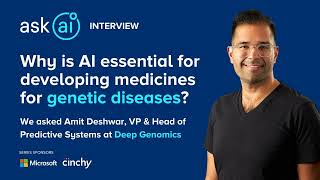
Why is AI essential for developing new medicines for genetic diseases?
Ask AI