BriefCase vs ZoeMD

AI Verdict
Choose BriefCase if…
Choose BriefCase if your large hospital or health system needs an AI-powered solution to rapidly communicate critical medical imaging findings and streamline collaboration among care teams. It excels at prioritizing urgent cases like intracranial hemorrhages or pulmonary embolisms detected in CT scans, ensuring timely attention and follow-up.
View BriefCase →Choose ZoeMD if…
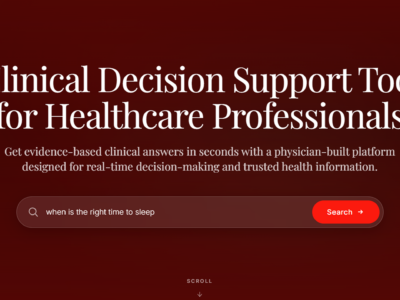
Choose ZoeMD if you are a healthcare professional seeking an evidence-based medical AI platform for real-time clinical decision support and quick access to cited clinical answers. It is ideal for retrieving evidence on diagnoses, treatments, and dosing, as well as generating clinical summaries and comparing treatment options across a wide range of specialties.
View ZoeMD →Reviewed by Pouyan Golshani, MD — Interventional Radiologist
Quick Comparison
| Feature | BriefCase | ZoeMD |
|---|---|---|
| Pricing | Enterprise pricing starts at approximately $50,000 per site per year and scales modularly. | Freemium |
| Deployment | Aidoc's aiOS™ platform integrates seamlessly into a facility’s existing IT infrastructure, including PACS, EHR, VNA, scheduling systems, and radiology worklists, using standard communication protocols (DICOM, HL7, FHIR). It can be set up in 2 to 3 weeks, with some implementations as fast as 24 hours for rapid and efficient deployment. | Cloud |
| FDA Status | Cleared AI-estimated | Not applicable AI-estimated |
| HIPAA | Yes AI-estimated | Yes AI-estimated |
Head-to-Head
AI-generated assessment across six dimensions based on each tool's documented features and compliance posture. Grounded in public data — not a substitute for hands-on evaluation.
Usability
TieBriefCase is integrated into the Aidoc platform and offers mobile access for care team collaboration, suggesting a streamlined workflow for existing Aidoc users. ZoeMD also offers multi-platform access (desktop, tablet, mobile) and emphasizes a clean, intuitive interface for quick access to information. Without direct user feedback or comparative studies on their interfaces, it's difficult to definitively declare a winner in usability.
Clinical Value
BriefCaseAidoc's BriefCase is an FDA-cleared solution for critical medical imaging findings, with multiple FDA clearances across various acute pathologies like stroke, PE, and ICH. It has been validated through over 230 published studies and abstracts, demonstrating increased disease awareness, efficiency gains, and improved turnaround times. ZoeMD, while providing evidence-based clinical answers from over 39 million sources and offering features like Smart Differential Diagnosis and Safety Risk Alerts, is not FDA-cleared for diagnostic use and positions itself as a decision support tool rather than a diagnostic one.
Pricing & Value
ZoeMDZoeMD offers a freemium model, including a free tier with limited queries and a 'Pro' version listed at $0 (potentially an introductory offer or placeholder), making it highly accessible for individual clinicians. BriefCase, on the other hand, uses an enterprise pricing model, customized based on hospital size and modules, with a baseline starting around $50,000 per site per year, making it a significant investment primarily for large institutions.
Enterprise Readiness
BriefCaseAidoc's BriefCase is designed for large hospitals and health systems, with over 500 global customers and robust enterprise features like seamless integration with PACS, RIS, and EHR systems, comprehensive audit trails, and SOC2, GDPR, and HIPAA compliance. ZoeMD, while HIPAA compliant and serving over 1,500 customers, appears to cater to a broader 'any' target size and lacks explicit mentions of the deep integration capabilities crucial for large-scale hospital deployments.
Innovation
TieBriefCase leverages AI for critical finding detection and communication, integrating with existing hospital workflows to prioritize urgent cases. ZoeMD offers an AI platform for evidence-based clinical answers, smart differential diagnosis, and a citation engine, aiming to reduce hallucination risk by linking directly to sources. Both tools demonstrate innovation in their respective domains of AI application within healthcare, one focusing on imaging workflow and the other on clinical knowledge retrieval.
Support & Docs
BriefCaseBriefCase, as an enterprise solution from Aidoc, implies comprehensive support and documentation for large-scale deployments, integrations, and ongoing operations, though specific details aren't provided in the initial facts. ZoeMD mentions 'priority support' for its Pro users and offers a user manual and contact support through its internal portal, but the depth and breadth of enterprise-level support typically offered by a company like Aidoc for its complex integrations are likely more extensive.
Feature-by-Feature
Detail beyond the Quick Comparison summary. For pricing, deployment, BAA, FDA, and HIPAA see the Overview tab.
| Feature | BriefCase | ZoeMD |
|---|---|---|
| Name | BriefCase | ZoeMD |
| Company | Aidoc Medical | ZoeMD |
| Description | FDA-cleared AI-powered communication and collaboration solution integrated into the Aidoc platform, designed to streamline the sharing of critical medical imaging findings among care teams. | Evidence-based medical AI platform providing cited clinical answers and real-time decision-making support for healthcare professionals. |
| Mobile App | Both | 1 |
| API Available | Yes | No |
| Target Size | Large hospitals and health systems | Any |
Videos
Demos, reviews, and walkthroughs featuring BriefCase and ZoeMD.