Stethee Pro 1 vs EchoNext

AI Verdict
Choose Stethee Pro 1 if…
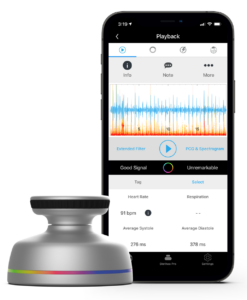
Choose Stethee Pro 1 if you need a highly portable, AI-enabled digital stethoscope for real-time cardiac and respiratory vital sign analysis during patient examinations or telemedicine consultations. It excels at quickly capturing and visualizing heart and lung sounds with advanced amplification and filtering, providing quantitative data for immediate clinical insights and secure sharing.
View Stethee Pro 1 →Choose EchoNext if…
Choose EchoNext if your primary goal is to screen for hidden structural heart disease, including heart failure, valve disease, and pulmonary hypertension, using standard 12-lead ECGs. This AI tool is ideal for broad access screening in various clinical settings, from major hospitals to community practices, to identify patients who require further evaluation with an echocardiogram.
View EchoNext →Reviewed by Pouyan Golshani, MD — Interventional Radiologist
Quick Comparison
| Feature | Stethee Pro 1 | EchoNext |
|---|---|---|
| Pricing | $499 (device); subscription for stethee central web portal | Starts at $600/month |
| Deployment | Cloud-based (Stethee Central Web Portal) and mobile application (iOS/Android) | Available through the OpenEvidence clinical decision support platform. |
| BAA Available | Unknown | Yes AI-estimated |
| FDA Status | 1 AI-estimated | Yes AI-estimated |
| HIPAA | Unknown | Yes AI-estimated |
Head-to-Head
AI-generated assessment across six dimensions based on each tool's documented features and compliance posture. Grounded in public data — not a substitute for hands-on evaluation.
Usability
Stethee Pro 1Stethee Pro 1 is designed for ease of use, capturing cardiac and respiratory vital signs in just 20 seconds, significantly reducing the time compared to traditional methods. Its intuitive mobile and web applications, along with a patented user interface, make data visualization, recording, playback, and sharing straightforward. EchoNext, while integrated into the OpenEvidence platform, is an AI analysis tool for existing ECGs, and its direct user interaction for data input is less prominent than Stethee Pro 1's device-centric approach.
Clinical Value
EchoNextEchoNext demonstrates superior clinical value by detecting hidden structural heart disease from standard ECGs with higher accuracy than cardiologists, even those assisted by AI. This capability can lead to earlier diagnosis of serious conditions like heart failure and valve disease, potentially improving patient outcomes significantly. Stethee Pro 1 offers real-time vital sign analysis and amplification, which is valuable for diagnostics and telemedicine, but EchoNext's ability to uncover previously undiagnosed conditions from a routine test presents a more profound clinical impact.
Pricing & Value
Stethee Pro 1Stethee Pro 1 has a clear upfront device cost of $499, with a subscription for its web portal. EchoNext's pricing starts at $600/month with tiered plans and additional fees, which could be a higher barrier to entry for smaller practices or individual clinicians. While EchoNext's value in detecting hidden heart disease is high, Stethee Pro 1's transparent and lower initial cost makes it more accessible.
Enterprise Readiness
EchoNextEchoNext is deployed through the OpenEvidence clinical decision support platform, which serves over 650,000 U.S. physicians, indicating a strong existing infrastructure for broad adoption and integration within healthcare systems. Pathway Labs is also actively expanding deployment across health systems and growing its clinical and commercial teams. Stethee Pro 1 offers a HIPAA-compliant web portal and data sharing, but its enterprise readiness appears more focused on individual clinician use and telemedicine rather than large-scale health system integration.
Innovation
EchoNextEchoNext represents a significant innovation by utilizing AI to detect a broad range of hidden structural heart diseases from standard ECGs, a capability that has historically been limited to more expensive and less accessible imaging techniques like echocardiography. This approach has shown to outperform cardiologists in diagnostic accuracy. Stethee Pro 1 is innovative as the world's first AI-enabled wireless digital stethoscope, offering real-time vital sign analysis and advanced amplification, but EchoNext's ability to derive such critical insights from a widely available and inexpensive test like an ECG is a more disruptive innovation in early disease detection.
Support & Docs
TieBoth tools provide documentation and support. Stethee Pro 1 offers a comprehensive online support section with getting started guides, FAQs, and tutorials for its hardware and software. EchoNext, being integrated into the OpenEvidence platform and developed by a company with strong academic ties, likely benefits from robust technical and clinical support, though specific details on publicly available documentation are less explicit.
Feature-by-Feature
Detail beyond the Quick Comparison summary. For pricing, deployment, BAA, FDA, and HIPAA see the Overview tab.
| Feature | Stethee Pro 1 | EchoNext |
|---|---|---|
| Name | Stethee Pro 1 | EchoNext |
| Company | M3DICINE Pty Ltd. | Pathway Labs |
| Description | Stethee Pro 1 is an FDA-cleared, AI-enabled wireless digital stethoscope system by M3DICINE, providing real-time cardiac and respiratory vital sign analysis, advanced amplification, and secure data sharing for enhanced diagnostics and telemedicine. | EchoNext is an FDA-cleared AI tool from Pathway Labs that analyzes standard ECGs to detect hidden structural heart disease, including heart failure, valve disease, and pulmonary hypertension. |
| Key Features | AI-enabled wireless digital stethoscope system, Captures cardiac and respiratory vital signs in 20 seconds, Measures systole, diastole, heart cycle durations, and respiration rate, Sophisticated sound amplification (up to 96x) and 5 proprietary digital filters, Real-time visualization of heart (PCG, AIDA Cycle, AIDA Energy) and lung sounds (spectrogram), Mobile app (iOS and Android) and HIPAA compliant Central Web Portal, Secure data capture, analysis, recording, playback, and sharing capabilities, Automatic geo-location and environmental data tagging (humidity, temperature, pollen count, pollution) | AI-powered ECG analysis, Detection of hidden structural heart disease, Identifies heart failure risk, Screens for valve disease, Detects pulmonary hypertension indicators, Utilizes standard 12-lead ECGs, FDA-cleared technology, Non-invasive diagnostic support |
Videos
Demos, reviews, and walkthroughs featuring Stethee Pro 1 and EchoNext.