AI Metrics

by AI Metrics  · Based in United States → — Radiology AI Created By A Radiologist Augments Your Team.
Oncology Radiology

Contact for pricing
Regulatory Status Disclosed

Overview

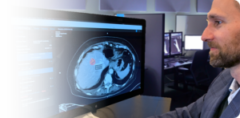
AI Metrics is an AI-enabled radiology software platform designed to optimize and accelerate advanced cancer imaging evaluations. Developed to address radiologist burnout and workflow inefficiencies, the tool is primarily built for radiologists and oncologists operating in clinical imaging centers, hospitals, and oncology practices.

The platform integrates into the clinical radiology workflow to streamline the complex, time-consuming process of cancer reads. Key capabilities and workflow features include:

  • AI-Guided Evaluation: Serves as an assistive tool during image interpretation, helping radiologists evaluate advanced cancer scans with increased efficiency.
  • Workflow Optimization: Minimizes the need to constantly switch between exams, reports, and worklists, allowing radiologists to maintain focus on the patient images.
  • Automated Reporting: Automatically generates structured, visualized patient reports during the imaging study, providing clear visual data preferred by oncologists over standard text-based reports.
  • Clinical Focus: Specifically targets complex, multi-slice oncology follow-ups and CT imaging to reduce manual measurement and reporting effort.

Reviewed by Pouyan Golshani, MD — Interventional Radiologist

Key Features

  • AI-assisted tumor measurement and labeling
  • Guided workflows for cancer evaluation
  • Automated patient report generation
  • Rapid review of prior and preliminary reads
  • Tracking of incidental findings
  • DICOM compliant image data processing
  • Interoperability with PACS, RIS, and EMR
  • Cloud-based installation
  • Radiomics and imaging biomarker development
  • Export of tumor segmentations

Use Cases

  • Accelerating cancer imaging reads
  • Improving accuracy and consistency in radiology reports
  • Reducing radiologist burnout
  • Enhancing communication between radiologists and oncologists
  • Staging chronic liver disease with Liver Surface Nodularity (LSN)
  • Clinical trial assessments and research

What Physicians Need to Know

Evidence Base (guidelines, literature scope)
AI-powered clinical decision support (CDS) systems learn from vast amounts of clinical data, including patient records, adverse event reports, and biomedical literature, to provide evidence-based recommendations. They can synthesize immense, often conflicting, medical research into practical guidance. Responsible AI-CDS systems leverage curated, peer-reviewed content and offer transparency by providing direct links to source materials and clear ratings of evidence quality.
Clinical Validation Studies
Rigorous, end-to-end clinical validation is crucial for AI-CDSS, and it is an iterative process to ensure long-term accuracy and adaptation to new data and user feedback. Real-world clinical trials are essential to prove safety and effectiveness across diverse conditions and populations. AI models have demonstrated improved detection rates in areas like breast cancer screening and earlier nodule detection in lung cancer.
Alert Fatigue Management
AI-powered CDSS aims to mitigate alert fatigue by learning from specific patient populations, understanding clinical context, and providing probability-based recommendations rather than numerous, often irrelevant, binary warnings. Machine learning models are being developed to predict physician responses and filter non-essential alerts, thereby improving alert specificity and allowing clinicians to focus on vital alerts.
Override Rate Data
Traditional CDSS often experiences high override rates (up to 90-96%) due to irrelevant alerts. AI systems strive to reduce these rates by offering more relevant and contextualized alerts. Studies indicate that transparent AI reasoning and high confidence factors can significantly decrease override rates (e.g., from 99% to 1.7%). Systems should log both AI suggestions and physician overrides, along with the rationale, as high override rates can signal a need for model retraining or refinement.
Drug Interaction Checking
AI tools can rapidly analyze large datasets to identify harmful drug interactions, leading to faster decisions and fewer misses compared to traditional methods. They are capable of screening multi-drug regimens for potential interaction categories, explaining the mechanisms behind flagged interactions, suggesting clinical management strategies, and identifying drug-disease interactions that traditional databases might miss. Some AI models have achieved high accuracy (e.g., 99.9%) in predicting drug-drug interactions.
Differential Diagnosis Support
AI-powered tools can assist with clinical reasoning by generating organized differential diagnosis lists, complete with supporting and opposing features, and recommending appropriate workups. While AI models can perform well on final diagnoses, they have shown limitations in generating comprehensive differential diagnoses, sometimes converging prematurely on a single answer, highlighting the need for careful clinician supervision.
Guideline Update Frequency
AI-driven approaches enable the creation of 'living guidelines' that evolve continuously with emerging medical knowledge, ensuring healthcare providers always have access to the most current, evidence-based recommendations. These systems can automate data analysis and provide continuous updates, significantly reducing the resource burden traditionally associated with guideline development and maintenance.
Clinical Workflow Integration
Seamless integration of AI into existing clinical systems, such as Electronic Health Records (EHRs) and Picture Archiving and Communication Systems (PACS), is crucial for operational efficiency and clinician adoption. AI can optimize workflows by automating repetitive tasks, expediting decision-making, and streamlining complex processes, thereby freeing clinicians for high-value patient care. Improper integration can lead to workflow disruption and increased cognitive load.
Decision Audit Trail
AI-powered CDS systems must maintain tamper-evident audit trails that document every AI-assisted clinical decision. These logs should include details such as timestamps, user identity, data accessed, the AI model version, prompts used, confidence scores, and the clinician's action (acceptance or override) with rationale. This is vital for accountability, regulatory compliance (e.g., HIPAA), and detecting model drift over time.
Physician Tip

Critically appraise AI recommendations, especially in high-risk scenarios like differential diagnosis, as AI models can still struggle with nuanced clinical reasoning. Understand the evidence base and transparency of the AI tool; look for systems that provide clear explanations and source citations for their recommendations. Actively provide feedback on AI alerts and recommendations to help improve model performance and reduce alert fatigue. Recognize that AI is a support tool, not a replacement for human judgment; maintain a 'human-in-the-loop' approach, ensuring you can independently review the basis for recommendations.

Successful AI integration requires interoperability with existing EHRs and PACS systems, often utilizing standards like Fast Healthcare Interoperability Resources (FHIR). Consider AI components that can directly integrate into existing clinical systems to avoid workflow disruption and increased cognitive load. AI tools should be designed to complement, not disrupt, current clinical workflows, potentially through ambient AI for documentation or pre-visit summaries. Ensure robust data security, privacy, and compliance (e.g., HIPAA) during integration, with end-to-end data encryption and audit controls.

Details

Category Oncology AI, Radiology & Imaging AI
Pricing Contact for pricing
DeploymentCloud-based, integrates with existing PACS, RIS, and EMR systems.
Compliance
BAA AvailableUnknown AI-estimated
HIPAA CompliantUnknown AI-estimated
FDA Status 1 AI-estimated

AI Metrics, LLC received FDA 510(k) clearance (K202229) on December 22, 2020, for its image analysis platform, including the AI Mass application, which assists radiologists with image analysis and reporting of advanced cancer over time. The company also garnered FDA 510(k) clearance for its Liver Surface Nodularity (LSN) virtual liver biopsy software in November 2020, designed to assist physicians in staging chronic liver disease.

Integrations
EHR Not specified
Specialties Oncology, Radiology

What the Web Says

AI Metrics, founded by a radiologist, aims to improve radiology workflows and combat burnout in advanced cancer imaging by offering faster cancer reads, AI guidance for improved accuracy and efficiency, and simplified workflows. Their automated reporting generates clear, visualized patient reports that are preferred by oncologists. While there's general positive sentiment around AI's potential in healthcare for efficiency and accuracy, concerns exist regarding its ability to handle nuanced clinical reasoning and potential biases in performance metrics.

Overall: Mixed

Strengths

  • Faster cancer reads, potentially cutting read times in half.
  • AI guidance acts as an extra set of eyes, improving accuracy and efficiency for radiologists.
  • Simplified workflows reduce tedious tasks and constant switching between exams, reports, and worklists.
  • Automated reporting generates clear, visualized reports preferred by oncologists.
  • Potential to reduce administrative burden and improve clinical accuracy in healthcare.
  • Can help identify early-stage conditions and support data-driven decisions.

Limitations

  • AI models may struggle with early-stage, open-ended clinical reasoning and differential diagnoses.
  • Concerns about AI encoding human biases, potentially leading to health equity issues.
  • Risk of AI creating bottlenecks if doctors have to review too many flagged cases.
  • Potential for data privacy and regulatory exposure risks when using external AI tools with sensitive patient data.
  • High rates of AI-generated reviews on platforms like G2 and Capterra raise questions about review authenticity.
  • Concerns about AI-linked performance metrics in other industries potentially disadvantaging employees on leave or with disabilities.

Based on reviews from: AI Metrics, Reddit, Residency Advisor, Medical Economics, The Public Health AI Handbook, JetBase, G2, Capterra, Originality.AI, SE Ranking, Gartner, Gadget Review

Last updated: 2026-07-17

Ratings & Reviews

No reviews yet. Be the first to review this tool!

Rate AI Metrics

Clinical Value
Ease of Use
Integration
Support & Docs
Value for Money
No press coverage or publications on file yet. Know of some? Suggest an edit →

Videos

Product demos, reviews, and walkthroughs for AI Metrics.

View all on YouTube

Frequently Asked Questions

The effectiveness of AI in clinical decision support is measured through various metrics, including improvements in diagnostic accuracy, reductions in medical errors, and enhanced operational efficiency like streamlined workflows and time savings. Key performance indicators also encompass clinical outcomes such as reduced readmission rates and improved treatment plans, alongside patient satisfaction.
Ensuring AI compliance involves rigorous validation of training data, transparent evidence sourcing, and continuous safety monitoring throughout the AI's lifecycle. AI systems must adhere to regulatory frameworks like HIPAA and GDPR, with regulatory bodies like the FDA emphasizing fairness, equity, and transparency in AI tools. Regular audits and documented bias testing are crucial to verify alignment with medical guidelines and ethical standards.
Traditional clinical decision support systems rely on human expertise, checklists, and established medical guidelines. While these methods offer a personal touch, they can be susceptible to human error and inefficiencies in processing large data volumes. AI-based systems excel in speed, pattern recognition, and data analysis, potentially surpassing human performance in specific diagnostic areas, though they still require human oversight and quality data for reliable outcomes.
The implementation costs for AI clinical decision support systems can range from $50,000 to over $1,000,000, covering hardware, software, data integration, and staff training, with annual maintenance adding 15-20%. These costs are often justified by a rapid return on investment (ROI) typically seen within 14-16 months, driven by significant gains in diagnostic accuracy, reductions in medical errors, and improved clinician efficiency.
Known limitations of AI in clinical decision support include potential data bias leading to unequal care, faulty algorithms causing misdiagnoses, and the risk of clinician over-reliance, which could diminish critical thinking. These issues can manifest in performance metrics through poor calibration (predicted probabilities not matching observed outcomes), inadequate performance across diverse patient subgroups, or a lack of measured clinical utility beyond basic accuracy.
Transparency in healthcare AI involves making its design, functioning, and decision-making processes understandable, including data sources and reasoning. Explainable AI (XAI) aims to provide clear insights into how recommendations are generated, often by citing sources and showing the underlying logic. Physicians can independently verify these systems through clear documentation, auditing for bias, and continuous monitoring of performance and compliance.

Related Tools

Surgical Reality Viewer
Surgical Reality
Oncology AI
Surgical Reality offers CE- and FDA-certified AI-powered 3D medical imaging and surgical planning software that transforms CT scans into patient-specific 3D models for thoracic surgery, enhancing precision in complex lung procedures.
Cancer Copilot
Color Health
Oncology AI
Color Health's Cancer Copilot, built with OpenAI, helps oncologists and clinicians identify and order workup needs for recently diagnosed patients, aiming to speed up time to cancer treatment. This AI tool is designed to expand cancer expertise, speed decisions, and improve care, reducing a two-hour clinical task to 10 minutes with over 95% validated accuracy.
Cercare Medical Oncology Virtual Expert
Cercare Medical
Neurology AI
Cercare Medical's Oncology Virtual Expert is an AI-powered brain tumor segmentation module that provides fast, consistent, and semi-automated tumor analysis from standard MRI data, designed for on-premise deployment within existing clinical radiology workflows.
Synapse Lung Nodule AI
Fujifilm Corporation
Oncology AI
Fujifilm's Synapse Lung Nodule AI is an AI software algorithm for detecting pulmonary nodules on CT imaging, aiming to support early detection and treatment of lung cancer.
RadOncAI
Informai (for RadOncAI product) / Global Network for AI in Radiation Oncology (for RadoncAI.net)
Oncology AI
RadOncAI is an AI solution by Informai designed to optimize and enhance radiation oncology workflows, improving efficiency and accuracy in treatment planning and delivery.
FAITH project (Fatigue Therapy – AI-supported Diagnosis and Therapy of Tumour-associated Fatigue Syndrome)
Fimo Health GmbH (Consortium Leader)
Mental & Behavioral Health AI
The FAITH project is developing an AI-based solution for the diagnosis and therapy of tumor-associated fatigue syndrome in cancer patients. It uses wearable sensors, a smartphone app, and artificial intelligence to provide individualized therapy recommendations and monitor mental health.

See all Oncology AI tools →

Suggest an Edit → | Last Verified: 2026-04-17 | First Added: 2026-04-17
AI Tool Finder
AI-powered search. Results may not be comprehensive.