AusculThing ACC

by AusculThing Oy  · Based in Finland → — Reinventing auscultation with AI-powered heart sound analysis.
Cardiology Internal Medicine Pediatrics

Contact vendor
Regulatory Status Disclosed

Overview

AusculThing ACC is an FDA-cleared software developed by AusculThing Oy, designed to assist healthcare providers in the accurate and efficient interpretation and evaluation of heart sounds in adult and pediatric patients. The software utilizes an electronic stethoscope, specifically the Thinklabs One, to record, display, and analyze acoustic signals of the heart.

At its core, AusculThing ACC features an AI-based algorithm, trained on a proprietary database of high-quality echocardiogram data, which enables advanced murmur detection. It categorizes heart sounds as either “abnormal” if any heart murmur is identified, or “normal” if no murmurs or only benign murmurs are present. The software provides both acoustic and visual playback of heart sounds, supporting clinical decision-making.

It is important to note that AusculThing ACC is intended as a decision-support tool and not a standalone diagnostic device. Its analysis is most effective when used in conjunction with a physician’s expertise and other relevant patient data. The software operates as a mobile app, enhancing accessibility and user-friendliness.

Reviewed by Pouyan Golshani, MD — Interventional Radiologist

Key Features

  • AI-based algorithm for heart sound analysis
  • Advanced heart murmur detection and categorization (abnormal/normal)
  • Records, displays, and analyzes heart sounds
  • Acoustic and visual playback of heart sounds
  • Decision-support software for healthcare providers
  • Intended for use in adult and pediatric patients
  • Requires Thinklabs One electronic stethoscope for data acquisition
  • Mobile app deployment for accessibility
  • High performance metrics (e.g., Accuracy 93%, Sensitivity 91%, Specificity 96%)

Use Cases

  • Bedside auscultation
  • Remote stethoscope exams during virtual visits
  • Pharmacy and community-based screenings
  • Home-health applications
  • Aiding healthcare providers in interpreting heart sounds
  • Screening for structural heart disease

What Physicians Need to Know

Heart Sound Analysis Capability
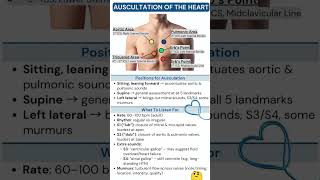
Advanced AI-based algorithm for detecting and categorizing heart murmurs (abnormal vs. normal) across the precordium in adult and pediatric patients. The software provides both acoustic and visual playback of heart sounds.
AI-based Algorithm
The core of AusculThing ACC lies in its AI-based algorithm, which has been trained on a proprietary database of high-quality echocardiogram data.
Intended Use
Designed as decision-support software to aid healthcare providers in accurately and efficiently interpreting and evaluating heart sounds. It is not intended as a standalone diagnostic device, but rather as a complementary tool to a physician's expertise and other patient data.
Murmur Detection Accuracy
The software demonstrates leading performance in heart sound analysis, with an accuracy of 93%, sensitivity of 91%, and specificity of 96%.
Cardiac Monitoring Integration
The software functions as a mobile app and is specifically designed to record heart sounds using a compatible electronic stethoscope, such as the Thinklabs One. This setup facilitates the acquisition and analysis of cardiac acoustic data.
Real-Time Analysis
AusculThing ACC provides instant, automated analysis of patient heart sounds, differentiating between normal and pathological sounds and delivering information on suspected murmurs.
FDA Clearance
The AusculThing ACC software has received FDA clearance.
Physician Tip

AusculThing ACC is a valuable decision-support tool that can enhance the accuracy and efficiency of heart sound interpretation. It is crucial to remember that it serves as a supplementary tool; always integrate its findings with your comprehensive clinical expertise and other relevant patient data for a holistic cardiac assessment. Utilize the visual and acoustic playback features for detailed examinations, patient education, and to deepen your understanding of cardiac abnormalities.

The AusculThing ACC software operates as a mobile application and is specifically designed for use with an electronic stethoscope, such as the Thinklabs One. Its primary focus is on heart sound acquisition and AI-driven analysis. While the current information highlights its use with a dedicated electronic stethoscope, the underlying technology could potentially be integrated into broader digital health ecosystems for enhanced cardiovascular monitoring and data management.

Details

Category Cardiology AI
Pricing Contact vendor — Unknown
DeploymentMobile App
Compliance
BAA AvailableUnknown AI-estimated
HIPAA CompliantUnknown AI-estimated
FDA Status Yes AI-estimated

AusculThing ACC received FDA 510(k) clearance (K230823) on July 12, 2023, as a Class II medical device (Stethoscope, Electronic, Product Code DQD, DQC). It is intended for Rx use only as a decision-support software for evaluating heart sounds in adult and pediatric patients, to be used with the Thinklabs One electronic stethoscope.

Integrations
EHR Not specified
Specialties Cardiology, Internal Medicine, Pediatrics

What the Web Says

AusculThing ACC is an FDA-cleared mobile application designed to assist healthcare providers in analyzing heart sounds for both adult and pediatric patients. It utilizes an AI-based algorithm, trained on echocardiogram data, to detect and categorize heart murmurs when used with a Thinklabs One electronic stethoscope. The software is intended as a decision-support tool, complementing a physician's expertise rather than serving as a standalone diagnostic device.

Overall: Positive

Strengths

  • Aids healthcare providers in accurately and efficiently interpreting heart sounds.
  • Advanced AI-based algorithm for murmur detection and categorization (normal/abnormal).
  • Mobile app format offers a user-friendly and accessible interface.
  • Provides visual and acoustic playback of heart sounds for detailed examinations and educational purposes.
  • Supports clinical decisions by offering immediate insights at the point of care.
  • FDA-cleared for real-time heart sound analysis.

Limitations

  • Not intended as a standalone diagnostic device; requires physician expertise and other patient data.
  • Requires the use of a specific electronic stethoscope (Thinklabs One) for data acquisition.
  • No ratings or detailed user reviews yet on platforms like G2 or Capterra.
  • Some physicians express skepticism about the overall reliability of auscultation as a diagnostic tool, preferring ultrasonography.

Based on reviews from: Medical News Observer, Physician Ai Tools, Reddit

Last updated: 2026-07-19

Ratings & Reviews

No reviews yet. Be the first to review this tool!

Rate AusculThing ACC

Clinical Value
Ease of Use
Integration
Support & Docs
Value for Money

Press & Coverage

Medical News Observer
AusculThing ACC Software: A Modern Tool for Heart Sound Analysis
The AusculThing ACC software, developed by AusculThing Oy, is a high-tech, user-friendly solution for heart sound analysis, utilizing an AI-based algorithm to detect and categorize heart murmurs in adult and pediatric patients. It functions as a decision-support tool for healthcare providers, offering visual and acoustic representations of heart sounds, but is not intended as a standalone diagnostic device.
2023-12
FDA
K230823 - 510(k) Premarket Notification - FDA
This document details the FDA 510(k) Premarket Notification for AusculThing ACC, identifying Ausculthing Oy as the applicant and Jani Virtanen as the contact. It classifies the device under regulation number 870.187523 with product code DQD24.
2023-07
FDA.report
AusculThing Oy Jani Virtanen Process owner, Regulatory and Quality Affairs Ruusutorpanpuisto 4 A 15 Espoo, 02600 F - FDA.report
This report from July 12, 2023, outlines the FDA's substantial equivalence determination for AusculThing ACC, a decision support software that uses an AI-based algorithm with a Thinklabs One electronic stethoscope to analyze heart sounds in adult and pediatric patients. The software categorizes heart sounds as 'abnormal' or 'normal' and is intended for prescription use, not as a standalone diagnostic tool.
2023-07
ResearchGate
Digital Health Trends 2024: Implications for Research and Patient Care
The 'Digital Health Trends 2024' report lists AusculThing ACC among various electronic stethoscopes and digital health tools for detecting heart and lung problems. It highlights the growing number of digital diagnostics and clinical decision support tools that aid healthcare providers.
2023-12
BS Publications
Introduction of AI and ML in Pharmaceutical Sciences - BS Publications
This publication mentions AusculThing ACC software as an example of AI and Machine Learning (ML) in healthcare, specifically for assisting healthcare providers in interpreting and evaluating heart sounds in adults and children using an electronic stethoscope. It notes the software's AI-based algorithm for detecting and categorizing heart murmurs.
unknown
Scribd
Digital Health Trends 2024 Report | PDF | Medical Diagnosis - Scribd
The 'Digital Health Trends 2024 Report' lists AusculThing ACC among various digital health solutions, specifically under electronic stethoscopes for detecting heart and lung problems. It highlights the evolving landscape of digital therapeutics and diagnostics in healthcare.
2024-12

Videos

Product demos, reviews, and walkthroughs for AusculThing ACC.

View all on YouTube

Frequently Asked Questions

AI tools like AusculThing ACC are designed to integrate into clinical workflows by providing real-time diagnostic insights and automating aspects of auscultation, aiming to reduce administrative burden and streamline processes. Effective integration often involves adherence to interoperability standards and co-design with clinicians to ensure intuitive interfaces and minimal disruption.
Any AI tool handling Protected Health Information (PHI), including AusculThing ACC, must comply with HIPAA's Privacy, Security, and Breach Notification Rules. This requires robust technical safeguards like encryption, strict access controls, and often a Business Associate Agreement (BAA) with the vendor to ensure data confidentiality and security.
AI-enabled medical devices like AusculThing ACC are regulated by the FDA, typically following a 510(k) pathway based on their risk level and similarity to predicate devices. The FDA has issued guidance on the regulatory framework for AI/ML-based Software as a Medical Device (SaMD), including considerations for lifecycle management and predetermined change control plans for algorithm updates.
AusculThing ACC aims to enhance diagnostic accuracy by leveraging AI to detect subtle abnormalities in heart and lung sounds that may be beyond human hearing or easily missed by traditional auscultation. While traditional auscultation is subjective and dependent on clinician experience, AI-assisted tools offer more objective, consistent analysis and can support earlier disease detection.
Potential limitations include the risk of diagnostic errors if the AI model was trained on biased or incomplete data, and the 'black box' nature of some AI algorithms can make it challenging to understand their reasoning. Over-reliance on AI tools could also lead to an erosion of essential clinical skills, emphasizing the critical need for human oversight and validation of AI-generated outputs.
While specific pricing models for hypothetical products vary, AI solutions in healthcare often aim to demonstrate cost-effectiveness through improved diagnostic accuracy, reduced unnecessary procedures, and optimized resource allocation. The projected ROI would stem from efficiencies gained in clinical workflows and potentially better patient outcomes, though turning theoretical savings into practical, scalable solutions remains a challenge.
Addressing algorithmic bias is crucial for AI in healthcare, as biased training data can lead to inaccurate or discriminatory outcomes, particularly for marginalized populations. Reputable AI tools should undergo rigorous validation with diverse datasets and include mechanisms for bias analysis and transparency regarding the data used for training.

Related Tools

EchoMD AutoEF
Caption Health (formerly Bay Labs, now part of GE HealthCare)
Cardiology AI
EchoMD AutoEF is an FDA-cleared AI software that automates the selection of echocardiogram clips and calculates left ventricular ejection fraction (EF), enhancing efficiency and accuracy in cardiac assessments.
ECG-AI Cardiac Amyloidosis (CA) 12-Lead Algorithm
Anumana, Inc.
Cardiology AI
An AI algorithm for screening cardiac amyloidosis using standard 12-lead ECGs.
DEEPVESSEL Plaque
Keya Medical Technology Co., Ltd.
Cardiology AI
An AI software platform for coronary plaque analysis and quantification from CT angiography.
WatchMate Software
Anumana, Inc.
Cardiology AI
Anumana is an AI-driven health technology company from nference, developing and delivering ECG algorithms enabling early diagnosis and intervention.
syngo.CT Coronary Cockpit
Siemens Healthineers
Cardiology AI
syngo.CT Coronary Cockpit is an AI-powered software tool by Siemens Healthineers for efficient and accurate CT coronary angiography analysis.
HeartLung AI-CVD®
HeartLung Corporation
Cardiology AI
HeartLung AI-CVD® is an FDA-cleared AI-powered quantitative imaging tool that provides automated CT-derived measurements for assessing cardiovascular and multisystem risks opportunistically.

See all Cardiology AI tools →

Suggest an Edit → | Last Verified: 2026-04-17 | First Added: 2026-04-17
AI Tool Finder
AI-powered search. Results may not be comprehensive.