AutoContour

by Radformation  · Based in United States → — Automated AI Contouring Software for Radiation Therapy
Nuclear Medicine Oncology Radiology

Contact for pricing
Regulatory Status Disclosed

Overview

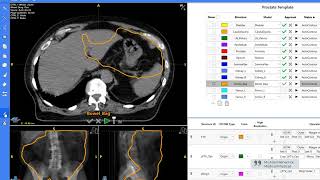
AutoContour by Radformation is a deep learning automated AI contouring software designed to enhance efficiency and safety in cancer treatment planning. It provides fast, consistent, and standardized contouring with planning-ready results in minutes, eliminating the need for extensive setup. The software comes equipped with a vast library of AI-trained models, including over 480 models across CT, MR, and CBCT modalities, with a focus on organs at risk (OARs) and lymph nodes.

AutoContour streamlines the radiation therapy workflow by automatically segmenting common structures and generating necessary planning volumes like expansions, booleans, crops, and ring structures. It supports both rigid and deformable registration, enabling accurate anatomical mapping and dose accumulation for re-irradiation and adaptive planning workflows. The software integrates seamlessly with existing treatment planning systems, such as Eclipse™, and other DICOM-compatible systems.

The platform includes a built-in automated review process with intuitive editing tools, ensuring clinical experts maintain control and can make immediate adjustments. AutoContour’s models are developed in alignment with international consensus guidelines, including AAPM TG-263 nomenclature, RTOG, and NRG, promoting high-quality and consistent contours.

Radformation’s cloud-based AI segmentation engine processes de-identified CT data, ensuring patient privacy, and returns contours to the local client application for user review and export as DICOM RTSTRUCT files. This architecture eliminates the need for expensive local hardware and extensive IT support.

Reviewed by Pouyan Golshani, MD — Interventional Radiologist

Key Features

  • AI-driven deep learning contouring for OARs and lymph nodes
  • 480+ AI-trained models across CT, MR, and CBCT
  • Generates planning-ready contours in minutes
  • Seamless integration with Eclipseu2122 and DICOM-compatible systems
  • Automated planning structure generation with site-specific templates
  • Rigid and deformable image registration capabilities
  • Multi-modality support (CT, MR, CBCT, PET/CT for registration/fusion)
  • Built-in automated review process with comprehensive editing tools
  • Dose accumulation and evaluation for re-irradiation and adaptive planning
  • Adherence to international consensus guidelines (AAPM TG-263, RTOG, NRG)

Use Cases

  • Automating organ-at-risk (OAR) and target volume segmentation in radiation therapy
  • Streamlining and standardizing radiation treatment planning workflows
  • Facilitating adaptive planning and re-irradiation through deformable registration and dose accumulation
  • Reducing manual contouring time and improving consistency across planners
  • Generating complex planning structures (expansions, booleans, crops, rings) automatically
  • Supporting clinical evaluation and quality improvement projects in radiation oncology

What Physicians Need to Know

Key Capabilities
Automated AI-driven deep learning contouring with 480+ AI-trained models across CT, MR, and CBCT, including 115 lymph node models. Generates consistent, standardized contours aligned with international consensus guidelines in minutes. Features rigid and deformable registration, 4D-CT handling, ITV/PRV contour propagation, and automated generation of planning structures using site-specific templates. Supports re-irradiation workflows and adaptive planning.
Clinical Utility
Significantly reduces manual contouring time, with reported savings up to 84% across anatomical sites and 60% overall, accelerating the treatment planning process. Improves contouring consistency and standardization, leading to higher quality, clinically-validated contours that often require only minor edits. Enhances adaptive planning by tracking anatomical changes and evaluating cumulative dose.
Integration Options
Works seamlessly with Varian Eclipseu2122 (v15.5+) via ESAPI for an integrated workflow. Compatible with DICOM-compatible systems, allowing it to function as a standalone application for other treatment planning systems. Listens for new DICOM data from scanners, processes structures, and automatically exports them to the TPS. Integrates with other Radformation products like ClearCheck.
Compliance Status
Achieved EU Medical Device Regulation (MDR) CE Mark certification, classifying it as a Class IIa Software as a Medical Device (SaMD) in the EU. Successfully passed Clinical, Technical, and preliminary AI technical review processes for EU AI Act compliance in December 2024. Holds regulatory clearances in Australia (TGA), Brazil (ANVISA), Canada (Health Canada), and Thailand (Thai FDA). It is also being evaluated as part of the 3-year UK NICE health technology evaluation.
Pricing Model
Specific pricing details are not publicly disclosed and typically require direct inquiry with Radformation. The technology operates on a licensing model, and a free trial period may be available.
User Experience
Designed for intuitive use with a 'zero-click workflow' for initial contour generation. Features a built-in automated review process with single-click structure review, automatic viewing plane alignment, and scrolling. Provides editing tools (pencil, brush, recent edit iteration) for immediate adjustments. While generally intuitive, some users have noted that reviewing every slice of every contour can still be time-consuming.
Support Quality
Radformation offers dedicated support services, with 'Support' listed as a key company section on their website. User manuals are typically accessible within the software. Radformation provides extensive resources including webinars, case studies, white papers, and a blog with tips and tricks. One external source noted a past 'lack of publicly available technical documentation and support may be limited to specific forums'.
Implementation Complexity
Marketed as 'ready to use' with pre-trained models requiring 'no setup' for immediate contouring. AI solutions like AutoContour require significantly less front-end effort for clinical implementation and validation compared to previous auto-segmentation methods. It integrates into existing workflows either directly within a TPS or as a standalone application.
Evidence Base
Supported by multiple case studies demonstrating significant time savings and improved consistency in various clinical settings (e.g., AdventHealth, ICON Group, NYU Langone, ARC, Hospital Su00e3o Vicente de Paulo). White papers detail the underlying deep learning algorithms (CNN, V-net design) and training methods. Clinical evaluations have assessed contour quality using metrics like Dice similarity coefficient (DSC) and Hausdorff distance, showing high quality and clinical applicability. It has been included in comparative studies against other commercial AI contouring systems, demonstrating comparable performance.
Physician Tip

Leverage AutoContour to significantly reduce the tedious manual contouring time, allowing for more focus on complex cases and patient interaction. While the AI generates high-quality contours, always perform a thorough review, especially for critical structures or unusual anatomies, to ensure clinical accuracy and patient safety. Utilize the automated planning structure generation and template features to standardize workflows and maintain consistency across your department. Explore the deformable registration capabilities for adaptive planning, particularly in cases with significant anatomical changes like head and neck. Integrate it seamlessly into your existing TPS to maximize efficiency.

AutoContour is designed for flexible integration. It offers deep integration with Varian Eclipse (v15.5+) using ESAPI, enabling a streamlined workflow directly within the TPS. For other treatment planning and imaging systems, it functions as a standalone application, communicating via DICOM. This vendor-neutral approach ensures compatibility across diverse clinical environments, allowing clinics to enhance their workflow without being tied to a single vendor's ecosystem. It also integrates with other Radformation products like ClearCheck for a comprehensive automation suite.

Details

Category Oncology AI, Radiology & Imaging AI
Pricing Contact for pricing — Annual or multi-year contracts; pricing reflects comprehensive product nature
DeploymentHybrid (cloud-based AI engine with local client application)
Compliance
BAA AvailableUnknown AI-estimated
HIPAA CompliantUnknown AI-estimated
FDA Status 1 AI-estimated

AutoContour (Model RADAC V4) received FDA 510(k) clearance (K242729) on December 9, 2024. It is radiological image processing software for radiation therapy, intended to assist treatment planners in contouring and reviewing structures within medical images for treatment planning. It uses DICOM-compliant CT or MR image data as input to automatically contour structures using machine learning, allows user modification, and generates DICOM-compliant structure set data.

Integrations
EHR Not specified
Specialties Nuclear Medicine, Oncology, Radiology

What the Web Says

AutoContour by Radformation is an AI-driven automated contouring software designed for radiation oncology, aiming to streamline the treatment planning process. It utilizes deep learning to generate contours for organs at risk (OARs) and planning structures across various imaging modalities like CT, MR, and CBCT. Physicians and medical physicists generally report that AutoContour significantly reduces contouring time and improves consistency compared to manual methods, though some level of review and occasional editing by a clinical expert remains crucial.

Overall: Positive

Strengths

  • Significant time savings in contouring, potentially reducing total contouring time by up to 84%.
  • Generates consistent and standardized contours, reducing inter-observer variability.
  • Offers a large library of AI-trained models (480 models, including 115 lymph node models) across multiple modalities (CT, MR, CBCT).
  • Includes automated generation of planning structures (expansions, booleans, crops, ring structures) using site-specific templates.
  • Seamless integration with Eclipse and DICOM-compatible systems, with additional efficiency when integrated with ClearCheck.
  • Features built-in tools for efficient review and editing of AI-generated contours, including single-click structure review and automatic viewing plane alignment.

Limitations

  • AI-generated contours sometimes require edits, and a smooth process for review and editing is essential.
  • Some users have noted that the software requires the user's attention and fills an entire computer screen during calculation, requiring review of every slice, which can be time-consuming.
  • In a minority of cases, unusual anatomy can lead to poor scores, requiring manual contouring and more in-depth physician review.
  • One Reddit user expressed a preference for Limbus AI contouring over Radformation's, citing better accuracy and a more efficient workflow.
  • While generally positive, a study indicated that for certain organs like the prostate, physicians should continue to manually review and edit contours based on MRI.
  • The clinical applicability of geometric outcome metrics, often reported in studies, has been questioned by researchers.

Based on reviews from: Radformation.com, Reddit (r/MedicalPhysics), PubMed Central (PMC), EMJ (European Medical Journal), The Royal College of Radiologists, ResearchGate, RT Medical Systems

Last updated: 2026-07-20

Ratings & Reviews

No reviews yet. Be the first to review this tool!

Rate AutoContour

Clinical Value
Ease of Use
Integration
Support & Docs
Value for Money

Press & Coverage

AuntMinnie
Radformation releases rad therapy contouring software
Radformation has released AutoContour, an AI-based image segmentation software for radiation therapy contouring, which allows users to adjust structure slices and has been integrated into Varian Medical Systems' Eclipse planning system.
2021-03
Imaging Technology News
Radformation and Videra Surgical Collaborate to Improve Post-Surgical Radiation Therapy
Radformation Inc and Videra Surgical announced a collaboration integrating Videra Surgical's VeraForm tumor bed marker and Radformation's AI-driven AutoContour Software to improve post-surgical radiation therapy.
2022-09
Radformation Blog
AutoContour Adds to the List of Available Structures
Radformation released an update to AutoContour, including dozens of new structure models and variations, such as additional MR models and vertebral bodies, to accommodate diverse clinical needs and preferences.
2023-04
Radformation Blog
AutoContour Feature Focus: Planning Structure Generation
This article highlights how AutoContour can reduce total contouring time by up to 84% by automating patient-specific structures and planning structures through site-specific templates.
2023-12
Icon Group
Radformation and Icon Group Unite to Transform Cancer Treatment and Workflows
Radformation and Icon Group announced a strategic partnership to transform cancer care through groundbreaking workflows and advanced software solutions, starting with AutoContour and RadMachine.
2024-02
Radformation Press
Radformation Receives Regulatory Clearances for Automation Solutions in Australia, Brazil, Canada, and Thailand
Radformation received regulatory clearances for its radiotherapy automation solutions, including AutoContour, from authorities in Australia, Brazil, Canada, and Thailand, reflecting its commitment to global healthcare innovation.
2024-02
PMC (National Library of Medicine)
Evaluation of multiple-vendor AI autocontouring solutions
This study evaluated the performance of three commercial AI-based autocontouring solutions, including Radformation-AutoContour, finding that each exhibited capabilities similar to manual contouring.
2024-05
RAD Magazine
OIS partners with Radformation to bring automation to radiation oncology
Oncology Imaging Systems (OIS) became the official distributor of Radformation's automation tools, including AutoContour, across the UK, aiming to streamline radiation oncology workflows.
2025-08

Videos

Product demos, reviews, and walkthroughs for AutoContour.

View all on YouTube

Frequently Asked Questions

AutoContour typically integrates seamlessly with existing treatment planning systems (TPS) like Eclipse, often operating as a standalone application or via API. Its primary application is to automate the delineation of organs-at-risk (OARs) and lymph nodes in radiation oncology, significantly reducing the manual contouring time and improving consistency in treatment planning.
Many AI auto-contouring solutions, including specific versions of AutoContour and similar products, have received FDA 510(k) clearance, indicating they are deemed safe and effective for their intended use. For data privacy, solutions like MVision AI's Contour+ are designed to be HIPAA and GDPR compliant, employing encryption and pseudonymization of patient data to protect sensitive health information.
Traditional alternatives include manual contouring by dosimetrists and radiation oncologists, which is labor-intensive and subject to inter-observer variability. Older automated methods like atlas-based auto-segmentation exist but often have limitations in complex or non-standard anatomies. Several other commercial AI-driven auto-contouring solutions are available from vendors such as MIM, Mirada, Limbus, RaySearch, Siemens, and TheraPanacea, offering comparable functionalities.
While specific pricing models for AutoContour are not detailed, the adoption of AI technology in healthcare, including auto-contouring, is projected to result in significant cost savings by increasing productivity and reducing errors. Institutions should consider the balance between the software's cost (which may involve tiered pricing based on automation levels) and the efficiency gains, such as reduced contouring time and potential for freeing up staff for more complex tasks or patient-facing activities.
AutoContour models, while highly accurate, may not always produce perfect results, particularly with very small or irregularly shaped organs, atypical patient anatomy, unusual positioning, or image artifacts. Therefore, physician review and potential editing of all AI-generated contours remain crucial to ensure clinical acceptability and mitigate potential algorithmic biases that might arise from the training datasets.
Clinical evaluations suggest that AI auto-contouring solutions generally produce high-quality contours comparable to manual methods, often requiring only minor edits. Accuracy is quantitatively measured using metrics like the Dice similarity coefficient (DSC) and Hausdorff distance, which assess the geometric overlap and surface distance between AI-generated and physician-approved contours.
While specific training details vary by vendor, AI auto-contouring solutions are generally designed for seamless integration and ease of use, often requiring minimal setup. Vendors typically provide support to ensure proper implementation and address any workflow bottlenecks, with the goal of enabling clinicians to quickly adopt the technology and focus on treatment planning.

Related Tools

Surgical Reality Viewer
Surgical Reality
Oncology AI
Surgical Reality offers CE- and FDA-certified AI-powered 3D medical imaging and surgical planning software that transforms CT scans into patient-specific 3D models for thoracic surgery, enhancing precision in complex lung procedures.
Cancer Copilot
Color Health
Oncology AI
Color Health's Cancer Copilot, built with OpenAI, helps oncologists and clinicians identify and order workup needs for recently diagnosed patients, aiming to speed up time to cancer treatment. This AI tool is designed to expand cancer expertise, speed decisions, and improve care, reducing a two-hour clinical task to 10 minutes with over 95% validated accuracy.
Cercare Medical Oncology Virtual Expert
Cercare Medical
Neurology AI
Cercare Medical's Oncology Virtual Expert is an AI-powered brain tumor segmentation module that provides fast, consistent, and semi-automated tumor analysis from standard MRI data, designed for on-premise deployment within existing clinical radiology workflows.
Synapse Lung Nodule AI
Fujifilm Corporation
Oncology AI
Fujifilm's Synapse Lung Nodule AI is an AI software algorithm for detecting pulmonary nodules on CT imaging, aiming to support early detection and treatment of lung cancer.
RadOncAI
Informai (for RadOncAI product) / Global Network for AI in Radiation Oncology (for RadoncAI.net)
Oncology AI
RadOncAI is an AI solution by Informai designed to optimize and enhance radiation oncology workflows, improving efficiency and accuracy in treatment planning and delivery.
FAITH project (Fatigue Therapy – AI-supported Diagnosis and Therapy of Tumour-associated Fatigue Syndrome)
Fimo Health GmbH (Consortium Leader)
Mental & Behavioral Health AI
The FAITH project is developing an AI-based solution for the diagnosis and therapy of tumor-associated fatigue syndrome in cancer patients. It uses wearable sensors, a smartphone app, and artificial intelligence to provide individualized therapy recommendations and monitor mental health.

See all Oncology AI tools →

Suggest an Edit → | Last Verified: 2026-04-20 | First Added: 2026-04-20
AI Tool Finder
AI-powered search. Results may not be comprehensive.