FEops HEARTguide

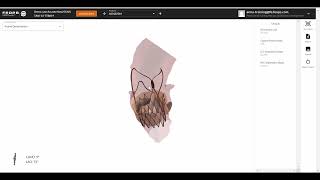
by FEops  · Based in Belgium → — At FEops, we envision a future in which cutting-edge, AI-based technology helps physicians alter the course of heart disease. Our cloud-based structural heart procedure planning platform, FEops HEARTguide™, analyses cardiac computed tomography (CT) scans and offers unprecedented insight into a patient’s total heart health.
Cardiology Cardiothoracic Surgery

FDA Authorized
Regulatory Status Disclosed

Quick answers

What is FEops HEARTguide?

FEops HEARTguide: At FEops, we envision a future in which cutting-edge, AI-based technology helps physicians alter the course of heart disease.

Is FEops HEARTguide FDA cleared?

Yes. FEops HEARTguide is on FDA’s list of AI-enabled medical devices: De Novo DEN200030, granted September 8, 2021.

Overview

FEops HEARTguide, developed by FEops NV (a Materialise company), is a cloud-based structural heart procedure planning platform. The technology combines artificial intelligence and predictive simulation to analyze cardiac computed tomography (CT) scans, providing clinicians with detailed anatomical measurements and insights into how transcatheter structural heart devices will interact with a patient’s unique anatomy.

The platform is designed for multidisciplinary heart teams, including interventional cardiologists, cardiothoracic surgeons, and imaging specialists, operating in hospital and clinical settings. It supports the planning of complex structural heart interventions, specifically Left Atrial Appendage Occlusion (LAAO) and Transcatheter Aortic Valve Implantation (TAVI).

FEops HEARTguide integrates into the clinical workflow via a secure, cloud-based portal featuring a DICOM interface. Clinicians upload patient CT scans to receive AI-enabled anatomical analyses and predictive simulations. Notable capabilities include:

  • AI-Based Anatomical Measurements: Automated, time-efficient measurements of cardiac structures with the option for manual adjustments.
  • Predictive Device-Host Simulations: Virtual modeling of device-anatomy interactions to assist in selecting optimal device sizes and positioning.
  • TAVI Lifetime Management: Tools to evaluate future valve-in-valve procedures and long-term patient care pathways.

Reviewed by Pouyan Golshani, MD — Interventional Radiologist

Key Features

  • Predictive simulation technology
  • AI-based anatomical measurements
  • Digital twin technology for patient-specific replicas
  • Cloud-based platform with anytime, anywhere access
  • DICOM interface for CT scan upload
  • Semi-automatic identification and measurement of anatomical landmarks
  • Interactive 2D and 3D viewer
  • Evaluation of device sizing and positioning pre-operatively
  • Secure case sharing with peers and industry partners
  • Multi-factor authentication and enforced password changes for security

Use Cases

  • Pre-operative planning for Left Atrial Appendage Occlusion (LAAO) procedures
  • Pre-operative planning for Transcatheter Aortic Valve Implantation (TAVI) procedures
  • Optimizing device sizing and positioning for structural heart interventions
  • Predicting device-anatomy interaction to reduce complications
  • Improving procedural efficiency and outcomes in structural heart disease
  • Accelerating research and development of novel cardiovascular devices

What Physicians Need to Know

Cardiac CT/MRI Analysis
FEops HEARTguide analyzes cardiac computed tomography (CT) scans to provide insights for structural heart interventions. It uses AI-based anatomical analysis of multi-slice CT images for pre-operative planning. The platform transforms cardiac images into digital twins, which are virtual copies of the heart or its substructures, enabling detailed assessment of patient anatomy. It provides semi-automatic identification and measurement of anatomical landmarks, with options for manual adjustments. The software offers segmentation of cardiovascular structures and visualization techniques like 2D review and Multiplanar Reconstruction (MPR).
Coronary Artery Assessment
For Transcatheter Aortic Valve Implantation (TAVI) procedures, FEops HEARTguide provides insights into coronary access, assessing potential complications for different device sizes and positions. It also offers a qualitative evaluation of leaflet overhang and the impact of commissural alignment for TAVI lifetime management, including future redo-TAVI options.
Predictive Simulation for Device Interaction
The platform combines digital twin technology with AI-enabled anatomical analysis to simulate how transcatheter structural heart devices will interact with a patient's unique anatomy before implantation. This includes predicting device apposition, frame deformation, and compression rate for Left Atrial Appendage Occlusion (LAAO) devices. For TAVI, it predicts the interaction between the device and the patient's anatomy, including post-implantation deformation, to assess the risk for paravalvular leakage and conduction abnormalities.
Procedure Planning for LAAO
FEops HEARTguide provides a cloud-based procedure planning environment for Left Atrial Appendage Occlusion (LAAO) using preoperative CCT images. It enables physicians to virtually implant LAAO devices to simulate their feasibility, modify implant size, and select the optimal device size and position. Clinical evidence suggests that FEops-guided pre-procedure planning for LAAO can reduce the number of devices and repositioning needed, decrease procedure and radiation time, and increase LAA closure without residual leak or disc retraction. It has been shown to improve procedural efficiency and outcomes, including a 15% reduction in total closure devices used and a twofold increase in procedural success with single device deployment.
Procedure Planning for TAVI
The platform supports planning for Transcatheter Aortic Valve Implantation (TAVI), helping physicians understand options for future valve-in-valve procedures and plan complex TAVI cases. It can predict the risk for paravalvular leakage (PVL) and new pacemaker implantation (PPI) post-TAVI. Studies have shown that FEops HEARTguide can change preprocedural planning in a significant percentage of TAVI patients, leading to favorable clinical outcomes.
TMVR Workflow (Early Evidence)
Early evidence supports the use of FEops simulation technology in Transcatheter Mitral Valve Replacement (TMVR). The TMVR workflow aims to provide accurate simulation-based information about the effects of replacement device positioning and deformation within each patient's anatomy, helping to identify optimal positions and minimize complications like left ventricular outflow tract (LVOT) obstruction.
Physician Tip

FEops HEARTguide leverages AI-based anatomical analysis and predictive simulations from cardiac CT scans to optimize planning for structural heart interventions like LAAO and TAVI. This allows for personalized device sizing and positioning, potentially reducing procedural complications, radiation exposure, and procedure time. The platform's ability to simulate device-anatomy interaction pre-operatively can lead to more informed decision-making and improved patient outcomes. Physicians retain full control over the analysis and can manually adjust measurements. The collaborative cloud-based platform also facilitates case sharing with peers.

FEops HEARTguide is a cloud-based platform that integrates AI-driven simulation with 3D planning insights. It has partnered with ConcertAI's TeraRecon for commercialization, particularly for the Left Atrial Appendage (LAA) occlusion workflow in the US market. The platform is designed to integrate into clinical workflows and offers a DICOM interface for reviewing patient anatomical landmarks.

Details

Category Cardiology AI, Surgical AI
Pricing Unknown
DeploymentCloud Based platform
Compliance
BAA AvailableUnknown
HIPAA Compliant Yes AI-estimated
FDA Status Authorized FDA-listed

In EU, UK, Canada and Australia, FEops HEARTguide™ is available for AI-enabled anatomical analysis and computer simulation with indication for use in TAVI and LAAO. In USA, FEops HEARTguide ™ is available for AI-enabled anatomical analysis with indication for use in TAVI and LAAO and for computer simulation in LAAo with WATCHMAN™, WATCHMAN™FLX, Amplatzer™ Amulet™. New TAVI Lifetime Management is not available for clinical use in the US, 510(k) pending.

Integrations
EHR Not specified
Specialties Cardiology, Cardiothoracic Surgery

FDA clearance history

This product’s FDA authorization. From FDA’s list of AI-enabled medical devices; each number links to FDA’s record.

Decision dateNumberName as listed by FDA
2021-09-08DEN200030 De NovoFEops HEARTguide

Ratings & Reviews

No reviews yet. Be the first to review this tool!

Rate FEops HEARTguide

Clinical Value
Ease of Use
Integration
Support & Docs
Value for Money
No press coverage or publications on file yet. Know of some? Suggest an edit →

Videos

Product demos, reviews, and walkthroughs for FEops HEARTguide.

View all on YouTube

Frequently Asked Questions

FEops HEARTguide is a cloud-based procedure planning platform that uses digital twin technology and AI-based anatomical measurements to provide insights into how transcatheter structural heart devices will interact with a patient's unique anatomy. This allows cardiologists to make better-informed clinical decisions, optimize device sizing and positioning, and potentially improve procedural efficiency and outcomes for interventions like Transcatheter Aortic Valve Implantation (TAVI) and Left Atrial Appendage Occlusion (LAAO).
FEops HEARTguide currently offers workflows for Transcatheter Aortic Valve Implantation (TAVI) and Left Atrial Appendage Occlusion (LAAO) procedures. It also has ongoing research and early evidence supporting its use in Transcatheter Mitral Valve Replacement (TMVR).
Yes, FEops HEARTguide has received FDA approval for its AI-based anatomical analysis capabilities and for LAAO planning with specific devices in the US. It is also CE-marked and commercially available in Europe, UK, Canada, and Australia for TAVI and LAAO workflows.
While FEops HEARTguide offers significant advantages, some limitations exist. The use of FEops HEARTguide for LAAO planning requires a pre-operative cardiac CT scan, which may incur additional costs and radiation risk compared to standard transesophageal echocardiography (TEE) alone. Additionally, the clinical utility for certain devices may be limited, and some studies have noted a lack of standardization in control arms, suggesting a need for further validation with larger sample sizes.
FEops HEARTguide goes beyond traditional anatomical measurements by combining digital twins with AI-enabled anatomical analysis, providing deeper insights into device-anatomy interaction. This allows for the virtual modeling of clinical scenarios and prediction of implant frame deformation, which is not possible with manual measurement techniques. While other software solutions exist for planning and sizing based on CT scans, FEops HEARTguide is noted for its unique combination of predictive simulation and AI.

Related Tools

Stethophone Pro
Sparrow Acoustics
Cardiology AI
Stethophone Pro transforms smartphones into advanced cardiac screening tools, enabling clinicians to capture, interpret, and visualize heart sounds for early detection of cardiovascular diseases.
ACUSON Sequoia Diagnostic Ultrasound System, ACUSON Sequoia Select Diagnostic Ultrasound System, ACUSON Origin Diagnostic Ultrasound System, ACUSON Origin ICE Diagnostic Ultrasound System
Siemens Medical Solutions, USA
Cardiology AI
Siemens Healthineers offers advanced AI-powered ultrasound systems, including the ACUSON Origin for comprehensive cardiovascular care and the ACUSON Sequoia for high-performance general imaging with BioAcoustic™ technology.
syngo.via MI Workflows, syngo MBF
Siemens Medical Solutions USA
Cardiology AI
syngo.via MI Workflows, syngo MBF is an intelligent, integrated imaging software that helps address the challenges of interpreting, managing, and sharing complex data from molecular imaging scanners, providing automated workflows and advanced visualization for various clinical applications.
syngo.via MI WorkFlows, Scenium, syngo MBF
Siemens Medical Solutions USA
Cardiology AI
syngo.via MI Workflows, Scenium, and syngo MBF are medical diagnostic post-processing applications for viewing, manipulation, quantification, analysis, and comparison of PET or nuclear-medicine functional data with CT or MR anatomical data across timepoints, supporting disease management and radiotherapy treatment planning by trained healthcare professionals.
ACUSON Sequoia Diagnostic Ultrasound System, ACUSON Sequoia Select Diagnostic Ultrasound System, ACUSON Origin Diagnostic Ultrasound System
Siemens Medical Solutions USA
Cardiology AI
Siemens Healthineers offers the ACUSON Sequoia, ACUSON Sequoia Select, and ACUSON Origin ultrasound systems, providing advanced imaging for various medical needs. The Sequoia line focuses on high-resolution imaging with deep penetration and reduced variability, while the AI-powered ACUSON Origin specializes in comprehensive cardiovascular diagnostics and interventions.
R30 Diagnostic Ultrasound System
Samsung Medison Co.
Cardiology AI
The Samsung Medison R30 Diagnostic Ultrasound System is a general-purpose, mobile, software-controlled diagnostic ultrasound system that offers a wide range of imaging capabilities and analysis tools for various clinical applications.

See all Cardiology AI tools →

Suggest an Edit → | Report an issue | Last Verified: 2026-11-06 | First Added: 2026-04-18
AI Tool Finder
AI-powered search. Results may not be comprehensive.