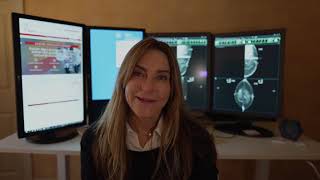
Genius AI Detection

by Hologic  · Based in United States → — Giving you the Power to Find Additional Cancers
Oncology Radiology

Contact for pricing
Regulatory Status Disclosed

Overview

Hologic’s Genius AI Detection is a deep learning-based software designed to assist radiologists in the early detection of breast cancer using breast tomosynthesis images. It meticulously searches each slice of the tomosynthesis image set to locate lesions likely representing breast cancer, including soft-tissue densities (masses, architectural distortions, asymmetries) and calcification clusters. The algorithm marks suspected lesions with improved performance, significantly reducing false positive markings compared to previous-generation CAD systems.

The system provides various outputs, including lesion scores and an overall case score, indicating the confidence that a case contains a cancerous lesion. This allows for point-of-care triaging and workflow optimization, enabling radiologists to categorize and prioritize cases by complexity and expected read time. The Genius AI Detection PRO solution further enhances this by combining 2D and DBT deep learning AI, analyzing prior exams, and offering automated pre-reporting, breast density scoring, patient history, and image quality checks within an all-in-one user interface. It integrates seamlessly with Hologic’s 3Dimensions™ and Selenia® Dimensions® systems and is compatible with 3DQuorum SmartSlices, outputting findings in a DICOM CAD Structured Report object.

Reviewed by Pouyan Golshani, MD — Interventional Radiologist

Key Features

  • Deep learning algorithm for breast tomosynthesis image analysis
  • Identifies suspicious breast lesions (masses, architectural distortions, asymmetries, calcifications)
  • Reduced false positive markings compared to conventional CAD
  • Lesion and Case Scoring for confidence assessment
  • Workflow optimization and case prioritization tools
  • Compatibility with Hologic 3D Mammographyu2122 systems (3Dimensionsu2122, Seleniau00ae Dimensionsu00ae) and 3DQuorum SmartSlices
  • Outputs DICOM CAD Structured Report (SR)
  • Automated pre-reporting and breast density scoring (PRO version)
  • Analysis of prior exams for improved accuracy (PRO version)
  • Image quality checks and patient history integration (PRO version)

Use Cases

  • Enhancing early detection of breast cancer in screening mammography
  • Assisting radiologists in the interpretation of complex breast tomosynthesis images
  • Streamlining radiology workflow and improving reading efficiency
  • Prioritizing patient cases for immediate review based on cancer likelihood
  • Automating aspects of reporting and breast density assessment
  • Reducing radiologist fatigue and variability in interpretation

What Physicians Need to Know

Key Capabilities
Deep learning-based software designed to detect subtle potential cancers (masses, architectural distortions, asymmetries, calcification clusters) in breast tomosynthesis images. It highlights suspicious areas and provides key metrics like Case Score, Case Complexity Index, Reading Priority Indicator, and Read Time Indicator to categorize and prioritize cases. The PRO version includes analysis of prior exams, automated pre-reporting, breast density scoring, and image quality checks.
Clinical Utility
Aids in early breast cancer detection by improving radiologists' diagnostic performance and accuracy, with studies showing a +9% improvement in observed reader sensitivity. It helps optimize workflow by prioritizing cases and has the potential to shorten the cycle between screening and diagnostic follow-up. Retrospective studies indicate its ability to identify invasive lobular cancers and flag a significant portion of false-negative cases.
Integration Options
Runs on the acquisition workstation of the mammography system, eliminating the need for a separate server. It packages findings into DICOM Mammography CAD SR objects for display on DICOM-compliant review workstations, including Hologic's SecurView 12.0 and some PACS systems. The PRO solution offers flexible deployment (cloud or on-premise) and can integrate with EMR/RIS/MIS for patient information.
Compliance Status
Received U.S. Food and Drug Administration (FDA) clearance on December 2, 2020, as a Class II medical device (Regulatory Number: 21 CFR 892.2090, Product Code: QDQ). It is intended for use with compatible digital breast tomosynthesis (DBT) systems and its sale is restricted to by or on the order of a physician.
User Experience
Designed for concurrent reading, highlighting suspicious areas directly on radiologists' workstations with tools for quick navigation. It allows radiologists to toggle CAD information on/off and prioritize cases based on AI-generated metrics. The PRO version features a streamlined, all-in-one user interface with an intuitive color-coded 1-10 scoring scale for suspicion levels, aiming to reduce reading times and fatigue.
Implementation Complexity
Considered less complex as it runs on the mammography system's acquisition workstation, removing the need for an additional server. Integration with Hologic's Dimensions platform offers workflow benefits. Compatibility with specific review workstations and their ability to interpret DICOM CAD SR objects should be verified. The PRO version offers flexible cloud or on-premise deployment.
Evidence Base
FDA clearance is supported by a multi-reader, multi-case (MRMC) study demonstrating a statistically significant increase in clinical performance (AUC improvement) and improved sensitivity without compromising recall rates. Studies show a significant reduction in false positive marks compared to previous CAD. Retrospective analyses highlight its effectiveness in identifying challenging cancers, including invasive lobular cancers and previously false-negative cases.
Physician Tip

Leverage the AI-generated case metrics (Case Score, Complexity Index, Reading Priority) to efficiently triage and prioritize your workload, focusing on more complex or suspicious cases. Utilize the automated lesion correlation and color-coded scoring (in PRO version) to quickly assess findings and streamline interpretation, but always use the AI as an assistive tool, not a replacement for thorough diagnostic review. Be aware that while the AI improves detection and reduces false positives, it does not identify all suspicious areas, and clinical judgment remains paramount.

Genius AI Detection is designed for seamless integration with Hologic's 3D Mammographyu2122 systems (Seleniau00ae Dimensionsu00ae and 3Dimensionsu2122) and is compatible with Hologic's SecurViewu00ae 12.0 software. Its output, a DICOM Mammography CAD SR object, allows for display on various DICOM-compliant PACS and review workstations, though specific feature availability may depend on the workstation vendor's implementation. The PRO solution offers broader compatibility across reading workstations and flexible deployment options.

Details

Category Oncology AI, Radiology & Imaging AI
Pricing Contact for pricing
DeploymentOn-premise (runs on mammography acquisition workstation, integrates with PACS)
Compliance
BAA Available Yes AI-estimated
HIPAA Compliant Yes AI-estimated
FDA Status Yes AI-estimated

Genius AI Detection 2.0 received 510(k) clearance (K243341) on July 31, 2025, as a radiological computer-assisted detection/diagnosis software for lesions suspicious for cancer. The initial Genius AI Detection technology received FDA clearance in December 2020.

Integrations
EHR Not specified
Specialties Oncology, Radiology

What the Web Says

Genius AI Detection, offered by Hologic, is generally perceived as a significant advancement in breast cancer screening, particularly for its potential to improve the accuracy and efficiency of mammography. Reviews highlight its ability to assist radiologists in identifying subtle anomalies, potentially leading to earlier detection and reduced false positives. However, some discussions also touch upon the learning curve for integrating new AI tools and the ongoing need for human oversight.

Overall: Positive

Strengths

  • Improved accuracy in breast cancer detection
  • Potential for earlier diagnosis of malignancies
  • Reduced false positives, minimizing patient anxiety and unnecessary follow-ups
  • Increased efficiency for radiologists, aiding in workload management
  • Enhanced detection in dense breast tissue
  • Integration with existing Hologic mammography systems

Limitations

  • Initial investment cost for the technology
  • Learning curve for radiologists to fully integrate AI into their workflow
  • Potential for over-reliance on AI, diminishing human diagnostic skills
  • Ongoing need for human interpretation and oversight
  • Data privacy and security concerns with AI systems
  • Limited independent reviews from some platforms like Reddit, G2, Capterra specifically for 'Genius AI Detection' as a standalone product, often discussed within Hologic's broader portfolio.

Based on reviews from: Hologic Official Website, Radiology Today, AuntMinnie.com, Healthcare IT News, Physician forums and medical journals (general sentiment), Tech review sites (general AI in healthcare discussions)

Last updated: 2026-07-18

Ratings & Reviews

No reviews yet. Be the first to review this tool!

Rate Genius AI Detection

Clinical Value
Ease of Use
Integration
Support & Docs
Value for Money
No press coverage or publications on file yet. Know of some? Suggest an edit →

Videos

Product demos, reviews, and walkthroughs for Genius AI Detection.

View all on YouTube

No FAQs available yet for this tool.
Related Tools

Surgical Reality Viewer
Surgical Reality
Oncology AI
Surgical Reality offers CE- and FDA-certified AI-powered 3D medical imaging and surgical planning software that transforms CT scans into patient-specific 3D models for thoracic surgery, enhancing precision in complex lung procedures.
Cancer Copilot
Color Health
Oncology AI
Color Health's Cancer Copilot, built with OpenAI, helps oncologists and clinicians identify and order workup needs for recently diagnosed patients, aiming to speed up time to cancer treatment. This AI tool is designed to expand cancer expertise, speed decisions, and improve care, reducing a two-hour clinical task to 10 minutes with over 95% validated accuracy.
Cercare Medical Oncology Virtual Expert
Cercare Medical
Neurology AI
Cercare Medical's Oncology Virtual Expert is an AI-powered brain tumor segmentation module that provides fast, consistent, and semi-automated tumor analysis from standard MRI data, designed for on-premise deployment within existing clinical radiology workflows.
Synapse Lung Nodule AI
Fujifilm Corporation
Oncology AI
Fujifilm's Synapse Lung Nodule AI is an AI software algorithm for detecting pulmonary nodules on CT imaging, aiming to support early detection and treatment of lung cancer.
RadOncAI
Informai (for RadOncAI product) / Global Network for AI in Radiation Oncology (for RadoncAI.net)
Oncology AI
RadOncAI is an AI solution by Informai designed to optimize and enhance radiation oncology workflows, improving efficiency and accuracy in treatment planning and delivery.
FAITH project (Fatigue Therapy – AI-supported Diagnosis and Therapy of Tumour-associated Fatigue Syndrome)
Fimo Health GmbH (Consortium Leader)
Mental & Behavioral Health AI
The FAITH project is developing an AI-based solution for the diagnosis and therapy of tumor-associated fatigue syndrome in cancer patients. It uses wearable sensors, a smartphone app, and artificial intelligence to provide individualized therapy recommendations and monitor mental health.

See all Oncology AI tools →

More from Hologic

Genius AI Detection 2.0 with CC-MLO Correlation
Hologic
Oncology AI
Hologic Genius AI Detection 2.0 with CC-MLO Correlation is an FDA-cleared AI-powered software for digital breast tomosynthesis, designed to enhance breast cancer detection by identifying suspicious lesions and correlating findings across CC and MLO views, improving diagnostic accuracy and workflow efficiency for radiologists.
Genius Digital Diagnostics System with the Genius Cervical AI algorithm
Hologic
OB/GYN AI
Hologic's Genius™ Digital Diagnostics System with the Genius™ Cervical AI algorithm is the first and only FDA-cleared digital cytology system, combining AI with advanced volumetric imaging to enhance cervical cancer screening, improve detection of precancerous lesions and cancer cells, and optimize laboratory workflows.
M1000 IMAGECHECKER
Hologic
Oncology AI
Hologic's M1000 ImageChecker is an FDA-cleared computer-aided detection (CAD) system that assists radiologists in identifying suspicious areas on mammograms, such as microcalcifications and masses, to aid in the early detection of breast cancer.
Quantra
HOLOGIC
Oncology AI
Hologic Quantra 2.2 is an FDA-cleared AI-powered software that automates and standardizes breast density assessment from mammography images, categorizing breast tissue according to BI-RADS guidelines to aid radiologists.

View company profile →

Suggest an Edit → | Last Verified: 2026-04-18 | First Added: 2026-04-18
AI Tool Finder
AI-powered search. Results may not be comprehensive.