LINQ II Insertable Cardiac Monitor

by Medtronic  · Based in Ireland → — Advanced insertable cardiac monitoring with AI-powered accuracy and remote management.
Cardiology

Enterprise
Documentation ProvidedRegulatory Status Disclosed

Overview

The Medtronic LINQ II™ Insertable Cardiac Monitor (ICM) is a state-of-the-art, miniaturized device designed for long-term, continuous heart monitoring. Approximately one-third the size of a AAA battery, it is subcutaneously implanted in a minimally invasive procedure, offering discreet and persistent monitoring for up to 4.5 years. This device is indicated for adult patients and pediatric patients aged two years and older who are at increased risk of cardiac arrhythmias or experience transient symptoms such as dizziness, palpitations, syncope, and chest pain that may suggest an arrhythmia.

A core innovation of the LINQ II ICM is its integration with AccuRhythm™ AI algorithms. This groundbreaking artificial intelligence platform applies deep learning to ECG data flowing into the Medtronic CareLink™ network, significantly enhancing the accuracy of atrial fibrillation (AF) and Pause detection. The cloud-based AI system is proven to reduce false alerts by over 91% while preserving nearly all true alerts, thereby streamlining clinician workflows and allowing more time for critical patient care.

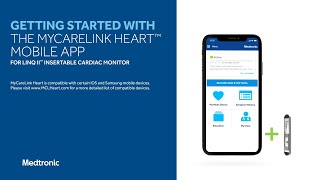
The LINQ II system offers flexible and convenient remote patient management. Patients can transmit device data automatically via the MyCareLink Heart™ mobile app (compatible with both iOS and Android smartphones/tablets) or the MyCareLink Relay™ home communicator. This remote connectivity, including the first-ever remote programming capability for an ICM, allows clinicians to optimize device settings post-insertion without the need for in-office visits, reducing patient burden and improving compliance. The device is also MRI-compatible (at 1.5 and 3.0T) and features end-to-end encryption to ensure the security and privacy of patient data.

Reviewed by Pouyan Golshani, MD — Interventional Radiologist

Key Features

  • AccuRhythmu2122 AI algorithms for enhanced accuracy
  • Remote programming capability
  • Up to 4.5 years of continuous monitoring
  • MRI compatibility (1.5 and 3.0T)
  • MyCareLink Heartu2122 mobile app for data transmission
  • MyCareLink Relayu2122 home communicator option
  • Innovative PVC detection algorithm
  • Pediatric indication (ages 2+)
  • End-to-end data encryption
  • Minimally invasive implantation

Use Cases

  • Long-term monitoring for cardiac arrhythmias
  • Diagnosing unexplained syncope (fainting)
  • Investigating palpitations and chest pain
  • Managing atrial fibrillation (AFib)
  • Detecting AFib after cryptogenic stroke
  • Reducing false alerts in cardiac monitoring

What Physicians Need to Know

ECG/EKG Analysis Capability
The LINQ II ICM records subcutaneous ECG and offers an enhanced ECG experience to aid in clinical adjudication. Its AccuRhythmu2122 AI algorithms are trained on over 1 million electrocardiogram heart rhythm episodes to improve analysis accuracy.
Arrhythmia Detection Accuracy
Features advanced AccuRhythmu2122 AI algorithms for enhanced accuracy in detecting arrhythmias like Atrial Fibrillation (AF) and Pause. The AI system significantly reduces false alerts (over 91% reduction in AF and pause false alerts with latest enhancements) while preserving true alerts (99% for AF, 100% for Pause). It also includes an innovative PVC detection algorithm.
Heart Failure Risk Prediction
The LINQ family of ICMs, utilizing AI-based algorithms, can quantify AF burden to inform treatment decisions and help anticipate future healthcare needs. Studies, such as DEFINE AFib, have shown its ability to predict patients' risk of needing AF-related healthcare. Medtronic is also evaluating its utility in identifying patients at high risk of worsening heart failure through trials like ALLEVIATE-HF and LINQ2-HF.
Cardiac Monitoring Integration
The system integrates with the Medtronic CareLinku2122 Network for remote management. Patients can transmit data via the MyCareLink Heartu2122 mobile app (Bluetooth-enabled) or the MyCareLink Relayu2122 Home Communicator. It also supports remote programming of device parameters, potentially reducing clinic visits.
AHA/ACC Guideline Alignment
The LINQ II ICM is indicated for patients at increased risk of cardiac arrhythmias or those experiencing transient symptoms suggestive of an arrhythmia, aligning with the general principles for long-term cardiac monitoring as outlined in major cardiology guidelines for conditions like unexplained syncope, palpitations, or cryptogenic stroke.
Real-Time Alert Capability
The device automatically detects and records abnormal heartbeats, providing timely and actionable alerts to clinicians via BlueSyncu2122 technology. Patients can also manually mark symptoms, which are then transmitted to the clinic for review, with AI algorithms ensuring only the most accurate alerts are signaled.
MRI Compatibility
The LINQ II ICM is MR Conditional at u2264 3T, with no post-insertion waiting period required, allowing patients to undergo MRI scans under specified conditions.
Physician Tip

Leverage the AccuRhythmu2122 AI algorithms to significantly reduce false alerts and streamline data review, allowing more focused attention on clinically relevant events. Utilize the remote programming feature to optimize device settings without requiring in-person patient visits. Consider the LINQ II for long-term, continuous monitoring (up to 4.5 years) in patients with infrequent symptoms, cryptogenic stroke, or those at risk for cardiac arrhythmias, including pediatric patients aged two and older. Educate patients on the use of the MyCareLink Heartu2122 mobile app or MyCareLink Relayu2122 Home Communicator to ensure consistent data transmission and enhance patient engagement in their care. The device provides valuable data for diagnosing underlying heart conditions and guiding treatment protocols for AF and other abnormal heart rhythms, and its AI-based analytics may assist in predicting future AF-related healthcare needs.

The LINQ II ICM seamlessly integrates with the Medtronic CareLinku2122 Network for comprehensive remote patient management. It offers flexible connectivity options, including Bluetooth-enabled communication with patient smartphones via the MyCareLink Heartu2122 mobile app and the MyCareLink Relayu2122 Home Communicator for bedside data transmission. Additionally, the Reveal LINQu2122 mobile manager app supports device activation, programming, and checks in a clinical setting. The cloud-based AccuRhythmu2122 AI system processes data within the CareLinku2122 network to enhance diagnostic accuracy.

Details

Category Cardiology AI, Clinical Decision Support & Reference
Pricing Enterprise — Pricing is typically negotiated with healthcare systems and is not publicly disclosed.
Free Trial No
DeploymentHybrid
Mobile AppBoth
Data Export Yes
LanguagesEnglish
Training Yes
Target SizeSolo to large health systems
Compliance
BAA AvailableUnknown AI-estimated
HIPAA Compliant Yes AI-estimated
FDA Status Cleared AI-estimated

510(k) K233562 (initial clearance for LINQ II in 2020, expanded pediatric indication in 2022)

Integrations
EHR Not specified
Specialties Cardiology

Social Proof

CustomersMore than 1 million patients have received a Medtronic ICM worldwide

Support & Reliability

Training Provided Yes

What the Web Says

The Medtronic LINQ II Insertable Cardiac Monitor (ICM) is a small, wireless device designed for long-term, continuous monitoring of abnormal heart rhythms. It has received positive feedback from physicians and patients for its ability to provide crucial diagnostic data, reduce false alerts through AI algorithms, and offer remote programming capabilities. The device is about one-third the size of a AAA battery and has a battery life of up to 4.5 years.

Overall: Positive

Strengths

  • Provides continuous, long-term monitoring for infrequent or unknown heart rhythm conditions, aiding in diagnosis and treatment.
  • Significantly reduces false alerts for Atrial Fibrillation (AF) and pauses with AccuRhythm AI algorithms, saving clinics considerable time in reviewing reports.
  • Offers remote programming capabilities, reducing the need for in-person office visits.
  • Small size (one-third of a AAA battery) and allows patients to undergo MRI scans.
  • Gives patients peace of mind knowing their heart activity is being monitored 24/7.
  • Insertion procedure is generally quick, performed with local anesthetic, and has a good safety profile.

Limitations

  • Some patients experience incisional pain or soreness for a couple of weeks after implantation.
  • The cost of monitoring services may not always be fully covered by insurance, leading to out-of-pocket expenses.
  • Patients may wish the device provided an immediate alert for irregular heart activity.
  • Requires remembering to charge a separate receiver/home communicator device.
  • Some patients have reported feeling the device under their skin.
  • The device needs to be removed after its battery life, incurring additional cost and a procedure.

Based on reviews from: Medtronic.com, Reddit (r/AFIB, r/askCardiology, r/PVCs), MedTech Dive, Diagnostic and Interventional Cardiology, LIFE TREE, Mayo Clinic Connect, Stories of Our Boys, Turquoise Health Blog

Last updated: 2026-07-20

Ratings & Reviews

No reviews yet. Be the first to review this tool!

Rate LINQ II Insertable Cardiac Monitor

Clinical Value
Ease of Use
Integration
Support & Docs
Value for Money

Press & Coverage

MedTech Dive
Newest Medtronic implantable heart monitor gets FDA nod as remote device features proliferate
Medtronic received FDA 510(k) clearance and CE marking for its Linq II insertable cardiac monitor, which features remote programming and is designed for long-term monitoring of abnormal heart rhythms. The device is one-third the size of a AAA battery, offers improved accuracy, and has a longevity of 4.5 years.
2020-07
Cardiac Rhythm News
US and European approval for Medtronic's LINQ II insertable cardiac monitor
Medtronic announced it received US FDA clearance and CE mark approval for its LINQ II insertable cardiac monitor (ICM) with remote programming, allowing clinicians to optimize device settings without in-person visits. The device offers improved longevity and enhanced accuracy for detecting abnormal heart rhythms.
2020-07
Contemporary Pediatrics
FDA gives clearance to Medtronic's LINQ II
Medtronic's LINQ II Insertable Cardiac Monitor (ICM) system received FDA clearance for use in pediatric patients aged over 2 years, making it the first ICM to receive this 510(k) clearance for this population. The device includes AccuRhythm AI algorithms to reduce false alerts and has a battery life of over 4.5 years.
2022-09
PR Newswire
Medtronic receives FDA clearance for expanded indication of LINQ IIu2122 insertable cardiac monitor for use in pediatric patients ages 2 and older
Medtronic announced that its LINQ IIu2122 Insertable Cardiac Monitor (ICM) system is the first and only ICM to receive 510(k) clearance by the U.S. FDA for use in pediatric patients over the age of 2 who have heart rhythm abnormalities. The system incorporates AccuRhythmu2122 AI algorithms to improve the accuracy of heart rhythm event data.
2022-09
MD+DI
Medtronic Made a Bold Manufacturing Move with Linq II
Medtronic made a significant manufacturing change for its Linq II Insertable Cardiac Monitor, adopting a wafer-scale manufacturing process, typically used for integrated circuits, to automate production and allow for easier integration of future sensors. The Linq II won a best-in-show award at the MDEAs.
2021-05
BioWorld
FDA greenlights two Medtronic AI algorithms for cardiac monitoring
The FDA cleared two AccuRhythm AI algorithms from Medtronic for use with the Linq II insertable cardiac monitor, designed to detect atrial fibrillation and asystole with improved accuracy. These cloud-based algorithms aim to reduce false alerts and will be available on the CareLink Network.
2021-07
Cardiac Rhythm News
AccuRhythm AI algorithms gain US FDA clearance
Medtronic announced FDA clearance for two AccuRhythm AI algorithms for the LINQ II insertable cardiac monitor, which target common false alerts like atrial fibrillation and asystole. These AI-powered algorithms enhance the accuracy of heart rhythm data for better diagnosis and treatment.
2021-07
American Heart Association Journals
Monitoring of Remotely Reprogrammable Implantable Loop Recorders With Algorithms to Reduce Falseu2010Positive Alerts
A study published in the Journal of the American Heart Association evaluated the LINQ II and LUX-Dx insertable loop recorders, focusing on remote reprogramming and algorithms to reduce false-positive alerts. The study found that customized ILR programming and remote management can positively impact clinic efficiency.
2024-02

Videos

Product demos, reviews, and walkthroughs for LINQ II Insertable Cardiac Monitor.

View all on YouTube

Frequently Asked Questions

The LINQ II's AccuRhythm AI algorithms significantly improve arrhythmia detection by reducing false atrial fibrillation (AF) alerts by 88.2% and false pause alerts by 97.4%, while preserving 99% of true AF alerts and 100% of true pause alerts. This cloud-based AI system, trained on over a million adjudicated ECGs, enhances diagnostic accuracy and saves clinics substantial time by minimizing the review of non-clinically relevant alerts.
Medtronic prioritizes a high level of security for LINQ II data, employing NIST government standards for encryption before transmitting information to the CareLinku2122 network. As with all medical devices handling protected health information, the LINQ II system and its platform must adhere to stringent regulations like HIPAA and GDPR, requiring robust administrative, physical, and technical safeguards, as well as clear policies for data handling, access, and cross-border transfers.
The LINQ II offers continuous, long-term monitoring with AI-enhanced accuracy, providing superior diagnostic yield for conditions like AF, cryptogenic stroke, and syncope compared to short-term monitors. Studies indicate that ICMs like LINQ II detect significantly more AF episodes than consumer wearables such as the Apple Watch, especially when wearables are not consistently worn, thus providing more reliable and actionable insights for physicians. Other ICMs, like Boston Scientific's LUX-Dx and Biotronik's BIOMONITOR IV, also incorporate AI to reduce false positives and aid clinical review.
Insertable cardiac monitors, including the LINQ II, are widely covered by Medicare and private insurance providers, though specific costs and copays depend on individual plans and conditions. Economic studies have demonstrated that continuous monitoring with LINQ ICMs is cost-effective, primarily due to higher AF detection rates leading to timely interventions that prevent strokes and improve quality-adjusted life years.
While LINQ II's AI algorithms significantly reduce false positives, no AI system is entirely infallible, and there remains a potential for missed or over-detected events in specific patient populations. Physicians must critically interpret AI-driven insights, understanding that AI models can sometimes act as 'black boxes' without transparent decision-making processes, necessitating clinical judgment and not a complete delegation of responsibility.
The LINQ II facilitates integration through the Medtronic CareLinku2122 Network, which enables remote programming and secure, two-way communication, thereby reducing the need for frequent office visits and the burden of reviewing repetitive data. AI-driven data analysis can enhance clinicians' ability to efficiently retrieve and synthesize patient data from EHRs, potentially through digital dashboards or chat-based interfaces, streamlining workflow and improving patient care.

Related Tools

EchoMD AutoEF
Caption Health (formerly Bay Labs, now part of GE HealthCare)
Cardiology AI
EchoMD AutoEF is an FDA-cleared AI software that automates the selection of echocardiogram clips and calculates left ventricular ejection fraction (EF), enhancing efficiency and accuracy in cardiac assessments.
ECG-AI Cardiac Amyloidosis (CA) 12-Lead Algorithm
Anumana, Inc.
Cardiology AI
An AI algorithm for screening cardiac amyloidosis using standard 12-lead ECGs.
DEEPVESSEL Plaque
Keya Medical Technology Co., Ltd.
Cardiology AI
An AI software platform for coronary plaque analysis and quantification from CT angiography.
WatchMate Software
Anumana, Inc.
Cardiology AI
Anumana is an AI-driven health technology company from nference, developing and delivering ECG algorithms enabling early diagnosis and intervention.
syngo.CT Coronary Cockpit
Siemens Healthineers
Cardiology AI
syngo.CT Coronary Cockpit is an AI-powered software tool by Siemens Healthineers for efficient and accurate CT coronary angiography analysis.
HeartLung AI-CVD®
HeartLung Corporation
Cardiology AI
HeartLung AI-CVD® is an FDA-cleared AI-powered quantitative imaging tool that provides automated CT-derived measurements for assessing cardiovascular and multisystem risks opportunistically.

See all Cardiology AI tools →

More from Medtronic

Guardian Connect
Medtronic
Endocrinology & Metabolic AI
The Medtronic Guardian Connect system is a continuous glucose monitoring (CGM) system that provides real-time glucose level monitoring and alerts on mobile devices, with AI capabilities for predicting blood glucose changes.
Reveal LINQ
Medtronic
Cardiology AI
Medtronic Reveal LINQ is a tiny, implantable cardiac monitor that continuously records ECG for up to three years, utilizing AccuRhythm™ AI algorithms to accurately detect and diagnose cardiac arrhythmias, including atrial fibrillation, cryptogenic stroke, and unexplained syncope.
Reveal LINQ Insertable Cardiac Monitor
Medtronic
Cardiology AI
The Medtronic LINQ II™ Insertable Cardiac Monitor (ICM) with AccuRhythm™ AI algorithms provides long-term, accurate heart monitoring by using deep learning AI to reduce false alerts and enhance diagnostic yield for conditions like atrial fibrillation and syncope.

View company profile →

Suggest an Edit → | Last Verified: 2026-04-19 | First Added: 2026-04-19
AI Tool Finder
AI-powered search. Results may not be comprehensive.