Lung Vision System
Overview
The LungVision® System by Body Vision Medical is an AI-powered, intraoperative imaging and navigation system designed to revolutionize lung cancer diagnostics and interventions. It transforms images from any conventional 2D C-arm into real-time 3D images, providing pulmonologists and thoracic surgeons with enhanced visualization and guidance during bronchoscopy procedures.
Utilizing proprietary AI Tomo® technology, LungVision corrects for CT-to-body divergence, a common challenge in traditional navigation systems, and offers visual tool-in-lesion confirmation. This enables clinicians to accurately locate and biopsy even small, peripheral lung lesions with greater precision, confidence, and simplicity.
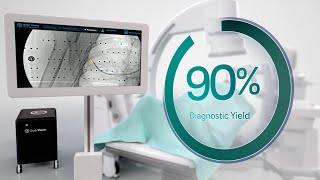
The system is hardware-light, offering an affordable, low-cost solution with a small, mobile footprint, and seamlessly integrates with existing 2D and 3D C-arms, navigation platforms, bronchoscopes (including robotic), and biopsy tools. LungVision has demonstrated improved diagnostic yields, approaching 90-95%, and significantly reduces radiation exposure compared to 3D C-arms.
It supports comprehensive workflow from planning (including virtual bronchoscopy) to real-time navigation and lesion localization, aiming to facilitate earlier diagnosis and more effective treatment of lung cancer.
Reviewed by Pouyan Golshani, MD — Interventional Radiologist
Key Features
- AI-powered 3D imaging from 2D C-arms
- Real-time intraoperative navigation and lesion localization
- Correction for CT-to-body divergence
- Augmented fluoroscopy with tool-in-lesion confirmation
- Compatibility with existing bronchoscopes, C-arms, and biopsy tools (including robotic)
- Reduced radiation exposure (up to 1/5 of 3D C-arms)
- Affordable, hardware-light, mobile footprint
- Improved diagnostic yield (approaching 90-95%)
- Virtual bronchoscopy for pathway planning
- C-Arm Based Tomography (CABT)
Use Cases
- Peripheral pulmonary nodule biopsy
- Early lung cancer diagnosis
- Image-guided navigation during bronchoscopy procedures
- Delivery of localized therapies
- Diagnosis and treatment in a single-anesthesia event
- Accessing smaller, hard-to-visualize, and more peripheral lesions
What Physicians Need to Know
Leverage LungVision's real-time 3D imaging and AI Tomou00ae technology to overcome CT-to-body divergence, especially for small or difficult-to-access peripheral lung nodules. Integrate it with your existing C-arm and robotic bronchoscopy platforms to enhance navigation and confirm tool-in-lesion placement, thereby maximizing diagnostic yield and potentially reducing procedure time and radiation exposure. Consider the comprehensive training and support offered to optimize adoption and clinical outcomes.
The LungVision System is designed for broad compatibility, seamlessly integrating with virtually any 2D C-arm, various navigation platforms, and both standard and robotic bronchoscopes (e.g., Ion by Intuitive, Ethicon Monarch). This 'agnostic' approach allows healthcare providers to utilize their existing imaging hardware without significant upgrades, making it a versatile addition to diverse clinical settings. It also integrates with standard biopsy instruments, including cryoprobes.
Details
| Category | Oncology AI, Radiology & Imaging AI, Surgical AI |
| Pricing |
Contact for pricing
|
| Deployment | On-premise hardware with integrated software (main unit and tablet). |
| Compliance | |
| BAA Available | Unknown AI-estimated |
| HIPAA Compliant | Unknown AI-estimated |
| FDA Status |
Yes AI-estimated The Lung Vision System received 510(k) FDA clearance (K183593) on April 18, 2019, as an image processing and radiological system. It is intended to enable users to segment previously acquired 3D CT datasets and overlay and register these with live X-ray images to support catheter/device navigation during pulmonary procedures. |
| Integrations | |
| EHR | Not specified |
| Specialties | Cardiothoracic Surgery, Interventional Radiology, Pulmonology |
What the Web Says
The Lung Vision System by Body Vision Medical is an AI-assisted navigation and augmented fluoroscopy system designed to improve the diagnosis of peripheral pulmonary nodules. It integrates pre-procedural 3D CT scans with real-time intraoperative fluoroscopy, allowing physicians to visualize nodules not typically visible with conventional fluoroscopy. The system has received FDA clearance and aims to enhance diagnostic yield and safety in lung nodule biopsies.
Overall: PositiveStrengths
- Improved diagnostic yield for peripheral lung lesions (81% vs. 64% in one study).
- Facilitates localization of nodules not visible with traditional fluoroscopy.
- Increases sample adequacy for molecular testing.
- High safety profile with minimal complications.
- Minimally invasive approach for early detection and characterization of lung nodules.
- Integrates AI algorithms for precise targeting.
Limitations
- No specific cons were identified in the provided search results.
- Limited information available from independent tech reviewers, Reddit, G2, or Capterra.
- One study reported mild to moderate bleeding complications in 21% of procedures, though no severe bleeding or pneumothorax.
- One case of atrial fibrillation was reported in a study, managed medically.
Based on reviews from: Thorax, ResearchGate, Innolitics (FDA 510(k) listings), Scribd (Abstracts of Italian Society of Thoracic Endoscopy, Artificial Intelligence and Machine Learning (AIML) - Enabled Medical Devices FDA), Volza (HSN Code used in Israel), Google Scholar (referencing various medical journals)
Last updated: 2026-07-18
Ratings & Reviews
No reviews yet. Be the first to review this tool!
Rate Lung Vision System
Press & Coverage
Videos
Product demos, reviews, and walkthroughs for Lung Vision System.
LungVision Workflow - Standalone for Navigation and Real-Time Imaging