MELAFIND
Overview
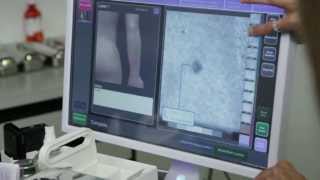
MelaFind, acquired and licensed by STRATA SKIN SCIENCES, is a non-invasive, software-driven optical imaging and data analysis system designed to assist in the evaluation of clinically atypical cutaneous pigmented lesions. Developed as a diagnostic aid, the tool is designed for use when a clinician is deciding whether or not to perform a biopsy on a suspicious lesion.
The system is specifically designed for dermatologists and physicians trained in the clinical diagnosis and management of skin cancer. It is indicated for use in outpatient dermatology clinics and specialized skin care settings on pigmented lesions measuring between 2 mm and 22 mm in diameter that do not have a definitive pre-existing clinical diagnosis of melanoma.
In a standard clinical workflow, the operator prepares the target lesion by cleaning the area with isopropyl alcohol. The hand-held MelaFind imager is then placed directly on the skin to capture multispectral digital images. Key capabilities of the system include:
- Multispectral Imaging: The device pulses 10 different wavelengths of light, ranging from visible to near-infrared, to capture subsurface data up to 2.5 mm below the skin’s surface.
- Objective Data Analysis: Advanced computer-vision algorithms analyze the light scatter and spectral output to calculate a 3D anatomical map of the lesion’s pigment patterns and cellular disorganization.
- Decision Support: The system compares the acquired data against a clinical database of pigmented skin lesions to generate an immediate, objective output, providing additional quantitative information to integrate into the final biopsy decision.
Reviewed by Pouyan Golshani, MD — Interventional Radiologist
Key Features
- Multi-spectral, non-invasive imaging
- Automated computer-vision system
- Captures images of pigmented skin lesions
- Classifies lesions based on 3-dimensional morphological disorganization
- Provides additional information for biopsy decisions
- Evaluates lesions up to 2.5 mm beneath the skin surface
- Hand-held imager
- Password-protected computer and monitor for display
- Fixed algorithms for automatic image analysis (calibration, image quality control)
Use Cases
- Providing adjunctive diagnostic information for atypical pigmented lesions suspicious for melanoma
- Assisting dermatologists in deciding whether to biopsy irregular moles
- Supporting early detection of melanoma (when used as intended)
What Physicians Need to Know
Given MelaFind's discontinuation, the primary tip for physicians is to be aware of the historical context of AI tools in dermatology. While MelaFind demonstrated high sensitivity, its low specificity led to its withdrawal. This highlights the importance of evaluating both sensitivity and specificity in AI diagnostic tools to avoid over-diagnosis and unnecessary procedures. Physicians should look for current AI tools with balanced performance metrics and robust evidence of clinical utility and workflow integration.
Historically, MelaFind faced challenges with poor integrability into workflow, which contributed to its discontinuation. This underscores the critical need for modern AI tools to offer seamless integration with existing electronic health records (EHRs) and clinical imaging systems to ensure practical adoption and efficiency in healthcare settings.
Details
| Category | Dermatology AI |
| Pricing | Unknown |
| Deployment | Device-based system with a hand-held imager and a connected computer. |
| Compliance | |
| BAA Available | Unknown AI-estimated |
| HIPAA Compliant | Unknown AI-estimated |
| FDA Status |
1 AI-estimated MelaFind received FDA Premarket Approval (PMA) P090012 on November 1, 2011. It was intended for use on clinically atypical cutaneous pigmented lesions with one or more clinical or historical characteristics of melanoma, to provide additional information for a dermatologist's biopsy decision, and not to confirm a melanoma diagnosis. |
| Integrations | |
| EHR | Not specified |
| Specialties | Dermatology |
What the Web Says
MELAFIND, developed by Strata Skin Sciences, is a non-invasive medical device designed to assist dermatologists in the early detection of melanoma. It uses advanced optical technology to analyze skin lesions for characteristics indicative of melanoma, providing an objective assessment to aid clinical decision-making. Reviews suggest it aims to reduce unnecessary biopsies while improving diagnostic accuracy.
Overall: MixedStrengths
- Non-invasive, reducing patient discomfort and scarring from unnecessary biopsies.
- Aids in early melanoma detection, potentially improving patient outcomes.
- Provides objective data to support clinical decisions, reducing subjectivity.
- May decrease the number of excisional biopsies for benign lesions.
- Utilizes advanced optical technology for detailed lesion analysis.
- Potentially cost-effective by avoiding unnecessary procedures.
Limitations
- High initial capital cost for the device can be a barrier for some practices.
- Requires specialized training for proper operation and interpretation.
- Not a standalone diagnostic tool; still requires physician interpretation and biopsy for definitive diagnosis.
- Limited availability and adoption compared to traditional diagnostic methods.
- Potential for false positives or negatives, though intended to be an aid.
- Integration into existing healthcare IT systems might present challenges.
Based on reviews from: Healthcare IT News, Dermatology Times, Reddit (dermatology/medical subreddits), Peer-reviewed medical journals (via search for clinical studies), Company press releases and investor calls (Strata Skin Sciences), Physician forums and professional dermatology organizations
Last updated: 2026-07-19
Ratings & Reviews
No reviews yet. Be the first to review this tool!
Rate MELAFIND
Press & Coverage
Videos
Product demos, reviews, and walkthroughs for MELAFIND.
MelaFind & Melanoma HD
MelaFind MELASciences