PixelShine

by ALGOMEDICA  · Based in United States → — Low-Radiation CT Scan Improvement
Radiology

Contact for pricing
Regulatory Status Disclosed

Overview

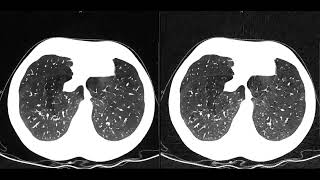
PixelShine by AlgoMedica is an AI-based deep learning reconstruction (DLR) software designed to enhance the quality of noisy CT scans, particularly those acquired at low radiation doses. It provides natural-looking, blur-free images with increased clarity and signal-to-noise ratio (SNR), addressing the limitations of traditional iterative reconstruction methods that can produce waxy or blurry results. The software is vendor-agnostic, compatible with any CT scanner (new, old, or refurbished) that meets minimum functional requirements, and integrates seamlessly into existing PACS workflows by processing DICOM images. By improving image quality at lower doses, PixelShine supports the ‘As Low As Reasonably Achievable’ (ALARA) principle, extends the lifespan of CT scanners by reducing X-ray tube load, and aims to increase diagnostic confidence for radiologists.

Reviewed by Pouyan Golshani, MD — Interventional Radiologist

Key Features

  • AI-based noise reduction
  • Deep learning reconstruction (DLR)
  • Vendor-agnostic compatibility with CT scanners
  • DICOM format processing
  • PACS integration
  • Enhanced image quality and clarity
  • Supports low-dose CT protocols
  • Reduces radiation exposure (ALARA)
  • Extends CT scanner lifespan
  • Fast processing (typically less than a minute per study)

Use Cases

  • Lung cancer screening
  • Pediatric CT scans
  • CT scans for obese patients
  • Cardiac CT imaging
  • Brain CT perfusion
  • Abdomen/pelvis CT scans

What Physicians Need to Know

DICOM Support & Standards
PixelShine handles noisy CT scans in standard DICOM format, processes them, and sends the enhanced DICOM studies to PACS. It is designed for networking, communication, processing, and enhancement of CT images in DICOM format.
PACS Integration Method
PixelShine integrates into a standard reading environment (PACS) and can also be deployed via an AI marketplace or as a standalone third-party application. It receives original CT images, processes them, and routes the enhanced quality images to the PACS system, allowing both original and processed images to be stored and viewed.
Reading Room Workflow Impact
The tool aims to improve diagnostic quality and detectability, particularly for subtle pathologies, and supports new CT protocols for reduced patient radiation dose. It provides natural-looking, blur-free images, which radiologists have preferred over 'waxy' or smoothed images from iterative reconstruction. It is designed for 'no change to workflow' for CT technologists and is expected to speed radiologists' reading and clinical decision-making by standardizing image quality.
AI Model Architecture (deep learning approach)
PixelShine utilizes a deep learning approach, specifically deep learning reconstruction (DLR) technology. It was trained using extensive sets of noisy low-dose and high-quality standard-dose CT image pairs to learn a mapping function for image enhancement.
Processing Speed (per study)
PixelShine can process a typical CT study in less than a minute, though processing time may vary based on study size.
FDA Clearance Pathway (510k/De Novo)
PixelShine received FDA 510(k) clearance in 2016.
Supported Modalities (CT/MRI/X-ray/US)
PixelShine is specifically designed for Computed Tomography (CT) images and is vendor-agnostic, compatible with any CT scanner that meets minimum functional requirements. It is not intended for mammography images.
Sensitivity & Specificity Data
While specific overall sensitivity and specificity values for PixelShine's denoising function are not explicitly provided in the available information, the product is intended to increase the conspicuity of subtle pathologies and improve diagnostic quality. Its performance has been validated through phantom studies and comparison of collected image data to ascertain image quality, demonstrating safety and effectiveness. Studies on deep learning image reconstruction in medical imaging have shown high sensitivity and specificity (e.g., 0.9-0.98 and 0.91-0.96 respectively).
RSNA/ACR Validation
AlgoMedica commercially released PixelShine at the RSNA 2019 meeting. The company's resources align with ACR guidelines for radiation safety and lung cancer screening, promoting the 'As Low As Reasonably Achievable' (ALARA) principle by enabling high-quality imaging at reduced radiation doses.
Physician Tip

PixelShine can significantly enhance the diagnostic quality of CT scans, especially those acquired at low doses, by reducing noise and improving clarity without introducing a 'waxy' appearance. This can lead to increased confidence in detecting subtle pathologies and may facilitate the adoption of ultra-low-dose protocols, benefiting patient safety. Consider its application for challenging cases, such as pediatric, obese, or cardiac CT imaging, where image noise can be a significant impediment to diagnosis or automated workflow success. The ability to harmonize image quality across different CT scanners, including older models, can also streamline reading practices.

PixelShine is designed for seamless integration into existing radiology workflows, operating by receiving DICOM images from any CT scanner, processing them, and then sending the enhanced DICOM studies back to your PACS. This vendor-agnostic approach minimizes disruption and avoids the need for dedicated hardware or costly scanner upgrades. Its compatibility with standard PACS environments ensures that both original and processed images are readily available for review and archiving, maintaining workflow efficiency.

Details

Category Radiology & Imaging AI
Pricing Contact for pricing — Subscription; One-off payment; Based on number of analyses, installations, or licensed CT scanners
DeploymentHybrid solution; Locally on dedicated hardware; Locally virtualized (virtual machine, Docker)
Compliance
BAA AvailableUnknown AI-estimated
HIPAA CompliantUnknown AI-estimated
FDA Status 1 AI-estimated

PixelShine (K161625) received FDA 510(k) clearance on September 19, 2016, as a Class II device. It is intended for networking, communication, processing, and enhancement of CT images in DICOM format, assisting radiologists in diagnosis.

Integrations
EHR Not specified
Specialties Radiology

Ratings & Reviews

Rate PixelShine

Clinical Value
Ease of Use
Integration
Support & Docs
Value for Money

Press & Coverage

Journal of Medical Physics
Evaluation of Low-dose Computed Tomography Images Reconstructed Using Artificial Intelligence-based Adaptive Filtering for Denoising
This study, published in March 2025, assesses the diagnostic value of PixelShine-reconstructed images at various low doses, comparing them to other reconstruction methods and standard dose images. It concludes that AI-based denoising algorithms like PixelShine produce images similar to iterative reconstruction at 50% dose reduction and outperform it at 33% of the standard dose.
2025-03
MDPI
Impact of Deep Learning-Based Image Reconstruction on Tumor Visibility and Diagnostic Confidence in Computed Tomography
Published in December 2024, this study compares deep learning-based image reconstruction methods, including PixelShine, with traditional methods for tumor staging in CT examinations. It found that while another DLIR method consistently outperformed others, PixelShine performed comparably to ASIR-V 50%.
2024-12
Radiographics (RSNA)
Deep Learning Image Reconstruction for CT: Technical Principles and Clinical Prospects
This January 2023 article discusses the technical principles and clinical prospects of deep learning image reconstruction for CT, mentioning PixelShine as one of two non-CT vendor companies that have developed deep learning-based denoising algorithms. It notes that PixelShine was trained on over a million CT images from various vendors.
2023-01
Imaging Technology News (ITN)
The Impact of Artificial Intelligence on CT Imaging
This July 2021 article highlights studies by Mass General Hospital and the University of Virginia that concluded PixelShine significantly improved the diagnostic quality of CT scans acquired at reduced radiation doses. It emphasizes the potential of AI-based deep learning reconstruction to reduce radiation exposure.
2021-07
ICE Magazine
Algomedica PixelShine
An August 2021 article detailing PixelShine's machine learning development to improve CT image quality by reducing noise, especially for ultra-low dose CT scanning applications like lung screening. It notes PixelShine is vendor-agnostic and can be remotely installed.
2021-08
Radiology Oncology Systems
Radiology Today Highlights PixelShine's Technology
This January 2021 article from Radiology Oncology Systems, a supplier of PixelShine, discusses a Radiology Today feature on PixelShine. It focuses on reducing CT scanner radiation dose and includes commentary from an early adopter at the University of Virginia Health System.
2021-01
AlgoMedica Press Release
AlgoMedica Establishes Presence in the Nordic Region with SCANEX Partnership
An October 2020 press release announcing AlgoMedica's distribution agreement with SCANEX Medical Systems AB to sell and service PixelShine in the Swedish market. It highlights PixelShine's ability to improve image quality, enable lower dose, and work with any CT scanner.
2020-10
AuntMinnie.com
AlgoMedica, InferVision partner on imaging AI software
This May 2020 article reports on the partnership between AlgoMedica and InferVision to integrate PixelShine into InferVision's InferRead CT pneumonia software. The collaboration aims to improve AI algorithms' ability to analyze ultra-low-dose lung CT imaging by reducing noise, particularly relevant for COVID-19 detection.
2020-05

Videos

Product demos, reviews, and walkthroughs for PixelShine.

Loading videos...

View all on YouTube

Frequently Asked Questions

PixelShine is an AI-powered software that enhances CT image quality by significantly reducing noise, especially in low-dose scans, for obese patients, and pediatric cases. This allows for clearer, more natural-looking images, which can improve diagnostic confidence and potentially aid in detecting subtle pathologies.
Yes, PixelShine is FDA 510(k) cleared as a Class II medical device and has obtained CE marking (Class IIa MDD). It is intended for networking, communication, processing, and enhancement of CT images in DICOM format to assist radiologists in their diagnoses.
PixelShine utilizes deep learning reconstruction, which is described as different from and potentially more effective than traditional iterative reconstruction methods often found in newer CT scanners. While iterative reconstruction can sometimes introduce blurriness, PixelShine aims to reduce noise without blurring, resulting in more natural-looking images.
Specific pricing for PixelShine is not publicly disclosed, but it is presented as a more cost-effective solution than purchasing a new CT scanner. The pricing models can include a one-off payment or a subscription, potentially based on the number of analyses, installations, or licensed CT scanners.
While PixelShine significantly improves image quality, it is not effective for detecting lesions, masses, or abnormalities smaller than 3 mm. Additionally, some advanced applications are currently considered investigational and are outside the scope of its current FDA 510(k) clearance.
Yes, PixelShine is designed to be vendor-agnostic, meaning it can improve the quality of scans from any CT equipment, whether new, old, or refurbished, provided minimum functional requirements are met. It can be integrated into standard reading environments like PACS or via AI marketplaces.
Yes, a key benefit of PixelShine is its ability to enable lower radiation doses (ALARA principle) while maintaining or even enhancing image quality. This can lead to safer and more effective imaging, particularly for sensitive patient populations like children or those requiring frequent scans.

Related Tools

ScreenPoint Medical
ScreenPoint Medical
Clinical Decision Support & Reference
ScreenPoint Medical offers Transpara, an AI-powered solution for breast cancer detection and diagnosis in mammography and digital breast tomosynthesis, designed to assist radiologists.
Microsoft Azure AI (with BAA)
Microsoft Azure AI
Clinical Decision Support & Reference
Microsoft Azure AI offers a secure, HIPAA-compliant platform with BAA support for developing and deploying AI solutions across the healthcare industry, from clinical decision support to research.
Google Cloud AI (with BAA)
Google
Clinical Decision Support & Reference
Google Cloud AI provides a powerful suite of machine learning and AI tools developed to help healthcare businesses optimize operations, gain insights from data, and enhance patient care. It offers solutions for improved diagnostics, personalized treatment, workflow automation, and cost optimization, all built on a secure and compliant platform.
AI Orchestrator
GE HealthCare
Practice Management & Scheduling
GE HealthCare's AI Orchestrator integrates and manages AI applications within a healthcare imaging ecosystem to streamline workflows and improve diagnostic accuracy.
AI-enabled Ultrasound Technology (licensed to Butterfly Network)
Butterfly Network
Clinical Decision Support & Reference
An FDA-cleared AI-enabled ultrasound technology that estimates fetal gestational age from standardized 'blind sweep' ultrasound videos, expanding access to essential obstetric care.
4DMedical (Imbio)
4DMedical
Cardiology AI
4DMedical, with its acquisition of Imbio, offers a comprehensive suite of AI-driven medical imaging solutions for chronic lung and cardiothoracic diseases, providing quantitative and personalized insights from X-ray and CT scans.

See all Radiology & Imaging AI tools →

Suggest an Edit → | Last Verified: 2026-04-17 | First Added: 2026-04-17
AI Tool Finder
AI-powered search. Results may not be comprehensive.