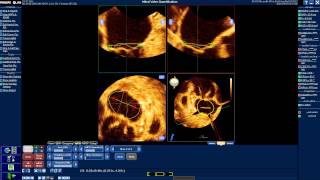
QLAB Advanced Quantification

by Philips Healthcare  · Based in Netherlands →Turning images into answers. Providing insight to support your clinical decisions.
Cardiology Obstetrics & Gynecology Radiology

Not publicly available
Regulatory Status Disclosed

Overview

Philips QLAB Advanced Quantification software is a comprehensive suite of advanced clinical tools designed to enhance the value of ultrasound imaging by providing quantifiable, reproducible, and consistent results. It is built upon proven algorithms and leverages Anatomical Intelligence Ultrasound (AIUS) with advanced organ modeling, image slicing, and quantification to make exams easier to perform and deliver new levels of clinical information. QLAB offers various Q-Apps that utilize anatomical intelligence, some featuring ZeroClick technology for automated analysis with minimal user interaction. The software supports both 2D and 3D quantification, including color Doppler quantification, and aids in the review and analysis of contrast studies. It can be deployed as a stand-alone product on a standard PC, a dedicated workstation, or directly on Philips ultrasound systems, and integrates with Philips’ Xcelera, Q-Station, and IntelliSpace PACS for streamlined departmental workflow.

Reviewed by Pouyan Golshani, MD — Interventional Radiologist

Key Features

  • Advanced organ modeling, image slicing, and proven quantification for 2D and 3D data sets
  • 2D and 3D quantification and color Doppler quantification
  • Anatomical Intelligence Ultrasound (AIUS) with ZeroClick technology for automated analysis
  • Elastography Quantification (EQ) for breast lesion stiffness analysis
  • Tools for monitoring tumor response to therapy
  • Accurate and fast ejection fraction calculations (e.g., aCMQ, 3DQA, Dynamic HeartModel)
  • Vascular Plaque Quantification (VPQ) and Intima Media Thickness (IMT) measurement
  • 3D interrogation and volume measurements for OB/GYN applications
  • Integration with Philips ultrasound systems (EPIQ, Affiniti, Lumify, CX50, Sparq, iE33, iU22, HD15, HD11XE)
  • Compatibility with Q-Station, Xcelera, and IntelliSpace PACS for off-cart analysis

Use Cases

  • Assessing and managing cardiovascular disease, ischemia, heart failure, and structural heart disease
  • Monitoring oncology patients, including those receiving cardio-toxic chemotherapy
  • Diagnosing and monitoring COVID-19 related lung and cardiac complications
  • Analyzing breast health and OB/GYN issues, including fetal heart navigation
  • Predicting the risk of cardiovascular disease and monitoring kidney transplants
  • Structural measurements and monitoring of Abdominal Aortic Aneurysms (AAA)

What Physicians Need to Know

DICOM Support & Standards
QLAB supports DICOM standards, enabling the export of images as DICOM Secondary Capture. Philips ultrasound systems, which QLAB is designed to work with, implement DICOM services for worklist download, image storage, and structured reports.
PACS Integration Method
QLAB can be integrated with Philips' Xcelera, Q-Station, and IntelliSpace PACS. It allows for populating these PACS databases with images captured in QLAB and exporting processed/rendered images back to patient studies. It can be deployed as a stand-alone solution or deeply integrated into PACS and EMR echocardiography reading workflows.
Reading Room Workflow Impact
Designed to enhance operational efficiencies and accelerate diagnostic processes by reducing the need for manual contouring, making results more quantifiable and reliable. It offers streamlined analysis and image presentation tools, with workflow improvements aimed at user convenience. Features like Anatomical Intelligence Ultrasound (AIUS) and 'ZeroClick' technology automate repetitive steps, supporting both on-cart and off-cart usage.
AI Model Architecture (deep learning approach)
QLAB integrates automatic segmentation technology, derived from HeartModel and TomTec-Arena 4D RV-function, utilizing machine learning algorithms for semi-automatic delineation of the right ventricle endocardial contours. Anatomical Intelligence Ultrasound (AIUS) elevates the system to an actively adaptive device through advanced organ modeling and image slicing.
Processing Speed (per study)
For cardiac applications, such as 3D LV global and regional volume and ejection fraction assessment, QLAB's 3DQA can compute results within a few minutes.
FDA Clearance Pathway
QLAB Advanced Quantification Software received 510(k) clearance (K191647) on December 20, 2019, for version 13.0. It also received 510(k) clearance in May 2020 for managing COVID-19 related lung and cardiac complications.
Supported Modalities
Primarily designed for viewing and quantifying image data acquired on Philips **ultrasound (US)** systems, supporting both 2D and 3D ultrasound datasets.
Sensitivity & Specificity Data
A validation study demonstrated end diastolic volume errors below 15%. An external study confirmed high accuracy and reproducibility compared to cardiac MRI, often requiring only minor revisions. Root Mean Square Error (RMSE) analysis for 3D Auto RV showed 8.3 ml for end diastolic RV volumes, 2.7 ml for end systolic RV volumes, and 2.7% for RV ejection fraction, compared to the predicate 4D RV.
RSNA/ACR Validation
While Philips actively showcases its advanced visualization and AI innovations at events like RSNA, and emphasizes AI-driven workflows and quantitative analysis, specific RSNA/ACR validation for QLAB Advanced Quantification itself is not explicitly detailed in the provided information.
Physician Tip

Leverage QLAB's AI-driven semi-automatic segmentation, especially for cardiac assessments like RV function, to significantly reduce manual contouring time and improve measurement reproducibility. Utilize its integration capabilities with PACS and EMR for a seamless workflow, allowing for efficient review and reporting both on-cart and off-cart. The comprehensive 2D and 3D quantification tools can enhance diagnostic confidence across various ultrasound applications, from cardiology to women's health and vascular imaging. Pay attention to the specific Q-Apps available to customize the toolset to your clinical needs.

QLAB Advanced Quantification is designed for tight integration within the Philips ecosystem, specifically with Philips ultrasound systems and imaging informatics solutions like Xcelera, Q-Station, and IntelliSpace PACS. It supports DICOM for image and data transfer, facilitating interoperability with other systems. For optimal performance and workflow, ensure compatibility with your existing Philips hardware and software infrastructure, and consult with Philips for specific PACS integration solutions.

Details

Category Radiology & Imaging AI
Pricing Not publicly available Contact vendor for pricing information.
DeploymentOn-cart (on Philips ultrasound systems), stand-alone PC, dedicated workstation, or integrated with PACS (Xcelera, Q-Station, IntelliSpace PACS).
Compliance
BAA AvailableUnknown AI-estimated
HIPAA CompliantUnknown AI-estimated
FDA Status 1 AI-estimated

QLAB Advanced Quantification Software (K200974) received FDA 510(k) clearance on June 3, 2020, as an Automated Radiological Image Processing Software (Class II). It includes applications like 3D Auto MV cardiac quantification.

Integrations
EHR Not specified
Specialties Cardiology, Obstetrics & Gynecology, Radiology

Ratings & Reviews

No reviews yet. Be the first to review this tool!

Rate QLAB Advanced Quantification

Clinical Value
Ease of Use
Integration
Support & Docs
Value for Money

Press & Coverage

Fierce Biotech
To screen COVID-19 patients for heart problems, FDA clears several ultrasound, AI devices from Philips, Eko, Caption Health
In May 2020, Philips received 510(k) clearance from the FDA for several of its portable and point-of-care ultrasound systems, including QLAB Advanced Quantification Software, for use in managing COVID-19-related lung and cardiac complications. This clearance allows for the assessment and diagnosis of heart problems and lung tissue affected by pneumonia in COVID-19 patients.
2020-05
Diagnostic Imaging
Philips Captures 510(k) Clearance to Apply Ultrasound Portfolio to COVID-19
Philips announced in May 2020 that it received 510(k) clearance from the FDA to market its ultrasound solutions, including QLAB Advanced Quantification Software, for managing COVID-19-related lung and cardiac complications. This clearance provides guidance to clinicians using Philips systems and software for point-of-care services in emergency departments or ICUs.
2020-05
Cardiovascular News
Philips gains FDA clearance for the use of its ultrasound portfolio to manage COVID-19 cardiac complications
Royal Philips received 510(k) clearance from the FDA in May 2020 for its ultrasound solutions, including QLAB Advanced Quantification Software, to manage COVID-19-related cardiac and lung complications. This allows Philips to offer detailed guidance to clinicians using its systems and software for affected patients.
2020-05
Philips Global Newscenter
Philips receives FDA clearance for the use of its ultrasound portfolio to manage COVID-19-related lung and cardiac complications
Philips announced FDA 510(k) clearance in May 2020 for its ultrasound solutions, including QLAB Advanced Quantification Software, for managing COVID-19-related lung and cardiac complications. This clearance, an industry first, enables Philips to provide practical guidance to clinicians using their systems and software for COVID-19 patients.
2020-05
MDPI
Increased Left Ventricular Mass Index and Atrial Volume Index Are Associated with Atrial Fibrosis in Patients with Atrial Fibrillation
A study published in October 2021 utilized QLAB Advanced Quantification Software (v10.5, Philips, Andover, MA, USA) for the analysis of echocardiographic data in patients with atrial fibrillation. The software was used to calculate left atrial and left ventricular volumes, ejection fractions, and assess diastolic function and myocardial strain.
2021-10
PMC
Anterior papillary muscle strain predicts significant left anterior descending coronary artery stenosis in patients undergoing angiography
A study used Philips QLAB Advanced Quantification Software with the Cardiac Motion Quantification (CMQ) module, Version 15.5, for papillary muscle strain analysis in patients undergoing angiography. This analysis aimed to predict significant left anterior descending coronary artery stenosis.
unknown
Innolitics
Definitive Guide to AI/ML SaMD Ground Truthing
An article discussing AI/ML SaMD ground truthing references Philips Healthcare's QLAB Advanced Quantification Software (K191647) in the context of FDA clearances. It highlights how the software's validation demonstrated that healthcare professionals could successfully revise contours for accurate RV volume measurements.
2025-09
Heart Medical
Philips CX50 Ultrasound Machine Review
A review of the Philips CX50 Ultrasound Machine highlights QLAB Advanced Quantification as a key feature, transforming ultrasound analysis with automated, high-precision measurement tools. The QLAB suite includes Strain Quantification (SQ), MicroVascular Imaging (MVI), and 3D Quantification (3DQ) for detailed cardiac assessments.
2025-02

Videos

Product demos, reviews, and walkthroughs for QLAB Advanced Quantification.

View all on YouTube

Frequently Asked Questions

QLAB Advanced Quantification is designed to integrate with Philips ultrasound systems and can also function as a standalone product on a standard PC or dedicated workstation. It facilitates off-line review and quantification of ultrasound studies, aiming to streamline diagnostic processes by providing faster and more reliable measurements.
QLAB Advanced Quantification supports a range of clinical applications, including advanced cardiac analysis for the right ventricle and ejection fraction, global and regional cardiac function using speckle tracking, breast and GYN elastography, and 3D volume manipulation for OB/GYN. It utilizes AI for semi-automated border detection and quantification across these areas.
Philips QLAB Advanced Quantification Software has received FDA clearance for clinical use. Regarding data privacy and security, users are responsible for ensuring their use complies with relevant institutional and federal policies and standards, such as VA Handbooks and NIST standards, to properly protect sensitive patient data.
Several alternatives exist in the market for laboratory information systems (LIS) and advanced quantification software that offer similar features for managing lab workflows, data, and analysis. Notable competitors include CGM LABDAQ, LabWare LIMS, STARLIMS, LabVantage, and SoftLab.
Pricing for QLAB Advanced Quantification is generally available upon request directly from Philips, the vendor. The software is often offered with various Q-App modules, allowing for customization based on specific clinical needs, and can be acquired through a perpetual license model.
While QLAB aims for high accuracy and reproducibility, some studies indicate that minor revisions to the AI-generated measurements may still be needed in most cases. The AI algorithms are designed for semi-automated analysis with user edit capability, implying that physician oversight and potential manual adjustments remain crucial to the workflow.
QLAB is designed for ease of use, incorporating features like 'ZeroClick technology' to automate repetitive steps in the analysis process. However, effective utilization of its advanced quantification tools and accurate interpretation of the results still necessitate clinical expertise in ultrasound imaging and the relevant anatomical and physiological contexts.

Related Tools

OCTA
OCTA
Clinical Decision Support & Reference
OCTA Flow is an AI-powered platform that assists ophthalmologists in analyzing Optical Coherence Tomography Angiography (OCTA) scans to enhance diagnostic accuracy and efficiency.
Smart Reporting
Smart Reporting
Clinical Decision Support & Reference
A German health tech startup uses artificial intelligence to cut time spent on medical reports and improve patient care. Founded by a radiologist, Smart Reporting aims to standardize reporting and minimize documentation time, addressing the looming threat of physician shortage in Europe.
RetiVue EntireEye Imaging
RetiVue, LLC
Ophthalmology AI
RetiVue manufactures ultrawidefield retinal cameras with automatic image capture, aiming to aid in the early documentation of eye disease and prevent blindness. Their EntireEye Imaging System offers both desktop and portable options, providing true color, high-detail images with a wide field of view for patients from infancy to adulthood.
LesionQuant
CorTechs Labs
Neurology AI
LesionQuant, an FDA-approved AI product by CorTechs Labs, is particularly useful for patients with multiple sclerosis. It provides brain structure data and quantifies the number, size, and location of lesions, comparing them to prior studies.
Augmentiqs Augmented Reality Microscope (ARM)
Augmentiqs Medical Ltd.
Clinical Decision Support & Reference
Augmentiqs integrates augmented reality into existing microscopes, providing real-time access to digital pathology software, AI algorithms, and telepathology capabilities directly within the microscope's field of view.
AI Optics Sentinel Camera
AI Optics
Ophthalmology AI
AI Optics' Sentinel Camera is an FDA 510(k)-cleared handheld retinal imaging system designed to capture high-quality images for retinal disease screening, with future plans for integrated AI-based screening software for diabetic retinopathy, glaucoma, and macular degeneration.

See all Radiology & Imaging AI tools →

Suggest an Edit → | Last Verified: 2026-04-20 | First Added: 2026-04-20
AI Tool Finder
AI-powered search. Results may not be comprehensive.