Salesforce Health Cloud (Patient Engagement)
Overview
Salesforce Health Cloud (Patient Engagement) is a specialized patient relationship management platform designed to unify clinical and non-clinical data into a centralized, 360-degree view of each patient’s healthcare journey.
The platform is built for healthcare providers, multidisciplinary care teams, and administrators across various care settings, including hospitals, health systems, and specialty clinics. It acts as an engagement and collaboration layer that sits alongside existing electronic health record (EHR) systems of record.
In a clinical workflow, the tool integrates patient data from EHRs, medical devices, and communication histories into a structured, visual timeline. This allows care teams to coordinate care plans, assign tasks, and manage patient transitions. Key capabilities include:
- Patient 360: A comprehensive dashboard consolidating demographics, clinical history, active care plans, and social determinants of health.
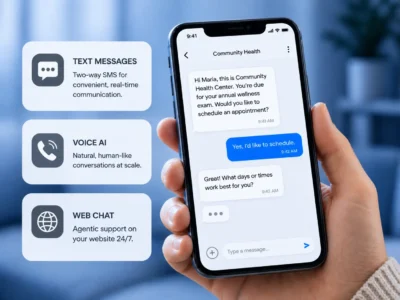
- Omnichannel Communication: Secure outreach tools that support patient engagement through preferred channels, including SMS, email, and patient portals.
- Workflow Automation: Automated scheduling, task routing, and follow-up reminders to reduce administrative burdens on staff.
- Care Team Collaboration: Shared portals and tools that facilitate real-time coordination among multidisciplinary providers and caregivers.
Reviewed by Pouyan Golshani, MD — Interventional Radiologist
Key Features
- Unified Patient 360 Profile (aggregates data from EHRs, labs, insurance claims, wearables, social determinants of health)
- AI-powered personalization and automation (via Agentforce for Health)
- Personalized Care Plans (treatment regimens, appointments, reminders, educational resources)
- Secure Communication (email, SMS, telehealth, two-way messaging)
- Integrated Patient Portals and Mobile Access (self-service, appointment management, communication)
- Care Coordination Tools (collaboration features, task assignments, progress tracking)
- Interoperability with EHR/EMR Systems (via APIs, MuleSoft, FHIR, HL7)
- Intelligent Appointment Management (automated scheduling, reminders)
- Analytics and Reporting (dashboards, custom reports, predictive analytics for population health management)
- Security, Compliance, and Consent Management (HIPAA-ready, GDPR, HITRUST, data encryption, audit trails, access controls)
Use Cases
- Managing patient relationships and engagement across various touchpoints
- Coordinating care teams and streamlining workflows
- Automating administrative tasks and patient outreach
- Providing a unified view of patient information for informed decision-making
- Supporting population health management and proactive care
- Facilitating secure communication between patients and care teams
What Physicians Need to Know
Leverage the 'Patient 360' view to gain a holistic understanding of each patient, integrating clinical and non-clinical data for personalized care. Utilize AI-powered appointment scheduling and reminders to reduce administrative burden and improve patient show-up rates. Implement personalized care plans and educational content to empower patients in managing their chronic conditions and medication adherence. Ensure seamless integration with existing EHRs to maintain a single source of truth for medical records while enhancing patient engagement capabilities. Actively use the secure communication tools to foster stronger patient-provider relationships and improve care coordination within multidisciplinary teams.
Salesforce Health Cloud is designed to integrate extensively with various healthcare systems. It offers robust interoperability with EHR/EMR systems (like Epic, Cerner, Allscripts) through FHIR APIs, HL7 interfaces, and MuleSoft connectors for real-time and batch data exchange. It also integrates with other Salesforce products such as Marketing Cloud for patient outreach, Experience Cloud for patient portals, Data Cloud for unified data aggregation and analytics, and Tableau for reporting. Furthermore, it supports integration with third-party applications, medical devices, wearables, and pharmacy management systems to create a comprehensive patient view and enhance medication adherence monitoring. MuleSoft Direct for Health Cloud provides prebuilt integrations with leading EHRs, payer networks, and health information exchanges.
Details
| Category | Patient Engagement & Education |
| Pricing |
Paid, subscription-based
|
| Deployment | Cloud-based (SaaS) |
| Compliance | |
| BAA Available | Unknown AI-estimated |
| HIPAA Compliant | Unknown AI-estimated |
| FDA Status | Not applicable AI-estimated — No information found regarding FDA clearance. |
| Integrations | |
| EHR | Not specified |
| Specialties | Family Medicine, Internal Medicine, Pediatrics |
What the Web Says
Salesforce Health Cloud for Patient Engagement is a CRM system designed to centralize patient data from various sources, offering a unified view for healthcare providers. It aims to improve patient relationship management, care coordination, and overall patient outcomes through personalized communication and streamlined workflows. The platform is generally recommended for mid-sized to large healthcare organizations seeking scalable solutions.
Overall: PositiveStrengths
- Unified patient view by aggregating data from EHRs, labs, insurance claims, wearables, and more.
- Enhanced care coordination through built-in collaboration features for multidisciplinary teams.
- Personalized patient engagement capabilities, including communications, self-service portals, and mobile experiences.
- Improved administrative efficiency through workflow automation and intelligent case routing.
- HIPAA compliance and robust security features for protecting patient information.
- Strong reporting and data management features for tracking patient outcomes and operational metrics.
Limitations
- High implementation and licensing costs, making it less suitable for smaller organizations.
- Significant customization complexity and dependence on skilled Salesforce resources.
- Integration challenges with legacy healthcare systems.
- Not a full EHR/EMR replacement; it complements existing EHR systems.
- Can have a complex interface and overwhelming functionalities for new users, leading to a steep learning curve.
- Occasional bugs and system slowdowns, particularly with large amounts of historical data.
Based on reviews from: Ksolves, Info-Tech, G2, RizeX Labs, DESelect, SoftwareReviews, Salesforce, Reddit, Capterra, Elion, Axelerant, Trailhead
Last updated: 2026-07-03
Ratings & Reviews
No reviews yet. Be the first to review this tool!
Rate Salesforce Health Cloud (Patient Engagement)
Press & Coverage
Videos
Product demos, reviews, and walkthroughs for Salesforce Health Cloud (Patient Engagement).
Salesforce Healthcare Cloud with Dr. Geeta Nayyar
Healthcare IT Today

How to Use AI and Health Cloud to Improve Patient Care | Salesforce Explained
Salesforce

Large Health Benefits Company Transforms Patient Engagement with Salesforce Health Cloud
Magnet360
Salesforce MedTech Innovation for Health Cloud Demo | Salesforce
Salesforce
Heroiq Health Demo - Patient Engagement and Remote Monitoring for Salesforce Health Cloud
Mav3rik

How Salesforce Health Cloud help with Patient Engagement and Care Coordination
Cynoteck Technology Solutions