Saranas Early Bird Bleed Monitoring System

by Saranas  · Based in United States → — Sustain the results of your successful intervention through early detection and monitoring of internal bleeding complications. Early Bird enhances bleed management and provides assurance to your patients.
Cardiology Interventional Radiology Vascular Surgery

Regulatory Status Disclosed

Overview

The Saranas Early Bird Bleed Monitoring System is an intravascular bleed monitor designed for real-time detection and monitoring of internal bleeding complications during endovascular procedures. The system is utilized primarily by interventional cardiologists, cardiothoracic surgeons, and vascular surgeons in catheterization laboratories and cardiovascular intensive care units. It is indicated for use during large-bore access procedures where the femoral artery or vein is accessed, such as transcatheter aortic valve replacement (TAVR), endovascular aneurysm repair (EVAR), and mechanical circulatory support (MCS) placement.

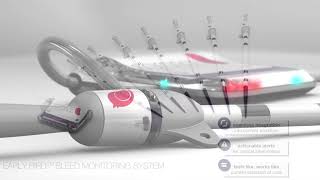
The system integrates into standard clinical workflows without altering existing endovascular protocols. It consists of a fully functional vascular access sheath (available in 6 Fr or 8 Fr) embedded with a bleed detection array of sensing electrodes, a dilator, and a user interface display. The device fits into the workflow by replacing a standard introducer sheath at the access site.

Notable Capabilities:

  • Bioimpedance Monitoring: Continuously measures local tissue electrical resistance to detect extravascular fluid accumulation from vessel injury.
  • Three-Stage Alarm System: Features a user interface with visual and audible indicators that trigger at three sequential levels of bleed progression (approximately 50 mL, 100 mL, and 200 mL of accumulated volume).
  • Post-Procedure Monitoring: Capable of active monitoring during the procedure and up to 12 hours post-intervention.

Reviewed by Pouyan Golshani, MD — Interventional Radiologist

Key Features

  • Real-time detection and monitoring of vascular access site bleed complications.
  • Utilizes a vascular access sheath with embedded electrodes.
  • Measures changes in bioimpedance to detect extravascular fluid accumulation.
  • Provides visual and audible indicators for bleed onset and progression with a 3-staged alarm system.
  • Seamless integration into standard endovascular workflows.
  • Available in 6 or 8 Fr sheath sizes.
  • Can remain in place for sustained monitoring up to 12 hours post-procedure.

Use Cases

  • Monitoring during Transcatheter Aortic Valve Replacement (TAVR) procedures.
  • Bleed detection during Percutaneous Coronary Intervention (PCI).
  • Surveillance during Mechanical Circulatory Support (MCS) device placement (e.g., Impella).
  • Detection of bleeding complications in Endovascular Aneurysm Repair (EVAR).
  • Monitoring for vascular injury in other complex endovascular interventions where the femoral artery or vein is accessed.
  • Continuous bleed monitoring during and immediately after endovascular procedures.

What Physicians Need to Know

Cardiac Monitoring Integration
The Early Bird Bleed Monitoring System is designed for seamless integration into standard endovascular procedural workflows. It functions as a vascular access sheath with embedded electrodes, providing continuous monitoring during and post-procedure.
AHA/ACC Guideline Alignment
The system's capability for early detection and monitoring of bleeding complications aligns with the broader clinical objective of reducing adverse events and improving patient outcomes in cardiovascular procedures, a key focus of AHA/ACC guidelines. It supports 'bleed management as part of their standard of care'.
Real-Time Alert Capability
The Early Bird system provides real-time, continuous monitoring with a 3-staged visual and auditory alarm system to notify clinicians of the onset and progression of bleeding events (Level 1 for mild, Level 2 for medium, and Level 3 for large bleeds).
Physician Tip

Physicians should leverage the Early Bird system for its unique ability to provide objective, real-time detection of internal bleeding at access sites, often before clinical symptoms manifest. This allows for proactive intervention and potentially reduces the severity of bleeding complications. Integrate its continuous monitoring and multi-level alarm system into post-procedural care protocols, especially for high-risk patients undergoing large-bore endovascular procedures.

The Saranas Early Bird Bleed Monitoring System is engineered to integrate smoothly into existing endovascular procedural workflows and protocols. It functions as a specialized introducer sheath with integrated bioimpedance sensors, rather than requiring complex integration with external electronic health records (EHR) or advanced imaging platforms for its core bleed detection functionality. Its integration is primarily at the point of care within the cath lab or recovery setting.

Details

Category Cardiology AI, Clinical Decision Support & Reference
Pricing Unknown
DeploymentOn-premise (medical device used in a clinical setting)
Compliance
BAA AvailableUnknown AI-estimated
HIPAA CompliantUnknown AI-estimated
FDA Status 1 AI-estimated

The Saranas Early Bird Bleed Monitoring System received De Novo classification (DEN180021) from the U.S. Food and Drug Administration (FDA) in March 2019. A 510(k) premarket notification (K230273) was granted on May 25, 2023, related to firmware changes.

Integrations
EHR Not specified
Specialties Cardiology, Interventional Radiology, Vascular Surgery

What the Web Says

The Saranas Early Bird Bleed Monitoring System is a novel device designed for real-time detection and monitoring of internal bleeding complications during and after endovascular procedures, particularly those involving large-bore access in the femoral artery or vein. It utilizes bioimpedance sensors embedded in a vascular access sheath to detect changes in tissue electrical resistance caused by extravascular fluid accumulation. The system provides visual and auditory alerts to clinicians, indicating the onset and progression of bleeding across three levels. Studies have shown its effectiveness in detecting bleeding before it becomes clinically evident, potentially improving patient outcomes and reducing complications.

Overall: Positive

Strengths

  • Early and real-time detection of internal bleeding, often before clinical symptoms appear.
  • Reduces the severity of bleeding complications and associated risks like increased mortality, longer hospital stays, and higher healthcare costs.
  • Seamlessly integrates into existing endovascular procedural workflows.
  • Provides actionable alerts (visual and auditory) to clinicians, allowing for timely intervention.
  • Safe and effective across a variety of endovascular procedures, including TAVR and high-risk PCI.
  • Does not add incremental risk as it utilizes an existing venous access sheath.

Limitations

  • Not evaluated for safety and compatibility in the MR environment, making it MR Unsafe.
  • Not recommended to insert more than one Early Bird device in the same vessel or adjoining vessel due to potential interaction.
  • The benefit for superficial bleed events, which can be observed directly, is lower.
  • Some studies are relatively small (e.g., 60 patients in initial human trials).
  • Limited information available from independent tech reviewers or general consumer platforms like Reddit, G2, or Capterra, as it is a specialized medical device.

Based on reviews from: CLD (Cath Lab Digest), SCAI (Society for Cardiovascular Angiography & Interventions), MedTech Dive, Clinical Trials Arena, ScienceDaily, Deborah Heart & Lung Center, accessdata.fda.gov, Houston Chronicle, DAIC (Diagnostic and Interventional Cardiology), HMP Global Learning Network (Journal of Invasive Cardiology), PubMed, Diagnostic and Interventional Cardiology, Cambridge Consultants, Heart diseases (Cardiac Vascular Today), tctmd.com, Texas Heart Institute

Last updated: 2026-07-19

Ratings & Reviews

No reviews yet. Be the first to review this tool!

Rate Saranas Early Bird Bleed Monitoring System

Clinical Value
Ease of Use
Integration
Support & Docs
Value for Money

Press & Coverage

Business Wire
Saranas Successfully Completes Enrollment of Clinical Trial Assessing the Utility of Early Bleed Detection in Patients Undergoing Mechanical Circulatory Support
Saranas announced the completion of enrollment in its SAFE-MCS clinical trial, evaluating the Early Bird Bleed Monitoring System for patients undergoing complex high-risk percutaneous coronary intervention with mechanical circulatory support. The Early Bird is the first and only FDA-approved device for real-time monitoring of endovascular bleed complications.
2023-09
Journal of the Society for Cardiovascular Angiography & Interventions (JSCAI)
New Study Aims to Assess Bleeding Complications in Patients Undergoing High-Risk PCI
A new multicenter study, SAFE-MCS, will evaluate bleeding complications in high-risk PCI patients using the Impella Heart Pump and the Saranas Early Bird Bleed Monitoring System. The study's design and rationale were published in JSCAI.
2023-07
Business Wire
Saranas Announces Over 1,200 Patients Treated with the Early Birdu00ae Bleed Monitoring System
Saranas announced that over 1,200 patients have been treated with their Early Bird Bleed Monitoring System, the first and only FDA-approved bleed detection system, since its launch in 2019. The system uses bioimpedance sensors to detect endovascular bleed complications.
2022-11
Baird Capital
Venture Capital Team Invests in Saranas
Saranas, Inc. secured $12.8 million in Series B investment led by Baird Capital and S3 Ventures, aiming to accelerate the commercialization of the Early Bird Bleed Monitoring System and expand clinical evidence.
2021-07
Journal of Invasive Cardiology
First-in-Human Study of the Saranas Early Bird Bleed Monitoring System for the Detection of Endovascular Procedure-Related Bleeding Events
This peer-reviewed study evaluated the safety and accuracy of the Early Bird Bleed Monitoring System for detecting access-site related bleeds during endovascular procedures, showing high agreement with CT scans.
2020-07
DAIC (Diagnostic and Interventional Cardiology)
Early Bird Bleed Monitoring System Used in First Commercial U.S. Patient
Saranas announced the first U.S. commercial use of its Early Bird Bleed Monitoring System for real-time detection of endovascular bleed complications during a TAVR procedure at Morristown Medical Center.
2019-11
Medical Device Network
Early Bird Bleed Monitoring System gains FDA de novo designation
The FDA granted de novo designation to Saranas' Early Bird Bleed Monitoring System, designed to detect and reduce bleeding complications using bioimpedance sensors embedded in a vascular access sheath.
2019-03
Texas Heart Institute
Texas Heart Institute Conducting New Clinical Trial to Test Innovative New Early Birdu2122 Bleed Monitoring System
The Texas Heart Institute initiated a clinical trial for the Saranas Early Bird Bleed Monitoring System, an invention by Dr. Mehdi Razavi, designed to detect and monitor bleeding during endovascular procedures using bioimpedance sensors.
2018-11

Videos

Product demos, reviews, and walkthroughs for Saranas Early Bird Bleed Monitoring System.

View all on YouTube

Frequently Asked Questions

The Early Bird system continuously monitors changes in electrical bio-impedance in the tissue around a vascular sheath. It uses an algorithm to detect a decline in bio-impedance, which indicates extravascular fluid accumulation (bleeding). When the rate of decline reaches a prescribed slope threshold, the system triggers visual and auditory alarms at three distinct levels, correlating with small, medium, and large bleeds, enabling early intervention.
The Saranas Early Bird Bleed Monitoring System received FDA de novo approval on March 5, 2019, classifying it as a Class II device. Its sale, distribution, and use are restricted to prescription use in accordance with 21 CFR 801.109.
The system may not detect a bleed if it occurred prior to sheath insertion or initial bioimpedance measurement. Additionally, inserting more than one Early Bird device in the same or adjoining vessel is not recommended due to potential signal interaction. There was one reported instance where a significant bleed was not detected due to tissue saturation impacting the baseline measurement.
The Early Bird system is a first-of-its-kind device designed for real-time detection and monitoring of endovascular bleeding complications, often before clinical signs of hemodynamic instability appear. Traditional methods often rely on waiting for symptoms to develop, which can take hours, whereas the Early Bird provides immediate, objective alerts.
While specific institutional pricing varies, individual disposable introducer sheath sets have been listed for sale around $300-$400. The system involves a single-use, disposable sheath with integrated electrodes and a user interface device.
The Early Bird system is designed for seamless integration into existing endovascular procedural workflows without altering current protocols. It functions as a standard vascular access sheath with embedded sensors, providing real-time visual and auditory alerts to the clinical team during and up to 12 hours post-procedure.
The Early Bird system primarily processes bioimpedance data in real-time to trigger local visual and auditory alarms on its user interface device. The search results do not indicate that the system transmits or stores extensive patient-identifiable data externally, focusing instead on immediate, local bleed detection.

Related Tools

EchoMD AutoEF
Caption Health (formerly Bay Labs, now part of GE HealthCare)
Cardiology AI
EchoMD AutoEF is an FDA-cleared AI software that automates the selection of echocardiogram clips and calculates left ventricular ejection fraction (EF), enhancing efficiency and accuracy in cardiac assessments.
ECG-AI Cardiac Amyloidosis (CA) 12-Lead Algorithm
Anumana, Inc.
Cardiology AI
An AI algorithm for screening cardiac amyloidosis using standard 12-lead ECGs.
DEEPVESSEL Plaque
Keya Medical Technology Co., Ltd.
Cardiology AI
An AI software platform for coronary plaque analysis and quantification from CT angiography.
WatchMate Software
Anumana, Inc.
Cardiology AI
Anumana is an AI-driven health technology company from nference, developing and delivering ECG algorithms enabling early diagnosis and intervention.
syngo.CT Coronary Cockpit
Siemens Healthineers
Cardiology AI
syngo.CT Coronary Cockpit is an AI-powered software tool by Siemens Healthineers for efficient and accurate CT coronary angiography analysis.
HeartLung AI-CVD®
HeartLung Corporation
Cardiology AI
HeartLung AI-CVD® is an FDA-cleared AI-powered quantitative imaging tool that provides automated CT-derived measurements for assessing cardiovascular and multisystem risks opportunistically.

See all Cardiology AI tools →

Suggest an Edit → | Last Verified: 2026-04-19 | First Added: 2026-04-19

Investors who backed Saranas Early Bird Bleed Monitoring System

Funded through the company that built this tool.

AI Tool Finder
AI-powered search. Results may not be comprehensive.