SIGNA™ Sprint

by GE Medical Systems  · Based in United States →Next-generation 1.5T MRI system with deep-learning intelligence for advanced diagnostic imaging.
Cardiology Oncology Radiology

Contact vendor
Regulatory Status Disclosed

Overview

Important Note: The provided information indicates that SIGNA™ Sprint is a 1.5T Magnetic Resonance Imaging (MRI) system, not an AI tool for a physician directory. It is a medical device designed for diagnostic imaging across various parts of the body, incorporating advanced AI technologies to enhance image quality, accelerate scan times, and streamline workflow. The details below reflect its actual function as an MRI system.

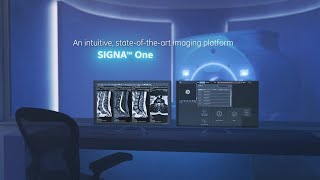
SIGNA™ Sprint, from GE HealthCare (formerly GE Medical Systems), is an ultra-premium wide bore 1.5-tesla high-performance gradient MRI system. It is engineered to expand access to advanced imaging, elevate diagnostic precision, and transform the patient experience. The system leverages built-in AI solutions such as AIR Recon DL, Sonic DL, and AIR x to enable clear, fast imaging and improved workflow, particularly in cardiology and oncology. It is also part of the SIGNA One AI-powered workflow ecosystem, which aims to reduce inefficiencies and support MRI exams from planning to scanning and beyond.

Reviewed by Pouyan Golshani, MD — Interventional Radiologist

Key Features

  • 1.5T ultra-premium wide bore MRI system
  • High-performance gradient (65/200 per axis) for exceptional clarity
  • Built-in AI technologies: AIR Recon DL, Sonic DL, AIR x
  • Deep-learning reconstruction for accelerated scans and improved image quality
  • 70 cm wide bore for enhanced patient comfort
  • Free-breathing capabilities for cardiac MRI
  • Supports quantitative MRI for deeper tissue understanding
  • Part of SIGNA One AI-powered workflow ecosystem
  • Ventless magnet design (with Freelium option) for flexible installation
  • Scanning Autonomy and autonomous magnet monitoring

Use Cases

  • Advanced diagnostic imaging in cardiology
  • Oncology diagnosis and treatment planning
  • Neurological imaging and research
  • Musculoskeletal assessments
  • Whole-body imaging for various medical conditions
  • Research in advanced imaging techniques

What Physicians Need to Know

Cardiac CT/MRI Analysis
SIGNAu2122 Sprint is a 1.5T MRI system designed for advanced cardiac imaging, enabling functional assessment of the heart. It supports a shift to quantitative MRI for a deeper understanding of tissue characteristics beyond basic anatomy. Built-in AI technologies like AIR Recon DL, Sonic DL, and AIR x enhance image quality, accelerate scans up to 12x, and automate slice placement, even in demanding anatomies. The system provides crystal-clear visualization of sub-millimetric structures and aids in the advanced evaluation of complex conditions such as cardiac amyloidosis, hypertrophic cardiomyopathy, heart failure, and microvascular dysfunction.
AI-Powered Image Acquisition & Reconstruction
Leverages deep-learning reconstruction techniques (AIR Recon DL, Sonic DL) for accelerated cardiac MRI, reducing scan times and the expertise needed for interpretation, while driving consistency and reliability. AIR x enables automated slice placement, improving workflow efficiency.
Physician Tip

Leverage the AI-powered acceleration (Sonic DL) and enhanced image quality (AIR Recon DL) to perform faster and more confident cardiac MRI exams, particularly beneficial for acutely ill patients or those with challenging anatomies due to free-breathing capabilities. Utilize the quantitative MRI capabilities to gain deeper insights into tissue characteristics, aiding in the diagnosis and management of complex cardiac conditions like heart failure and cardiomyopathies. The automated slice placement (AIR x) can streamline workflow and improve consistency in cardiac imaging protocols.

The AI technologies (AIR Recon DL, Sonic DL, and AIR x) are built directly into the SIGNAu2122 Sprint MRI system, providing seamless integration for image acquisition and reconstruction. The system is designed to be a future-ready investment, supporting advanced cardiac imaging and the shift towards quantitative MRI. It can be closely integrated within specialized hubs for advanced cardiac imaging, facilitating collaborative care pathways.

Details

Category Cardiology AI, Oncology AI, Radiology & Imaging AI
Pricing Contact vendor
  • Pricing for MRI systems is typically complex and requires direct consultation with GE HealthCare sales representatives
DeploymentOn-premise (physical medical device)
Compliance
BAA AvailableUnknown AI-estimated
HIPAA CompliantUnknown AI-estimated
FDA Status 1 AI-estimated

SIGNA™ Sprint received 510(k) clearance from the U.S. Food and Drug Administration (FDA) on September 11, 2025, under submission number K251399. It is classified as a Magnetic Resonance Diagnostic Device (Product Code LNH) for whole-body diagnostic imaging.

Integrations
EHR Not specified
Specialties Cardiology, Oncology, Radiology

Ratings & Reviews

No reviews yet. Be the first to review this tool!

Rate SIGNA™ Sprint

Clinical Value
Ease of Use
Integration
Support & Docs
Value for Money

Press & Coverage

GE HealthCare
GE HealthCare achieves MRI portfolio milestone with FDA clearances for next-generation SIGNA MRI technology designed to enhance precision imaging and clinical efficiency
GE HealthCare announced FDA 510(k) clearance for three new MR innovations, including SIGNAu2122 Sprint with Freeliumu2122, a 1.5T sealed magnet MRI system, designed for sustainable and efficient precision imaging. This marks a significant step in their strategy to differentiate their MR portfolio and expand access to high-quality imaging.
2026-02
Diagnostic Imaging
GE HealthCare Introduces Signa Sprint 1.5T MRI System at ISMRM Conference
GE HealthCare unveiled the SIGNAu2122 Sprint 1.5T MRI system at the ISMRM 2025 conference, highlighting its high-performance gradient technology and AI tools for enhanced workflow efficiencies in cardiac and oncology imaging. The system aims to provide advanced visualization of sub-millimetric structures and a deeper understanding of tissue characteristics.
2025-05
GE HealthCare
GE HealthCare unveils ultra-premium, high-performance gradient 1.5T MRI system
GE HealthCare introduced SIGNAu2122 Sprint, an FDA 510(k) pending ultra-premium wide bore 1.5T high-performance gradient MRI system, at ISMRM 2025. This system is designed to unlock advanced imaging possibilities in cardiology, oncology, and other clinical and research areas with powerful gradient technology and AI solutions.
2025-05
GE HealthCare
GE HealthCare introduces advanced imaging solutions powered by NVIDIA technology to support timely diagnoses and streamlined clinical workflows
GE HealthCare announced the integration of NVIDIA technology into several new imaging solutions, including SIGNAu2122 Sprint with Freelium, to accelerate deep learning-based reconstruction models and enable fast, efficient image reconstruction. This collaboration aims to deliver everyday diagnostic excellence with helium-free sustainability and high-fidelity image quality.
2025-12
GE HealthCare
GE HealthCare unveils next-generation SIGNA MRI technology, aiming to boost efficiency, enhance patient experience, and advance sustainability
GE HealthCare announced 510(k) submissions to the FDA for next-generation SIGNAu2122 MRI technology, including SIGNAu2122 Sprint with Freelium, at RSNA 2025. These solutions are designed to address healthcare challenges by boosting efficiency, enhancing patient experience, and advancing sustainability through a sealed magnet design with less than 1% helium usage.
2025-11
GE HealthCare
GE HealthCare welcomes new SIGNA Sprint 1.5T to explore further
GE HealthCare is set to unveil SIGNAu2122 Sprint at the 2025 ISMRM Annual Meeting, featuring unparalleled gradient performance at 1.5T to advance diagnostic and research imaging in cardiology and oncology. The system incorporates deep-learning technology like Sonic DLu2122 for Cine and aims to improve patient comfort.
2025-04
GE HealthCare
First worldwide SIGNA Sprint Elite installations at Inova and AZ Delta
GE HealthCare has installed its new SIGNAu2122 Sprint Elite MR system at Inova and AZ Delta, marking the first worldwide installations. This next-generation system is developed to advance cardiac, oncologic, and pediatric imaging, as well as imaging for patients with implanted devices, offering significant advancements in precision imaging and patient-centered care.
unknown
Scribd
SIGNAu2122 Sprint Preinstallation Guide
The SIGNAu2122 Sprint Preinstallation Manual provides essential guidelines for the installation of the SIGNAu2122 Sprint MRI system, covering system requirements, room specifications, and equipment details. It outlines necessary conditions for magnet, equipment, and control rooms, as well as electrical and environmental specifications for users involved in the installation process.
2025

Videos

Product demos, reviews, and walkthroughs for SIGNA™ Sprint.

View all on YouTube

No FAQs available yet for this tool.

Related Tools

Cardiomatics
Cardiomatics
Cardiology AI
Cardiomatics is a cloud-based, AI-powered software for analyzing ambulatory (Holter) ECG tests, using clinically validated algorithms to provide accurate and high-quality results for cardiac diagnostics. It aims to streamline ECG analysis, reduce interpretation time, and improve diagnostic accuracy for various heart conditions.
SafeBeat Rx App
SafeBeat Rx, Inc.
Cardiology AI
An AI application designed to support safe pharmacological treatment and monitoring for cardiac arrhythmias.
PreemptiveAI Clinical SDK
Measure Labs, Inc. (Dba Preemptiveai, Inc.)
Cardiology AI
A clinical software development kit using AI to model and predict cardiovascular health metrics, aiming to shift healthcare from reactive to proactive by providing early health risk signals.
Clarius Ejection Fraction AI
Clarius Mobile Health Corp.
Cardiology AI
Clarius Ejection Fraction AI is an AI-powered ultrasound tool for automated left ventricular ejection fraction calculation, integrated into the Clarius Ultrasound App for real-time cardiac assessments.
Automated Aortic Stenosis Software (AutoAS)
Multiple companies are developing Automated Aortic Stenosis Software (AutoAS) or similar AI-powered solutions. Notable ones include iCardio.ai, Us2.ai, AccurKardia, HeartSciences Inc., and Echo IQ.
Cardiology AI
Automated Aortic Stenosis Software (AutoAS) is an ultrasound application by GE Medical Systems that provides automated assessment of aortic stenosis to enhance diagnostic efficiency and consistency.
ECG-AI Pulmonary Hypertension (PH) 12-Lead algorithm
Anumana
Cardiology AI
An AI algorithm that analyzes standard 12-lead ECG recordings to detect signs of pulmonary hypertension, aiming for earlier diagnosis and improved patient outcomes.

See all Cardiology AI tools →

More from GE Medical Systems

AIR Recon DL
GE Medical Systems
Radiology & Imaging AI
GE Healthcare's AIR Recon DL is a deep-learning-based MRI image reconstruction software that enhances image quality, sharpness, and signal-to-noise ratio while significantly reducing scan times across all anatomies.
Auto Segmentation
GE Medical Systems
Oncology AI
An AI-powered post-processing application by GE Medical Systems (now GE HealthCare) that automatically generates contours of organs at risk (OARs) from CT images for radiation therapy planning, streamlining workflow and standardizing outputs.
Critical Care Suite
GE Medical Systems
Radiology & Imaging AI
GE HealthCare's Critical Care Suite is an on-device AI solution embedded in X-ray systems, offering automated detection of pneumothorax, precise endotracheal tube positioning, and real-time image quality checks to expedite critical care decisions.
MaxFOV 2
GE Medical Systems
Oncology AI
MaxFOV 2 by GE Medical Systems is a deep learning-based software option for GE CT scanners that extends the display field of view up to 80 cm, improving visualization for radiation therapy planning and large patients by reducing artifacts and enhancing image quality.

View company profile →

Suggest an Edit → | Last Verified: 2026-04-18 | First Added: 2026-04-18
AI Tool Finder
AI-powered search. Results may not be comprehensive.