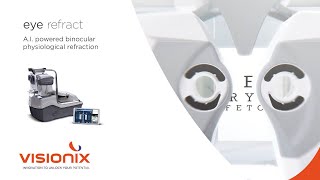
Visionix AI Retina Screening

by Visionix  · Based in France → — Visionix leads innovation in eye care with AI-based retinal screening, offering accurate and rapid assessments for early detection of pathologies.
Ophthalmology

Inquire for a quote

Overview

Visionix AI Retina Screening is an advanced solution designed to assist physicians in the early detection of various retinal pathologies. Leveraging deep learning algorithms, this tool analyzes retinal images captured by the Visionix VX 610 retinal camera to identify up to 13 potential conditions, including the four major ones: Diabetic Retinopathy (DR), Glaucoma, Age-related Macular Degeneration (AMD – both wet and dry), and retinal detachment risk.

The system is engineered for efficiency, providing rapid and accurate assessments within minutes. Its algorithms are trained on interpretations from expert ophthalmologists and retina specialists, ensuring consistency with international classifications and robust learning across diverse patient populations and camera types. This allows for precise customer assessment and follow-up without requiring a medical specialist on-site for initial screening.

A key feature is its integration with the Visionix Nexus platform, which offers an optional telehealth subscription. This allows practitioners to request external human grading from an off-site ophthalmologist for cases requiring further expert review. The ultimate goal of Visionix AI Retina Screening is to improve patient outcomes by facilitating the earliest possible detection of retinal conditions, thereby enabling timely intervention and management.

Reviewed by Pouyan Golshani, MD — Interventional Radiologist

Key Features

  • AI-based retinal image analysis
  • Detects up to 13 retinal pathologies
  • Identifies DR, glaucoma, wet AMD, dry AMD, and retinal detachment risk
  • Rapid assessment (less than 6 minutes)
  • Automated image analysis
  • Algorithms based on expert ophthalmologist knowledge
  • Compatible with Visionix VX 610 retinal camera
  • Optional telehealth for human grading via Visionix Nexus platform

Use Cases

  • Early detection of diabetic retinopathy
  • Screening for glaucoma
  • Identification of age-related macular degeneration (wet and dry)
  • Assessing retinal detachment risk
  • Efficient patient assessment and follow-up in eye care practices
  • Supporting telehealth workflows for ophthalmology

What Physicians Need to Know

Evidence Base (guidelines, literature scope)
Visionix AI Retina Screening utilizes deep learning algorithms trained on interpretations from expert ophthalmologists and retina specialists, consistent with international classifications. The models have been trained on images from diverse populations and various cameras. The system aims to detect up to 13 retinal pathologies, including the four major ones: Wet AMD, Dry AMD, Glaucoma, and Diabetic Retinopathy. Studies highlight the potential of AI-based retinal imaging for early detection of systemic complications in diabetic patients.
Clinical Validation Studies
Visionix's EyeWisdomu00ae MCS solution is clinically validated. Clinical studies have focused on the development and evaluation of deep learning models for detecting multiple fundus diseases and the efficacy of AI-based screening for diabetic retinopathy in type 2 diabetes patients. The AI technology correctly flags a positive result 93% of the time and negative results 90.6% of the time for 13 common retinal pathologies. One study found that AI-assisted OCT is highly accurate, sensitive, and specific in auto-detection of 15 kinds of retinal disorders, with AUC values ranging from 0.891u20130.997, sensitivity from 87.65u2013100%, and specificity from 80.12u201399.41%. Another multi-center clinical trial on a combined OCT retinal imaging and AI-based image processing system showed test accuracy for image quality assessment at 99.2%, lesion detection at 98.6%, and referral urgency assessment at 96.7%.
Differential Diagnosis Support
The AI system utilizes deep learning algorithms to analyze retinal images and identify up to 13 potential pathologies, including Wet AMD, Dry AMD, Glaucoma, and Diabetic Retinopathy, aiding in differential diagnosis.
Clinical Workflow Integration
The Visionix AI Retina Screening solution is designed for fast, reliable, and accessible assessments, automating image analysis for efficient patient assessment and follow-up. It can complete an extensive retinal health assessment in under 5 minutes. The system is compatible with Visionix Nexus, a data exchange platform that supports asynchronous telediagnosis and remote device control. The VX 610 device is compact and has a touchscreen interface, making it easy to integrate into various practice settings. The Visionix VX650, which includes a fundus camera, allows for comprehensive ocular exams and retinal screening in minutes, improving workflow efficiency. The system can also be integrated into existing non-digital diabetic retinopathy screening programs to digitize workflows and monitor performance. AI integration can streamline processes, reduce administrative burdens, and enhance decision-making in ophthalmology.
Decision Audit Trail
The Visionix Nexus platform allows for the secure exchange and storage of anonymized and encrypted patient data, and automatically backs up patient data in a safe, encrypted environment. This functionality supports a decision audit trail by maintaining a record of patient data and AI analysis.
Physician Tip

Leverage the Visionix AI Retina Screening for rapid, automated pre-screening of up to 13 retinal pathologies, including the four major ones (Wet AMD, Dry AMD, Glaucoma, Diabetic Retinopathy), to enhance workflow efficiency and identify potential issues early. Utilize the optional telehealth subscription for human grading to confirm AI findings and manage complex cases. Integrate the system with Visionix Nexus for seamless data management, remote assessment by ophthalmologists, and secure patient data backup. Remember that while AI provides high accuracy in detection, positive findings still require a comprehensive ophthalmologic evaluation.

The Visionix AI Retina Screening solution is designed to integrate with Visionix's ecosystem of devices, including the VX 610 retinal camera and the VX 650, which combines a wavefront aberrometer, fundus camera, and other technologies. It is compatible with Visionix Nexus, a cloud-based data exchange platform that enables automatic synchronization between connected Visionix devices and the cloud, supporting remote ophthalmologist assessment and patient data management. The system's EMR/EHR-ready capabilities allow clinicians to access data from a secured computer interface, facilitating integration into existing practice management systems.

Details

Category Clinical Decision Support & Reference, Ophthalmology AI, Radiology & Imaging AI
Pricing Inquire for a quote — Pricing information is not publicly available and requires direct inquiry.
DeploymentOn-premise (with VX 610 retinal camera) and Cloud-based secure storage.
Data ExportUnknown
LanguagesEnglish (website content also available in other languages like German and Italian for clinical studies).
TrainingUnknown
Target SizeOpticians, optometrists, and ophthalmologists, including retail stores and those seeking to expand telehealth capabilities.
Compliance
BAA AvailableUnknown AI-estimated
HIPAA Compliant Yes AI-estimated
FDA Status Unknown AI-estimated

Visionix's AI-based products and services are not currently available in the United States. Other AI systems for diabetic retinopathy screening have received FDA clearance, such as IDx-DR, EyeArt, and AEYE Diagnostic Screening.

GDPRUnknown AI-estimated
Integrations
EHR Not specified
Specialties Ophthalmology

Social Proof

CustomersOver 135,000 eye care professionals use Visionix products daily.
Notable
unknown

Support & Reliability

Training ProvidedUnknown

What the Web Says

Visionix AI Retina Screening, particularly with the VX 610 and VX 650 devices, is generally well-received for its ability to streamline retinal exams and aid in the early detection of various ocular pathologies. The system utilizes AI to automate image analysis and can detect early signs of 13 common retinal conditions, including diabetic retinopathy, glaucoma, and AMD. It aims to enhance patient care through efficient and accurate screenings, often without the need for pupil dilation.

Overall: Positive

Strengths

  • Automated functions for alignment, focus, and capture enhance imaging accuracy and consistency.
  • Does not require pupil dilation, improving patient comfort and efficiency.
  • Detects early signs of 13 common retinal pathologies with high accuracy (93% for positive, 90.6% for negative results).
  • Compact size and touch-screen interface allow for easy integration into various practice settings.
  • Can be operated by technicians, freeing up optometrists' and ophthalmologists' time.
  • Offers telehealth capabilities for remote review by specialists and can generate additional revenue streams for practices.

Limitations

  • No specific cons were found in the provided search results regarding the Visionix AI Retina Screening system.
  • General concerns about AI in healthcare, such as data privacy and the potential for over-reliance on technology, are sometimes raised in broader discussions about AI in medicine.
  • The accuracy of AI models can vary by population.
  • Some providers in other AI screening contexts have reported trouble accessing screening services during office hours.

Based on reviews from: Review of Optometry, Visionix (visionix.com), Review of Ophthalmology, Reddit, Review of Optometric Business, Facebook, YouTube, PMC

Last updated: 2026-09-19

Ratings & Reviews

No reviews yet. Be the first to review this tool!

Rate Visionix AI Retina Screening

Clinical Value
Ease of Use
Integration
Support & Docs
Value for Money

Videos

Product demos, reviews, and walkthroughs for Visionix AI Retina Screening.

View all on YouTube

Frequently Asked Questions

Visionix AI Retina Screening is designed for seamless integration, typically involving a quick, non-mydriatic retinal scan followed by AI analysis. The results are then presented in a clear, actionable report that can be easily incorporated into your electronic health record system, aiding in efficient patient management and referral decisions.
Clinical studies have demonstrated high sensitivity and specificity for Visionix AI Retina Screening in detecting common retinal pathologies like diabetic retinopathy, glaucoma, and macular degeneration, often comparable to or exceeding traditional screening methods. It serves as a robust pre-screening tool, helping to identify patients who require further specialist evaluation.
Operating the Visionix AI Retina Screening system generally requires minimal training, often completed within a few hours, as the device is user-friendly and largely automated. Compliance involves adhering to standard ophthalmic imaging protocols and data privacy regulations, for which Visionix typically provides comprehensive guidance and support.
While highly effective for screening, Visionix AI Retina Screening may have limitations in detecting rare or subtle pathologies, or in cases with significant media opacities. A traditional dilated exam remains crucial for a comprehensive assessment, especially when the AI flags a potential issue, for monitoring disease progression, or when a patient presents with specific symptoms not fully captured by the screening.
The pricing model for Visionix AI Retina Screening typically involves a capital equipment purchase or a subscription-based service, with varying tiers depending on features and support. Reimbursement options can vary by region and insurance provider, but often align with existing codes for retinal imaging and screening, and Visionix usually offers resources to help navigate these complexities.
Yes, there are other AI retina screening solutions on the market, each with its own strengths. Visionix differentiates itself through its comprehensive AI algorithms, ease of integration, and robust support, often offering a broader spectrum of detectable pathologies and a user-friendly interface that streamlines clinical workflow.

Related Tools

Cortex
Cortex
Clinical Decision Support & Reference
Cortex Workspace is a secure, HIPAA-compliant AI platform designed to streamline healthcare workflows and enhance decision-making for physicians.
SureMediks ProView
SureMediks (Rasimo Systems, LLC)
Clinical Decision Support & Reference
SureMediks is an AI-powered clinical decision support and metabolic health platform that automates care workflows for specialists, providing AI-generated patient summaries, automated chart review, and real-time biometric alerts.
SOAP Health
SOAP Health
Clinical Decision Support & Reference
SOAP Health is a Florida-based startup transforming patient intake with AI-powered diagnosis, offering a comprehensive solution that improves diagnosis accuracy and empowers patients and physicians.
Oxipit ChestLink
Oxipit (part of Sectra group)
Clinical Decision Support & Reference
Oxipit ChestLink is the world's first CE Class IIb-certified autonomous AI application for healthy chest X-ray reporting, capable of identifying normal studies with 99.9% sensitivity. It automates the reporting of normal chest X-rays, reducing radiologist workload and improving efficiency.
KATE AI
Mednition
Clinical Decision Support & Reference
KATE AI is a nurse-built clinical decision support tool for emergency departments that analyzes incoming patients in real-time to flag high-risk cases that standard acuity scoring might miss. It has supported over 5,000,000 patient visits, helping emergency teams deliver safer, faster, and more informed care.
MCG Health
MCG Health
Clinical Decision Support & Reference
MCG Health provides industry-leading evidence-based guidance and technologies to optimize health outcomes, drive operational efficiency, and achieve cost savings. Their solutions are utilized by thousands of hospitals, a majority of U.S. health plans, and various government health programs.

See all Clinical Decision Support & Reference tools →

Suggest an Edit → | Last Verified: 2026-06-19 | First Added: 2026-06-19
AI Tool Finder
AI-powered search. Results may not be comprehensive.