Viz LVO ContaCT

by Viz.ai  · Based in United States → — AI-Powered Neurovascular Care Coordination
Emergency Medicine Neurology Radiology

Not disclosed
Regulatory Status Disclosed

Overview

Viz LVO ContaCT, also known as Viz LVO, is an AI-powered neurovascular care coordination solution developed by Viz.ai. It is a notification-only, parallel workflow tool designed for hospital networks and trained clinicians to rapidly identify and communicate images of specific patients with suspected large vessel occlusion (LVO) strokes. The system utilizes an artificial intelligence algorithm to analyze head CT angiogram (CTA) images for findings suggestive of a pre-specified clinical condition, notifying appropriate medical specialists in parallel to standard of care image interpretation. Viz LVO features AI-enhanced 3D imaging for clear views of neurovasculature, interactive tools for vessel assessment, and a streamlined workflow that automates 3D processing. This technology aims to improve stroke team coordination, reduce time to treatment, and ultimately enhance patient outcomes by enabling faster critical decision-making.

Reviewed by Pouyan Golshani, MD — Interventional Radiologist

Key Features

  • AI-Enhanced 3D Imaging for neurovasculature
  • Interactive Tools for vessel assessment
  • Streamlined Workflow with automated 3D processing
  • Auto-detection of suspected large vessel occlusions (LVOs)
  • Rapid notification to on-call stroke team
  • HIPAA-compliant image review and care plan discussions
  • Improved stroke team coordination
  • Reduces time to treatment and unnecessary transfers

Use Cases

  • Identification and triage of suspected Large Vessel Occlusion (LVO) strokes
  • Coordination of care across hospital networks (primary and comprehensive stroke centers)
  • Facilitating rapid treatment decisions for acute ischemic stroke patients
  • Improving patient outcomes in acute ischemic stroke
  • Analyzing CTA images for LVOs

What Physicians Need to Know

Stroke Detection Speed
Viz LVO auto-detects suspected large vessel occlusions within seconds of image acquisition. The mean processing time is 5 minutes, with a maximum of 8 minutes. Studies show a median time to alert of 10 minutes, and a median time-to-notification of 5 minutes and 45 seconds across various hospitals. Implementation has led to a 44.13% reduction in time from patient arrival to LVO diagnosis and first contact with the treating endovascular surgeon, and a 31-minute average reduction in treatment time.
Brain MRI/CT Analysis
Viz LVO processes head and neck CTAs using a convolutional neural network AI platform to identify anterior circulation LVOs. It analyzes CTA images of the brain for suspected large vessel occlusions. The platform offers AI-Enhanced 3D Imaging for clear, unobstructed views of neurovasculature by removing bone and venous noise, and interactive tools for freeform manipulation to assess distal and complex vessels. Viz LVO is specifically intended to analyze terminal ICA and MCA-M1 vessels for LVO. The Viz Neuro Suite also includes Viz CTP for automated analysis of CTP images with quantified color-coded perfusion maps and AI-powered motion artifact correction, and Viz VIEW for high-fidelity mobile DICOM image viewing across NCCT, CTA, and CTP.
Large Vessel Occlusion Detection
Viz LVO utilizes advanced machine learning algorithms for AI-driven detection of large vessel occlusions in brain scans, specifically designed for CTA scans. It has demonstrated high diagnostic accuracy, with reported sensitivities ranging from 82% to 96.3% and specificities from 87.5% to 94%. The system is FDA cleared for LVO detection. It is a notification-only, parallel workflow tool intended to analyze terminal ICA and MCA-M1 vessels, with detection rates of 100% for ICA-T, 93% for M1, and 49% for M2 occlusions.
Triage Prioritization Speed
The system provides real-time analysis and results to expedite decision-making in emergency situations. Automated alerts and dynamic mobile image viewing facilitate fast case review. Studies indicate that 90% of alerts are reviewed by the intended specialist within 5 minutes. Implementation of Viz LVO has significantly decreased critical stroke care metrics, including door-to-transfer, door-to-puncture, and door-to-recanalization times, and has reduced the median initial door-to-neuroendovascular team notification time.
Mobile Notification System
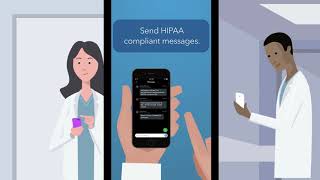
Viz LVO includes a mobile application that sends notifications to neurovascular specialists upon detection of a suspected LVO, recommending image review. This application combines HIPAA-compliant group messaging functionality with a mobile PACS Viewer, allowing users to view images, make triage decisions, and communicate with the care team through chat. Notifications are customizable, with options for push/SMS, sound selection, and overriding silent/do not disturb modes. Viz HUB provides a HIPAA-compliant platform for texting, calling, and coordinating patient care.
Physician Tip

Viz LVO acts as a 'co-pilot,' providing a second set of eyes for triage and increasing radiologist confidence in findings and prioritization of critical cases. It allows physicians to view imaging on their phone within minutes of a scan, enabling early confirmation of occlusion, evaluation of surrounding anatomy, and proactive case planning and team communication. While the mobile application provides compressed images for informational purposes and notification, clinicians are responsible for reviewing non-compressed images on a diagnostic viewer and conducting a full patient evaluation before making care-related decisions. The software is particularly impactful when emergency access to neuroradiologists or vascular neurologists is limited, streamlining code stroke workflows.

Viz LVO is designed for seamless integration into existing medical imaging systems and clinical workflows, including Picture Archiving and Communication Systems (PACS). It is part of the broader Viz.ai One platform, which offers a comprehensive suite of AI models and care coordination solutions. The platform supports real-time image sharing and secure mobile communication, and patient images are saved directly to their electronic health record. Viz.ai has established partnerships with companies like Medtronic to expedite stroke patient triage and Salesforce for real-time clinical intelligence and workflow orchestration across nearly 2,000 hospitals.

Details

Category Neurology AI, Radiology & Imaging AI
Pricing Not disclosed — Not disclosed
DeploymentCloud-based
Compliance
BAA AvailableUnknown AI-estimated
HIPAA CompliantUnknown AI-estimated
FDA Status 1 AI-estimated

Viz LVO ContaCT received FDA 510(k) clearance (K223042) on October 21, 2022, as a Class II device under product code QAS for radiological computer aided triage and notification software.

Integrations
EHR Not specified
Specialties Emergency Medicine, Neurology, Radiology

Ratings & Reviews

No reviews yet. Be the first to review this tool!

Rate Viz LVO ContaCT

Clinical Value
Ease of Use
Integration
Support & Docs
Value for Money

Press & Coverage

FDA
Viz LVO ContaCT - 510(k) Premarket Notification
The FDA granted 510(k) clearance to Viz LVO ContaCT on October 21, 2022, for detecting large vessel occlusions. This regulatory announcement signifies the device's substantial equivalence to a predicate device, allowing it to be marketed in the US.
2022-10
British Journal of Radiology
Artificial intelligence in neuroradiology: a review of Food and Drug Administration-regulated algorithms
This peer-reviewed article from May 2026 reviews FDA-cleared AI algorithms in neuroradiology, including Viz LVO (ContaCT) for detecting large vessel occlusions on CTA. It highlights the growing role of AI in enhancing radiology workflows and diagnostic capabilities.
2026-05
PMC (via Journal of Medical Internet Research)
To pay or not to pay for artificial intelligence applications in radiology
Published in June 2023, this article discusses reimbursement pathways for AI applications in radiology, noting that Viz LVO (ContaCT) secured NTAP status from 2020 to 2022 due to evidence of reducing time-to-diagnosis for large vessel occlusion.
2023-06
Stroke (Journal of the American Heart Association)
Accuracy of Automated Computer-Aided Diagnosis for Stroke Imaging: A Critical Evaluation of Current Evidence
This April 2022 article critically evaluates the accuracy of automated computer-aided diagnosis for stroke imaging, mentioning Viz LVO (ContaCT) for its ability to detect large vessel occlusions on CTA. It also notes an ongoing multicenter RCT testing the impact of Viz LVO on stroke workflow.
2022-04
PMC (via Experimental and Therapeutic Medicine)
Computational healthcare: Present and future perspectives (Review)
This review article, published in December 2021, includes Viz LVO (ContaCT) as an AI application for diagnosis in neuroradiology. It provides a historical overview of AI in healthcare and discusses future prospects.
2021-12
Scribd (Ministry of Health and Welfare, Taiwan)
u885bu751fu798fu5229u90e8u8cc7u8a0au8655u4e09u5927u985eu578bu667au6167u91abu7642u4e2du5fc3u6280u8853u624bu518a (Technical Manual for Three Types of Smart Medical Centers by the Ministry of Health and Welfare Information Department)
This technical manual from August 2023 describes Viz LVO ContaCT as a tool that sends notifications of suspected large vessel occlusions to neurovascular specialists, recommending image review via a mobile application. It emphasizes that the mobile preview is for reference only and not for diagnosis.
2023-08
uac74uac15ud615uad11ud39c (Health Highlighter)
AI uc9c4ub2e8uc758 ud601uba85: uc758ub8ccuc758 uc815ud655uc131uacfc ud6a8uc728uc131uc758 uc0c8ub85cuc6b4 uc2dcub300ub97c uc5f4ub2e4 (The Revolution of AI Diagnosis: Opening a New Era of Accuracy and Efficiency in Healthcare)
This March 2024 article discusses the revolution of AI in diagnosis, referencing FDA Access Data for Viz LVO/ContaCT (K223042) and a UC Davis Health case study where Viz.ai helped a partner hospital reduce stroke transfer time by half.
2024-03

Videos

Product demos, reviews, and walkthroughs for Viz LVO ContaCT.

View all on YouTube

Frequently Asked Questions

Viz LVO ContaCT integrates by automatically detecting large vessel occlusions (LVOs) on CTA scans and immediately alerting the stroke team via a mobile application, streamlining communication and care coordination. This significantly reduces critical time metrics like door-to-puncture and door-to-recanalization, ultimately improving patient outcomes.
Viz LVO ContaCT is FDA cleared (De Novo clearance) and CE Marked, affirming its safety and efficacy for use. It is designed for HIPAA-compliant image review and communication, ensuring patient data privacy and security within healthcare networks.
Viz LVO ContaCT is a notification-only tool and should not be used for primary diagnosis or in place of a full patient evaluation. Images viewed on the mobile application are compressed and for informational purposes only, requiring review of non-compressed images on a diagnostic viewer for definitive clinical decisions.
In real-world studies, Viz LVO ContaCT demonstrates sensitivity ranging from 81% to 83.5% and specificity from 89.9% to 94% for LVO detection. While effective for triage, it has shown higher detection rates for proximal occlusions (ICA-T, M1) compared to more distal M2 occlusions, and false negatives can occur.
Yes, other AI solutions like Rapid AI exist for LVO detection. Viz LVO ContaCT is noted for prioritizing precision (higher specificity/lower false positive rate) in its detection, aiming to limit unnecessary alerts, while some alternatives may prioritize maximal LVO capture.
Viz LVO ContaCT typically operates on a subscription model for hospitals. It is eligible for Medicare New Technology Add-on Payment (NTAP) of up to $1,040 per eligible Medicare patient, which helps hospitals offset the costs, particularly for cases where treatment expenses exceed standard DRG payments.

Related Tools

Cercare Medical Oncology Virtual Expert
Cercare Medical
Neurology AI
Cercare Medical's Oncology Virtual Expert is an AI-powered brain tumor segmentation module that provides fast, consistent, and semi-automated tumor analysis from standard MRI data, designed for on-premise deployment within existing clinical radiology workflows.
CoLumbo C-Spine
Smart Soft Healthcare AD
Clinical Decision Support & Reference
CoLumbo C-Spine is an AI-powered software that processes and analyzes cervical spine MRI exams, assisting clinicians in diagnosis and assessment.
MeRT System
Wave Neuroscience
Mental & Behavioral Health AI
MeRT (Magnetic e-Resonance Therapy) is an advanced, personalized form of TMS that uses your own brainwave data to guide treatment. It's a non-invasive, drug-free option designed to help the brain communicate more efficiently so symptoms of conditions like depression, anxiety, PTSD, TBI, autism, and more can improve.
Brainomix 360 Hyperdensity
Brainomix Limited
Neurology AI
Brainomix 360 Hyperdensity is an AI-powered neuroimaging software tool that detects and quantifies brain hyperdensities on CT scans, forming a crucial part of the Brainomix 360 Stroke platform for rapid and accurate stroke assessment.
SOMNUM
HoneyNaps
Clinical Decision Support & Reference
SOMNUM is an AI-enabled medical software tool by Honeynaps Co., Ltd. that provides comprehensive sleep analysis to aid in the diagnosis and management of sleep disorders.
DETECT-ME/CFS project
DETECT-ME/CFS project (ME/CFS Research Foundation)
Clinical Decision Support & Reference
The DETECT-ME/CFS project is developing an AI-supported clinical decision support system to improve the rapid and reliable diagnosis of Myalgic Encephalomyelitis/Chronic Fatigue Syndrome.

See all Neurology AI tools →

More from Viz.ai

ContaCT
Viz.AI
Neurology AI
Viz.ai is a pioneering AI-powered care coordination platform that accelerates disease detection and streamlines clinical workflows. With multiple FDA clearances, including the initial Viz.AI Contact application for stroke, it helps ensure patients receive timely treatment across over 1,700 hospitals globally.
Viz AAA
Viz.ai
Cardiology AI
Viz AAA is the first FDA-cleared AI-powered solution by Viz.ai for the detection and triage of suspected Abdominal Aortic Aneurysm (AAA) from CT angiography scans, designed to accelerate diagnosis and care coordination.
Viz ANEURYSM
Viz.ai
Neurology AI
Viz ANEURYSM is an FDA-cleared AI-powered solution by Viz.ai that auto-detects suspected cerebral aneurysms in CT angiograms (CTAs), streamlining neurovascular care coordination and facilitating timely patient management.
Viz CTP
Viz.ai
Clinical Decision Support & Reference
Viz.ai is a pioneer in AI-powered disease detection and intelligent care coordination, leveraging over 50 FDA-cleared algorithms to analyze medical imaging and streamline clinical workflows for faster diagnosis and treatment.

View company profile →

Suggest an Edit → | Last Verified: 2026-04-19 | First Added: 2026-04-19

Investors who backed Viz LVO ContaCT

Funded through the company that built this tool.

AI Tool Finder
AI-powered search. Results may not be comprehensive.