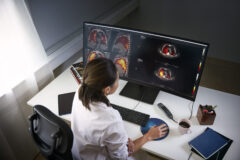
Voxel Dosimetry

by Hermes Medical Solutions AB  · Based in Sweden →A personalized approach to dosimetry with Hermia Voxel Dosimetry.
Nuclear Medicine Oncology

Contact for pricing
Regulatory Status Disclosed

Overview

Hermia Voxel Dosimetry by Hermes Medical Solutions AB is a state-of-the-art software application designed for accurate and personalized radiation dose calculations in nuclear medicine. It supports a wide range of therapy and imaging isotopes, enabling a personalized approach to radionuclide therapy. The software streamlines workflows by processing DICOM images from various camera manufacturers with automatic alignment of multiple SPECT/CT or PET/CT time points, including deformable registration. It calculates cumulated activity at both voxel and organ levels, utilizing a validated Monte Carlo algorithm for simulating dose deposition. Key features include semi-automatic organ segmentation for organs like the liver, kidneys, spleen, and lungs, as well as visualization of total absorbed dose distribution, dose volume histograms, and dose results tables. The latest versions incorporate machine learning-based algorithms for improved segmentation, reduced calculation times, and enhanced compatibility with various SPECT systems. It is FDA-cleared and CE-marked, ensuring its reliability and safety for clinical use.

Reviewed by Pouyan Golshani, MD — Interventional Radiologist

Key Features

  • Personalized approach to dosimetry
  • Supports a wide range of therapy and imaging isotopes (e.g., Ac-225, Lu-177, Y-90)
  • One workflow for all dosimetry work, processing DICOM images from all camera manufacturers
  • Automatic alignment of multiple SPECT/CT or PET/CT time points including deformable registration
  • Cumulated activity calculation at voxel or organ level
  • Validated Monte Carlo algorithm for dose deposition simulation
  • Semi-automatic organ segmentation (liver, kidney, spleen, lung) using patient's CT, with machine learning-based algorithms
  • Visualization of total absorbed dose distribution, dose volume histograms, and dose results table
  • Single time point dosimetry
  • Reduced calculation times
  • Improved compatibility with Spectrum Dynamics Quantitative SPECT
  • New features for research use, including dose rate calculations and ability to add isotopes
  • Computer-assisted organ segmentation
  • Dmax tool to quantify lesion spread in disseminated disease
  • Split tool for manual separation of adjacent lesions or physiological uptake
  • Theranostic Dashboard for optimizing patient-specific activity injections

Use Cases

  • Personalized radionuclide treatment planning and verification
  • Estimating radiation dose in nuclear medicine studies
  • Theranostics
  • Treatment planning for complex liver, prostate, and neuroendocrine cancers
  • Clinical image review and reporting in Nuclear Medicine, PET, SPECT, CT, and MRI
  • Research in dosimetry and isotope applications

What Physicians Need to Know

Key Capabilities
Supports a wide range of therapy and imaging isotopes for theranostics (e.g., Lu-177, Y-90, Ac-225). Processes vendor-neutral DICOM images with automatic multi-time point alignment and deformable registration. Performs voxel and organ-level activity calculation using a validated Monte Carlo algorithm. Features AI-powered semi-automatic organ segmentation (liver, kidney, spleen, lung) and versatile manual drawing tools. Visualizes 3D dose maps, dose volume histograms, and results tables. Offers single time point dosimetry options and includes research features like dose rate calculations and custom isotope addition.
Clinical Utility
Enables personalized radionuclide therapy planning and dose optimization, supporting informed decision-making for treatment and radiation safety. Improves patient management and decision support in molecular imaging, particularly for complex targeted radionuclide therapies such as PRRT for neuroendocrine tumors (NETs).
Integration Options
Designed as a vendor-neutral platform, compatible with DICOM images from all camera manufacturers. Offers seamless connectivity and integration with existing clinical workflows and systems, including PACS, Hermes Hybrid Viewer (v4.0+), and Hermes Affinity (v4.0+). It is part of the broader Hermia software suite, providing a comprehensive solution for molecular imaging.
Compliance Status
CE-marked and FDA 510(k) cleared, with regulatory clearance also in Canada. Complies with the EU Medical Device Regulation (MDR) 2017/745. In the US, it is intended for calculating doses for FDA-approved radiopharmaceuticals for clinical purposes, with research use for unapproved drugs.
Pricing Model
Offers flexible acquisition models, including capital purchase with delayed payment terms, a subscription model (monthly or quarterly payments), or a cloud solution/SaaS model.
User Experience
Features a streamlined 'one workflow' approach for all dosimetry tasks, enhanced by time-saving functionalities like semi-automatic organ segmentation and automated workflow configurations. Optimized for faster dose map calculations, providing an intuitive user interface with clear steps for alignment, VOI drawing, dose calculation, and results viewing.
Support Quality
Emphasizes customer-driven service with support provided by experts with clinical backgrounds in nuclear medicine. Committed to maintaining product safety and performance through necessary patches and encourages reporting of incidents and errors to support.
Implementation Complexity
Requires adherence to specific system requirements, configuration, and licensing. Designed for integration into existing IT infrastructure, with specific interoperability requirements for other Hermes products. The software application is configurable based on user needs.
Evidence Base
Utilizes a validated Monte Carlo algorithm for accurate dose calculations. Supported by extensive clinical validation published in peer-reviewed journals, demonstrating high correlation and low error rates when compared to established dosimetry methods like OLINDA/EXM. Software verification and validation testing are conducted in accordance with FDA guidance.
Physician Tip

For optimal use of Hermia Voxel Dosimetry, physicians should leverage its AI-powered semi-automatic organ segmentation to expedite workflow while critically reviewing and manually adjusting segmentations as needed for patient-specific anatomical variations. Utilize the comprehensive isotope support and Monte Carlo algorithm for precise, personalized treatment planning, especially for complex theranostic cases. Explore the single time point dosimetry options for efficiency when multiple time points are not feasible. Remember that while the software is FDA-cleared for approved radiopharmaceuticals, use for unapproved drugs is for research purposes only in the US. The detailed 3D dose maps and dose volume histograms are crucial for understanding dose distribution and potential toxicity to organs at risk.

Hermia Voxel Dosimetry is designed as a vendor-neutral solution, ensuring compatibility with DICOM images from various camera manufacturers. It seamlessly integrates into existing nuclear medicine workflows and IT infrastructure, including PACS and other modules within the Hermia software suite (e.g., Hybrid Viewer, Affinity). This allows for a unified platform experience, reducing data transfer errors and streamlining the overall dosimetry process. Ensure your existing Hermes software components (like Hybrid Viewer or Affinity) are updated to compatible versions for full interoperability.

Details

Category Oncology AI, Radiology & Imaging AI
Pricing Contact for pricing
DeploymentSoftware (likely on-premise with remote access capabilities)
Compliance
BAA AvailableUnknown AI-estimated
HIPAA CompliantUnknown AI-estimated
FDA Status 1 AI-estimated

Hermes Medical Solutions has received U.S. FDA clearance (K243919) for the new version of Hermia Voxel Dosimetry software for estimating radiation dose in nuclear medicine studies. This software calculates a volumetric map of absorbed radiation dose at the voxel level for patients administered with radioisotopes.

Integrations
EHR Not specified
Specialties Nuclear Medicine, Oncology

What the Web Says

Hermes Medical Solutions' Hermia Voxel Dosimetry software is designed for personalized dosimetry in nuclear medicine, supporting a wide range of therapy and imaging isotopes. It aims to streamline workflows and provide accurate dose calculations for various cancers. The software has received CE marking and FDA clearance, with recent updates focusing on improved automation, faster calculations, and enhanced image alignment.

Overall: Positive

Strengths

  • Supports a wide range of therapy and imaging isotopes, enabling personalized therapy.
  • Features semi-automatic organ segmentation with machine learning algorithms, saving time and improving efficiency.
  • Utilizes a validated Monte Carlo algorithm for accurate dose calculations.
  • Offers a vendor-neutral platform, processing DICOM images from various camera manufacturers.
  • Includes automated workflows and reduced calculation times, simplifying the dosimetry process.
  • Provides deformable registration for better image alignment, accounting for patient movement and breathing.

Limitations

  • One study indicated that Hermes Voxel Dosimetry consistently exhibited lower absorbed doses compared to another software (Simplicit90Yu2122) in a post-radioembolization clinical assessment.
  • The semi-Monte Carlo algorithm used for dose calculations assumes local electron energy absorption, which might affect accuracy in certain scenarios.
  • The accuracy of dose results can be susceptible to variations in the imaged activity distribution.
  • The software's Monte Carlo simulation for photons, while fast, cannot fully account for tissue inhomogeneities like bone and lung tissue.
  • The scientific literature is still unclear on whether absorbed dose alone can be directly linked to organ toxicity or tumor response, highlighting a broader challenge in dosimetry.
  • Concerns exist within the medical dosimetry community regarding the potential impact of AI on job longevity, though some believe AI will augment rather than replace dosimetrists.

Based on reviews from: Hermia | Voxel Dosimetry - Hermes Medical Solutions, Hermes gets FDA nod for new version of Hermia Voxel Dosimetry - AuntMinnie, July 30, 2025 Hermes Medical Solutions AB Hanne Grinaker Chief Quality and Regulatory Affairs Officer Strandbergsgatan 16 Stockh - accessdata.fda.gov, The Concept of Voxel Based Dosimetry - Hermes Medical Solutions, Voxel Dosimetry - Hermes Medical Solutions, Inc - PDF Catalogs | Technical Documentation, Hermes Educational Series, The Concept of Voxel Based Dosimetry - YouTube, FDA Clears Updated Hermia Voxel Dosimetry Software | 24x7, US Instructions For Use Voxel Dosimetry 3.2.0 - Hermes Medical Solutions, Hermes Medical Solutions updates dosimetry software - AuntMinnie, Hermia Dosimetry - Software Overview - IntuitionLabs, Hermes PACS Integration - Nuclear medicine PACS integration Software | IntuitionLabs.ai, 90Y post-radioembolization clinical assessment with whole-body Biograph Vision Quadra PET/CT: image quality, tumor, liver and lung dosimetry - PMC, Dosimetry software Hermes Internal Radiation Dosimetry: From quantitative image reconstruction to voxel-level absorbed dose distribution | Request PDF - ResearchGate, Organ vs Voxel Dosimetry in relation to Theranostics, a Practical Experience, Hermia Voxel Dosimetry - YouTube, Dosimetry Programs : r/medicaldosimetry - Reddit, Is Medical Dosimetry Worth Pursuing? : r/MedicalPhysics - Reddit, Any medical dosimetrists in here concerned about the rise of AI? : r/RadiationTherapy

Last updated: 2026-07-22

Ratings & Reviews

No reviews yet. Be the first to review this tool!

Rate Voxel Dosimetry

Clinical Value
Ease of Use
Integration
Support & Docs
Value for Money

Press & Coverage

Hermes Medical Solutions
New Hermia Voxel Dosimetry receives 510(K) FDA Clearance
Hermes Medical Solutions received 510(k) FDA Clearance for a new version of Hermia Voxel Dosimetry, which includes new features like additional isotopes, automated workflows, and advanced Monte Carlo dose calculations for personalized dosimetry in theranostics.
2025-08
AuntMinnie
Hermes gets FDA nod for new version of Hermia Voxel Dosimetry
Hermes Medical Solutions received 510(k) clearance from the FDA for its updated Hermia Voxel Dosimetry software, featuring semi-automatic organ segmentation, reduced calculation times, and improved compatibility with SPECT systems.
2025-08
Hermes Medical Solutions
Hermes Medical Solutions releases a new version of Hermia Voxel Dosimetry
Hermes Medical Solutions launched the latest version of Hermia Voxel Dosimetry, aiming to improve personalized dosimetry for theranostics with new isotopes, automated workflows, and faster dose map calculations.
2024-10
AuntMinnie
Hermes Medical Solutions updates dosimetry software
Hermes Medical Solutions updated its Hermia Voxel Dosimetry software, incorporating new alpha-emitting isotopes, automated workflows, and advanced Monte Carlo dose calculations for faster and more precise dose mapping.
2024-10
Hermes Medical Solutions
Hermes Medical Solutions receives EU MDR certificate and CE marking for its medical software applications
Hermes Medical Solutions obtained its EU Medical Device Regulation (MDR) certificate, with its dosimetry applications, including Voxel Dosimetry, certified as class IIb, ensuring compliance with new European legislation.
2024-02
Frontiers in Medicine
90Y post-radioembolization clinical assessment with whole-body Biograph Vision Quadra PET/CT: image quality, tumor, liver and lung dosimetry - PMC
This peer-reviewed article discusses the use of HERMIA GOLD Smart Workstation 2.17 with the Voxel Dosimetry 1.1 toolbox for post-treatment dosimetry validation in 90Y radioembolization, highlighting its semi-Monte Carlo algorithm for dose calculations.
2024-02
Hermes Medical Solutions
Hermes Medical Solutions Receives CE Mark & Health Canada Clearance for Single Time Point Voxel Dosimetry
Hermes Medical Solutions released Voxel Dosimetry 1.1 in Europe and Canada, featuring groundbreaking single time point dosimetry calculations to provide accurate dosimetry for theranostics and personalized radionuclide therapies.
2021-06
Frontiers in Medicine
Developments in 177Lu-based radiopharmaceutical therapy and dosimetry - Frontiers
This article highlights Voxel Dosimetryu2122 by Hermes Medical Solutions as a CE-marked and FDA 510(k) cleared software that provides patient-specific dosimetry for radiopharmaceuticals using Monte Carlo simulations and single-time-point dosimetry.
unknown

Videos

Product demos, reviews, and walkthroughs for Voxel Dosimetry.

Loading videos...

View all on YouTube

Frequently Asked Questions

AI-driven voxel dosimetry integrates by automating and optimizing dose calculation and contouring, which can significantly reduce planning time and improve accuracy by accounting for tissue heterogeneity more precisely. This integration aims to enhance treatment personalization, minimize toxicity to healthy tissues, and ultimately lead to better patient outcomes.
Regulatory compliance requires that AI models for clinical use have appropriate clearances, such as FDA approval, which often occurs via the 510(k) pathway. Adherence to data privacy regulations like HIPAA is paramount for patient information, and practices must also navigate evolving state-specific AI laws and frameworks.
Current alternatives include traditional dose calculation methods such as Monte Carlo simulations and analytical algorithms like AAA or Acuros XB. While AI offers speed and efficiency, Monte Carlo is often considered the reference standard for accuracy and may be preferred in complex cases or for validation purposes.
Pricing models for AI-driven dosimetry solutions often involve licensing fees, per-patient charges, or subscription services, with costs ranging from approximately u00a34 to u00a350 per plan. The return on investment can be realized through increased planning efficiency, reduced treatment planning errors, and potentially improved patient outcomes, which can lead to cost savings in managing side effects.
Inherent limitations include the potential for AI models to perpetuate biases present in their training data, which could lead to suboptimal plans for underrepresented patient populations. Mitigation strategies involve rigorous validation with diverse, high-quality datasets, ongoing human oversight, and the development of explainable AI (XAI) techniques to understand the model's decision-making.
AI models for voxel dosimetry require large, diverse datasets comprising patient CT/MRI scans, existing treatment plans, and corresponding dose distributions for effective training and validation. This necessitates robust data governance, secure data sharing agreements, and strict adherence to privacy protocols to protect sensitive patient information.
Physician oversight remains crucial, as AI tools are assistive and the physician retains ultimate responsibility for the treatment plan. While many AI models have a 'black box' nature, efforts in explainable AI (XAI) are increasing transparency, allowing physicians to better understand and validate the AI's recommendations.

Related Tools

FAITH project (Fatigue Therapy – AI-supported Diagnosis and Therapy of Tumour-associated Fatigue Syndrome)
Fimo Health GmbH (Consortium Leader)
Mental & Behavioral Health AI
The FAITH project is developing an AI-based solution for the diagnosis and therapy of tumor-associated fatigue syndrome in cancer patients. It uses wearable sensors, a smartphone app, and artificial intelligence to provide individualized therapy recommendations and monitor mental health.
AI-based support system for skin cancer diagnostics
German Cancer Research Center (DKFZ)
Clinical Decision Support & Reference
Scientists at the German Cancer Research Center have developed an AI-based support system for skin cancer diagnostics that explains its decisions, increasing doctors' confidence in both the AI and their own diagnoses.
eyonis® LCS
Median Technologies
Oncology AI
eyonis® LCS is an FDA 510(k) cleared AI/machine learning-powered software for the detection and diagnosis of lung cancer, helping clinicians detect and characterize suspicious parenchymal pulmonary nodules earlier on low-dose CT scans.
Lumea Digital Pathology
Lumea
Clinical Decision Support & Reference
Lumea is a specialty-specific digital pathology platform that covers the entire diagnostic workflow, from biopsy to final report, and integrates AI tools from partners like Paige and Mindpeak.
Azra AI
Azra AI
Clinical Decision Support & Reference
Azra AI is an AI platform that swiftly analyzes, identifies, and classifies cancer patients, triaging those needing therapy and follow-up to enhance oncology care. It is deployed at more than 1,500 sites and integrated with leading EHRs.
Trial Library
Trial Library
Drug Discovery & Research
Trial Library's AI-native platform is embedded in community oncology practices to identify eligible patients for oncology clinical trials. It integrates clinical trials into routine care, activating providers, identifying eligible patients, and navigating them through the trial lifecycle across health systems, biopharma, and payers.

See all Oncology AI tools →

Suggest an Edit → | Last Verified: 2026-04-20 | First Added: 2026-04-20
AI Tool Finder
AI-powered search. Results may not be comprehensive.