vRad AI

by vRad  · Based in United States → — AI-enabled technology and support platform for radiology practices.
Radiology

Regulatory Status Disclosed

Overview

vRad AI is a core component of The vRad Platform, a fully integrated, AI-enabled technology and support platform for radiology practices. The platform is designed to optimize radiologist productivity, provide real-time practice-wide analytics, and help deliver consistent, high-quality patient care across dispersed facilities and reading locations.

Developed and refined over two decades for vRad’s own radiologists, the platform is now commercially available to other radiology practices. It aims to unify disparate technologies and data, improve practice performance, and boost radiologist satisfaction.

vRad AI acts as a safety net, automatically identifying and prioritizing cases with suspected critical findings to improve radiology quality and reduce diagnostic errors. It also detects critical findings in routine imaging that may not have been initially suspected.

Reviewed by Pouyan Golshani, MD — Interventional Radiologist

Key Features

  • Auto-prioritization for 19 critical pathologies, reducing referring physician wait time by more than 15 minutes per read, on average.
  • Automated alerts to address Merit-based Incentive Patient System (MIPS) requirements relevant to the procedure (100% MIPS compliance on all six required measures among vRad radiologists).
  • Auto-structured reports (average processing time under one second).
  • Alerts on left/right and male/female report discrepancies.
  • Autodialed calls to the ordering provider for 38 critical findings.
  • Auto-generated prior report summaries recognizing up to 200 positive pathologies related to the current report.
  • Case routing and advanced image viewer.
  • AI-powered dictation and reporting.
  • Operations dashboards.
  • 24/7 live clinical and tech support (optional).

Use Cases

  • Improving radiologist efficiency and productivity (up to 40% increase).
  • Reducing diagnostic errors and improving quality assurance (identifying 2,000+ diagnostic errors annually).
  • Accelerating care for critical patients (reducing turnaround times by 15+ minutes on average for 36,000+ critical findings annually).
  • Detecting hidden threats in routine imaging (prioritizing 14,000+ non-emergent cases annually, including intracranial hemorrhages, pulmonary emboli, and aortic dissections).
  • Mitigating medical malpractice exposure and costs.
  • Supporting multi-site radiology practices with a unified platform.

What Physicians Need to Know

Evidence Base
vRad AI development is guided by a radiologist panel that prioritizes model development based on patient data and outcomes, leveraging over two decades of emergency radiology expertise and a massive, diverse dataset from approximately 2,100 sending facilities across all 50 states.
Clinical Validation Studies
vRad AI acts as a safety net, identifying over 2,000 diagnostic errors annually across eight critical pathologies, contributing to a 99.87% accuracy rate. The AI models correctly prioritize about 75 emergent cases daily, reducing time to care by as much as 15 minutes, and re-prioritize approximately 10 non-emergent cases per month, accelerating care by up to 24 hours for patients with critical, but initially unknown, findings. AI models have been deployed for pathologies such as intracranial hemorrhage, pulmonary embolism, epidural lesions, pneumoperitoneum in chest CTs, and testicular torsion in ultrasound scans.
Alert Fatigue Management
vRad AI prioritizes 55,000+ critical findings for 19 pathologies annually, reducing turnaround times by over 15 minutes on average. The system auto-prioritizes the worklist and provides radiologist alerts for issues like omitted reimbursement terminology and left vs. right discrepancies. While the potential for alert fatigue exists with AI, vRad's approach focuses on refining algorithms to minimize false positives and prioritize relevant alerts.
Override Rate Data
Specific override rate data is not explicitly provided. However, vRad AI functions as a 'safety net' to identify potential diagnostic errors and prioritize critical cases, suggesting that radiologists review and confirm AI findings.
Drug Interaction Checking
vRad AI does not explicitly mention drug interaction checking as a feature. The focus is on image-based diagnostics and prioritization.
Differential Diagnosis Support
vRad AI primarily focuses on identifying and prioritizing critical findings and enhancing quality assurance in radiology. It does not explicitly offer differential diagnosis support in the traditional sense.
Guideline Update Frequency
vRad has maintained a strict AI governance framework for over a decade, guided by a radiologist panel that prioritizes model development based on patient data and outcomes. The technology team continuously builds, validates, and deploys both natural language processing (NLP) and image AI models to enhance prioritization workflows.
Clinical Workflow Integration
The vRad Platform is a fully integrated, AI-enabled technology and support platform that integrates superior image reading and dictation, automated report generation, case routing, and advanced image viewer. AI is embedded throughout the system, from auto-prioritizing the worklist to radiologist alerts. The platform connects with over 150,000 imaging devices and all major PACS and EMRs. Automated workflows cut stroke turnaround times by 85% and trauma by 75%. The system also includes automated radiologist alerts for common reporting errors and auto-dialed calls to ordering providers for 38 critical findings.
Physician Tip

Leverage vRad AI for efficient worklist prioritization, especially for critical findings, to reduce turnaround times and improve patient care. Utilize the automated alerts for reporting accuracy and compliance. The integrated platform aims to reduce cognitive load and burnout by automating routine tasks, allowing more focus on complex cases and clinical judgment.

The vRad Platform is designed as an end-to-end solution that connects with over 150,000 imaging devices and all major PACS and EMRs, enabling a unified and streamlined environment for radiology practices. It offers seamless integration for image reading, dictation, automated report generation, and real-time analytics. vRad also engages in partnerships with AI developers like Radiobotics to expand its AI capabilities for specific diagnostic areas.

Details

Category Clinical Decision Support & Reference, Radiology & Imaging AI
Pricing Unknown
DeploymentCloud-based
Compliance
BAA AvailableUnknown
HIPAA Compliant Yes AI-estimated
FDA Status Cleared AI-estimated
Integrations
EHR Not specified
Specialties Radiology

What the Web Says

vRad AI, particularly its vRad AI Insights platform, is generally viewed positively within the radiology community for its potential to improve diagnostic accuracy and efficiency. Physicians appreciate the integration of AI tools that support their workflow, while healthcare IT professionals see value in its ability to enhance operational metrics and patient care. However, some discussions touch upon the ongoing need for human oversight and the continuous evolution of AI in clinical settings.

Overall: Positive

Strengths

  • Enhances diagnostic accuracy and consistency.
  • Improves radiologist efficiency and workflow.
  • Provides actionable insights for operational improvements.
  • Supports early detection of critical conditions like intracranial hemorrhage.
  • Integrates well with existing radiology platforms.
  • Potential to reduce turnaround times for critical findings.

Limitations

  • Reliance on AI still requires significant human oversight.
  • Potential for 'alert fatigue' if not properly managed.
  • Initial setup and integration might require IT resources.
  • Concerns about data privacy and security with AI processing.
  • The technology is continuously evolving, requiring ongoing updates and training.
  • Some physicians may be hesitant to fully trust AI over their own judgment.

Based on reviews from: vRad.com (product information), Healthcare IT News, Radiology Business, AuntMinnie.com, LinkedIn (professional discussions), Reddit (r/radiology, r/medicine)

Last updated: 2026-10-11

Ratings & Reviews

No reviews yet. Be the first to review this tool!

Rate vRad AI

Clinical Value
Ease of Use
Integration
Support & Docs
Value for Money

Press & Coverage

vRad
vRad Opens Proprietary AI-Enabled Technology and Support Platform to Radiology Practices Broadly
vRad announced the commercial availability of its AI-enabled technology and support platform, which has been used by 688 radiologists reading 8.9 million studies annually and can increase radiologist efficiency by up to 40%. The platform includes AI-enabled automation for auto-prioritization of critical pathologies, automated MIPS alerts, and auto-structured reports.
2025-11
AuntMinnie
vRad Platform now available commercially - AuntMinnie
AuntMinnie reported that vRad's AI-enabled technology and support platform is now commercially available to other radiology practices. The platform integrates image reading, dictation, automated report generation, and operational management, and is SOC 2 Type II certified for security and availability.
2025-11
vRad Blog
AJR Podcast: Artificial Intelligence as a Radiology Safety Net - vRad Blog
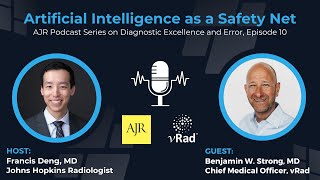
Dr. Ben Strong, vRad's Chief Medical Officer, discussed with Dr. Francis Deng of Johns Hopkins the use of AI in quality assurance and its impact on diagnostic error and malpractice risk, highlighting the role of natural language processing (NLP) in improving care.
2025-06
vRad Blog
Bringing Subspecialist Breast Imaging Back to a Rural Community: A Big Win With Telemammography - vRad Blog
This article discusses how vRad's teleradiology and AI solutions enable rural communities to access subspecialist breast imaging, ensuring regulatory compliance and providing timely patient feedback.
2025-03
Healthcare.Digital (referenced in search result)
Telemedicine Market - Forecasts from 2025 to 2030
A market research report highlights vRad AI Teleradiology's role in reducing diagnostic times in 2023, contributing to the thriving telemedicine market driven by technology, chronic disease needs, and policy support.
2024-02
vRad Blog
Q&A: vRad's CIO on AI Beyond Worklist Prioritization, New Solutions for Radiologists, COVID-19 and More
vRad's CIO discusses the company's AI initiatives beyond worklist prioritization, including new solutions for radiologists and insights into their COVID-19 related research.
2022-08
vRad
vRad Joins Radiology Partners
vRad announced its acquisition by Radiology Partners, following regulatory approvals, aiming to further elevate the role of radiologists in the healthcare system.
2020-12
vRad Blog
New Radiology AI Models Reduce Time to Care - Teleradiology services - vRad Blog
vRad deployed two new AI models to its imaging platform to identify pneumoperitoneum in chest CTs and testicular torsion in ultrasound scans, aiming to accelerate care delivery for critical conditions.
2020-07

Videos

Product demos, reviews, and walkthroughs for vRad AI.

View all on YouTube

Frequently Asked Questions

vRad AI is designed to integrate seamlessly with most existing PACS and EMR systems through standard protocols like DICOM and HL7. This allows for automated image routing, AI analysis, and the direct insertion of AI-generated insights into your patient records and worklists, minimizing disruption to your current workflow.
vRad AI is developed with strict adherence to global regulatory and compliance standards, including HIPAA in the United States and GDPR in Europe, to ensure patient data privacy and security. The platform employs robust encryption, access controls, and anonymization techniques to protect sensitive health information throughout the AI analysis process.
vRad AI demonstrates high accuracy and reliability in its validated diagnostic capabilities, often exceeding human performance in specific tasks, as evidenced by extensive clinical validation studies. However, it's crucial to understand that vRad AI is a decision support tool and not a replacement for physician judgment, with current limitations typically revolving around rare pathologies or image artifacts that may require human expertise for definitive interpretation.
vRad AI offers flexible pricing models that can be tailored to the specific needs of your practice or institution, including subscription-based models, per-study fees, or tiered pricing based on the volume of studies and the suite of AI features utilized. Detailed pricing information and customized quotes are available upon consultation with our sales team.
While several AI solutions exist in the radiology market, vRad AI differentiates itself through its comprehensive suite of AI algorithms covering a broad range of modalities and pathologies, its seamless integration capabilities, and its focus on clinical validation and physician-centric design. Our commitment to continuous improvement and robust customer support also sets us apart from many alternatives.
vRad AI is designed with mechanisms to flag edge cases or unusual findings that fall outside its core training data for immediate physician review. While the AI provides initial insights, these cases are escalated to ensure that human expertise is applied to complex or rare conditions, maintaining diagnostic accuracy and patient safety.
vRad AI provides continuous ongoing support, including technical assistance, regular software updates, and algorithm improvements to enhance performance and introduce new features. Our commitment to research and development ensures that our AI solutions remain at the forefront of radiology innovation, with updates deployed to users as they become available.

Related Tools

a2z Radiology AI Inc.
Clinical Decision Support & Reference
Abdo-Triage is an AI tool by a2z Radiology AI Inc. designed to assist radiologists in triaging abdominal imaging studies and identifying critical findings.
OpenAI
OpenAI
Clinical Decision Support & Reference
ChatGPT for Clinicians by OpenAI provides advanced AI capabilities to assist medical professionals with information synthesis, documentation, and patient communication.
Perimeter Medical Imaging AI
Clinical Decision Support & Reference
The Claire OCT System by Perimeter Medical Imaging AI uses Optical Coherence Tomography and AI to provide real-time, high-resolution tissue imaging during surgery to help identify cancerous tissue.
Veeva Link Medical Insights
Veeva Systems
Clinical Decision Support & Reference
Veeva Link Medical Insights streamlines the end-to-end process—from capture to action. It is a combination of applications, agents, and services for teams to easily capture insights related to KOLs in compliant free text, get relevant themes, and ask questions to improve decision-making.
Semantic Clinical Artificial Intelligence (SCAI)
University at Buffalo (UB)
Clinical Decision Support & Reference
Semantic Clinical Artificial Intelligence (SCAI) is a clinical AI tool developed by University at Buffalo researchers that can respond to medical questions, demonstrating high accuracy on medical licensing exams and augmenting physician decision-making.
Prenaital
Prenaital
Clinical Decision Support & Reference
Prenaital uses AI to detect and manage high-risk pregnancies, enhancing the detection of conditions like abnormal fetal growth, preterm birth, and stillbirth.

See all Clinical Decision Support & Reference tools →

Suggest an Edit → | Report an issue | Last Verified: 2026-07-12 | First Added: 2026-07-12
AI Tool Finder
AI-powered search. Results may not be comprehensive.