Bunkerhill ECG-EF vs Loss of Pulse Detection

AI Verdict
Choose Bunkerhill ECG-EF if…
Choose Bunkerhill ECG-EF if your healthcare system requires an FDA-cleared AI algorithm to efficiently screen for reduced left ventricular ejection fraction (LVEF ≤ 40%) from routine 12-lead electrocardiograms. This tool is ideal for integrating into existing EHRs and clinical archives to enhance early identification of patients at risk for heart failure within a clinical workflow.
View Bunkerhill ECG-EF →Choose Loss of Pulse Detection if…
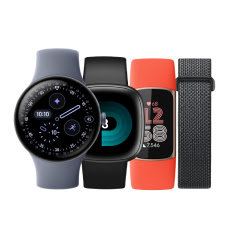
Choose Fitbit's Loss of Pulse Detection if you are seeking a personal safety feature on a compatible wearable device that can automatically detect a potential loss of pulse using PPG and accelerometry. This is best suited for individuals who desire an automated system to alert emergency services if they become unresponsive, providing real-time critical event monitoring outside of a formal clinical diagnostic setting.
View Loss of Pulse Detection →Reviewed by Pouyan Golshani, MD — Interventional Radiologist
Quick Comparison
| Feature | Bunkerhill ECG-EF | Loss of Pulse Detection |
|---|---|---|
| Pricing | Contact sales for pricing details. | Unknown |
| Deployment | Cloud-native platform (Carebricks) that integrates with existing health system infrastructure like EHRs. | Unknown |
| BAA Available | Unknown | Yes AI-estimated |
| FDA Status | Yes AI-estimated | Cleared AI-estimated |
| HIPAA | Yes AI-estimated | Yes AI-estimated |
Head-to-Head
AI-generated assessment across six dimensions based on each tool's documented features and compliance posture. Grounded in public data — not a substitute for hands-on evaluation.
Usability
Bunkerhill ECG-EFBunkerhill ECG-EF (Tool A) integrates seamlessly with existing EHRs and clinical archives, streamlining professional workflows for healthcare providers. This allows for automated clinical workflows without requiring significant changes to current practices. In contrast, Fitbit's Loss of Pulse Detection (Tool B) is a user-facing feature on a wearable device, requiring user interaction and management, which, while simple for the end-user, is less about professional clinical usability.
Clinical Value
Bunkerhill ECG-EFBunkerhill ECG-EF (Tool A) offers proactive clinical value by aiding in the early identification of patients at risk for heart failure through routine ECGs, potentially leading to earlier intervention and improved long-term outcomes for a chronic condition. While Fitbit's Loss of Pulse Detection (Tool B) provides critical, life-saving emergency response for acute events, Tool A's focus on early diagnosis and risk stratification for a prevalent chronic disease offers a broader, sustained impact on patient management and preventative care.
Pricing & Value
Loss of Pulse DetectionFitbit's Loss of Pulse Detection (Tool B) offers superior pricing transparency and value as it is included with compatible devices and not sold as a standalone product or subscription. Bunkerhill ECG-EF (Tool A) requires contacting for pricing, indicating a potentially higher, enterprise-level cost without public transparency.
Enterprise Readiness
Bunkerhill ECG-EFBunkerhill ECG-EF (Tool A) is explicitly designed for enterprise integration, seamlessly connecting with EHRs and clinical archives as part of the Carebricks platform, making it suitable for large-scale deployment within healthcare systems. Fitbit's Loss of Pulse Detection (Tool B), while FDA-cleared and HIPAA compliant, is a feature on consumer wearable devices, which typically operates at an individual user level rather than being managed and deployed across a healthcare organization's IT infrastructure.
Innovation
Bunkerhill ECG-EFBunkerhill ECG-EF (Tool A) demonstrates significant innovation by applying an AI algorithm to interpret complex diagnostic information from routine 12-lead ECGs for early heart failure detection, a novel approach to proactive disease management. Its tagline, 'Generative AI for clinical reasoning and action,' suggests a broader, more advanced AI capability. While Fitbit's automated emergency response on a wearable (Tool B) is also innovative, Tool A's application of advanced AI to transform a standard diagnostic test for chronic disease management represents a deeper technological and clinical paradigm shift.
Support & Docs
Loss of Pulse DetectionFitbit's Loss of Pulse Detection (Tool B) benefits from extensive, publicly available user support documentation typical of consumer electronics, including instructions for use and FAQs. For enterprise solutions like Bunkerhill ECG-EF (Tool A), specific support and documentation details are generally not publicly disclosed and are handled through direct client relationships, making Tool B's resources more accessible to its end-users.
Feature-by-Feature
Detail beyond the Quick Comparison summary. For pricing, deployment, BAA, FDA, and HIPAA see the Overview tab.
| Feature | Bunkerhill ECG-EF | Loss of Pulse Detection |
|---|---|---|
| Name | Bunkerhill ECG-EF | Loss of Pulse Detection |
| Company | BunkerHill Health | Fitbit |
| Description | Bunkerhill ECG-EF is an FDA-cleared artificial intelligence algorithm by BunkerHill Health that detects reduced left ventricular ejection fraction (LVEF u2264 40%) from routine 12-lead electrocardiograms (ECGs), aiding in the early identification of patients at risk for heart failure. | Fitbit's Loss of Pulse Detection is an FDA-cleared feature on compatible wearable devices that uses PPG and accelerometry to detect a potential loss of pulse and can automatically alert emergency services if the user is unresponsive. |
| Key Functionality | AI algorithm to detect reduced Left Ventricular Ejection Fraction (LVEF u2264 40%) from routine 12-lead ECG data | Automatic loss of pulse detection utilizing PPG and accelerometry sensors |
| Specialties | Cardiology, Emergency Medicine, Internal Medicine | Cardiology, Critical Care, Emergency Medicine |
Videos
Demos, reviews, and walkthroughs featuring Bunkerhill ECG-EF and Loss of Pulse Detection.
Frequently Asked Questions
More Comparisons
More matchups featuring Bunkerhill ECG-EF or Loss of Pulse Detection
Backers
Who funded each tool's parent company.