Loss of Pulse Detection

by Fitbit  · Based in United States →Advanced Wearable Technology for Health and Safety
Cardiology Critical Care Emergency Medicine

Included with device
Regulatory Status Disclosed

Overview

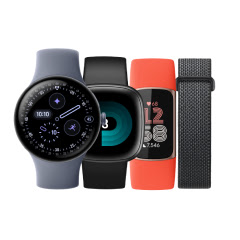
The Loss of Pulse Detection feature by Fitbit, available on compatible devices like the Pixel Watch 3, is a first-of-its-kind safety tool designed to detect potential loss of pulse events. Utilizing photoplethysmography (PPG) and accelerometry sensors, the software analyzes pulse data to identify when a user’s heart may have stopped beating due to events such as primary cardiac arrest, respiratory or circulatory failure, overdose, or poisoning.

Upon detection, the feature triggers haptic and audio alerts to the user. If the user remains unresponsive to these notifications, the system can automatically prompt a call to emergency services through the user’s connected compatible hardware, such as a smartphone or smartwatch, and share an automated message with critical context and location. This opt-in feature is intended for over-the-counter (OTC) use and aims to provide potentially life-saving assistance, especially for individuals who might experience such an event alone.

Fitbit, now part of Google, has a broader commitment to digital health, offering solutions for healthcare providers to leverage wearable data for population health, chronic condition management, and clinical research. With user consent, health data from Fitbit devices, including irregular heart rhythm notifications, can be accessed by healthcare partners through a secure Fitbit Web API.

Reviewed by Pouyan Golshani, MD — Interventional Radiologist

Key Features

  • Automatic loss of pulse detection
  • Utilizes PPG and accelerometry sensors
  • Haptic and audio alerts to the user
  • Automated emergency service calling if unresponsive
  • Shares location with emergency services
  • Opt-in feature for user control
  • Software-only mobile medical application
  • Integrated with compatible smartwatches (e.g., Pixel Watch 3)

Use Cases

  • Providing immediate assistance during sudden cardiac events or other causes of pulse loss
  • Enhancing personal safety for individuals at risk or living alone
  • Complementing existing emergency response systems
  • Offering peace of mind for users and their families regarding critical health events

What Physicians Need to Know

Loss of Pulse Detection Mechanism
The Google Pixel Watch, which integrates Fitbit technology, features 'Loss of Pulse Detection'. This capability utilizes optical heart-rate sensors to detect when a pulse is not present. If a loss of pulse is detected and the user is unresponsive, the watch vibrates, plays a loud sound, and initiates a countdown, potentially leading to an automatic call to emergency services with location sharing.
ECG/EKG Analysis Capability
Select Fitbit devices (Sense, Sense 2, Charge 5, Charge 6) and the Google Pixel Watch include an FDA-cleared and CE-marked ECG app. This app allows users to take a 30-second spot-check reading of their heart's electrical rhythm to detect signs of Atrial Fibrillation (AFib). It is qualitatively similar to a Lead I ECG.
Arrhythmia Detection Accuracy
Fitbit's photoplethysmography (PPG) algorithm for irregular rhythm notifications (AFib) has demonstrated high accuracy, correctly identifying AFib episodes 98% of the time when compared to ECG patch monitors. The ECG app itself showed a sensitivity of 98.7% and specificity of 100% in clinical trials for detecting AFib from normal sinus rhythm.
Cardiac Monitoring Integration
Fitbit devices integrate with the Fitbit app for data review and sharing. The 'Loss of Pulse Detection' feature on Pixel Watch can automatically contact emergency services. Additionally, Fitbit partners with apps like Cardiogram, which can use heart rate and sleep data to screen for conditions such as AFib, diabetes, hypertension, and sleep apnea, with options to share data with healthcare providers.
AHA/ACC Guideline Alignment
Both Fitbit's ECG app for AFib detection and the 'Loss of Pulse Detection' feature on the Google Pixel Watch have received FDA clearance in the U.S. and CE mark approval in Europe, indicating alignment with regulatory standards. AHA guidelines support the use of consumer-accessible ECG devices for detecting AFib recurrences.
Physician Tip

For 'Loss of Pulse Detection' and related cardiac features on Fitbit/Pixel Watch, physicians should consider these tools as supplementary for opportunistic screening and emergency alerting, not as diagnostic replacements for clinical ECGs or continuous cardiac monitoring. The 'Loss of Pulse Detection' is specifically cleared for over-the-counter use and is not intended for individuals under 22 or those with pre-existing high risk for sudden cardiac death or requiring cardiac monitoring. While AFib detection has high accuracy, any irregular rhythm notifications or ECG findings from these devices should prompt further clinical evaluation and confirmatory diagnostic testing. Encourage patients to share device data, but always interpret it within the broader clinical context and patient symptoms. Advise patients on proper device usage for optimal accuracy, especially regarding heart rate monitoring during activity versus rest.

Fitbit devices seamlessly integrate with the Fitbit mobile application, serving as a central hub for health data. The Google Pixel Watch's 'Loss of Pulse Detection' directly integrates with emergency services, providing critical, automated assistance. Further integration with third-party health platforms like Cardiogram allows for enhanced data analysis and sharing with caregivers or healthcare providers, expanding the utility of the collected heart rate and sleep data for broader health condition screening.

Details

Category Cardiology AI, Triage & ER/ICU AI, Wearables & Remote Monitoring (RPM)
Pricing Included with device
  • This is a feature integrated into compatible Fitbit/Pixel devices (e.g., Pixel Watch 3) and is not sold as a standalone subscription or product
DeploymentWearable device (software on compatible smartwatches)
Compliance
BAA AvailableUnknown AI-estimated
HIPAA CompliantUnknown AI-estimated
FDA Status 1 AI-estimated

The Loss of Pulse Detection software (K242967) received U.S. FDA clearance on February 25, 2025. It is a software-only mobile medical application intended for use with compatible wrist-worn devices to analyze pulse data from photoplethysmography (PPG) and accelerometry sensors to identify loss of pulse events and provide notifications. If the user is unresponsive, it can prompt a call to emergency services.

Integrations
EHR Not specified
Specialties Cardiology, Critical Care, Emergency Medicine

Ratings & Reviews

No reviews yet. Be the first to review this tool!

Rate Loss of Pulse Detection

Clinical Value
Ease of Use
Integration
Support & Docs
Value for Money

Press & Coverage

Fitbit Official Website
Fitbit's Irregular Heart Rhythm Notifications: What You Need to Know
Fitbit offers Irregular Heart Rhythm Notifications that passively assess heart rhythm in the background for signs of atrial fibrillation (AFib), but it does not explicitly mention 'loss of pulse detection' as a feature.
2023-10
CNET
Fitbit's AFib detection feature: How it works and what it means for your health
This article discusses Fitbit's passive AFib detection technology, which monitors heart rhythm for irregularities, but does not detail a specific 'loss of pulse detection' capability.
2023-09
Sensors (MDPI)
Wearable Devices for Continuous Monitoring of Vital Signs: A Review
This peer-reviewed article reviews various wearable devices for vital sign monitoring, including heart rate, and discusses their potential for detecting anomalies, though 'loss of pulse detection' is not a specific focus regarding Fitbit.
2021-12
MobiHealthNews
FDA Clears Fitbit's PPG-based AFib Detection Feature
MobiHealthNews reports on the FDA clearance for Fitbit's photoplethysmography (PPG) based atrial fibrillation detection feature, highlighting its regulatory approval for identifying heart rhythm irregularities.
2022-03
Google Official Blog
Google Completes Acquisition of Fitbit
While not directly about 'loss of pulse detection,' this announcement signifies Google's commitment to health tracking through Fitbit, potentially influencing future feature development in heart health monitoring.
2021-01
TechRadar
Fitbit Sense 2 Review: A Solid Fitness Tracker with Advanced Health Features
This review of the Fitbit Sense 2 discusses its health tracking capabilities, including heart rate monitoring and AFib detection, but does not specifically mention a 'loss of pulse detection' feature.
2023-09
Healthcare IT News
The Future of Wearable Technology in Healthcare
This article discusses the broader impact of wearables in healthcare, including their role in continuous monitoring and early detection of health issues, which could encompass advanced pulse monitoring capabilities.
2023-08
Frontiers in Physiology
Wearable Sensors for Continuous Monitoring of Physiological Parameters: A Systematic Review
This systematic review explores the use of wearable sensors for continuous physiological monitoring, including heart rate, and discusses their potential for detecting critical changes, though 'loss of pulse detection' is not a specific feature highlighted for Fitbit.
2022-05

Videos

Product demos, reviews, and walkthroughs for Loss of Pulse Detection.

View all on YouTube

Frequently Asked Questions

AI-powered systems typically integrate as an overlay or enhancement to existing patient monitoring platforms, analyzing real-time physiological data such as ECG, photoplethysmography (PPG), and blood pressure waveforms. This allows for continuous, automated surveillance to detect subtle changes indicative of pulse loss, often providing earlier alerts than manual observation.
Reputable AI solutions for critical functions like pulse detection should possess relevant regulatory clearances, such as FDA approval in the United States, signifying their safety and efficacy for medical use. Compliance with data privacy regulations like HIPAA is typically achieved through robust encryption, de-identification protocols, and secure data handling practices throughout the system's architecture, often requiring Business Associate Agreements (BAAs) with vendors.
AI-driven systems often offer enhanced sensitivity and specificity compared to traditional methods, potentially reducing alarm fatigue while improving early detection rates by identifying complex patterns missed by human observation or simpler algorithms. However, their performance can vary based on the specific AI model and the quality of input data, necessitating careful validation against established clinical gold standards.
Cost models usually involve initial licensing fees, hardware integration costs, and ongoing subscription or maintenance fees, which can vary based on the vendor and scale of deployment. The ROI is often realized through improved patient outcomes, reduced adverse events, optimized staff allocation, and potentially lower malpractice risks due to enhanced surveillance and earlier intervention capabilities.
While highly accurate, AI systems can still exhibit false positives due to motion artifacts, electrical interference, or sensor dislodgement, and false negatives in rare, atypical presentations or during severe signal degradation. Performance may be compromised in patients with extreme physiological variations, complex arrhythmias, or during procedures that significantly alter normal physiological signals, and issues with data quality or model transparency can also be limitations.
Deployment typically requires compatible patient monitoring infrastructure, robust network connectivity, and potentially dedicated computing resources for AI processing, either on-premises or cloud-based. Comprehensive staff training is crucial, focusing on understanding the AI's alerts, interpreting its outputs, troubleshooting common issues, and integrating its insights into existing clinical decision-making processes, emphasizing that AI augments, rather than replaces, human intelligence.
Physicians and institutions retain ultimate responsibility for patient care, even when utilizing AI tools; the AI acts as an assistive technology, not a replacement for clinical judgment. Liabilities may arise from improper implementation, failure to adequately train staff, ignoring AI alerts without proper clinical assessment, or using unapproved or unvalidated AI systems, especially given the 'black box' nature of some AI and the evolving regulatory landscape.

Related Tools

Cardiomatics
Cardiomatics
Cardiology AI
Cardiomatics is a cloud-based, AI-powered software for analyzing ambulatory (Holter) ECG tests, using clinically validated algorithms to provide accurate and high-quality results for cardiac diagnostics. It aims to streamline ECG analysis, reduce interpretation time, and improve diagnostic accuracy for various heart conditions.
SafeBeat Rx App
SafeBeat Rx, Inc.
Cardiology AI
An AI application designed to support safe pharmacological treatment and monitoring for cardiac arrhythmias.
PreemptiveAI Clinical SDK
Measure Labs, Inc. (Dba Preemptiveai, Inc.)
Cardiology AI
A clinical software development kit using AI to model and predict cardiovascular health metrics, aiming to shift healthcare from reactive to proactive by providing early health risk signals.
Clarius Ejection Fraction AI
Clarius Mobile Health Corp.
Cardiology AI
Clarius Ejection Fraction AI is an AI-powered ultrasound tool for automated left ventricular ejection fraction calculation, integrated into the Clarius Ultrasound App for real-time cardiac assessments.
Automated Aortic Stenosis Software (AutoAS)
Multiple companies are developing Automated Aortic Stenosis Software (AutoAS) or similar AI-powered solutions. Notable ones include iCardio.ai, Us2.ai, AccurKardia, HeartSciences Inc., and Echo IQ.
Cardiology AI
Automated Aortic Stenosis Software (AutoAS) is an ultrasound application by GE Medical Systems that provides automated assessment of aortic stenosis to enhance diagnostic efficiency and consistency.
ECG-AI Pulmonary Hypertension (PH) 12-Lead algorithm
Anumana
Cardiology AI
An AI algorithm that analyzes standard 12-lead ECG recordings to detect signs of pulmonary hypertension, aiming for earlier diagnosis and improved patient outcomes.

See all Cardiology AI tools →

Suggest an Edit → | Last Verified: 2026-04-18 | First Added: 2026-04-18

Investors who backed Loss of Pulse Detection

Funded through the company that built this tool.

AI Tool Finder
AI-powered search. Results may not be comprehensive.