Caption Guidance vs Loss of Pulse Detection

AI Verdict
Choose Caption Guidance if…
Choose Caption Guidance if your healthcare facility aims to expand access to diagnostic-quality cardiac ultrasound imaging, particularly in settings with limited sonographer availability or for clinicians new to echocardiography. This tool is ideal for empowering a broader range of providers to confidently acquire consistent, high-quality cardiac views with real-time AI guidance and automated quality assessment.
View Caption Guidance →Choose Loss of Pulse Detection if…
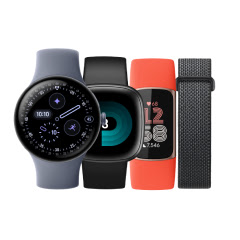
Choose Loss of Pulse Detection if you are an individual seeking an automated, passive safety net for potential medical emergencies, such as a sudden cardiac event or fall, where you might become unresponsive. This feature is best suited for personal use on a compatible wearable device to automatically alert emergency services and share your location when a loss of pulse is detected and you don't respond to alerts.
View Loss of Pulse Detection →Reviewed by Pouyan Golshani, MD — Interventional Radiologist
Quick Comparison
| Feature | Caption Guidance | Loss of Pulse Detection |
|---|---|---|
| Pricing | Contact vendor for pricing | Included with device |
| Deployment | Software accessory integrated into compatible general-purpose diagnostic ultrasound systems (e.g., GE HealthCare Venue Family, Vscan Air SL). | Wearable device (software on compatible smartwatches) |
| FDA Status | 1 AI-estimated | 1 AI-estimated |
Head-to-Head
AI-generated assessment across six dimensions based on each tool's documented features and compliance posture. Grounded in public data — not a substitute for hands-on evaluation.
Usability
Caption GuidanceCaption Guidance (Tool A) offers real-time AI guidance for ultrasound probe manipulation and automated quality assessment, significantly simplifying a complex diagnostic procedure for healthcare providers. This empowers a broader range of clinicians to acquire diagnostic-quality images, making a highly skilled task more accessible. In contrast, Loss of Pulse Detection (Tool B) is a passive, automatic feature for consumers, which, while highly usable, does not address the complexity of a professional medical procedure.
Clinical Value
TieBoth tools offer significant clinical value in different contexts. Caption Guidance (Tool A) enhances access to critical cardiac diagnostics by enabling providers to acquire diagnostic-quality ultrasound images, directly impacting diagnosis and treatment planning. Loss of Pulse Detection (Tool B) provides a potentially life-saving feature by automatically alerting emergency services during a critical event, reducing time to intervention. Their value propositions are distinct but equally critical within their respective domains of diagnostic improvement and acute emergency response.
Pricing & Value
Loss of Pulse DetectionLoss of Pulse Detection (Tool B) offers clear value as it is included with compatible Fitbit/Pixel devices and not sold as a standalone subscription or product, providing transparent and bundled pricing for the end-user. Caption Guidance (Tool A), while offering significant clinical utility, requires contacting the vendor for enterprise-based pricing, which suggests a higher, more variable cost and less transparency for individual providers or smaller practices.
Enterprise Readiness
Caption GuidanceCaption Guidance (Tool A), now part of GE HealthCare and integrated into compatible general-purpose diagnostic ultrasound systems, is designed for seamless deployment within existing hospital and clinical enterprise environments. Its FDA clearance, HIPAA compliance, and integration with professional medical equipment align well with healthcare IT infrastructure and workflows. While Loss of Pulse Detection (Tool B) is FDA-cleared and HIPAA compliant, its deployment on consumer wearables presents different challenges for enterprise integration compared to a solution built for clinical imaging departments.
Innovation
Caption GuidanceCaption Guidance (Tool A) represents a significant innovation by being the first FDA-cleared AI-guided software to empower healthcare providers to acquire diagnostic-quality cardiac ultrasound images with real-time guidance. This democratizes a highly skilled procedure, expanding access to critical diagnostics. While Loss of Pulse Detection (Tool B) is an innovative application of wearable technology for critical event detection and automated emergency response, the AI guidance for *acquiring* diagnostic images marks a more profound shift in clinical practice and skill transfer.
Support & Docs
Caption GuidanceAs part of GE HealthCare, Caption Guidance (Tool A) benefits from the robust enterprise-level support, comprehensive documentation, and extensive training infrastructure typically associated with a major medical device manufacturer. This ensures dedicated resources for healthcare providers and IT departments. In contrast, Loss of Pulse Detection (Tool B), being a feature on a consumer wearable from Fitbit, would likely rely on consumer-grade support and documentation, which may not meet the same rigorous standards or depth required for clinical enterprise deployments.
Feature-by-Feature
Detail beyond the Quick Comparison summary. For pricing, deployment, BAA, FDA, and HIPAA see the Overview tab.
| Feature | Caption Guidance | Loss of Pulse Detection |
|---|---|---|
| Product Name | Caption Guidance | Loss of Pulse Detection |
| Company | Caption Health (now part of GE HealthCare) | Fitbit |
| Primary Function | AI-guided software for acquiring diagnostic-quality cardiac ultrasound images with real-time guidance and automated quality assessment. | FDA-cleared feature on compatible wearable devices that uses PPG and accelerometry to detect a potential loss of pulse and can automatically alert emergency services if the user is unresponsive. |
| Key Feature: Guidance/Detection | Real-time AI guidance for ultrasound probe manipulation. | Automatic loss of pulse detection utilizing PPG and accelerometry sensors. |
| Key Feature: Automation/Alerts | Automated quality assessment with a 'Quality Meter' and auto-capture of diagnostic-quality ultrasound clips. | Automated emergency service calling if unresponsive and shares location with emergency services. |
Videos
Demos, reviews, and walkthroughs featuring Caption Guidance and Loss of Pulse Detection.
Frequently Asked Questions
More Comparisons
More matchups featuring Caption Guidance or Loss of Pulse Detection
Backers
Who funded each tool's parent company.