Acumen Hypotension Prediction Index (HPI) Feature Software vs Loss of Pulse Detection

AI Verdict
Choose Acumen Hypotension Prediction Index (HPI) Feature Software if…
Choose Acumen Hypotension Prediction Index (HPI) if you require proactive, real-time prediction and management of hemodynamic instability within a hospital setting. This tool is ideal for anesthesiologists and critical care teams needing to anticipate and intervene before hypotensive events occur during surgery or in the ICU, leveraging advanced machine learning on continuous physiological data.
View Acumen Hypotension Prediction Index (HPI) Feature Software →Choose Loss of Pulse Detection if…
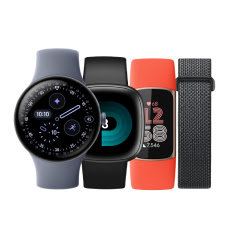
Choose Fitbit's Loss of Pulse Detection if you are looking for a personal safety feature that provides automatic emergency alerting in the event of a sudden, severe health crisis outside of a clinical environment. This wearable-based solution is best suited for individuals who desire an added layer of protection, automatically contacting emergency services if a loss of pulse is detected and the user is unresponsive.
View Loss of Pulse Detection →Reviewed by Pouyan Golshani, MD — Interventional Radiologist
Quick Comparison
| Feature | Acumen Hypotension Prediction Index (HPI) Feature Software | Loss of Pulse Detection |
|---|---|---|
| BAA Available | Unknown | Yes AI-estimated |
| FDA Status | Cleared AI-estimated | Cleared AI-estimated |
| HIPAA | Yes AI-estimated | Yes AI-estimated |
Head-to-Head
AI-generated assessment across six dimensions based on each tool's documented features and compliance posture. Grounded in public data — not a substitute for hands-on evaluation.
Usability
Loss of Pulse DetectionTool B (Fitbit Loss of Pulse Detection) is integrated into a familiar wearable device and operates automatically with user opt-in, making it highly accessible and straightforward for direct consumer use. Tool A (Acumen HPI) is a clinical tool integrated into a complex hospital monitoring system, requiring specific hardware and clinical interpretation by trained professionals.
Clinical Value
Acumen Hypotension Prediction Index (HPI) Feature SoftwareTool A (Acumen HPI) offers predictive capabilities, demonstrating a reduction in the incidence, duration, and severity of intraoperative hypotension, allowing for proactive clinical intervention and improved patient outcomes in a critical care setting. While Tool B provides valuable rapid response to a critical event, Tool A's focus on prevention and proactive management within a complex clinical context offers a distinct and impactful clinical value.
Pricing & Value
Loss of Pulse DetectionTool B (Loss of Pulse Detection) is included as a feature with the purchase of a compatible Fitbit/Pixel device, offering clear value without additional subscription costs. Tool A (Acumen HPI) requires contacting the vendor for pricing, suggesting a potentially significant enterprise-level cost for integration into hospital systems, making its value proposition less transparent and likely higher in direct cost.
Enterprise Readiness
Acumen Hypotension Prediction Index (HPI) Feature SoftwareTool A (Acumen HPI) is explicitly designed for integration into Edwards Lifesciences' HemoSphere advanced monitoring platform, a standard in clinical environments, and comes from a major medical device company, indicating robust enterprise readiness for hospital deployment. Tool B, while from a large company, is a consumer-facing wearable feature, which presents different challenges for enterprise-level integration within a healthcare system's IT infrastructure and clinical workflows.
Innovation
Acumen Hypotension Prediction Index (HPI) Feature SoftwareTool A (Acumen HPI) represents a significant innovation as a 'first-of-its-kind technology' utilizing machine learning for predictive analysis of blood pressure waveforms to anticipate hypotension up to 15 minutes in advance, enabling proactive clinical intervention. While Tool B's automated emergency response is valuable, the core concept of detecting critical events and alerting is becoming more common in consumer wearables, making Tool A's predictive capability in a complex physiological domain more innovative within its clinical context.
Support & Docs
Acumen Hypotension Prediction Index (HPI) Feature SoftwareAs an enterprise clinical solution, Tool A (Acumen HPI) from Edwards Lifesciences is expected to provide comprehensive, specialized support, training, and extensive clinical documentation for healthcare professionals. Tool B, a feature on a consumer wearable, typically relies on general customer support and user manuals, which are less specialized for a clinical environment.
Feature-by-Feature
Detail beyond the Quick Comparison summary. For pricing, deployment, BAA, FDA, and HIPAA see the Overview tab.
| Feature | Acumen Hypotension Prediction Index (HPI) Feature Software | Loss of Pulse Detection |
|---|---|---|
| Name | Acumen Hypotension Prediction Index (HPI) Feature Software | Loss of Pulse Detection |
| Company | Edwards Lifesciences | Fitbit |
| Description | Edwards Lifesciences' Acumen Hypotension Prediction Index (HPI) software is a predictive monitoring tool that uses machine learning to detect and alert clinicians to the likelihood of a hypotensive event before it occurs, aiding in proactive hemodynamic management and improving patient outcomes. | Fitbit's Loss of Pulse Detection is an FDA-cleared feature on compatible wearable devices that uses PPG and accelerometry to detect a potential loss of pulse and can automatically alert emergency services if the user is unresponsive. |
| Key Features | Hypotension Prediction Index (HPI) parameter (0-100 score), Smart Alerts and Smart Trend screen for impending hypotensive events, Relationship View screen providing insights into preload, afterload, and contractility, Machine learning algorithms for predictive analysis of blood pressure waveforms, Predicts hypotension up to 15 minutes before an event, Demonstrated reduction in incidence, duration, and severity of intraoperative hypotension, Compatibility with both invasive (arterial line) and non-invasive (Acumen IQ cuff) monitoring, Adjustable Mean Arterial Pressure (MAP) target for hypotension definition | Automatic loss of pulse detection, Utilizes PPG and accelerometry sensors, Haptic and audio alerts to the user, Automated emergency service calling if unresponsive, Shares location with emergency services, Opt-in feature for user control, Software-only mobile medical application, Integrated with compatible smartwatches (e.g., Pixel Watch 3) |
| Categories | Cardiology AI, Triage & ER/ICU AI | Cardiology AI, Triage & ER/ICU AI, Wearables & Remote Monitoring (RPM) |
| Specialties | Anesthesiology, Critical Care, Emergency Medicine | Cardiology, Critical Care, Emergency Medicine |
Videos
Demos, reviews, and walkthroughs featuring Acumen Hypotension Prediction Index (HPI) Feature Software and Loss of Pulse Detection.
Frequently Asked Questions
More Comparisons
More matchups featuring Acumen Hypotension Prediction Index (HPI) Feature Software or Loss of Pulse Detection
- Loss of Pulse Detection vs Sleepiz One+
- Acumen Hypotension Prediction Index (HPI) Feature Software vs Cardiomo
- Acumen Hypotension Prediction Index (HPI) Feature Software vs KardiaPro
- Loss of Pulse Detection vs Study Watch with Irregular Pulse Monitor
- Loss of Pulse Detection vs QFR
- Acumen Hypotension Prediction Index (HPI) Feature Software vs Lung AI