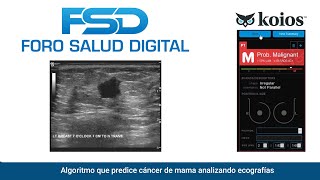
Koios DS
Overview
Koios DS is an AI-powered clinical decision support software developed by Koios Medical, designed to assist trained interpreting physicians in analyzing breast and thyroid ultrasound images. The software utilizes artificial intelligence and machine learning to provide real-time cancer risk assessments and classify lesions based on image data, aligning with established diagnostic systems like ACR BI-RADS, European U1-U5 Classification System, ACR TI-RADS, and American Thyroid Association (ATA) risk stratification systems. Koios DS aims to improve diagnostic accuracy, reduce interpretation variability, decrease unnecessary biopsies of benign tissue, and streamline clinical workflows. It can also function as an image viewer for multi-modality digital images, including ultrasound and mammography, and integrates seamlessly into most PACS workstations and directly onto ultrasound scanners.
Reviewed by Pouyan Golshani, MD — Interventional Radiologist
Key Features
- AI-based clinical decision support for ultrasound images
- Analysis of breast and thyroid ultrasound images
- Automatic classification of lesions (BI-RADS, TI-RADS, European U1-U5, ATA)
- AI/ML-derived cancer risk assessment
- Auto-population of lesion/nodule descriptors
- Lesion/nodule segmentation
- Image viewer for multi-modality digital images (ultrasound, mammography)
- Integrates with PACS workstations
- Real-time decision making / instantaneous results (in seconds)
- Exportable findings to reporting systems
Use Cases
- Early detection and accurate diagnosis of breast cancer
- Early detection and accurate diagnosis of thyroid cancer
- Reducing unnecessary biopsies of benign tissue
- Improving diagnostic accuracy and consistency for physicians
- Streamlining workflow and reducing interpretation time
- Prioritizing high-risk patients for backlog assessment
What Physicians Need to Know
Koios DS serves as an 'expert on-demand second opinion' to significantly enhance diagnostic accuracy and consistency in breast and thyroid ultrasound interpretation. It can substantially reduce interpretation time and the rate of unnecessary benign biopsies, while potentially increasing cancer detection rates. The tool provides AI-derived risk assessments aligned with established lexicon-based descriptors (BI-RADS, TI-RADS, ATA), which aids in standardizing reporting and reducing inter- and intra-operator variability. Physicians should undergo training for its use and understand that patient management decisions should not be made *solely* on Koios DS results, as it is intended as an adjunct tool.
Koios DS is designed for seamless integration within existing radiology ecosystems. It connects with all major PACS systems via DICOM interfaces and can export results to third-party reporting software. The software can also be deployed directly on ultrasound scanners, such as the GE Healthcare LOGIQu2122 E10. It supports enterprise directory services like Active Directory (AD) and Lightweight Directory Access Protocol (LDAP) for user authentication and can accommodate Single Sign-On (SSO) requirements.
Details
| Category | Oncology AI, Radiology & Imaging AI |
| Pricing |
Subscription
|
| Deployment | Locally virtualized (virtual machine, Docker); web application deployed to Microsoft IIS web server; integrates with PACS workstations; available directly on ultrasound scanners. |
| Compliance | |
| BAA Available | Unknown AI-estimated |
| HIPAA Compliant | Unknown AI-estimated |
| FDA Status |
1 AI-estimated Koios DS received initial FDA clearance for thyroid and breast cancer diagnosis in December 2021. An earlier version, Koios DS Breast 2.0, was cleared in July 2019. The latest 510(k) premarket notification (K242130) for Koios DS Version 3.6 had a summary date of October 18, 2024, and a decision date of November 15, 2024. |
| Integrations | |
| EHR | Not specified |
| Specialties | Endocrinology, Oncology, Radiology |
What the Web Says
Koios DS is an AI-powered ultrasound decision support system designed to help radiologists characterize thyroid and breast nodules. Reviews highlight its ability to improve diagnostic accuracy, standardize reporting, and enhance workflow efficiency, particularly for less experienced physicians. While generally well-received, some discussions touch upon the integration challenges with existing PACS and the learning curve for new users.
Overall: PositiveStrengths
- Improved diagnostic accuracy and reduced false positives/negatives for thyroid and breast nodules.
- Standardizes reporting using guidelines like ACR TI-RADS and BI-RADS, leading to consistent diagnoses.
- Enhances workflow efficiency by automating measurements and risk stratification.
- Provides decision support, potentially reducing unnecessary biopsies and follow-ups.
- User-friendly interface with intuitive features for radiologists.
- Beneficial for training and supporting less experienced physicians in nodule characterization.
Limitations
- Potential integration challenges with existing PACS and EMR systems.
- Initial learning curve for radiologists to fully utilize all features.
- Reliance on high-quality ultrasound images for optimal AI performance.
- Cost of implementation and ongoing maintenance could be a factor for smaller practices.
- Some users report occasional minor software glitches or performance issues.
- Limited information available on long-term impact on patient outcomes beyond diagnostic accuracy.
Based on reviews from: Koios Medical Website, Healthcare IT News, Radiology Today, G2, Capterra, Reddit (r/radiology, r/healthcareit)
Last updated: 2026-07-18
Ratings & Reviews
No reviews yet. Be the first to review this tool!
Rate Koios DS
Press & Coverage
Videos
Product demos, reviews, and walkthroughs for Koios DS.
Dr. Amy Patel on Koios AI
Liberty Hospital