NS-HGlio

by Neosoma  · Based in United States →Advancing Brain Cancer Care with AI-Powered MRI Analysis
Neurosurgery Oncology Radiology

Priced based on mri volume
Regulatory Status Disclosed

Overview

Neosoma is an innovative medical technology company focused on advancing the treatment of brain cancers through an integrated portfolio of artificial intelligence-based software products combined with a Clinical Management Software Platform. Its comprehensive SaaS solution is designed to serve the multidisciplinary neuro-oncology clinical team, researchers, and clinical trials. The company’s technology facilitates practitioners to analyze magnetic resonance imaging (MRI) sequences and provides an automated response assessment about tumors, such as glioblastoma, enabling doctors and clinicians to instantaneously access the status of the disease through digital images.

The Neosoma Platform includes a portfolio of highly-optimized, indication-specific software medical devices that map and measure compartments of tumors and track lesions longitudinally, delivering key insights in near-real-time to support clinical decisions and research. Its technology is PACS-integrated, interoperable with radiation treatment and surgical planning systems, and web-based for easy and secure access. The platform is cloud-based, allowing for the processing of a virtually unlimited number of patient MRIs and tracking of identified brain lesions.

Reviewed by Pouyan Golshani, MD — Interventional Radiologist

Key Features

  • Semi-automatic segmentation of high-grade glioma (enhancing tissue, T2/FLAIR hyperintensity, necrosis + cavity)
  • Volumetric quantification of tumor compartments
  • 3D visualization and interactive contour editing tools
  • Longitudinal tracking and analysis of tumor changes over time
  • PACS integration for automated DICOM study sending and deep linking
  • Interoperability with radiation treatment and surgical planning systems (e.g., Eclipse, MIM, Gamma Plan, Stealth)
  • Web-based interface for easy and secure access
  • MRI protocol tolerant (no changes to acquisition protocols needed)
  • Supports tumor burden and Residual Tumor Volume (RTV) assessment
  • Reimbursable via Category 3 CPT Codes (0865T, 0866T)

Use Cases

  • Treatment response monitoring in clinical practice and trials
  • Radiation treatment planning (automated GTV contouring)
  • Surgical planning and intra-operative targeting
  • Longitudinal assessment of high-grade gliomas
  • Patient counseling and visualization of tumor changes
  • Clinical research and re-analysis of historical clinical trials data

What Physicians Need to Know

Brain MRI Analysis
NS-HGlio is an AI-powered software designed for the semi-automatic labeling, visualization, and volumetric quantification of high-grade brain gliomas (WHO grade 3 astrocytoma, WHO grade 4 astrocytoma, and WHO grade 4 glioblastoma) from standard MRI images. It automatically quantifies enhancing tissue, T2/FLAIR hyperintensity, and necrosis + cavity at the voxel level. The tool supports longitudinal assessment, enabling automated co-registration of sequences and empirical comparison of current timepoints with prior scans for total tumor burden and compartment levels. It offers a full-featured DICOM viewer with side-by-side comparison, 3D visualization, and smart segmentation editing capabilities. NS-HGlio has demonstrated 95.5% accuracy in tumor volume measurement, exceeding individual neuroradiologist assessments.
Triage Prioritization Speed
NS-HGlio accelerates the workflow for high-grade glioma assessment by providing rapid and repeatable quantification of tumor volumes, eliminating inter-rater and intra-rater variability. This automation can save time in clinical trials and clinical practice by streamlining volumetric tumor assessments that would otherwise be manually conducted by neuroradiologists.
Mobile Notification System
While not explicitly detailed as a standalone mobile notification system, NS-HGlio is designed to seamlessly integrate with existing PACS, EMR, and research systems through its 'Edge System' technology. Results are displayed on Neosoma viewing software and can optionally connect to clinicians' applications, implying the capability to route actionable summary results and alerts to the care team, indicating that a case is pending review.
Physician Tip

NS-HGlio is an invaluable adjunctive tool for managing high-grade gliomas, offering objective and repeatable volumetric measurements for monitoring treatment response, surgical planning, and radiation therapy planning. Physicians should leverage its ability to reduce inter-rater variability and accelerate workflow in complex cases. It is crucial to remember that NS-HGlio is intended as an additional source of information and not for primary diagnosis, nor is it meant to replace the clinician's current standard practice of manual contouring. Medical professionals must finalize and confirm or modify the AI-generated contours using external platforms.

NS-HGlio is designed for seamless integration with existing hospital IT infrastructure, including Picture Archiving and Communication Systems (PACS) and Electronic Medical Record (EMR) systems via its 'Edge System'. It also supports interoperability with various treatment planning systems such as Eclipse, MIM, Gamma Plan, and Stealth, allowing for the import of Neosoma-generated Gross Tumor Volume (GTV) auto-contours for radiation treatment and surgical planning workflows.

Details

Category Neurology AI, Oncology AI, Radiology & Imaging AI
Pricing Priced based on mri volume Priced based on MRI volume; contact Neosoma for additional information
DeploymentCloud-based, web-based interface
Compliance
BAA Available Yes AI-estimated
HIPAA Compliant Yes AI-estimated
FDA Status Yes AI-estimated

NS-HGlio (also known as Neosoma HGG or Neosoma Glioma) received FDA 510(k) clearance (K221738) on September 27, 2022. It is intended for the semi-automatic labeling, visualization, and volumetric quantification of high-grade brain glioma (WHO grade 3 astrocytoma, WHO grade 4 astrocytoma, and WHO grade 4 glioblastoma) from standard MRI images for patients 18 years or older with pathologically proven high-grade glioma. It is not for primary diagnosis and is intended to be used by qualified clinical personnel as an additional source of information.

Integrations
EHR Not specified
Specialties Neurosurgery, Oncology, Radiology

What the Web Says

NS-HGlio is an AI-powered deep learning technology developed by Neosoma Inc. for the segmentation and volumetric measurement of high-grade gliomas (HGG) on MRI scans. It has received FDA 510(k) clearance and is designed to provide accurate, repeatable, and generalizable results for longitudinal assessment in clinical trials and patient care. The technology aims to improve treatment response monitoring, radiation planning, and surgical targeting by offering objective and consistent tumor measurements.

Overall: Positive

Strengths

  • Accurate and repeatable HGG segmentation and volumetric measurement.
  • Generalizable across multi-center and multi-vendor datasets.
  • Aids in treatment response monitoring, radiation planning, and intra-operative targeting.
  • Reduces inter-rater and intra-rater variability in tumor assessment.
  • Demonstrated 95.5% accuracy in measuring HGG volume.
  • Can be used to inform mRANO criteria and re-categorize historical clinical trial data.

Limitations

  • Potential for erroneous segmentation of edema in cerebellar hemispheres due to pulsation artifacts in a small percentage of cases.
  • May miss small enhancing lesions (below 5 mm) in some instances.
  • Performance may be improved with additional re-training using user-site specific data.
  • A larger multi-institutional external validation is desired after FDA clearance.
  • No specific reviews from physicians, healthcare IT, or tech reviewers were found outside of research papers and company announcements.
  • No reviews found on G2 or Capterra.

Based on reviews from: Neosoma (neosoma.com), PubMed, Diagnostic Imaging, PMC

Last updated: 2026-07-19

Ratings & Reviews

No reviews yet. Be the first to review this tool!

Rate NS-HGlio

Clinical Value
Ease of Use
Integration
Support & Docs
Value for Money

Press & Coverage

Neosoma
NS-HGlio: A Generalizable and Repeatable HGG Segmentation and Volumetric Measurement AI Algorithm
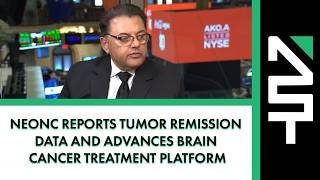
In December 2022, Neosoma published an article in Neuro-Oncology Advances detailing its core deep learning technology architecture, training, validation, and performance for high-grade glioma tumor segmentation. This patented technology is applied to longitudinal assessment and will be used for other neuro-oncology indications.
2022-12
Neosoma
Neuro-Oncology Advances Publishes About Neosoma's Technology
Neosoma announced in January 2023 that the technology and development of Neosoma HGG (NS-HGlio) was published in Neuro-Oncology Advances, a high-impact peer-reviewed journal. Dr. Aly Abayazeed, Neosoma's Co-Founder and Chief Medical Officer, served as the primary author.
2023-01
Neosoma
Neosoma Announces FDA 510(k) Clearance for Neosoma HGG
Neosoma announced in September 2022 that its AI-based neuro-oncology software, Neosoma HGG (High-Grade Glioma), received U.S. Food and Drug Administration (FDA) 510(k) clearance. This software provides precise and accurate brain tumor analysis on MRIs to aid clinicians in treatment decisions.
2022-09
Business Wire
Neosoma, Inc. a Medical Technology Company Focused on Advancing the Treatment of Brain Cancers, Announced Today It Has Received U.S. Food and Drug Administration (FDA) 510(k) Clearance for Its First AI-Based Neuro-Oncology Software, Neosoma HGG
Neosoma, Inc. announced on September 29, 2022, that it received FDA 510(k) clearance for Neosoma HGG, its AI-based neuro-oncology software. This software-as-a-medical-device (SaMD) is designed for three-dimensional longitudinal tumor analysis and quantification in high-grade gliomas.
2022-09
Neuro-Oncology Advances (PMC)
NS-HGlio: A generalizable and repeatable HGG segmentation and volumetric measurement AI algorithm for the longitudinal MRI assessment to inform RANO in trials and clinics
This peer-reviewed article, published in December 2022, details the development and validation of NS-HGlio, a 3D-Convoluted Neural Network for accurate and repeatable segmentation and volumetric measurement of high-grade glioma on MRIs. The algorithm aims to inform RANO criteria in clinical trials and practice.
2022-12
Oxford Academic (Neuro-Oncology Advances)
Artificial intelligence-based volumetric measurements for longitudinal clinical assessment of treatment response in high-grade
This study, published in February 2026, assesses the utility and limitations of the FDA-cleared AI-based tool Neosoma HGG for quantifying tumor volumes in high-grade glioma patients. It compares AI-derived volumes to expert manual measurements and multidisciplinary tumor board assessments.
2026-02
Innolitics
We Architected Neosoma's Fast Lane to FDA: A Modular Strategy Built for Rapid Repeat Clearances
This case study from Innolitics, published in February 2026, highlights their collaboration with Neosoma to achieve rapid FDA clearances for their AI products. It details a modular regulatory architecture that streamlined the clearance process for Neosoma Brain Mets (K252922) in December 2025.
2026-02
Worcester Business Journal
Groton medtech firm raises $3.5M for cancer-focused AI platform
In April 2026, Groton-based Neosoma raised $3.52 million in venture capital to advance its AI software platform for 3D analysis of cancerous tumors. The company's Neosoma Brain Mets platform received FDA clearance in December 2025.
2026-04

Videos

Product demos, reviews, and walkthroughs for NS-HGlio.

View all on YouTube

Frequently Asked Questions

NS-HGlio is designed to integrate with existing PACS and EHR systems, streamlining the process of analyzing imaging data for glioma. It can automate tasks such as tumor segmentation, volumetric analysis, and potentially assist in predicting molecular markers, thereby enhancing diagnostic precision and treatment planning.
As a medical AI tool, NS-HGlio would require appropriate regulatory approvals such as FDA clearance or a CE Mark, depending on the region, for its intended clinical use. It must adhere to stringent data privacy regulations like HIPAA and GDPR through robust encryption, access controls, and secure data handling protocols to protect patient information.
Alternatives to NS-HGlio include traditional manual interpretation of MRI and pathology by neuro-oncologists and radiologists, as well as other emerging AI-driven tools focused on radiomics or deep learning for glioma analysis. The choice often depends on the specific clinical context, available resources, and desired level of automation.
Pricing for healthcare AI solutions like NS-HGlio typically involves a combination of subscription fees, which may be tiered based on usage or features, and potentially per-study or per-patient charges. Implementation costs can also include data integration, staff training, and ongoing technical support.
Like many AI models, NS-HGlio's accuracy can be influenced by the diversity and quality of its training data, potentially leading to limitations in generalizability across highly varied patient populations or rare glioma subtypes. It may also have limitations in interpreting complex or atypical cases, requiring physician oversight.
NS-HGlio would typically require multimodal data, including MRI scans (T1, T2, FLAIR), potentially pathology slides, and relevant clinical data from EHRs for optimal performance. Data ingestion and processing must adhere to strict security protocols, often involving de-identification and secure cloud infrastructure, to maintain patient privacy and compliance.
Robust clinical evidence and validation studies, ideally including prospective trials or real-world data analyses, are crucial to demonstrate NS-HGlio's efficacy, safety, and impact on patient outcomes. These studies should detail its performance metrics, such as sensitivity, specificity, and inter-observer variability reduction, in diverse clinical environments.

Related Tools

DETECT-ME/CFS project
ME/CFS Research Foundation (Sponsor: Federal Ministry of Health (BMG))
Clinical Decision Support & Reference
The DETECT-ME/CFS project is developing an AI-supported clinical decision support system to improve the rapid and reliable diagnosis of Myalgic Encephalomyelitis/Chronic Fatigue Syndrome.
Neurotrack
Neurotrack
Clinical Decision Support & Reference
Neurotrack is a cognitive care enablement platform that provides clinically validated, FDA class II device assessments and care planning support to identify and manage cognitive decline and dementia earlier and with greater accuracy.
LesionQuant
CorTechs Labs
Neurology AI
LesionQuant, an FDA-approved AI product by CorTechs Labs, is particularly useful for patients with multiple sclerosis. It provides brain structure data and quantifies the number, size, and location of lesions, comparing them to prior studies.
ExcelsiusGPS
Globus Medical
Neurology AI
ExcelsiusGPS™ is the first and only robotic navigation platform on the market that offers a comprehensive approach to spine and cranial procedures, from start to finish. The system enables repeatable and accurate trajectory alignment and navigation for placing screws, interbody implants, and cranial instruments.
Onera SleepMap
Onera B.V.
Neurology AI
Onera SleepMap is an AI-powered sleep analysis software that processes polysomnography data, part of Onera Health's innovative patch-based system for at-home and in-lab sleep studies. The system aims to make clinical-grade sleep diagnostics more accessible and user-friendly, providing comprehensive data comparable to traditional in-lab PSG.
JLK-NCCT
JLK-NCCT
Clinical Decision Support & Reference
JLK-NCCT is an AI software designed to assist in the analysis of non-contrast CT brain scans for the detection of acute ischemic stroke.

See all Neurology AI tools →

More from Neosoma

Neosoma Brain Mets
Neosoma
Neurology AI
Neosoma Brain Mets is an FDA-cleared AI-powered software for rapid MRI assessment and auto-contouring of brain metastases, providing near-real-time insights for multidisciplinary neuro-oncology teams.
Neosoma Platform
Neosoma
Clinical Decision Support & Reference
The Neosoma Platform is a cloud-based, FDA-cleared AI tool for neuro-oncology, providing automated tumor mapping, lesion tracking, and real-time insights for brain metastases and gliomas.

View company profile →

Suggest an Edit → | Last Verified: 2026-04-18 | First Added: 2026-04-18

Investors who backed NS-HGlio

Funded through the company that built this tool.

AI Tool Finder
AI-powered search. Results may not be comprehensive.