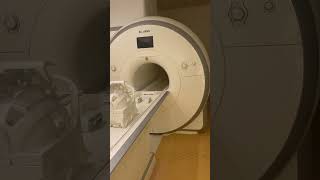
MAGNETOM Prisma fit

by Siemens Healthineers  · Based in Germany →The 3T PowerPack for exploration and advanced clinical and research imaging.
Neurology Neurosurgery Radiology

Contact vendor for pricing
Regulatory Status Disclosed

Overview

The MAGNETOM Prisma fit is a high-performance 3 Tesla (3T) Magnetic Resonance Imaging (MRI) scanner from Siemens Healthineers, designed to meet the demanding requirements of both advanced clinical diagnostics and cutting-edge research. It features an unmatched 3T magnet and powerful XR 80/200 gradients, delivering 80 mT/m gradient strength with a 200 T/m/s slew rate, enabling exceptionally high spatial and temporal resolution.

The system incorporates innovative technologies such as Tim 4G+Dot engines, which enhance consistency and reproducibility in imaging, and parallel transmit technology (TimTX TrueShape) for improved image quality and specific body region zooming. For future upgrades, the MAGNETOM Cima.X Fit introduces Gemini Gradients and Deep Resolve, a deep learning image reconstruction technology for faster acquisition times and superior image quality, along with BioMatrix Technology to adapt to patient biovariability.

The MAGNETOM Prisma fit offers a comprehensive suite of imaging capabilities for head-to-toe examinations, supported by a wide range of coils. Its open architecture allows researchers to develop custom applications and sequences, making it a versatile tool for exploring new insights in medical science.

Reviewed by Pouyan Golshani, MD — Interventional Radiologist

Key Features

  • Unmatched 3T magnet for high-field imaging
  • XR 80/200 gradients (80 mT/m @ 200 T/m/s slew rate) for high resolution
  • Tim 4G+Dot technology for consistency and reproducibility
  • Deep Resolve deep learning image reconstruction (with Cima.X Fit upgrade)
  • Parallel transmit technology (TimTX TrueShape)
  • Multi-GPA Technology (with Cima.X Fit upgrade)
  • BioMatrix Technology to adjust to patient biovariability (with Cima.X Fit upgrade)
  • Advanced applications: Diffusion Spectrum Imaging (DSI), fMRI, DWI, SWI, ASL
  • Open architecture for custom sequence development and research
  • Comprehensive coil portfolio for various anatomies (head/neck, spine, body, knee, breast)

Use Cases

  • Advanced neurological research and clinical imaging (e.g., fMRI, DTI)
  • High-resolution cardiac imaging and functional assessment
  • Oncology applications including tumor detection and characterization
  • Detailed orthopedic imaging of joints and spine
  • Comprehensive body imaging (abdomen, pelvis, MRCP, MR Urography)
  • Pediatric imaging with dedicated protocols
  • Translational and basic scientific research across various fields

What Physicians Need to Know

DICOM Support & Standards
The MAGNETOM Prisma fit supports standard DICOM 3.0 protocol, enabling efficient networking and management of studies. Supported functions include Send/Receive, Query/Retrieve, Basic Print, DICOM Worklist, DICOM Storage Commitment (SC), DICOM Modality Perform Procedure Step (MPPS), and DICOM Structured Report (SR), and DICOM Study Split.
PACS Integration Method
Integration with PACS is facilitated through comprehensive DICOM 3.0 support, allowing for seamless networking and management of imaging studies.
Reading Room Workflow Impact
AI-based features like myExam Companion optimize scan workflows with intuitive interfaces and intelligent guidance, reducing operational complexity and promoting consistent results. Dot workflow engines enhance productivity through patient personalization, step-by-step user guidance, and exam automation, ensuring reproducibility across studies. Features like AutoPosition and AutoAlign Head streamline patient positioning and slice alignment, while syngo software supports parallel working and one-click exams.
AI Model Architecture (deep learning approach)
The MAGNETOM Cima.X Fit upgrade for MAGNETOM Prisma features the next generation of Deep Resolve, a deep learning image reconstruction technology. Deep learning methods are applied across the imaging pipeline, including data acquisition, processing, channel combination, image generation, and post-processing, to reconstruct high-quality images from fewer data points and reduce scanning times. This can involve techniques like Generative Adversarial Networks (GANs) and diffusion models for image reconstruction.
Processing Speed (per study)
The next generation of Deep Resolve, powered by deep learning, aims to significantly reduce acquisition times while maintaining superior image quality. AI and deep learning play a pivotal role in optimizing various aspects of the imaging process to reduce scanning times, enhance MRI efficiency, and potentially increase patient throughput by up to 50%.
FDA Clearance Pathway (510k/De Novo)
The MAGNETOM Prisma, including Prisma fit systems, received FDA clearance as a magnetic resonance diagnostic device (MRDD). Multiple 510(k) clearances have been issued for various software versions, such as K202014 for syngo MR XA30A (cleared September 8, 2020) and K141977 for syngo MR E11A (cleared November 19, 2014).
Supported Modalities (CT/MRI/X-ray/US)
The MAGNETOM Prisma fit is a 3 Tesla (3T) whole-body Magnetic Resonance Imaging (MRI) scanner. It supports a comprehensive range of MRI applications, including Neuro, Angio, Cardiac, Body, Onco, Breast, Ortho, Pediatric, and Scientific suites.
RSNA/ACR Validation
The Siemens MAGNETOM Prisma fit system is ACR accredited for use in clinical translational studies. It has also been used in studies involving ACR phantom measurements for quality assurance.
Physician Tip

Leverage the AI-powered myExam Companion and Dot workflow engines to standardize protocols, enhance reproducibility, and personalize exams for diverse patient conditions. Utilize Deep Resolve for faster acquisition times and improved image quality, particularly beneficial for high-resolution and motion-sensitive studies. The comprehensive DICOM support ensures smooth integration into existing PACS, facilitating efficient image review and reporting. Be aware that while the system is ACR accredited, specific sensitivity and specificity data for its integrated AI diagnostic tools may require further inquiry from the vendor.

The MAGNETOM Prisma fit's robust DICOM 3.0 compliance ensures broad compatibility with existing PACS and other DICOM-enabled systems for image storage, retrieval, and workflow management. The system's software platform, syngo, is designed for medical applications, supporting parallel working and efficient data exchange. Integration with advanced AI post-processing solutions is possible given the standard DICOM output, allowing for further enhancement of images and diagnostic capabilities.

Details

Category Radiology & Imaging AI
Pricing Contact vendor for pricing
DeploymentOn-premise
Compliance
BAA Available Yes AI-estimated
HIPAA Compliant Yes AI-estimated
FDA Status Yes AI-estimated

The MAGNETOM Prisma fit (K231560) received FDA 510(k) clearance as a Magnetic Resonance Diagnostic Device on October 23, 2023.

Integrations
EHR Not specified
Specialties Neurology, Neurosurgery, Radiology

Ratings & Reviews

No reviews yet. Be the first to review this tool!

Rate MAGNETOM Prisma fit

Clinical Value
Ease of Use
Integration
Support & Docs
Value for Money

Press & Coverage

accessdata.fda.gov
MAGNETOM Prisma fit Indications for Use
The MAGNETOM Prisma fit system is indicated as a magnetic resonance diagnostic device (MRDD) for producing cross-sectional images, spectroscopic images, and/or spectra to display the internal structure and/or function of the head, body, or extremities.
2023-10
Department of Health, Medical Device Division (Hong Kong)
Department of Health | Medical Device Division - Safety Alerts - 2023-09-12 (2524)
Health Canada issued a safety alert regarding potential dot or line-shaped artifacts caused by lubricating grease in the headband of over-ear headphones used with various Siemens Healthineers Magnetom MRI systems, including the MAGNETOM Prisma fit.
2023-09
Siemens Healthineers
Excelerate Edition Upgrade - Siemens Healthineers
Siemens Healthineers offers the Excelerate Edition upgrade, equipped with syngo MR XA60A, for several MAGNETOM systems including the MAGNETOM Prisma fit, aiming to boost efficiency with technologies like Deep Resolve and Compressed Sensing.
2026
Journal of Applied Clinical Medical Physics
Adult brain T1 and T2 values measured at 3 T using magnetic resonance fingerprinting with phantom validation - PMC
A study published in December 2025 utilized a 3T Siemens MAGNETOM Prisma fit scanner for measuring T1 and T2 relaxation times in adult brains using magnetic resonance fingerprinting (MRF) with phantom validation.
2025-12
MDPI (Diagnostics)
Insights into Accelerated MRI Protocols for Pediatric Brain Assessment in Emergency Cases
This case overview from February 2026 discusses accelerated MRI protocols for pediatric brain imaging, with imaging of the GOBrain protocol performed on a 3T MAGNETOM Prisma Fit system.
2026-02
Frontiers in Neurology
Quantitative MR-Neurography at 3.0T: Inter-Scanner Reproducibility - Frontiers
A study investigated the inter-scanner reproducibility of quantitative MR-neurography parameters of the sciatic nerve using three different 3.0T MR scanners, including the Magnetom Prisma-FIT.
unknown
Siemens Healthineers UK
Paul Strickland Scanner Centre assists workflow and prostate cancer outcomes with UK's first MAGNETOM Prisma upgrade - Siemens UK
In January 2015, the Paul Strickland Scanner Centre upgraded its MR system to the UK's first MAGNETOM Prismafit, which has significantly improved prostate cancer diagnosis and patient experience.
2015-01
Canada.ca
MAGNETOM Prisma and Prisma Fit (2018-12-11) - Recalls and Safety Alerts - Canada.ca
A safety alert from December 2018 indicated that a software update was identified for MAGNETOM Prisma and Prisma Fit systems to ensure compliance with the IEC 60601-2-33 standard, addressing potential cardiac stimulation risks.
2018-12

Videos

Product demos, reviews, and walkthroughs for MAGNETOM Prisma fit.

View all on YouTube

Frequently Asked Questions

The MAGNETOM Prisma fit leverages AI, often through features like Siemens' Dot (Day optimizing throughput) engines, to enhance workflow automation and reproducibility, which is crucial for both clinical work and research applications. This can lead to improved efficiency, faster scan times, and potentially higher diagnostic accuracy by identifying subtle patterns and automating routine tasks like image segmentation.
While AI offers significant benefits, its limitations include potential biases from insufficient or skewed training data, which can lead to inconsistent or inequitable outcomes. Over-reliance on AI can also foster diagnostic complacency, as AI systems are not infallible and may miss subtle findings, especially in complex or rare cases, underscoring the continued need for expert human judgment.
Medical devices integrating AI, like the MAGNETOM Prisma fit, must adhere to strict data privacy regulations such as HIPAA and GDPR, which are critical given the large volumes of patient data required for AI development and operation. Manufacturers like Siemens Healthineers implement robust quality management systems (QMS) and regulatory information management systems (RIMS) to ensure data traceability, process efficiency, and information transparency, thereby maintaining compliance throughout the product lifecycle.
The MAGNETOM Prisma itself is an FDA-cleared 3T MRI scanner, and any AI features integrated into it would also require appropriate regulatory clearance or approval from bodies like the FDA. Regulatory landscapes for AI in medical devices are continuously evolving, with frameworks like the EU AI Act emphasizing a risk-based approach, and manufacturers are expected to manage updates and new AI functionalities in compliance with these changing regulations.
The MAGNETOM Prisma fit is known for its powerful 3T magnet, high-performance gradients (80 mT/m, 200 T/m/s slew rate), and advanced coil technology, which provide high spatial and temporal resolution for demanding applications. While specific AI differentiators are often tied to Siemens' proprietary 'Dot' engines for workflow optimization, other manufacturers also offer advanced 3T systems with their own AI-driven enhancements for image quality and speed.
The MAGNETOM Prisma is a high-end 3T MRI system, with new models averaging between $1.6 and $2.2 million, and AI integration typically contributes to these costs as part of advanced software and processing capabilities. While specific pricing models for AI features are not detailed, Siemens Healthineers offers upgrades like 'XA Upgrades' and 'MAGNETOM Cima.X Fit' for existing Prisma systems, suggesting that AI enhancements can be part of upgrade packages or potentially subscription-based services to extend the system's lifespan and capabilities.
Siemens Healthineers is committed to continually developing options and upgrades to keep their MRI systems state-of-the-art, including AI-driven innovations. Their roadmap includes 'XA Upgrades' designed to boost throughput, enhance imaging, and improve user experience, and they offer upgrades like 'MAGNETOM Cima.X Fit' for the MAGNETOM Prisma platform. This indicates a focus on evolving the system's capabilities with new technologies and software platforms to meet future research and clinical demands.

Related Tools

OCTA
OCTA
Clinical Decision Support & Reference
OCTA Flow is an AI-powered platform that assists ophthalmologists in analyzing Optical Coherence Tomography Angiography (OCTA) scans to enhance diagnostic accuracy and efficiency.
Smart Reporting
Smart Reporting
Clinical Decision Support & Reference
A German health tech startup uses artificial intelligence to cut time spent on medical reports and improve patient care. Founded by a radiologist, Smart Reporting aims to standardize reporting and minimize documentation time, addressing the looming threat of physician shortage in Europe.
RetiVue EntireEye Imaging
RetiVue, LLC
Ophthalmology AI
RetiVue manufactures ultrawidefield retinal cameras with automatic image capture, aiming to aid in the early documentation of eye disease and prevent blindness. Their EntireEye Imaging System offers both desktop and portable options, providing true color, high-detail images with a wide field of view for patients from infancy to adulthood.
LesionQuant
CorTechs Labs
Neurology AI
LesionQuant, an FDA-approved AI product by CorTechs Labs, is particularly useful for patients with multiple sclerosis. It provides brain structure data and quantifies the number, size, and location of lesions, comparing them to prior studies.
Augmentiqs Augmented Reality Microscope (ARM)
Augmentiqs Medical Ltd.
Clinical Decision Support & Reference
Augmentiqs integrates augmented reality into existing microscopes, providing real-time access to digital pathology software, AI algorithms, and telepathology capabilities directly within the microscope's field of view.
AI Optics Sentinel Camera
AI Optics
Ophthalmology AI
AI Optics' Sentinel Camera is an FDA 510(k)-cleared handheld retinal imaging system designed to capture high-quality images for retinal disease screening, with future plans for integrated AI-based screening software for diabetic retinopathy, glaucoma, and macular degeneration.

See all Radiology & Imaging AI tools →

More from Siemens Healthineers

AI-Rad Companion (Pulmonary)
Siemens Healthineers
Radiology & Imaging AI
AI-Rad Companion (Pulmonary) by Siemens Healthineers is an AI-powered image processing software for quantitative and qualitative analysis of lung CT images, aiding physicians in evaluating and assessing pulmonary diseases.
AI-Rad Companion Organs RT
Siemens Healthineers
Oncology AI
AI-Rad Companion Organs RT by Siemens Healthineers is an AI-powered software that automates the contouring of organs at risk (OARs) on CT and MR images for radiation therapy planning, aiming to improve efficiency and consistency.
Biograph Horizon
Siemens Healthineers
Neurology AI
The Siemens Healthineers Biograph Horizon is an advanced PET/CT medical imaging system that combines PET and CT scans for comprehensive diagnostic information in oncology, neurology, and cardiology. It is not an AI tool for a physician directory.
Biograph Vision
Siemens Healthineers
Cardiology AI
Biograph Vision is a Siemens Healthineers PET/CT imaging system offering high resolution, sensitivity, and ultra-fast time-of-flight performance for precise diagnostics in oncology, cardiology, and neurology, aiming to reduce scan times and patient dose.

View company profile →

Suggest an Edit → | Last Verified: 2026-04-19 | First Added: 2026-04-19
AI Tool Finder
AI-powered search. Results may not be comprehensive.