(Elements) Multiple Brain Mets SRS

by Brainlab SE  · Based in Germany → — Optimizing Radiosurgery Planning for Multiple Brain Metastases
Neurosurgery Oncology

Contact vendor for pricing
Regulatory Status Disclosed

Overview

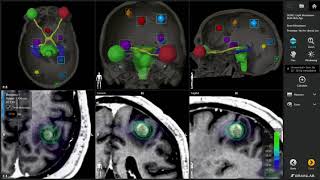
Brainlab Elements Multiple Brain Mets SRS is a specialized software application designed for advanced radiation therapy treatment planning and dose optimization, specifically for patients with multiple brain metastases. This cutting-edge tool enables clinicians to create consistent, high-quality radiosurgery plans efficiently. It utilizes a patented algorithm to generate volumetrically optimized dynamic conformal arc plans, targeting all metastases with a single virtual isocenter. The software supports dynamic jaw tracking for various linear accelerators, significantly reducing dose to normal tissue and improving field shaping for small lesions. With its comprehensive review tools, including maximum intensity projection, dose surface, dose cloud, and 3D dose volume histograms, clinicians can thoroughly evaluate plan quality. The system is designed to streamline workflows, allowing for rapid plan generation (typically under 5 minutes after image fusion and segmentation) and offering customizable clinical protocols to prioritize normal tissue sparing and target homogeneity. It is a key component of the broader Brainlab Elements portfolio, supporting a range of cranial, head and neck, and extracranial radiosurgery indications.

Reviewed by Pouyan Golshani, MD — Interventional Radiologist

Key Features

  • Automated, volumetrically optimized dynamic conformal arc plan generation
  • Single virtual isocenter for multiple metastases treatment
  • Patented algorithm for non-coplanar arcs and MLC aperture optimization
  • Reduced dose to normal tissue and improved field shaping for lesions
  • Supports Dynamic Jaw Tracking for Elekta Agility and Varian machines
  • Comprehensive plan review tools (MIP, dose surface, dose cloud, 3D DVH, CI, GI)
  • Fast plan generation (less than 5 minutes after image fusion/segmentation)
  • Customizable clinical protocols and constraints for organs at risk (OARs)
  • Optimizer guidance for normal tissue sparing and target homogeneity
  • Support for stereotactic radiosurgery (SRS) and hypo-fractionation
  • Advanced editing features for dose and angles
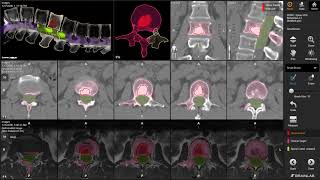
  • AI Tumor Segmentation (as part of broader Elements suite)

Use Cases

  • Treatment planning for multiple brain metastases
  • Stereotactic radiosurgery (SRS) for cranial lesions
  • Hypo-fractionated stereotactic radiotherapy (SRT) for cranial lesions
  • Radiation treatment planning for head and neck lesions
  • Radiation treatment planning for extracranial lesions
  • Optimizing dose distribution and minimizing exposure to healthy tissue

What Physicians Need to Know

Brain MRI/CT Analysis
Utilizes AI/ML-based Cranial Tumor Segmentation, trained on MRI data with contrast-enhancing tumors, for outlining and manipulating structures in patient image data. An AI-based module (Brainlab Smart Brush) demonstrates high sensitivity (97.5%) for detecting brain metastases larger than 0.1 cc, with robust volumetric accuracy. Elements Contrast Clearance Analysis provides additional insight into post-treatment tumor characteristics using robust MRI methods.
Triage Prioritization Speed
Enables fast automatic treatment plan generation for multiple brain metastases cases, with plan calculation taking about two minutes and typical plan generation less than five minutes. This significantly reduces planning and treatment times, allowing for efficient treatment of multiple metastases in a single session, often in less than 20 minutes including setup.
Physician Tip

Leverage the AI/ML-based segmentation for efficient and accurate tumor outlining on MRI/CT images. Utilize the rapid, automated plan generation to streamline workflows and provide timely treatment for multiple brain metastases, potentially reducing the need for whole-brain radiation therapy. While the AI module shows high sensitivity for larger lesions, maintain clinical oversight as human expertise remains crucial for detecting smaller lesions, especially those near complex anatomical structures. The single-isocenter approach facilitates efficient treatment delivery and minimizes patient repositioning, enhancing patient comfort and workflow efficiency.

Elements Multiple Brain Mets SRS is part of the Brainlab Elements suite of advanced planning solutions. It seamlessly integrates with other Brainlab technologies, such as the ExacTrac patient positioning and monitoring system, to ensure submillimetric accuracy during treatment delivery. The software also supports Dynamic Jaw Tracking for both Elekta Agility and Varian systems, contributing to reduced normal tissue dose.

Details

Category Neurology AI, Oncology AI, Surgical AI
Pricing Contact vendor for pricing — Customized quotes based on institutional needs and modules; no public pricing available.
DeploymentOn-premise software (computer-based)
Compliance
BAA AvailableUnknown AI-estimated
HIPAA CompliantUnknown AI-estimated
FDA Status 1 AI-estimated

Cleared by the FDA on June 17, 2025, under 510(k) K250440 as a Class II medical device (21 CFR 892.5050) for radiation treatment planning.

Integrations
EHR Not specified
Specialties Neurosurgery, Oncology

What the Web Says

Brainlab's Elements Multiple Brain Mets SRS is a software solution designed to optimize the planning and delivery of stereotactic radiosurgery (SRS) for patients with multiple brain metastases. It aims to shorten treatment duration by allowing clinicians to target several metastases simultaneously with a single isocenter, minimizing radiation exposure to healthy brain tissue. The software utilizes automated pre-planning steps, including image fusion and segmentation, and employs inverse-optimized dynamic conformal arc treatments.

Overall: Positive

Strengths

  • Significant reduction in planning time.
  • Reduced overall treatment time.
  • Enables treatment of multiple metastases with a single isocenter, sparing healthy brain tissue.
  • Automated planning workflow for efficiency and accuracy.
  • Provides consistent, high-quality radiosurgery plans.
  • Feasible and well-tolerated with excellent local control.

Limitations

  • Offers less control over shaping of the dose distribution compared to older systems like iPlan.
  • Can result in higher V12/24 (volume of healthy tissue receiving 12 or 24 Gy).
  • Limited user freedom to intervene in the automated planning process in some versions.
  • Potential for increased MLC leakage and the 'island blocking problem' when targets are in close proximity, leading to dose spill in normal brain tissue.
  • The clinical significance of higher V12/24 needs to be weighed against logistical benefits.

Based on reviews from: Novalis Circle, Stereotactic Radiosurgery of Multiple Brain Metastases: A Review of Treatment Techniques, Slashdot, BrainLAB's iPlan 4.5.4 vs. Elements 2.0 Multiple Brain Mets SRS, Treatment of multiple intracranial metastases in radiation oncology: a contemporary review of available technologies - PMC, Evaluation of two automated treatment planning techniques for multiple brain metastases using a single isocenter - PMC, Reddit (r/lungcancer), Single and multitarget stereotactic radiosurgery (SRS) with single isocenter in the treatment of multiple brain metastases (BM): institutional experience - PubMed, Elementsu2122 Multiple Brain Mets SRS - YouTube, SourceForge, Stereotactic radiosurgery alone for multiple brain metastases? A review of clinical and technical issues | Neuro-Oncology | Oxford Academic, Radiosurgery for Five to Fifteen Brain Metastases: A Single Centre Experience and a Review of the Literature - PMC, Single-isocenter multiple-target stereotactic radiosurgery for multiple brain metastases: dosimetric evaluation of two automated treatment planning systems - PMC, Reddit (r/LivingWithMBC), FDA 510(k) Premarket Notification (K250440), Evaluation of a Dedicated Software u201cElementsu2122 Spine SRS, Brainlabu00aeu201d for Target Volume Definition in the Treatment of Spinal Bone Metastases With Stereotactic Body Radiotherapy - Frontiers

Last updated: 2026-07-20

Ratings & Reviews

No reviews yet. Be the first to review this tool!

Rate (Elements) Multiple Brain Mets SRS

Clinical Value
Ease of Use
Integration
Support & Docs
Value for Money

Press & Coverage

BioTecNika
Brainlab's Spine, Cranial Indication-Specific Radiosurgery Software Gets FDA Nod
Brainlab received FDA clearance for Elements Spine SRS and Elements Cranial SRS, expanding its radiosurgery portfolio after the positive reception of its Elements Multiple Brain Mets SRS software. This development aims to provide more tailored radiosurgery plans for primary tumors in the spine and brain.
2026-06
FDA
510(k) Premarket Notification - K250440
This FDA premarket notification details the clearance for various Brainlab RT Elements software, including (Elements) Multiple Brain Mets SRS, (Elements) Cranial SRS, and (Elements) Spine SRS. The document confirms the regulatory classification and product codes for these medical devices.
2026-06
FDA
Class 2 Device Recall Radiation Therapy Treatment Planning System
A Class 2 device recall was issued for specific versions of Brainlab RT Elements software, including Multiple Brain Mets SRS, due to a potential for incorrect dose distribution calculation when using the Pencil Beam algorithm on the GPU. Brainlab addressed this by disabling the GPU calculation in the affected software settings.
2026-06
SoftwareSuggest
Compare Elements Multiple Brain Mets SRS vs. SafeDose in 2026
This article compares Brainlab's Elements Multiple Brain Metastases SRS with SafeDose, highlighting Elements' cutting-edge software solution for optimizing planning and execution of treatment for multiple brain metastases. It emphasizes the software's ability to target several metastases at once, reducing treatment duration and improving patient outcomes.
2026-06
Physics World
Automation and standardization: redefining best practice in stereotactic radiosurgery
This feature article discusses how Brainlab's Elements Multiple Brain Mets SRS software contributes to automation and standardization in stereotactic radiosurgery at Scripps MD Anderson Cancer Center. The software enables highly conformal single-session treatments for multiple metastases, minimizing dose spread to healthy tissue.
2021-05
Journal of Radiation Oncology
Simultaneous radiosurgery for multiple brain metastases: technical considerations and dosimetric comparison of two planning approaches
This peer-reviewed article compares dosimetric outcomes of two planning approaches for simultaneous radiosurgery of multiple brain metastases, including Brainlab Elements Multiple Brain Mets SRS. The study evaluates the effectiveness of different techniques in achieving high plan quality and sparing healthy brain tissue.
2021-12
Journal of Applied Clinical Medical Physics
Commissioning cranial singleu2010isocenter multiu2010target radiosurgery for the Versa HD
This study details the commissioning of Brainlab's Elements Multiple Brain Mets SRS (MBMS) for single-isocenter multi-target cranial stereotactic radiosurgery treatments on an Elekta Versa HD. It presents results validating the accuracy of dose calculations and delivery for various field sizes.
2021-03
Brainlab
Over 1000 Multiple Brain Metastases Patients Treated with Brainlab Indication-Specific Software
Brainlab announced that over 1,000 patients with multiple brain metastases have been treated using its Elements Multiple Brain Mets SRS software. The software significantly reduces treatment times by calculating plans with a single isocenter, improving the patient experience and limiting the need for whole brain radiation.
2017-11

Videos

Product demos, reviews, and walkthroughs for (Elements) Multiple Brain Mets SRS.

View all on YouTube

Frequently Asked Questions

AI can significantly enhance SRS planning by automating and optimizing tasks such as accurate tumor detection and segmentation, especially for small lesions, and delineating organs-at-risk. It can also generate and optimize dose distributions, predict treatment outcomes like local failure probability, and help identify optimal beam arrangements, leading to more efficient and precise treatment delivery while reducing planning time.
AI tools for medical devices, including those used in SRS planning, require regulatory clearance (e.g., FDA in the US) as Software as a Medical Device (SaMD), often through pathways like 510(k). Physicians and institutions must also adhere to data privacy regulations like HIPAA, institutional policies, and ethical guidelines, ensuring transparency, bias mitigation, and robust validation of these evolving AI algorithms.
Traditional manual or semi-automated planning by experienced dosimetrists and radiation oncologists remains the standard, achieving excellent results. However, AI offers the potential for faster plan generation, greater consistency, reduced inter-operator variability, and the ability to explore a wider range of optimization possibilities that might be time-prohibitive with manual methods, especially as the number of lesions increases.
Costs can include software licensing fees, potential hardware upgrades, integration services, and ongoing maintenance. While AI can reduce planning time and improve efficiency, reimbursement for the *use* of AI in planning is generally bundled into existing CPT codes for radiation therapy planning and delivery, rather than separate AI-specific codes, though the reimbursement landscape is continually evolving.
Key limitations include the 'black box' nature of some AI algorithms, making their decision-making processes difficult to interpret, and the potential for bias if trained on unrepresentative or insufficient data. AI models also require rigorous validation against real-world clinical outcomes and cannot replace the nuanced clinical judgment and expertise of an experienced radiation oncologist, particularly in unusual or highly complex anatomical scenarios.
AI is designed to augment, not replace, the physician's role by automating repetitive and time-consuming tasks like contouring and plan optimization, thereby streamlining workflows and improving efficiency. This allows radiation oncologists to focus more on complex clinical reasoning, patient consultation, quality assurance, and personalized decision-making, ultimately enhancing the overall quality of patient care.
Validation typically requires rigorous retrospective and prospective studies demonstrating accuracy, precision, and clinical benefit compared to existing methods. This includes evaluating technical performance, usability within clinical workflows, and impact on patient outcomes such as local control and toxicity, often necessitating multi-institutional and externally validated datasets to ensure generalizability and mitigate bias.

Related Tools

Cercare Medical Oncology Virtual Expert
Cercare Medical
Neurology AI
Cercare Medical's Oncology Virtual Expert is an AI-powered brain tumor segmentation module that provides fast, consistent, and semi-automated tumor analysis from standard MRI data, designed for on-premise deployment within existing clinical radiology workflows.
CoLumbo C-Spine
Smart Soft Healthcare AD
Clinical Decision Support & Reference
CoLumbo C-Spine is an AI-powered software that processes and analyzes cervical spine MRI exams, assisting clinicians in diagnosis and assessment.
MeRT System
Wave Neuroscience
Mental & Behavioral Health AI
MeRT (Magnetic e-Resonance Therapy) is an advanced, personalized form of TMS that uses your own brainwave data to guide treatment. It's a non-invasive, drug-free option designed to help the brain communicate more efficiently so symptoms of conditions like depression, anxiety, PTSD, TBI, autism, and more can improve.
Brainomix 360 Hyperdensity
Brainomix Limited
Neurology AI
Brainomix 360 Hyperdensity is an AI-powered neuroimaging software tool that detects and quantifies brain hyperdensities on CT scans, forming a crucial part of the Brainomix 360 Stroke platform for rapid and accurate stroke assessment.
SOMNUM
HoneyNaps
Clinical Decision Support & Reference
SOMNUM is an AI-enabled medical software tool by Honeynaps Co., Ltd. that provides comprehensive sleep analysis to aid in the diagnosis and management of sleep disorders.
DETECT-ME/CFS project
DETECT-ME/CFS project (ME/CFS Research Foundation)
Clinical Decision Support & Reference
The DETECT-ME/CFS project is developing an AI-supported clinical decision support system to improve the rapid and reliable diagnosis of Myalgic Encephalomyelitis/Chronic Fatigue Syndrome.

See all Neurology AI tools →

Suggest an Edit → | Last Verified: 2026-04-20 | First Added: 2026-04-20
AI Tool Finder
AI-powered search. Results may not be comprehensive.