CELLAVISION DM96 AUTOMATIC HEMATOLOGY ANALYZER

by CELLAVISION AB  · Based in Sweden → — Automating and simplifying digital hematology microscopy for improved diagnostic accuracy and efficiency.
Hematology Laboratory Medicine Pathology

Contact vendor for pricing
Regulatory Status Disclosed

Overview

The CellaVision DM96 Automatic Hematology Analyzer was an automated image analysis system designed for the differential counting of white blood cells (WBCs) and characterization of red blood cells (RBCs) in peripheral blood smears. Launched in 2003 and discontinued in 2014, it significantly advanced laboratory efficiency by automating tasks traditionally performed manually under a microscope. The system utilized a slide feeder unit, a microscope with multiple objectives, a camera, and sophisticated acquisition and classification software, often leveraging artificial neural network technology for pre-classification of cells. It featured a 96-slide capacity with automatic oil dispensing and barcode reading, allowing for continuous loading and high throughput. Beyond blood smears, with specific applications, it could also analyze body fluids such as cerebrospinal, synovial, and pleural fluid. The DM96 aimed to reduce manual labor, improve consistency in cell classification, and provide digital archiving of images for review, training, and remote collaboration among medical professionals.

Reviewed by Pouyan Golshani, MD — Interventional Radiologist

Key Features

  • Automated differential counting of white blood cells (WBCs)
  • Characterization of red blood cell (RBC) morphology
  • Platelet estimation
  • Digital image capture of blood and body fluid cells
  • Pre-classification of cells using AI/artificial neural networks
  • 96-slide capacity with continuous loading
  • Automatic oil dispensing and barcode reading
  • Remote review capabilities for supervisory analysis and collaboration
  • Digital archiving of cell images and patient data
  • Reduced manual labor and improved consistency in results

Use Cases

  • Routine peripheral blood smear analysis
  • Review of abnormal blood samples flagged by automated cell counters
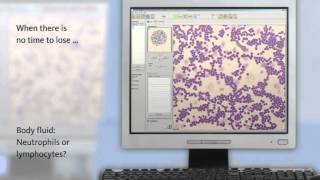
  • Analysis of body fluids (e.g., cerebrospinal, synovial, pleural fluid)
  • Training and competency testing for medical technologists
  • Remote consultation and collaboration among pathologists/hematologists
  • Quality assurance and long-term case management through image archiving

What Physicians Need to Know

LIS/LIMS Integration
The CellaVision DM96 offers bi-directional LIS (Laboratory Information System) support using ASTM communication protocols. It automatically scans slide barcodes to query the LIS for patient demographics and order data, and subsequently transmits processed results back to the LIS.
Supported Assay Types
The analyzer automates the differential counting of white blood cells (WBCs) and the characterization of red blood cell (RBC) morphology from peripheral blood smears and body fluid preparations. It also provides functionality for platelet estimation. Specific WBC classifications include various granulocytes (e.g., neutrophils, eosinophils, basophils, immature forms), lymphocytes, monocytes, blast cells, and plasma cells. It also preclassifies non-WBC elements like erythroblasts and platelet aggregates. For RBCs, it characterizes morphology related to size, color, and shape (e.g., anisocytosis, hypochromasia, poikilocytosis).
QC/QA Features
A built-in Quality Control (QC) module allows for verification of hardware functionality and stain quality, including cell location accuracy tests. The system supports archiving of results and digital images, which is valuable for quality assurance, competency testing, and creating reference material. Remote review capabilities enhance supervisory oversight and inter-laboratory collaboration.
Result Interpretation AI
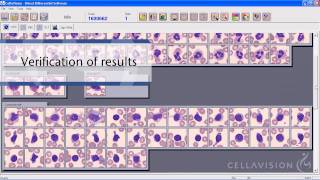
The CellaVision DM96 utilizes advanced image analysis technology and an artificial neural network to pre-classify WBCs and pre-characterize RBC morphology. This AI-assisted pre-classification provides a suggested identification for cells, which is then presented to a medical technologist or pathologist for review, verification, and potential reclassification. The system demonstrates high correlation with manual microscopy for common cell types and blasts.
Critical Value Alerts
While the system pre-classifies cells, the ultimate responsibility for critical value alerts rests with the reviewing technologist or pathologist. The AI's ability to pre-classify abnormal cells, including blasts, with high sensitivity aids in the timely identification and subsequent flagging of potentially critical findings, prompting immediate expert review.
Instrument Interfaces
The DM96 is designed for integration into automated hematology workflows. It interfaces with Laboratory Information Systems (LIS) via bi-directional ASTM communication. It processes barcode-labeled slides and can be part of a larger automation line, connecting with automated slide preparation units and hematology analyzers.
Reference Range Intelligence
The system's primary role is cell pre-classification and morphology characterization, standardizing the initial assessment of blood and body fluid smears. While it aids in providing consistent data, the interpretation of these results against specific patient or population-based reference ranges and the final diagnostic decision remain within the purview of the laboratory professional.
Turnaround Time Impact
The CellaVision DM96 significantly improves laboratory efficiency by automating the time-consuming process of manual differential counts. This leads to faster slide reviews, reduced manual technical validation, and a notable decrease in overall turnaround time, particularly beneficial for high-volume laboratories. It allows experienced microscopists to focus on complex cases.
Physician Tip

For physicians, the CellaVision DM96 provides access to standardized, high-quality digital images of blood and body fluid cells, facilitating remote review and consultation with hematopathologists. This can lead to quicker expert opinions and more consistent reporting. The system's ability to pre-classify abnormal cells, including blasts, helps ensure that critical findings are brought to attention efficiently. While the AI provides a strong initial assessment, always remember that final interpretation and clinical correlation remain crucial, especially for rare cell types or complex pathologies. The digital images also serve as an excellent educational and archival resource.

The CellaVision DM96 seamlessly integrates with existing LIS/LIMS environments through bi-directional ASTM communication, ensuring efficient transfer of patient orders and results. Its compatibility with automated slide preparation systems and hematology analyzers allows for a streamlined, end-to-end digital workflow in high-volume laboratories. This robust connectivity minimizes manual data entry, reduces errors, and enhances overall laboratory productivity and data integrity.

Details

Category Lab & Diagnostics, Pathology AI
Pricing Contact vendor for pricing — Contact vendor for pricing
DeploymentOn-premise (laboratory instrument with dedicated computer system)
Compliance
BAA AvailableUnknown AI-estimated
HIPAA CompliantUnknown AI-estimated
FDA Status 1 AI-estimated

The CellaVision DM96 Automatic Hematology Analyzer received FDA 510(k) clearance (K033840) on February 10, 2004, as an automated cell-locating device intended for in-vitro diagnostic use. It automatically locates and presents images of blood cells on peripheral blood smears for operator identification and verification.

Integrations
EHR Not specified
Specialties Hematology, Laboratory Medicine, Pathology

What the Web Says

The CellaVision DM96 Automatic Hematology Analyzer is an automated digital image analysis system designed to streamline and simplify the process of performing blood and body fluid differentials in hematology laboratories. It automatically locates and preclassifies various types of white blood cells, characterizes red blood cell morphology, and performs platelet estimations. The system aims to reduce manual microscopy time, improve consistency, and facilitate remote review and collaboration among medical professionals.

Overall: Positive

Strengths

  • Decreased eyestrain for medical technologists.
  • Improved consistency among patient results.
  • Advantages in training new personnel.
  • Enables remote review of blood smears and real-time collaboration.
  • High sensitivity and specificity for detecting blasts and unusual WBCs.
  • Automates analysis for high-volume testing requirements, potentially reducing labor costs and improving throughput.

Limitations

  • Limitations in accurately estimating platelets and red cell morphology.
  • Difficulty in identifying certain red cell inclusions like Howell-Jolly bodies due to the inability to focus up and down.
  • Can struggle with body fluids, especially those with low WBC counts, leading to analysis failures and backlogs.
  • Pre-classification accuracy can vary for certain cell types, with lower correlations for rare cells like basophils and immature granulocytes.
  • Older systems may experience decreased accuracy in cell identification over time.
  • Requires high-quality stained blood smears for accurate assessment.

Based on reviews from: Performance evaluation and relevance of the CellaVisionu2122 DM96 system in routine analysis and in patients with malignant hematological diseases - PMC, Performance Evaluation of the CellaVision DM96 System WBC Differentials by Automated Digital Image Analysis Supported by an Arti - Oxford Academic, A survey study of benefits and limitations of using CellaVision DM96 for peripheral blood differentials - PubMed, Experience with CellaVision DM96 for peripheral blood differentials in a large multi-center academic hospital system - PMC, CellaVisionu00ae DM9600, A critical analysis of CellaVision systems in the modern hematology laboratory - PMC - NIH, (PDF) Performance Evaluation of the CellaVision DM96 System: WBC Differentials by Automated Digital Image Analysis Supported by an Artificial Neural Network - ResearchGate, CellaVisionu00ae DM9600 | Sysmex America, The history of CellaVision devices, Does your lab have Cellavision? What do you like or dislike about it? - Reddit, CellaVisionu00ae DM9600 - Laboratory Specialists International, critical analysis of CellaVision systems in the modern hematology laboratory | American Journal of Clinical Pathology | Oxford Academic, Minimal Hematology Analyzer Plus Blood Smear Digital Imaging/ Analysis Provides Better Clinical Hematology Results Than a Complex Hematology Analyzer Alone - American Society of Hematology, Detection of Intracellular Parasites by Use of the CellaVision DM96 Analyzer during Routine Screening of Peripheral Blood Smears - ASM Journals, Cellavision : r/medlabprofessionals - Reddit, Performance of the CellaVisionu00ae DM96 system for detecting red blood cell morphologic abnormalities - PMC, Performance of CellaVision DM96 in leukocyte classification - PMC - NIH, Tips for getting ready to use CellaVision : r/medlabprofessionals - Reddit

Last updated: 2026-07-21

Ratings & Reviews

No reviews yet. Be the first to review this tool!

Rate CELLAVISION DM96 AUTOMATIC HEMATOLOGY ANALYZER

Clinical Value
Ease of Use
Integration
Support & Docs
Value for Money

Press & Coverage

PMC
Performance evaluation and relevance of the CellaVisionu2122 DM96 system in routine analysis and in patients with malignant hematological diseases
This study evaluates the CellaVisionu2122 DM96 as an automated image analysis system for preclassifying white blood cells, characterizing red blood cell morphology, and performing platelet counts in peripheral blood smears. It found excellent correlation with manual microscopy for most hematological parameters and high accuracy in cell identification, making it a useful tool for routine analysis and diagnosing malignant hematological diseases.
2008-12
ResearchGate
Artificial Intelligence and Digital Microscopy Applications in Diagnostic Hematopathology
This review discusses the application of AI and digital microscopy in diagnostic hematopathology, noting the introduction of the CellaVision DM96 in 2004. It highlights the system's role in overcoming limitations of manual analysis and its performance in recognizing various blood cell morphologies, including schistocytes and cells from patients with hereditary hemolytic anemia.
2020-03
accessdata.fda.gov
SUMMARY AND CERTIFICATION
This FDA document details the 510(k) clearance for the CellaVision DM96 Automatic Hematology Analyzer in 2003. It describes the device as an automated cell-locating system for differential white blood cell counts, red blood cell morphology characterization, and platelet estimation, intended for use by skilled operators.
2003-12
Innolitics
CELLAVISION DM96 AUTOMATIC HEMATOLOGY ANALYZER ... Regulatory Classification.
This entry from Innolitics provides regulatory classification information for the CellaVision DM96 Automatic Hematology Analyzer, indicating its 510(k) clearance in 2004.
unknown
ResearchGate
Performance Evaluation of the CellaVision DM96 System: WBC Differentials by Automated Digital Image Analysis Supported by an Artificial Neural Network
This study evaluates the CellaVision DM96's performance in WBC differentials, highlighting its advantages over direct microscopy, such as remote review capabilities and potential labor savings. It reports high sensitivity and specificity for immature myeloid cells, blasts, and unusual WBCs/nucleated RBCs.
unknown
American Society of Hematology
Minimal Hematology Analyzer Plus Blood Smear Digital Imaging/ Analysis Provides Better Clinical Hematology Results Than a Complex Hematology Analyzer Alone
This article compares the CellaVision DM96, used with a minimal hematology analyzer, to a complex hematology analyzer, finding similar cell counts and flagging capabilities. A key advantage of the DM96 combination is the ability to remotely review blood smears.
2016-12
PMC
Performance of CellaVision DM96 in leukocyte classification
This study evaluated the CellaVision DM96's performance in leukocyte classification, showing excellent correlation with manual microscopy for segmented neutrophils, lymphocytes, and blasts. It also noted significant improvements in automated morphological peripheral blood smear assessment compared to earlier systems.
2013-06
Innolitics
AI/ML in Digital Pathology and the Software-as-an-IVD Paradigm: 2026 Snapshot
This article provides a 2026 snapshot of AI/ML in digital pathology, mentioning the CellaVision DM96 Automatic Hematology Analyzer as an early example of an AI/ML-flagged device in hematology. It highlights the significant volume of hematology analyzers in the pathology AI landscape.
2026-04

Videos

Product demos, reviews, and walkthroughs for CELLAVISION DM96 AUTOMATIC HEMATOLOGY ANALYZER.

View all on YouTube

Frequently Asked Questions

The CellaVision DM96 employs AI for automated image analysis, primarily focusing on the pre-classification of white blood cells (WBCs) and the pre-characterization of red blood cell (RBC) morphologies on peripheral blood smears. It also uses AI-based 'Absolute Focus' technology to acquire focused images more rapidly, enhancing throughput. The system acts as a decision support tool, presenting pre-classified cells for review and verification by a skilled operator.
The CellaVision DM96 is an FDA-cleared device (K033840, cleared in 2004) for in-vitro diagnostic use as an automated cell-locating device for differential counts, RBC morphology characterization, and platelet estimation. It functions as a decision support system, requiring a trained operator to verify the AI's suggested classifications. CellaVision also declares conformity with European directives such as IVDR (EU) 2017/746.
While highly accurate for common cell types, the DM96 may have limitations in precisely classifying certain rare or immature WBC types, such as promonocytes, prolymphocytes, some immature granulocytes, plasma cells, and blasts. It also faces challenges with detecting critical abnormalities like platelet clumping and red blood cell agglutination. Therefore, human oversight by skilled laboratory staff is crucial to review, verify, and reclassify cells as needed, as the system is designed as a decision support tool.
The CellaVision DM96 offers advantages over traditional manual microscopy by reducing eyestrain, providing more consistent results, and facilitating training and remote collaboration. Compared to other automated digital morphology systems like Sysmex DI-60, Mindray MC-80, or ScopioLabs X100, the CellaVision system is considered a market leader and has been around the longest, though specific performance metrics can vary between systems for different cell types. It automates the initial scanning and pre-classification, significantly reducing manual workload.
Exact pricing for the CellaVision DM96 is not publicly disclosed and typically requires direct consultation with the vendor or authorized distributors. The cost can vary significantly based on the configuration, included software applications (e.g., Advanced RBC Application), service contracts, and regional market factors. Used units may be found on secondary markets, but official pricing for new systems is usually obtained through a quotation process.
No, the AI in the CellaVision DM96 does not continuously learn or adapt from user feedback in the laboratory environment. CellaVision explicitly states that the AI is not learning in the lab to maintain guarantees about the consistency and reliability of its results. New software versions with updated AI models are developed and extensively validated by the manufacturer to ensure performance across a wide range of samples.
Integrating the DM96 can significantly improve workflow efficiency by automating initial cell location and pre-classification, reducing review time for differentials, and enabling remote access and collaboration among specialists. While the system aims to standardize results and reduce interobserver variability, physicians must remain vigilant against over-reliance on AI and continue to apply critical thinking and analysis to verify results, especially for complex or rare pathologies. The system enhances diagnostic confidence by providing high-quality digital images and a structured review process.

Related Tools

LabLynx AI-Powered LIMS
LabLynx
Lab & Diagnostics
LabLynx AI-Powered LIMS integrates AI and Machine Learning into laboratory information management systems to automate complex analyses, predict outcomes, and optimize workflows for various lab settings. The platform offers LIMS, ELN, and Lab Automation suites, providing configurable and scalable solutions for diverse laboratory needs.
August AI
August AI
Lab & Diagnostics
August AI offers an AI-enabled telehealth platform with an AI health chatbot and virtual care services, including telehealth visits and prescription management. The company's AI chatbot is available globally for free, providing information and not medical advice. In the U.S., August AI offers August Care, a membership that provides clinical services, discounted labs, and quick prescriptions.
Allergios®
Allergios®
Lab & Diagnostics
Allergios® is developing an in-vitro diagnostic system that directly visualizes allergic responses in blood serum to provide unambiguous allergy diagnoses, starting with food allergies.
PNOĒ
PNOĒ
Endocrinology & Metabolic AI
PNOĒ is a science-backed cardiometabolic analyzer that performs comprehensive breath-based assessments to measure 23 biomarkers, including VO₂ max, resting metabolic rate (RMR), fat burn efficiency, and biological age. It delivers a 360° snapshot of an individual's physiology by analyzing how oxygen flows through the lungs, heart, and cells. The insights generated are used to personalize nutrition, exercise, and longevity plans.
Folklore Clinical Variant Interpretation
Helena Bioinformatics
Lab & Diagnostics
Folklore is a clinical variant interpretation platform for genetic laboratories and researchers that brings genomic annotation, ACMG/AMP classification, phenotype and inheritance evidence, literature, and structured reporting into one traceable workflow.
Insitro
Insitro
Drug Discovery & Research
Insitro combines automated cellular experiments with population-scale genetics to build Physical AI systems that reveal causal drivers of human disease and deliver targeted therapeutics.

See all Lab & Diagnostics tools →

More from CellaVision AB

Advanced RBC Application
CellaVision AB
Lab & Diagnostics
CellaVision Advanced RBC Application is an AI-powered software module that automates and standardizes the morphological examination of red blood cells, complementing peripheral blood smears for enhanced diagnostic efficiency in hematology labs.
CellaVision DC-1
CellaVision AB
Lab & Diagnostics
CellaVision DC-1 is an AI-powered digital cell morphology analyzer that automates and standardizes blood cell differentials in low-volume hematology laboratories, enhancing efficiency and diagnostic accuracy through digital imaging and pre-classification.
CELLAVISION DM1200 WITH THE BODY FLUID APPLICTION
CELLAVISION AB
Lab & Diagnostics
The CellaVision DM1200 with the Body Fluid Application is an FDA-cleared automated digital cell morphology system that uses AI and robotics to simplify and standardize blood and body fluid differentials in hematology labs.
CELLAVISION DM96 WITH THE BODY FLUID APPLICATION
CELLAVISION AB
Lab & Diagnostics
The CellaVision DM96 with the Body Fluid Application is an FDA-cleared automated digital morphology system that uses AI to analyze and pre-classify cells in blood and various body fluid samples, enhancing diagnostic efficiency and standardization in hematology laboratories.

View company profile →

Suggest an Edit → | Last Verified: 2026-04-20 | First Added: 2026-04-20
AI Tool Finder
AI-powered search. Results may not be comprehensive.