LungQ 4

by Thirona BV  · Based in Netherlands → — Experts in AI-Powered lung image analysis
Cardiothoracic Surgery Pulmonology Radiology

Contact for pricing
Regulatory Status Disclosed

Overview

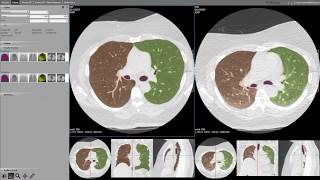
Thirona’s LungQ 4 is an AI-powered CT analysis software designed to provide comprehensive quantitative insights for thoracic CT images. It builds upon previous versions with enhanced capabilities for precision pulmonary care.

The software supports clinicians in the diagnosis, evaluation, treatment planning, and follow-up examinations of various lung diseases. It achieves this by delivering reproducible CT values for pulmonary tissue and offering detailed anatomical context for clinical interpretation.

LungQ 4’s robust modular AI technology is extensively validated across different diseases and patient populations, providing reliable results for clinically meaningful solutions. It is adaptable for both therapy development and interventional care, offering actionable insights for precision-driven decision-making.

Reviewed by Pouyan Golshani, MD — Interventional Radiologist

Key Features

  • Enhanced peripheral airway segmentation
  • Estimated chronic perfusion defects from CT (PXT)
  • Post-treatment detection of endobronchial implants
  • AI-powered CT analysis for thoracic images
  • Advanced lung segmentation capabilities
  • Quantitative analysis of anatomical volumes and disease distributions
  • Airway morphology, vascular morphology, and fissure completeness analysis
  • Reproducible CT values for pulmonary tissue
  • Detailed anatomical context for clinical interpretation
  • Automated quantification of airway-occluding mucus plugs (LungQu00aeMP)

Use Cases

  • Pulmonary intervention planning and guidance
  • Accelerating respiratory clinical trials
  • Treatment of lung cancer, emphysema, and chronic airway diseases
  • Respiratory disease assessment and understanding disease patterns
  • Lung volume reduction therapy
  • Post-operative position monitoring of endobronchial implants

What Physicians Need to Know

Key Capabilities
LungQ 4 offers enhanced peripheral airway segmentation, identifying distal airways in previously inaccessible regions and providing detailed anatomical context. It includes estimated chronic perfusion defects from CT (PXT) for quantitative data in lung volume reduction therapy and post-treatment detection of endobronchial implants for monitoring positioning or displacement. The software builds on advanced lung segmentation from previous versions, providing comprehensive structural characterization of the lung, including airways, blood vessels, and parenchyma, with granular regional insights. It also quantifies emphysema, air trapping, bronchiectasis, and mucus impaction.
Clinical Utility
The tool supports precise access planning for distal airway targets in navigational bronchoscopy for lung cancer, emphysema, and chronic airway diseases. It provides consistent anatomical referencing for visualizing airway abnormalities in respiratory disease assessment and aids in pre-procedural planning, patient eligibility, and post-treatment evaluation. LungQ 4 offers quantitative data for treatment target selection in lung volume reduction therapy, leading to more accurate diagnoses, timely disease management, and personalized treatment plans. It has been shown to reduce the time to analyze cystic fibrosis images from days to minutes.
Integration Options
LungQ 4 can be integrated via AI marketplaces or distribution platforms and can be deployed as a stand-alone web-based solution or locally on dedicated hardware. Thirona, the developer, collaborates with integration partners like Blackford and has a commercial partnership with Voiant for clinical trials.
Compliance Status
LungQ 4 has received FDA 510(k) clearance and is CE-certified (LungQ 3 and LungQ 4 PXT). It is already available for clinical use in Europe, the UK, and Australia. Thirona's product development processes comply with EU MDR 2017/745, U.S. FDA Quality System Regulation (21 CFR Part 820), and the Medical Device Single Audit Program (MDSAP). The company is also ISO 13485 and ISO 27001 certified.
Pricing Model
The pricing model for LungQ is not explicitly specified but is indicated to be based on the number of analyses performed.
User Experience
LungQ 4 is described as a user-friendly and fully automated tool, requiring no human intervention for certain analyses. It provides a one-page report with severity scores and visual representations of abnormal tissue for easy interpretation. The software is designed to be a trusted tool that works effectively in everyday clinical care.
Support Quality
Thirona emphasizes its commitment to quality and compliance, with a Quality & Regulatory system built for continuous improvement. This system is audited, certified, and refined through collaboration with MedTech and pharma partners, focusing on clinical impact, security by design, regulatory compliance, risk management, and medical data security.
Implementation Complexity
Implementation can involve local deployment on dedicated hardware or integration via AI marketplaces. The software is designed for implementation in close collaboration with partners across advanced clinical systems.
Evidence Base
LungQ 4 has been validated in studies, including one comparing automated and manual assessments by expert bronchoscopists, demonstrating excellent accuracy and reliability. Earlier clinical evaluations confirmed that its PXT feature provides quantitative information comparable to SPECT-CT. The LungQ platform is extensively validated across various diseases and patient populations, with its analyses demonstrating sensitive and accurate quantification that can exceed traditional clinical methods.
Physician Tip

Leverage LungQ 4 for enhanced precision in pre-procedural planning for bronchoscopic interventions, especially for distal airway targets. Utilize the estimated chronic perfusion defects (PXT) for informed treatment target selection in lung volume reduction therapy. The automated detection of endobronchial implants is valuable for post-treatment monitoring. The detailed anatomical and quantitative insights can significantly aid in diagnosing and managing complex lung diseases, potentially improving patient outcomes and operational efficiency. Consider its utility for longitudinal monitoring of disease progression and treatment efficacy.

LungQ 4 offers flexible integration options, including direct deployment on dedicated hardware or through AI marketplaces/distribution platforms. Healthcare providers should explore existing partnerships with companies like Blackford for streamlined integration into current imaging workflows. Compatibility with existing PACS and EMR systems should be verified to ensure seamless data flow and accessibility within the clinical environment.

Details

Category Oncology AI, Radiology & Imaging AI
Pricing Contact for pricing
DeploymentCloud, On-premise
Compliance
BAA AvailableUnknown AI-estimated
HIPAA CompliantUnknown AI-estimated
FDA Status 1 AI-estimated

LungQ® 4 received FDA 510(k) clearance (K250766) on October 2, 2025, as a Class II medical device. It extends capabilities into enhanced peripheral airway segmentation, estimated chronic perfusion defects from CT, and post-treatment detection of endobronchial implants.

Integrations
EHR Not specified
Specialties Cardiothoracic Surgery, Pulmonology, Radiology

What the Web Says

LungQ 4 is an AI-powered CT analysis software developed by Thirona, which received FDA clearance in October 2025. It enhances capabilities for pulmonary intervention planning and guidance, and accelerates respiratory clinical trials. The software provides detailed anatomical context for clinical interpretation and supports physicians in diagnosing and documenting pulmonary tissue images from CT thoracic datasets.

Overall: Positive

Strengths

  • Enhanced peripheral airway segmentation, enabling identification of distal airways.
  • Estimation of chronic perfusion defects directly from CT images, providing quantitative data comparable to SPECT-CT.
  • Improved post-treatment detection of endobronchial implants.
  • Provides consistent anatomical referencing to visualize airway abnormalities.
  • Validated for accuracy and reliability in automated and manual assessments by expert bronchoscopists.
  • Supports treatment target selection in lung volume reduction therapy.

Limitations

  • Lack of readily available public product reviews on major platforms like G2 and Capterra.
  • Absence of employer reviews on platforms such as Glassdoor and Reddit.
  • Operates as a command-line software without a graphical user interface (GUI).

Based on reviews from: AuntMinnie, accessdata.fda.gov, DAIC, FDA.report, Innolitics, Thirona - Physician Ai Tools

Last updated: 2026-07-21

Ratings & Reviews

No reviews yet. Be the first to review this tool!

Rate LungQ 4

Clinical Value
Ease of Use
Integration
Support & Docs
Value for Money
No press coverage or publications on file yet. Know of some? Suggest an edit →

Videos

Product demos, reviews, and walkthroughs for LungQ 4.

View all on YouTube

Frequently Asked Questions

LungQ 4 is designed to seamlessly integrate with your PACS system, providing AI-powered analysis of lung imaging studies directly within your existing viewing environment. It aims to augment your diagnostic process by identifying subtle patterns and anomalies, improving efficiency and potentially reducing misdiagnosis, rather than replacing human expertise.
LungQ 4 is an FDA-cleared medical device, having met applicable premarket requirements for safety and effectiveness, often through pathways like 510(k) clearance. It ensures HIPAA compliance through robust technical and administrative safeguards, including end-to-end encryption, strict access controls, and adherence to data de-identification protocols for Protected Health Information (PHI).
LungQ 4 distinguishes itself through advanced deep learning algorithms that can analyze medical images with remarkable accuracy and speed, potentially surpassing human capabilities in identifying subtle patterns. It aims to improve diagnostic accuracy and efficiency, serving as a valuable second reader to radiologists, while traditional methods rely solely on human interpretation.
LungQ 4 is typically offered on a subscription basis, with pricing models that can vary based on factors like the volume of studies processed, number of users, or specific features. Hybrid models combining a fixed base fee with a variable component tied to clinically relevant metrics are often preferred to balance predictability and scalability.
LungQ 4, like other AI systems, may exhibit biases if trained on unrepresentative datasets, potentially leading to reduced accuracy for certain demographic groups or in interpreting atypical presentations. Physicians should use LungQ 4 as an assistive tool, exercising their clinical judgment and correlating AI findings with the full patient context, as human expertise remains crucial.
LungQ 4 has undergone rigorous clinical validation, often involving external testing on independent datasets to assess its technical and clinical accuracy. While metrics like sensitivity and specificity are reported, it's important to note that generalizability to diverse real-world practices can be a limitation, and continuous monitoring is crucial.
Comprehensive training programs are provided, including online modules, webinars, and on-site sessions, to ensure effective integration and utilization of LungQ 4. Ongoing technical support and clinical application specialists are available to assist with questions, fostering a foundational understanding of AI tools, their limitations, and safe workflow integration.

Related Tools

Surgical Reality Viewer
Surgical Reality
Oncology AI
Surgical Reality offers CE- and FDA-certified AI-powered 3D medical imaging and surgical planning software that transforms CT scans into patient-specific 3D models for thoracic surgery, enhancing precision in complex lung procedures.
Cancer Copilot
Color Health
Oncology AI
Color Health's Cancer Copilot, built with OpenAI, helps oncologists and clinicians identify and order workup needs for recently diagnosed patients, aiming to speed up time to cancer treatment. This AI tool is designed to expand cancer expertise, speed decisions, and improve care, reducing a two-hour clinical task to 10 minutes with over 95% validated accuracy.
Cercare Medical Oncology Virtual Expert
Cercare Medical
Neurology AI
Cercare Medical's Oncology Virtual Expert is an AI-powered brain tumor segmentation module that provides fast, consistent, and semi-automated tumor analysis from standard MRI data, designed for on-premise deployment within existing clinical radiology workflows.
Synapse Lung Nodule AI
Fujifilm Corporation
Oncology AI
Fujifilm's Synapse Lung Nodule AI is an AI software algorithm for detecting pulmonary nodules on CT imaging, aiming to support early detection and treatment of lung cancer.
RadOncAI
Informai (for RadOncAI product) / Global Network for AI in Radiation Oncology (for RadoncAI.net)
Oncology AI
RadOncAI is an AI solution by Informai designed to optimize and enhance radiation oncology workflows, improving efficiency and accuracy in treatment planning and delivery.
FAITH project (Fatigue Therapy – AI-supported Diagnosis and Therapy of Tumour-associated Fatigue Syndrome)
Fimo Health GmbH (Consortium Leader)
Mental & Behavioral Health AI
The FAITH project is developing an AI-based solution for the diagnosis and therapy of tumor-associated fatigue syndrome in cancer patients. It uses wearable sensors, a smartphone app, and artificial intelligence to provide individualized therapy recommendations and monitor mental health.

See all Oncology AI tools →

More from Thirona BV

LungQ
Thirona BV
Radiology & Imaging AI
LungQ by Thirona offers AI-powered analysis of thoracic CT scans for specialized clinical care and interventional pulmonology, providing quantitative support for diagnosis, treatment planning, and follow-up examinations of lung diseases.

View company profile →

Suggest an Edit → | Last Verified: 2026-04-20 | First Added: 2026-04-20
AI Tool Finder
AI-powered search. Results may not be comprehensive.