LungQ
Overview
Thirona’s LungQ™ is an advanced AI-powered software solution designed for comprehensive analysis of thoracic CT scans. Developed for specialized clinical care, interventional pulmonology, and pharmaceutical research, LungQ provides quantitative support for the diagnosis, evaluation, treatment planning, and follow-up examinations of various lung diseases. The platform offers reproducible CT values for pulmonary tissue, aiding clinicians in achieving more accurate and precise diagnoses and timely disease management. LungQ’s robust modular AI technology is extensively validated across diverse diseases and patient populations, delivering precise quantitative insights to support translational research, drug development, and minimally invasive interventional therapies. It plays a crucial role in advancing precision medicine by enabling sensitive detection of disease progression and treatment response in chronic lung conditions. The software has received multiple FDA 510(k) clearances and CE marking, underscoring its commitment to quality and regulatory compliance.
Reviewed by Pouyan Golshani, MD — Interventional Radiologist
Key Features
- AI-powered analysis of thoracic CT scans
- Identification and volumetric quantification of anatomical lung structures (lobes, segments, subsegments, airways, fissures)
- One-page report with severity scores for emphysematous lung tissue and interlobar fissure completeness
- Visual representation of abnormal tissue for easy interpretation
- Reproducible CT values for pulmonary tissue
- Segmentation and isolation of sub-compartments
- Volumetric analysis, density evaluations, fissure evaluation, and reporting tools
- Quantitative assessment of pulmonary perfusion distribution (LungQu00ae PXT)
- Automated quantification of airway-occluding mucus plugs (LungQu00ae MP)
- Fully automated quantification of the entire bronchial tree (LungQu00ae BA)
Use Cases
- Diagnosis and follow-up of pulmonary diseases (e.g., COPD, emphysema, asthma, cystic fibrosis, COVID-19, lung cancer)
- Treatment planning and monitoring disease progression
- Guiding bronchoscopic navigation and surgical lung interventions
- Translational research and drug development for respiratory diseases
- Patient phenotyping and selection for clinical trials
- Assessment of bronchial wall thickness, dilatation, and narrowing
What Physicians Need to Know
Leverage LungQ for precise quantitative analysis of CT scans to aid in diagnosis, treatment planning, and monitoring of chronic lung diseases. Its detailed segmentation capabilities can be particularly useful for complex cases requiring accurate anatomical mapping and volumetric assessment. Integrate its output into your reporting workflow for objective evidence and improved efficiency, especially for conditions like COPD, emphysema, and for guiding interventional pulmonology procedures. The ability to track disease progression over time with reproducible measurements is a significant benefit for personalized patient management.
LungQ is designed for flexible integration into existing radiology IT environments, supporting direct PACS integration or deployment via AI marketplaces/distribution platforms. To maximize workflow benefits, ensure your PACS and IT infrastructure are configured for DICOM compliance and efficient data exchange. This will allow for seamless transfer of CT images for analysis and the return of DICOM-compliant results and reports into the radiologist's workflow.
Details
| Category | Radiology & Imaging AI |
| Pricing | Contact for pricing — Contact for pricing |
| Deployment | Cloud, on-premise (locally on dedicated hardware), or via AI marketplace/distribution platform |
| Compliance | |
| BAA Available | Unknown AI-estimated |
| HIPAA Compliant | Unknown AI-estimated |
| FDA Status |
1 AI-estimated LungQ has received multiple FDA 510(k) clearances, including for versions 3.0.0 (January 2024) and 4 (October 2025), for AI-powered analysis of thoracic CT scans to support diagnosis, treatment planning, and follow-up examinations by providing reproducible CT values and advanced segmentation capabilities. |
| Integrations | |
| EHR | Not specified |
| Specialties | Pulmonology, Radiology |
What the Web Says
LungQ, developed by Thirona, is an AI-powered software designed for the analysis of thoracic CT scans, aiding physicians in the diagnosis, documentation, and treatment planning of various lung conditions, including lung cancer and cystic fibrosis. It has received FDA 510(k) clearance for several versions, indicating its compliance with regulatory standards for medical devices. The software aims to provide quantitative support for diagnosis and follow-up examinations, enabling more personalized and minimally invasive lung care.
Overall: PositiveStrengths
- Provides accurate disease progression management with consistent and reproducible measurements across time.
- Offers detailed tissue analysis and identifies key structures like lobes, segments, subsegments, airways, and fissures.
- Guides bronchoscopic navigation with precision, enabling safer and more effective procedures.
- Supports physicians in the diagnosis and documentation of pulmonary tissue images from CT thoracic datasets.
- Aids in more precise diagnosis compared to clinical standard lung function testing.
- Enables personalized treatment planning and monitoring of disease progression.
Limitations
- No specific cons for LungQ were found in the provided search results.
- General concerns about AI in healthcare include limitations in generalizability, interpretability, and regulatory compliance.
Based on reviews from: PMC, Healio, Medical Product Outsourcing, AuntMinnie, The Silicon Review, arXiv
Last updated: 2026-07-19
Ratings & Reviews
No reviews yet. Be the first to review this tool!
Rate LungQ
Press & Coverage
Videos
Product demos, reviews, and walkthroughs for LungQ.
Thirona LungQ introduction
Thirona
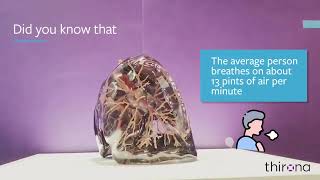
World Lung Day | Accelerating medical innovations for precision medicine in pulmonary diseases
Thirona
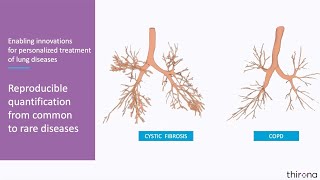
LungQu2122 precise quantification of common and rare diseases
Thirona

THIRONA IMAGE ANYSIS SERVICE
Gideon Attwell
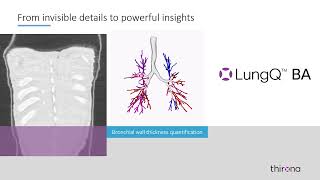
From invisible details to powerful insights - LungQu00ae BA
Thirona
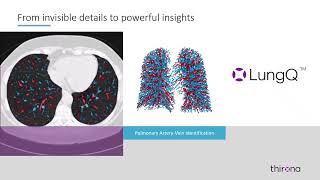
From invisible details to powerful insights - LungQu00ae AVX
Thirona