Advanced RBC Application

by CellaVision AB  · Based in Sweden → — Automating and Standardizing Red Blood Cell Morphology Analysis
Hematology Laboratory Medicine Pathology

Contact for pricing
Regulatory Status Disclosed

Overview

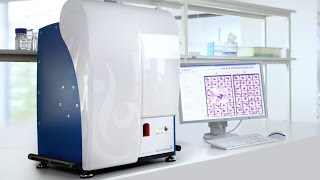
The CellaVision Advanced RBC Application is an optional software module designed to complement CellaVision’s Peripheral Blood Application, enabling a more comprehensive examination of red blood cell (RBC) morphology. When integrated with CellaVision analyzers (such as DM96, DM1200, DM9600, and DI-60) and supporting software, it streamlines and standardizes the review process, delivering more consistent results.

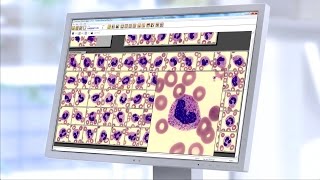
This innovative AI technology extracts cell features from digital images, providing a pre-characterization of RBCs based on up to 21 morphological characteristics, including shape, size, color, and inclusions. Medical technologists then review and verify this pre-characterization. The application aims to improve diagnostic accuracy and efficiency in hematology laboratories by reducing the labor-intensive and subjective aspects of manual microscopic examination.

It is intended for in-vitro diagnostic use by skilled operators trained in blood cell recognition, particularly for blood samples flagged as abnormal by automated cell counters.

Reviewed by Pouyan Golshani, MD — Interventional Radiologist

Key Features

  • Automated pre-characterization of RBCs based on 21 morphological characteristics
  • AI technology for extracting cell features from digital images
  • Easy to split or switch views for single cell filtering and grouping
  • High-resolution image viewing of individual cells or selected categories
  • Manual grading adjustment for re-characterization
  • Ability to share slides and cell images for collaboration and consultation
  • Export and email cell images for consultation, validation, or presentation
  • Archiving of cell images as part of patient's medical history
  • Comparison of cells with example cell images from a built-in library
  • Supports various slide preparation methods and Romanowsky stains

Use Cases

  • Comprehensive examination of red blood cell morphology
  • Automated pre-classification of RBCs in peripheral blood smears
  • Improving efficiency and standardization of RBC review in laboratories
  • Aiding in the diagnosis of hematological diseases and conditions
  • Quality control and technologist education in cellular classification
  • Review of flagged abnormal blood samples from automated cell counters

What Physicians Need to Know

LIS/LIMS Integration
Seamless integration with Laboratory Information Systems (LIS) and Laboratory Information Management Systems (LIMS) is supported. The system scans slide barcodes to query LIS/LIMS for patient demographics and order data, and can define analysis types from barcode information if LIS communication is unavailable.
Supported Assay Types
The Advanced RBC Application provides comprehensive pre-characterization for RBC differentials, analyzing 21 morphological characteristics. These include Polychromatic cells, Hypochromatic cells, Anisocytosis, Microcytes, Macrocytes, Poikilocytosis, Target cells, Schistocytes, Helmet cells, Sickle cells, Spherocytes, Elliptocytes, Ovalocytes, Teardrop cells, Stomatocytes, Acanthocytes, Echinocytes, Howell-Jolly bodies, Pappenheimer bodies, Basophilic stippling, and Parasites. It complements the Peripheral Blood Application for a more thorough RBC morphology examination and is intended for samples flagged as abnormal by automated cell counters.
QC/QA Features
The system includes quality control features such as a cell location test to verify slide preparation and hardware integrity, and self-tests during software startup and operation. It promotes standardized results and can be used with CellaVision Proficiency Software for training and competency testing in RBC morphology grading, contributing to overall quality assurance.
Result Interpretation AI
Utilizes innovative AI technology, specifically Artificial Neural Networks, to extract cell features from digital images and deliver an automated pre-characterization of RBCs into 21 morphological categories based on size, color, shape, and inclusions. This pre-characterization is then reviewed and verified by a Medical Technologist. Results are reported semi-quantitatively in four flag levels (0-3), with laboratories able to establish their own cut-off percentages.
Critical Value Alerts
While not explicitly termed 'alerts,' the system provides semi-quantitative grading (0-3) for RBC morphological characteristics, allowing laboratories to define and apply specific cut-off percentages for abnormal findings, often in accordance with ICSH guidelines. This functionality supports the identification and flagging of clinically significant morphological changes.
Instrument Interfaces
The Advanced RBC Application is an optional software module compatible with CellaVision DM96, DM1200, and DM9600 analyzers. It supports various slide preparation methods, including automated slide makers and stainers, HemaPrepu00ae, manual smears, RALu00ae SmearBox, and RALu00ae StainBox/Stainer. It is designed for use with Romanowsky stains (May Gru00fcnwald Giemsa, Wright Giemsa, Wright, RAL MCDh).
Reference Range Intelligence
The system supports laboratory-defined cut-off percentages for the semi-quantitative grading of RBC morphological characteristics (0-3). These cut-offs can be established based on laboratory-specific control populations or in accordance with international guidelines like those from the International Council for Standardization in Haematology (ICSH).
Turnaround Time Impact
Significantly reduces turnaround times by automating and simplifying the RBC review process, leading to faster delivery of results. This enables quicker clinical decisions, particularly in urgent cases, and facilitates remote review by pathologists, eliminating the need for physical slide transport. Laboratories have reported achieving STAT turnaround times of 45 minutes and routine assessments under two hours.
Microbiology ID Support
The application includes 'Parasites' as one of the 21 pre-characterized RBC morphological characteristics, offering limited support for identifying blood-borne parasites that affect red blood cell morphology.
Physician Tip

For physicians, the CellaVision Advanced RBC Application offers enhanced diagnostic precision and speed in evaluating red blood cell morphology. The AI-assisted pre-characterization provides standardized, high-quality results, reducing inter-observer variability and freeing up skilled technologists for complex cases. The ability for remote review facilitates rapid consultation and quicker treatment initiation, especially for critical conditions. Leverage the detailed morphological insights for more informed clinical decisions and improved patient management. Remember that while AI provides a robust pre-classification, final verification by a medical technologist remains crucial for comprehensive diagnostic accuracy.

The CellaVision Advanced RBC Application integrates seamlessly with existing CellaVision analyzer platforms (DM96, DM1200, DM9600) and is designed for compatibility with standard LIS/LIMS for efficient data exchange. It accommodates various automated and manual slide preparation methods and Romanowsky stains, ensuring flexibility within diverse laboratory workflows. This robust integration capability minimizes implementation hurdles and maximizes operational efficiency.

Details

Category Lab & Diagnostics, Pathology AI
Pricing Contact for pricing
  • Pricing not publicly disclosed; typically involves a license for the software module integrated with CellaVision analyzer systems
DeploymentIntegrated software module for CellaVision DM96, DM1200, DM9600, and DI-60 analyzer systems.
Compliance
BAA AvailableUnknown AI-estimated
HIPAA CompliantUnknown AI-estimated
FDA Status 1 AI-estimated

FDA 510(k) cleared (K171315) on August 1, 2017, as an optional software module for the CellaVision DM96 and DM1200 systems, intended for in-vitro diagnostic use to automatically locate and present images of blood cells on peripheral blood smears for skilled operators to identify and verify suggested classifications.

Integrations
EHR Not specified
Specialties Hematology, Laboratory Medicine, Pathology

What the Web Says

The CellaVision Advanced RBC Application is a software designed for automated pre-characterization and classification of red blood cells (RBCs) into 21 morphological categories, aiming to standardize and simplify the review process of peripheral blood smears. It is generally considered an easy-to-use tool that can significantly increase efficiency in hematology laboratories by providing a comprehensive initial analysis of RBC morphology. While it offers high sensitivity for certain critical RBC categories, expert review remains crucial for accurate diagnosis and to mitigate false positives, particularly for specific abnormalities like schistocytes.

Overall: Positive

Strengths

  • Automated pre-characterization of 21 RBC morphological characteristics, leading to more standardized results.
  • Increased efficiency and speed in the review process of peripheral blood smears.
  • High sensitivity for detecting critical RBC categories such as target cells, tear drop cells, and schistocytes (with varying degrees).
  • Reduces workload for laboratory personnel.
  • Provides clear presentation of individual RBCs on a computer screen, aiding in difficult interpretations and consultations.
  • Offers opportunities for greater quality control and technologist education.

Limitations

  • Requires evaluation of images by an experienced observer, as it does not eliminate the need for manual review.
  • Challenges in accurately detecting critical blood film abnormalities like platelet clumping and blast cells.
  • Varying degrees of false-positive reporting for certain morphologies, such as schistocytes and low-percentage blasts.
  • Lower sensitivity for certain RBC abnormalities like acanthocytes and spherocytes in pre-classification.
  • Timeliness of image availability and limited number of patients for whom the service was available in some implementations.
  • Customizable cut-offs and classification parameters can make direct comparison between studies challenging.

Based on reviews from: American Journal of Clinical Pathology, International Journal of Laboratory Hematology, KoreaMed Synapse, Journal of Hematology, Blood Advances, ResearchGate, Lablogatory, Scribd, Taylor & Francis Online, Ovid

Last updated: 2026-07-17

Ratings & Reviews

No reviews yet. Be the first to review this tool!

Rate Advanced RBC Application

Clinical Value
Ease of Use
Integration
Support & Docs
Value for Money

Press & Coverage

CellaVision
CellaVision Software 7.2 is here: more speed, intelligence, and collaboration
CellaVision Software 7.2, released in January 2026, includes improvements to RBC analysis with side-by-side cell gallery and overview in split view, and new sorting options to classify individual red cells by pre-characterization and size.
2026-01
CellaVision
CellaVision launches Bone Marrow Aspirate Application in EMEA
CellaVision announced the launch of its Bone Marrow Aspirate (BMA) Application across the EMEA region in March 2026, extending its digital cell morphology platform. This application is CE marked under the EU IVDR, allowing for a digital, AI-assisted workflow for bone marrow morphology.
2026-03
PubMed (American Journal of Clinical Pathology)
Assessing CellaVision peripheral blood and advanced RBC application software's impact on hematologic morphology reporting: Real-world implementation experience in a large Veterans Affairs hospital
A quality improvement study published in March 2025 examined the impact of CellaVision software, including the Advanced RBC Application, on hematologic morphology reporting at a Veterans Affairs hospital. The study found that blast and schistocyte reporting statistically increased after implementing the CellaVision software, particularly for low-percentage blasts.
2025-03
American Journal of Clinical Pathology (Oxford Academic)
critical analysis of CellaVision systems in the modern hematology laboratory | American Journal of Clinical Pathology | Oxford Academic
A review published in May 2025 provides a comprehensive analysis of CellaVision digital morphology systems, including the Advanced RBC Application, which uses AI to classify RBCs based on 21 morphologic characteristics. The article highlights the potential of these systems to supplement current diagnostic pathways while also discussing their practical limitations.
2025-05
CellaVision
AI & Innovation at CellaVision: 30 Years of Intelligent Microscopy
An August 2025 article from CellaVision discusses their 30 years of using AI in their products, including for the pre-characterization of red blood cell morphologies with the Advanced RBC Application.
2025-08
PubMed (Annals of Laboratory Medicine)
Evaluation of the CellaVision Advanced RBC Application for Detecting Red Blood Cell Morphological Abnormalities
This peer-reviewed article from January 2021 evaluates the diagnostic performance of the CellaVision Advanced RBC Application on the DM9600 system for classifying and grading RBC morphological abnormalities. The study found the application to be a valuable screening tool for detecting certain RBC abnormalities.
2021-01
ResearchGate
Correlation of Sysmex-XN9000 and CellaVision Advanced RBC software on anisocytosis
A study published in August 2023 evaluated the consistency of erythrocyte volume parameters between the Sysmex-XN9000 automated analyzer and the CellaVision-DI60 Advanced RBC software, suggesting their combined use for comprehensive anisocytosis assessment.
2023-08
GlobeNewswire
CellaVision AB Year-end Bulletin 2017
CellaVision's Year-end Bulletin from February 2018 announced that the CellaVision Advanced RBC Application received FDA approval in August 2017 and was commercially launched in the USA during that quarter.
2018-02

Videos

Product demos, reviews, and walkthroughs for Advanced RBC Application.

View all on YouTube

Frequently Asked Questions

The application is designed for seamless integration with existing laboratory information systems (LIS) and electronic medical record (EMR) platforms, typically via standard APIs like HL7 or FHIR. It can receive digital slide images or raw data, process them using AI algorithms, and then return structured results directly into the patient's chart for physician review.
This AI application performs automated morphological analysis of red blood cells, identifying and quantifying various abnormalities such as sickle cells, spherocytes, and parasitic inclusions. It provides quantitative data and flags critical findings, aiding in the rapid diagnosis of anemias, hemoglobinopathies, and other RBC disorders, thereby supporting more informed treatment planning.
The Advanced RBC Application has received regulatory approvals such as FDA 510(k) clearance or CE Mark for its intended use in clinical diagnostics. It employs robust encryption, access controls, and de-identification protocols to ensure strict adherence to patient data privacy regulations like HIPAA and GDPR, with all data processing occurring within secure, compliant environments.
Studies indicate that AI-powered RBC analysis can achieve comparable or superior accuracy to expert manual microscopy for many common pathologies, while significantly reducing turnaround time and inter-observer variability. It complements existing automated hematology analyzers by providing deeper morphological insights that these systems often lack.
Yes, several emerging AI solutions offer automated blood cell analysis. This Advanced RBC Application distinguishes itself through its proprietary deep learning algorithms trained on extensive, diverse datasets, offering superior sensitivity for rare cell types and a comprehensive suite of quantitative morphological parameters.
The pricing model typically involves a tiered subscription based on usage volume or a per-test fee, with options for annual contracts. Initial integration support is often included, but ongoing maintenance, software updates, and secure cloud data storage may incur separate, transparently outlined costs.
While highly accurate, the AI's performance can be limited by image quality and may require human expert review for extremely rare or atypical pathologies not well-represented in its training data. Efforts are continuously made to mitigate potential biases by expanding training datasets to include diverse patient populations and disease presentations.

Related Tools

LabLynx AI-Powered LIMS
LabLynx
Lab & Diagnostics
LabLynx AI-Powered LIMS integrates AI and Machine Learning into laboratory information management systems to automate complex analyses, predict outcomes, and optimize workflows for various lab settings. The platform offers LIMS, ELN, and Lab Automation suites, providing configurable and scalable solutions for diverse laboratory needs.
August AI
August AI
Lab & Diagnostics
August AI offers an AI-enabled telehealth platform with an AI health chatbot and virtual care services, including telehealth visits and prescription management. The company's AI chatbot is available globally for free, providing information and not medical advice. In the U.S., August AI offers August Care, a membership that provides clinical services, discounted labs, and quick prescriptions.
Allergios®
Allergios®
Lab & Diagnostics
Allergios® is developing an in-vitro diagnostic system that directly visualizes allergic responses in blood serum to provide unambiguous allergy diagnoses, starting with food allergies.
PNOĒ
PNOĒ
Endocrinology & Metabolic AI
PNOĒ is a science-backed cardiometabolic analyzer that performs comprehensive breath-based assessments to measure 23 biomarkers, including VO₂ max, resting metabolic rate (RMR), fat burn efficiency, and biological age. It delivers a 360° snapshot of an individual's physiology by analyzing how oxygen flows through the lungs, heart, and cells. The insights generated are used to personalize nutrition, exercise, and longevity plans.
Folklore Clinical Variant Interpretation
Helena Bioinformatics
Lab & Diagnostics
Folklore is a clinical variant interpretation platform for genetic laboratories and researchers that brings genomic annotation, ACMG/AMP classification, phenotype and inheritance evidence, literature, and structured reporting into one traceable workflow.
Insitro
Insitro
Drug Discovery & Research
Insitro combines automated cellular experiments with population-scale genetics to build Physical AI systems that reveal causal drivers of human disease and deliver targeted therapeutics.

See all Lab & Diagnostics tools →

More from CellaVision AB

CellaVision DC-1
CellaVision AB
Lab & Diagnostics
CellaVision DC-1 is an AI-powered digital cell morphology analyzer that automates and standardizes blood cell differentials in low-volume hematology laboratories, enhancing efficiency and diagnostic accuracy through digital imaging and pre-classification.
CELLAVISION DM1200 WITH THE BODY FLUID APPLICTION
CELLAVISION AB
Lab & Diagnostics
The CellaVision DM1200 with the Body Fluid Application is an FDA-cleared automated digital cell morphology system that uses AI and robotics to simplify and standardize blood and body fluid differentials in hematology labs.
CELLAVISION DM96 AUTOMATIC HEMATOLOGY ANALYZER
CELLAVISION AB
Lab & Diagnostics
The CellaVision DM96 Automatic Hematology Analyzer was an automated image analysis system that revolutionized hematology laboratories by providing digital solutions for differential counting of white blood cells and characterization of red blood cells, leveraging AI for pre-classification and enhancing workflow efficiency.
CELLAVISION DM96 WITH THE BODY FLUID APPLICATION
CELLAVISION AB
Lab & Diagnostics
The CellaVision DM96 with the Body Fluid Application is an FDA-cleared automated digital morphology system that uses AI to analyze and pre-classify cells in blood and various body fluid samples, enhancing diagnostic efficiency and standardization in hematology laboratories.

View company profile →

Suggest an Edit → | Last Verified: 2026-04-18 | First Added: 2026-04-18
AI Tool Finder
AI-powered search. Results may not be comprehensive.