Contextflow ADVANCE Chest CT

by Contextflow  · Based in Austria → — See beyond a single case
Oncology Pulmonology Radiology

Contact vendor for pricing information.

Overview

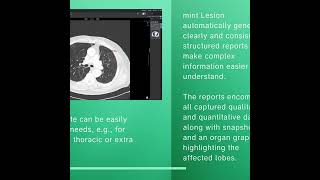
Contextflow ADVANCE Chest CT provides radiologists comprehensive computer-aided detection support for suspected lung cancer, interstitial lung diseases (ILD), and chronic obstructive pulmonary disease (COPD) cases. Its main features are designed to help save time and improve reporting quality by offering quantitative and qualitative insights directly within the radiologist’s native viewer. The solution includes advanced capabilities for nodule detection and quantification, nodule tracking over time, and quantitative lung tissue analysis for key image findings. It also provides qualitative analysis of 19 image patterns, along with reference cases and differential diagnosis information. Through integration with partner RevealDx, ADVANCE Chest CT can also provide malignancy scoring to aid in earlier lung cancer detection and reduce unnecessary procedures.

Reviewed by Pouyan Golshani, MD — Interventional Radiologist

Key Features

  • Nodule detection and quantification (4-30mm diameter)
  • Nodule tracking over time (TIMELINE view)
  • Quantitative lung tissue analysis for 7 key image findings (e.g., Consolidation, Emphysema, Ground-glass opacity)
  • Qualitative analysis of 19 image patterns
  • 3D image search for visually-similar patterns and reference cases
  • Differential diagnosis information
  • Computer-aided detection (CADe) support
  • Integration directly into native PACS viewer
  • Malignancy scoring (via RevealAI-Lung integration)
  • Anomaly heatmaps indicating disease pattern distribution

Use Cases

  • Comprehensive chest CT analysis for lung cancer, ILD, and COPD for radiologists
  • Support for lung cancer screening programs (e.g., Germany's nationwide program)
  • Quantitative profiling of patients for pharmaceutical companies
  • Improving radiology reporting quality and efficiency
  • Decision support for difficult and complex cases
  • Longitudinal analysis of disease progression or regression

What Physicians Need to Know

Key Capabilities
Comprehensive computer-aided detection (CAD) for lung cancer, ILD, and COPD, including nodule detection (4-30mm), quantification, classification (solid, part-solid, non-solid), and longitudinal tracking (growth percentage, volume doubling time). Offers lung tissue analysis with anomaly heatmaps and quantification for 7 key patterns (e.g., consolidation, emphysema, ground-glass opacity). Features a 3D Image Search for 19 image patterns, providing differential diagnosis literature and similar case retrieval. Integrates a Malignancy Similarity Index (mSI) via RevealDx for early cancer detection and reduced unnecessary procedures. Optional module for Incidental Pulmonary Embolism (iPE) detection.
Clinical Utility
Aids in objective reporting, saves radiologists' time (up to 31% reduction in reading time validated), and improves diagnostic accuracy for lung cancer, ILD, and COPD. Supports tumor board preparation. The mSI feature can detect lung cancer up to one year sooner and reduce false positives by 18%, leading to fewer unnecessary procedures and reduced patient stress. Provides quantitative and qualitative insights directly within the native PACS viewer, offering a holistic patient view and supporting ILD diagnosis and treatment decisions.
Integration Options
Seamless integration into standard reading environments (PACS, RIS, VNA) via DICOM (SR, SC, Encapsulated PDF) output. Supports worklist integration, pre-populated reports, and verification workflows. Deployment options include hybrid solutions, locally virtualized environments (VM, Docker), and web-application implementation (hosted within hospital network for data security). Partnerships with major AI platforms (e.g., Blackford Analysis, Sectra, Philips Healthcare) and numerous resellers ensure broad compatibility.
Compliance Status
CE marked medical device under MDR (Class IIa) and ISO 13485:2016 certified. Compliant with GDPR and HIPAA (software hosted within hospital networks). The DETECT feature is currently under development as a standalone product and not yet cleared for clinical use in the USA.
Pricing Model
Subscription-based, typically determined by the number of analyses performed. Specific pricing details require direct contact with the vendor.
User Experience
Designed for intuitive use and seamless integration into existing radiology workflows, providing AI-driven insights directly within the native viewer to minimize platform switching and reduce clicks. Praised for its transparency (not a 'black box' solution) and its ability to support radiologists' decision-making while maintaining physician autonomy. Can assist less experienced radiologists by suggesting differential diagnoses.
Support Quality
Contextflow emphasizes close collaboration with practicing radiologists, incorporating their feedback for continuous product improvement and feature development.
Implementation Complexity
Offers flexible deployment as a hybrid solution, locally virtualized (VM, Docker), or web-application. Integration into standard PACS is designed to be seamless, requiring 3D chest CT scans in DICOM format as input.
Evidence Base
Supported by peer-reviewed publications demonstrating efficiency and diagnostic accuracy, including a validated 31% reduction in reading time. Clinical studies show the malignancy scoring feature can detect lung cancer up to one year earlier and reduce false positives by 18%. The AI is trained on a knowledge base of over 8,000 anonymized lung CT scans from partner hospitals. Ongoing pilot projects are validating clinical utility and workflow efficiency in high-volume hospital settings.
Physician Tip

Contextflow ADVANCE Chest CT offers robust support for complex chest CT interpretations, particularly for lung cancer, ILD, and COPD. Leverage the nodule tracking and malignancy scoring features for enhanced confidence in follow-up and early detection. The 3D Image Search with differential diagnoses can be a valuable educational and diagnostic aid, especially for less common patterns. Integrate the quantitative insights directly into your structured reports to provide objective data for clinicians and multidisciplinary teams. Remember that while the AI provides comprehensive support, the final diagnostic decision remains with the radiologist.

The tool is designed for seamless integration into existing PACS, RIS, and VNA systems, supporting DICOM standards for output and worklist integration. This minimizes disruption to current workflows. Compatibility with various AI platforms and resellers indicates a flexible and adaptable solution for diverse IT infrastructures. Ensure your hospital's network configuration supports the hybrid or local virtualization deployment model for optimal performance and data security, especially given the GDPR and HIPAA compliance requirements.

Details

Category Oncology AI
Pricing Contact vendor for pricing information. — Subscription model.
DeploymentHybrid solution, locally virtualized (VM, Docker) within the hospital's network, integrating with existing PACS.
Compliance
BAA AvailableUnknown AI-estimated
HIPAA CompliantUnknown AI-estimated
FDA Status Unknown AI-estimated

Contextflow ADVANCE Chest CT is CE Marked for clinical use within Europe under the new MDR. For the USA, the DETECT feature is currently under development as a standalone product and is not yet cleared for clinical use.

Integrations
EHR Not specified
Specialties Oncology, Pulmonology, Radiology

What the Web Says

Contextflow ADVANCE Chest CT is an AI-powered computer-aided detection (CADe) system designed to assist radiologists in interpreting chest CT scans for conditions like lung cancer, ILD, and COPD. It offers features such as nodule detection and tracking, quantitative lung tissue analysis, and a 3D image search for various image patterns. Physicians generally report that the software improves diagnostic accuracy, saves time, and enhances reporting quality by providing objective and comprehensive insights.

Overall: Positive

Strengths

  • Comprehensive detection and quantification of lung nodules and various lung disease patterns.
  • Ability to track changes in nodules and disease patterns over time, aiding in monitoring treatment progress and follow-up.
  • Seamless integration into existing PACS workflows, with minimal training required for staff.
  • Reduces workload and improves efficiency for radiologists, allowing them to focus on diagnosis.
  • Provides objective and quantitative analysis, leading to increased transparency and improved communication with referring physicians and patients.
  • Low rate of false positives, which is a common concern with AI solutions.

Limitations

  • Some older Reddit discussions about AI in radiology, not specific to Contextflow, mention concerns about false positives and the need for AI to provide automatic measurements rather than just highlighting areas.
  • One systematic review, which included Contextflow SEARCH Lung CT (the previous name for ADVANCE Chest CT), noted segmentation failure rates for nodules, particularly higher in pure ground-glass and part-solid nodules.
  • The DETECT feature for USA is currently under development as a standalone product and not yet cleared for clinical use.
  • General concerns about the potential harms of false positives and incidentalomas from AI screening, including psychological and monetary costs, were raised in a Reddit discussion about low-dose CT for nonsmokers.
  • The initial integration of Contextflow into PACS sometimes required opening a separate viewer, though improvements have been made for more seamless integration.
  • Some radiologists express a desire for AI to not just highlight suspicious areas but to automatically measure and input data into reports to further streamline workflows.

Based on reviews from: contextflow.com, Health AI Register, LISAvienna, Blackford Analysis, Sectra Amplifier Marketplace, Reddit, NCBI (National Center for Biotechnology Information)

Last updated: 2026-07-21

Ratings & Reviews

No reviews yet. Be the first to review this tool!

Rate Contextflow ADVANCE Chest CT

Clinical Value
Ease of Use
Integration
Support & Docs
Value for Money

Press & Coverage

contextflow
contextflow targets early lung cancer detection by augmenting ADVANCE Chest CT with malignancy scoring from RevealDx
contextflow has released an updated version of ADVANCE Chest CT that includes a malignancy Similarity Index (mSI) feature to aid in early lung cancer detection and reduce unnecessary procedures. This feature analyzes nodules for malignancy and also includes a nodule tracking report.
2024-05
Tech News 180
Contextflow Set to Secure Europe's First Radiology AI Reimbursement Contract
contextflow has partnered with German health insurance company IKK Su00fcdwest to establish Europe's first radiology AI reimbursement contract, aiming to improve early and accurate lung cancer detection through the integration of malignancy scoring into ADVANCE Chest CT.
2024-11
contextflow
contextflow & Neologica partner to bring comprehensive chest CT support to radiologists
contextflow and Neologica have formed a commercial partnership to integrate contextflow's ADVANCE Chest CT solution into Neologica's LogiPACS, providing radiologists with advanced computer-aided detection support for lung cancer, ILD patterns, and COPD.
2024-06
contextflow
Blackford and contextflow Announce Commercial Partnership to Bring Comprehensive Chest CT Detection Software to Healthcare Providers
Blackford and contextflow have partnered to integrate contextflow's ADVANCE Chest CT solution into Blackford's enterprise AI platform, offering healthcare providers a powerful tool for detecting ILD, COPD, and lung cancer on chest CTs.
2023-11
EIN Presswire
contextflow to bolster ADVANCE Chest CT with incidental pulmonary embolism (IPE)
contextflow announced a new feature for ADVANCE Chest CT: incidental pulmonary embolism (IPE) detection, which aims to increase the speed of care for patients and provide comprehensive support for chest CT assessments.
2023-02
contextflow
UZ Leuven and contextflow Collaborate on a Pilot to Advance Chest Imaging Analysis
University Hospitals Leuven (UZ Leuven) has initiated a 12-month pilot with contextflow to integrate ADVANCE Chest CT into its radiology department, aiming to improve the diagnostic process for common lung conditions.
2025-09
Biology Methods and Protocols | Oxford Academic
Non-contiguous computed tomography lung scans can be manipulated to permit artificial intelligence analyses for interstitial lung disease in systemic sclerosis | Biology Methods and Protocols | Oxford Academic
A study published in Biology Methods and Protocols explores a method to enable AI analysis of older, non-contiguous HRCT lung scans for interstitial lung diseases using Contextflow ADVANCE Chest CT.
2026-05
Medium (Authority Magazine)
Digital Transformation in Healthcare: Markus Holzer Of contextflow On How Medical Practices Can Useu2026 - Medium
Markus Holzer, CEO of contextflow, discusses the digital transformation in healthcare, highlighting the CE certification of ADVANCE Chest CT and its role in integrating AI into radiology workflows for improved diagnostic support.
2024-11

Videos

Product demos, reviews, and walkthroughs for Contextflow ADVANCE Chest CT.

View all on YouTube

Frequently Asked Questions

Contextflow ADVANCE Chest CT is an AI-based system that detects, quantifies, and visualizes lung nodules (4-30mm) and other lung patterns, supporting the interpretation of lung cancer, ILD, and COPD. It includes nodule classification and longitudinal tracking for changes over time. The system integrates a Malignancy Similarity Index (mSI) to characterize nodules, aiming for earlier cancer detection and reducing unnecessary procedures, with results displayed in PACS and DICOM output for seamless workflow integration.
Contextflow ADVANCE Chest CT is a CE marked medical device under MDR, making it available for clinical use in Europe. The company also holds ISO 13485:2016 certification for its quality management system. To ensure data privacy and comply with regulations like GDPR, the software is hosted within the hospital's network; however, the 'DETECT' feature for nodule detection is currently under development and not yet cleared for clinical use in the USA.
Contextflow ADVANCE Chest CT offers comprehensive CAD support, including nodule detection, tracking, quantitative lung tissue analysis, and a 3D image search with differential diagnosis literature. Its integration of RevealDx's malignancy scoring aims to improve diagnostic precision and reduce false positives compared to traditional methods. Preliminary research indicates that using Contextflow ADVANCE Chest CT can reduce average chest CT reading time by 31%.
The pricing model for Contextflow ADVANCE Chest CT is subscription-based, generally determined by the number of analyses performed. Notably, Contextflow has secured a radiology-specific reimbursement agreement in Germany, where a per-exam fee is paid by insurers like IKK Su00fcdwest. For specific tiers or options for oncology practices or large hospital systems, direct contact with Contextflow sales is recommended.
While Contextflow ADVANCE Chest CT enhances nodule detection and characterization, its 'DETECT' feature for nodule detection is not yet cleared for clinical use in the USA. Although the integrated Malignancy Similarity Index (mSI) aids in assessing malignancy, it serves as a decision support tool rather than providing a definitive diagnosis. The system's knowledge base is built from anonymized data, which may influence its performance on extremely rare tumor types not well-represented in its training data.
Contextflow ADVANCE Chest CT is supported by several peer-reviewed studies demonstrating its efficacy. Research indicates that the software can lead to a 31% reduction in average reading time for chest CTs. Furthermore, the integrated RevealDx mSI feature has been shown to detect lung cancer up to one year sooner in approximately 45% of cases, while simultaneously reducing false positive detection rates by 18%.

Related Tools

Surgical Reality Viewer
Surgical Reality
Oncology AI
Surgical Reality offers CE- and FDA-certified AI-powered 3D medical imaging and surgical planning software that transforms CT scans into patient-specific 3D models for thoracic surgery, enhancing precision in complex lung procedures.
Cancer Copilot
Color Health
Oncology AI
Color Health's Cancer Copilot, built with OpenAI, helps oncologists and clinicians identify and order workup needs for recently diagnosed patients, aiming to speed up time to cancer treatment. This AI tool is designed to expand cancer expertise, speed decisions, and improve care, reducing a two-hour clinical task to 10 minutes with over 95% validated accuracy.
Cercare Medical Oncology Virtual Expert
Cercare Medical
Neurology AI
Cercare Medical's Oncology Virtual Expert is an AI-powered brain tumor segmentation module that provides fast, consistent, and semi-automated tumor analysis from standard MRI data, designed for on-premise deployment within existing clinical radiology workflows.
Synapse Lung Nodule AI
Fujifilm Corporation
Oncology AI
Fujifilm's Synapse Lung Nodule AI is an AI software algorithm for detecting pulmonary nodules on CT imaging, aiming to support early detection and treatment of lung cancer.
RadOncAI
Informai (for RadOncAI product) / Global Network for AI in Radiation Oncology (for RadoncAI.net)
Oncology AI
RadOncAI is an AI solution by Informai designed to optimize and enhance radiation oncology workflows, improving efficiency and accuracy in treatment planning and delivery.
FAITH project (Fatigue Therapy – AI-supported Diagnosis and Therapy of Tumour-associated Fatigue Syndrome)
Fimo Health GmbH (Consortium Leader)
Mental & Behavioral Health AI
The FAITH project is developing an AI-based solution for the diagnosis and therapy of tumor-associated fatigue syndrome in cancer patients. It uses wearable sensors, a smartphone app, and artificial intelligence to provide individualized therapy recommendations and monitor mental health.

See all Oncology AI tools →

Suggest an Edit → | Last Verified: 2026-04-21 | First Added: 2026-04-21
AI Tool Finder
AI-powered search. Results may not be comprehensive.