DIFFMASTER OCTAVIA AUTOMATIC HEMATOLOGY ANALYZER
Overview
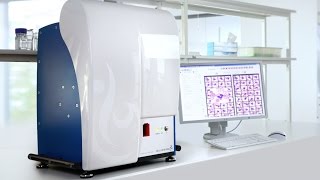
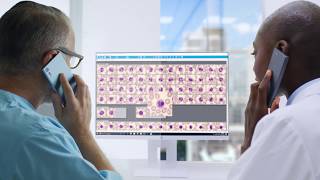
The DIFFMASTER OCTAVIA AUTOMATIC HEMATOLOGY ANALYZER, developed by CellaVision AB, was an early automated cell-locating device designed for in-vitro diagnostic use in clinical laboratories. Launched in early 2001, it aimed to automate and simplify the process of performing differential counts of white blood cells (WBC) and characterizing red blood cell (RBC) morphology, tasks traditionally conducted through manual microscopy. The system utilized a proprietary software system (Cytologica) combined with a sophisticated hardware platform to automatically locate and capture high-quality digital images of blood cells on peripheral blood specimens. It leveraged artificial neural networks for the pre-classification of leukocytes, presenting these images for review and verification by a skilled operator. While innovative for its time, the DiffMaster Octavia was CellaVision’s first product and was later discontinued, with approximately 80 systems sold before being succeeded by more automated and higher-throughput models like the CellaVision DM96.
Reviewed by Pouyan Golshani, MD — Interventional Radiologist
Key Features
- Automated cell locating on blood smears
- Differential count of white blood cells (WBC)
- Characterization of red blood cell (RBC) morphology
- Digital imaging of blood cells
- Software-based pre-classification using artificial neural networks
- Operator review and verification of cell classification
- Aimed at improving efficiency and diagnostic quality in hematology labs
- High image quality and user-friendly interface
Use Cases
- Routine analysis of peripheral blood samples in hematology laboratories
- Automated differential count of white blood cells
- Automated characterization of red blood cell morphology
- Preclassification of leukocytes in patients with hematological diseases
- Replacing or assisting manual microscopy for blood cell analysis
What Physicians Need to Know
The DiffMaster Octavia, while an early innovation, provided automated pre-classification of WBCs and pre-characterization of RBCs using artificial neural networks, serving as a decision support system. Physicians should be aware that while it offered good correlation with manual differentiation for WBC analysis, its classification accuracy could depend on the type of pathological changes in the blood sample, performing most effectively with non-pathological samples. Verification by a qualified morphologist was still crucial for generating high-quality reports.
The DiffMaster Octavia was CellaVision's first product, launched in 2001 and is now discontinued. While modern hematology analyzers emphasize seamless integration with LIS/LIMS for efficient data management, specific integration details for the legacy DiffMaster Octavia are not readily available. However, the general benefit of automated hematology analyzers includes connectivity and integration with laboratory systems.
Details
| Category | Lab & Diagnostics, Pathology AI |
| Pricing | Unknown |
| Deployment | On-premise (physical analyzer) |
| Compliance | |
| BAA Available | Unknown |
| HIPAA Compliant | Unknown |
| FDA Status | Cleared AI-estimated |
| Integrations | |
| EHR | Not specified |
| Specialties | Hematology, Laboratory Medicine, Pathology |
What the Web Says
The CellaVision DiffMaster Octavia Automatic Hematology Analyzer is an automated system designed for morphological classification of red blood cells (RBCs) and white blood cells (WBCs) in peripheral blood smears. It was CellaVision's first instrument, featuring a peripheral blood application that automatically identifies the optimal examination area on a blood film, locates WBCs, and pre-classifies them into one of 12 cell classes using artificial neural networks. The system also pre-characterizes RBCs into 6 types based on shape, form, and color. While effective for non-pathological blood samples, its accuracy can depend on the type of pathological changes present in the sample, and manual review is often considered necessary for pathological cells.
Overall: MixedStrengths
- Automated morphological analysis of peripheral blood films, including preclassification of RBCs and WBCs.
- Good correlation with manual differentiation for WBC analysis.
- Identifies optimal examination area (monolayer) on blood film automatically.
- Pre-classifies WBCs into 12 cell classes using artificial neural networks.
- Pre-characterizes RBCs into 6 types based on shape, form, and color.
- Core functionality has been enhanced over 20 years based on customer feedback, including better cell pre-classification and new workflow-based functionalities.
Limitations
- Classification accuracy depends on the type of pathological changes in the blood sample.
- Operates most effectively in the analysis of non-pathological blood samples.
- Manual review is often considered necessary for pathological cells.
- Slower analysis time compared to newer models like the CellaVision DM96 (5.4 min/slide for Octavia vs. 3.2 min/slide for DM96).
Based on reviews from: physicianaitools.com, jst.go.jp, scribd.com, scispace.com, researchgate.net, nih.gov, oup.com, cellavision.com
Last updated: 2026-10-29
Ratings & Reviews
No reviews yet. Be the first to review this tool!
Rate DIFFMASTER OCTAVIA AUTOMATIC HEMATOLOGY ANALYZER
Press & Coverage
Videos
Product demos, reviews, and walkthroughs for DIFFMASTER OCTAVIA AUTOMATIC HEMATOLOGY ANALYZER.
CellaVision DM1200