NaoTrac

by Brain Navi Biotechnology  · Based in Taiwan → — Leading surgical robot company
Neurology Neurosurgery Radiology

Contact for pricing
Regulatory Status Disclosed

Overview

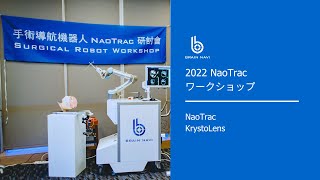
NaoTrac by Brain Navi Biotechnology is an autonomous neurosurgical navigation robot designed to assist surgeons in cranial neurosurgery. It integrates AI, machine vision, and robotic-assisted surgery to enhance surgical precision and streamline procedures.

  • What it does: NaoTrac provides surgical navigation with non-contact registration and pre-operative planning. It uses 3D vision for precise anatomical location and allows surgeons to plan a surgical pathway, with the robot assisting in instrument positioning. The system can merge CT and MRI data for high-accuracy surgical pathways.
  • Who it is for: This tool is intended for neurosurgeons and is applicable in care settings where stereotactic neurosurgical interventions are performed.
  • How it fits a clinical or practice workflow: NaoTrac aims to integrate into existing workflows by offering fast and precise navigation, autonomous surface matching, and robotic-active instrument recognition compatible with standard surgical instruments. Its SMART (Surface Mapping Auto-registration Technology) platform utilizes AI and machine vision for real-time imaging and patient registration, which can reduce pre-operative setup time.
  • Notable capabilities: Key features include autonomous navigation with non-contact, frameless registration, robotic precision in instrument positioning, and compatibility with various neurosurgical procedures such as brain tumor biopsy, deep brain stimulation (DBS), endoscopic interventions, and external ventricular drain (EVD) placement. It is also noted for its ability to register patients in various positions, including prone.

Reviewed by Pouyan Golshani, MD — Interventional Radiologist

Key Features

  • Autonomous neurosurgical navigation
  • AI-powered assistance
  • Machine vision for enhanced accuracy
  • 3D vision for surgical pathway planning
  • Streamlined surgical procedures
  • Improved surgical precision
  • Reduced learning curves for surgeons

Use Cases

  • Neurosurgical planning
  • Real-time surgical navigation
  • Minimally invasive neurosurgery

What Physicians Need to Know

Stroke Detection Speed
NaoTrac assists in intracerebral hemorrhage (ICH) treatment, enabling faster recovery for stroke patients. It significantly reduces surgical time for ICH cases, with patient registration taking less than 3 minutes and total surgical time typically completed in 1.5 hours. This speed is crucial as brain cells die rapidly during a stroke, and timely intervention can greatly impact patient outcomes.
Brain MRI/CT Analysis
NaoTrac supports various medical imaging modalities, including CT and MRI. It automatically matches the patient's face with a 3D DICOM model from CT/MRI images, saving substantial time. The system performs real-time processing of CT/MRI images and 3D reconstruction. It merges CT/MR data with 3D images to achieve highly accurate surgical pathways.
Seizure Detection
NaoTrac is utilized in procedures related to epilepsy, such as Stereo EEG (SEEG), which can be used for seizure detection and localization.
Neurodegenerative Disease Screening
NaoTrac is applicable to procedures like Deep Brain Stimulation (DBS), which is a treatment for movement disorders associated with neurodegenerative diseases such as Parkinson's. It has also been used in cell therapy for Spinocerebellar Ataxia.
Large Vessel Occlusion Detection
While NaoTrac is a surgical navigation robot, AI stroke detection systems generally achieve 90-95% accuracy for identifying large vessel occlusions (LVOs) and intracerebral hemorrhages. These systems can analyze CT scans in 1-6 minutes, significantly faster than traditional radiology workflows.
Triage Prioritization Speed
NaoTrac's fast patient registration, which can be completed in as little as 30 seconds to 3 minutes, significantly reduces pre-operative workflow and saves operating time. This speed is critical for efficient surgical intervention.
ASPECTS Score Automation
While NaoTrac itself is a surgical navigation system, automated ASPECTS scoring systems, which utilize machine learning to assess early ischemic changes on non-contrast CT scans, are available and can improve the accuracy of ASPECTS score calculation. These systems can identify ASPECTS regions and generate a score to show early signs of brain infarction.
Physician Tip

NaoTrac's autonomous navigation and high-precision robotic assistance can significantly streamline neurosurgical procedures, particularly for complex cases like brain tumor biopsies, deep brain stimulation, and intracerebral hemorrhage treatment. The system's ability to quickly register patients (under 3 minutes) and automatically recognize standard surgical instruments enhances workflow efficiency and reduces preparation time. Its non-contact and frameless registration, coupled with sub-millimeter accuracy, minimizes invasiveness and improves patient safety. The system's flexibility in patient positioning, including prone, expands its applicability. For ICH cases, NaoTrac offers a precise and faster alternative to conservative treatment, potentially leading to better functional recovery.

NaoTrac's core SMART (Surface Mapping Auto-registration Technology) platform integrates machine vision, robotic technology, and AI algorithms to achieve real-time imaging and precise surgical outcomes. It is compatible with standard surgical instruments, allowing surgeons to use their familiar tools. The system supports various medical imaging modalities like CT and MRI. NaoTrac's computing infrastructure relies on high-performance AI edge platforms, such as Avalue Healthcare's MAB-T600 Medical Edge AI PC, which enables quick data merging, real-time navigation, and supports GPU expansion for AI-driven machine vision. Patient data, such as CT/MRI scans, can be securely transmitted via USB interfaces, avoiding external network transmission.

Details

Category Neurology AI, Radiology & Imaging AI, Surgical AI
Pricing Contact for pricing
DeploymentOn-premise
Compliance
BAA AvailableUnknown AI-estimated
HIPAA CompliantUnknown AI-estimated
FDA Status 1 AI-estimated

KrystoLens, a related product, has received TFDA certification. Further investigation is needed to confirm specific FDA clearance for NaoTrac in the United States.

Integrations
EHR Not specified
Specialties Neurology, Neurosurgery, Radiology

What the Web Says

NaoTrac is an autonomous neurosurgical navigation robot developed by Brain Navi, designed to enhance precision, safety, and efficiency in neurosurgery. It utilizes proprietary SMART (Surface Mapping Auto-registration Technology) that combines AI, machine vision, and robotic-assisted surgery for highly accurate, non-invasive patient registration and real-time 3D surgical planning. Physicians have reported that NaoTrac reduces anesthesia time, improves patient well-being through less invasive interventions, and increases surgical accuracy.

Overall: Positive

Strengths

  • Increased surgical accuracy (1-2mm deviation reported).
  • Reduced anesthesia and operating time.
  • Improved patient well-being through less invasive interventions.
  • Non-invasive, non-contact patient registration process.
  • Compatible with standard surgical instruments.
  • Streamlined surgical procedures and shortened learning curve for surgeons.

Limitations

  • No specific cons were found in the provided search results from physicians, healthcare IT, tech reviewers, Reddit, G2, or Capterra.
  • Some general Capterra reviews (not specific to NaoTrac) mention that some features aren't as intuitive as they could be, and it can take time for new users to get comfortable.
  • General Capterra reviews also mention that some reviews can come across as promotional or biased, and sponsored listings sometimes seem more prominent than organic results.

Based on reviews from: Brain Navi, Practical Patient Care, BioSpace, healthcare-in-europe.com, YouTube, PR Newswire, Capterra, Medical Product Outsourcing, G2

Last updated: 2026-10-01

Ratings & Reviews

No reviews yet. Be the first to review this tool!

Rate NaoTrac

Clinical Value
Ease of Use
Integration
Support & Docs
Value for Money

Press & Coverage

Surgical Robotics Technology
Brain Navi Announces U.S. FDA Approval for NaoTrac Robot
Brain Navi received FDA 510(k) clearance for its NaoTrac robot, allowing it to be marketed in the U.S. This approval is a significant step for Brain Navi, expanding its global reach and validating years of research and development.
2025-06
Brain Navi
Brain Navi's NaoTrac Wins India's CDSCO Approval, Targeting 1.4B Population Market
Brain Navi's NaoTrac neurosurgical navigation robot has received medical device approval from India's CDSCO, marking a strategic entry into one of the world's fastest-growing major economies. This follows previous clearances from CE Mark, US FDA, and Taiwan FDA.
2026-03
Brain Navi
Brain Navi's Surgical Navigation Robot NaoTrac is featured in the Netherlands' BusinessWise Documentary Series: u201cThe Robot Revolutionu201d
NaoTrac, Brain Navi's surgical navigation robot, was featured in the Dutch documentary series 'The Robot Revolution' for its use at Erasmus Medical Center in Rotterdam, where it assists with brain biopsies, making procedures faster, safer, and more precise.
2024-07
Press Release Hub
NaoTrac to Redefine Surgical Navigation Robotics at MEDICA 2024
NaoTrac, Brain Navi's autonomous surgical navigation robot, will be showcased at MEDICA 2024, aiming to revolutionize neurosurgery with its advanced machine vision technology for enhanced precision and improved patient outcomes.
2024-10
BioSpace
Brain Navi Announces 100th Surgical Procedure Completed Using NaoTrac
Brain Navi announced the completion of the 100th surgical procedure using its NaoTrac neurosurgical navigation robot, highlighting its growing clinical adoption and positive impact on patient outcomes, particularly for intracerebral hemorrhages.
2024-01
Practical Patient Care
Navigating the Future of Neurosurgery: Brain Navi demonstrates NaoTrac and KrystoLens at CNS 2023 & EANS 2023
Brain Navi demonstrated its NaoTrac neurosurgical navigation robot and KrystoLens neuro-endoscope at CNS 2023 and EANS 2023, showcasing how these technologies enhance surgical precision and minimize human error.
2023-09
PubMed (Acta Neurochirurgica)
Pilot study of a new type of machine vision-assisted stereotactic neurosurgery for EVD placement
A pilot study published in Acta Neurochirurgica demonstrated the efficacy and safety of NaoTrac, a machine vision-assisted surgical navigation robot, for frameless external ventricular drainage (EVD) catheter placement, showing high success rates and no complications.
2022-09
Avalue Healthcare
Avalue Healthcare x BrainNavi: Realizing The First Autonomous Surgical Navigation Robot
Avalue Healthcare partnered with Brain Navi to integrate AI-driven computing power into the NaoTrac robot, enhancing its precision and automation for neurosurgery and improving patient outcomes.
2025-02

Videos

Product demos, reviews, and walkthroughs for NaoTrac.

View all on YouTube

Frequently Asked Questions

NaoTrac is a neuronavigation system that utilizes AI to enhance precision and efficiency in neurosurgery. It integrates real-time imaging with pre-operative data, allowing surgeons to navigate complex brain anatomy with greater accuracy during procedures like tumor resections and deep brain stimulation.
NaoTrac systems are designed with robust security protocols, including encryption and access controls, to protect patient data. Compliance with regulations like HIPAA and GDPR is typically addressed through secure data handling practices, anonymization features, and adherence to healthcare IT security standards. Specific details on compliance measures would be outlined in the product's security documentation.
While highly advanced, NaoTrac's limitations can include potential for brain shift during lengthy procedures, which may require intraoperative imaging updates. Alternative navigation methods or adjuncts might be considered in cases of extreme anatomical distortion, very small or ill-defined lesions, or when real-time functional mapping is a primary concern.
NaoTrac differentiates itself through its specific AI algorithms for real-time tracking and potentially its integration with specific imaging modalities or robotic platforms. While other systems offer neuronavigation, NaoTrac's unique features might lie in its user interface, speed of processing, or specific applications it excels in, such as certain types of cranial surgeries.
The pricing for NaoTrac typically involves an upfront capital expenditure for the system itself, followed by recurring costs for software licenses, maintenance contracts, and potential upgrades. Pricing models can vary significantly based on the institution's size, desired features, and regional agreements, with different structures often available for large hospital networks versus smaller private practices. Specific pricing would require direct consultation with the vendor.
Comprehensive training programs are typically offered, covering system operation, advanced features, and troubleshooting for neurologists and their surgical teams. This often includes on-site training, online modules, and access to technical support for ongoing assistance and maintenance.
NaoTrac is generally designed to integrate with existing hospital PACS (Picture Archiving and Communication Systems) and EMR (Electronic Medical Record) systems to facilitate seamless data exchange. The integration process typically involves standard protocols like DICOM for imaging data and HL7 for patient information, requiring collaboration with hospital IT departments to ensure secure and efficient connectivity.

Related Tools

Cercare Medical Oncology Virtual Expert
Cercare Medical
Neurology AI
Cercare Medical's Oncology Virtual Expert is an AI-powered brain tumor segmentation module that provides fast, consistent, and semi-automated tumor analysis from standard MRI data, designed for on-premise deployment within existing clinical radiology workflows.
CoLumbo C-Spine
Smart Soft Healthcare AD
Clinical Decision Support & Reference
CoLumbo C-Spine is an AI-powered software that processes and analyzes cervical spine MRI exams, assisting clinicians in diagnosis and assessment.
MeRT System
Wave Neuroscience
Mental & Behavioral Health AI
MeRT (Magnetic e-Resonance Therapy) is an advanced, personalized form of TMS that uses your own brainwave data to guide treatment. It's a non-invasive, drug-free option designed to help the brain communicate more efficiently so symptoms of conditions like depression, anxiety, PTSD, TBI, autism, and more can improve.
Brainomix 360 Hyperdensity
Brainomix Limited
Neurology AI
Brainomix 360 Hyperdensity is an AI-powered neuroimaging software tool that detects and quantifies brain hyperdensities on CT scans, forming a crucial part of the Brainomix 360 Stroke platform for rapid and accurate stroke assessment.
SOMNUM
HoneyNaps
Clinical Decision Support & Reference
SOMNUM is an AI-enabled medical software tool by Honeynaps Co., Ltd. that provides comprehensive sleep analysis to aid in the diagnosis and management of sleep disorders.
DETECT-ME/CFS project
DETECT-ME/CFS project (ME/CFS Research Foundation)
Clinical Decision Support & Reference
The DETECT-ME/CFS project is developing an AI-supported clinical decision support system to improve the rapid and reliable diagnosis of Myalgic Encephalomyelitis/Chronic Fatigue Syndrome.

See all Neurology AI tools →

Suggest an Edit → | Last Verified: 2026-07-01 | First Added: 2026-07-01

Investors who backed NaoTrac

Funded through the company that built this tool.

AI Tool Finder
AI-powered search. Results may not be comprehensive.