Acumen Hypotension Prediction Index EV1000 Clinical Platform vs Loss of Pulse Detection

AI Verdict
Choose Acumen Hypotension Prediction Index EV1000 Clinical Platform if…
Choose Acumen Hypotension Prediction Index if your clinical team requires advanced, real-time predictive analytics to proactively manage hemodynamic stability in high-acuity settings like the OR or ICU. This tool is ideal for preventing intraoperative hypotension by providing early warnings and actionable insights into the underlying causes of instability, allowing for timely intervention and improved patient outcomes.
View Acumen Hypotension Prediction Index EV1000 Clinical Platform →Choose Loss of Pulse Detection if…
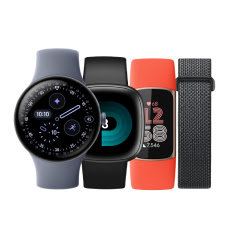
Choose Fitbit's Loss of Pulse Detection if you or your patients require an automated, personal safety net for out-of-hospital emergencies, particularly for individuals at risk of sudden cardiac events. This feature provides critical peace of mind by automatically detecting a potential loss of pulse and initiating emergency services contact if the user is unresponsive, sharing vital location information for rapid assistance.
View Loss of Pulse Detection →Reviewed by Pouyan Golshani, MD — Interventional Radiologist
Quick Comparison
| Feature | Acumen Hypotension Prediction Index EV1000 Clinical Platform | Loss of Pulse Detection |
|---|---|---|
| Deployment | On-premise (integrated with EV1000 clinical platform and HemoSphere advanced monitoring platform) | Unknown |
| BAA Available | Unknown | Yes AI-estimated |
| FDA Status | Cleared AI-estimated | Cleared AI-estimated |
| HIPAA | Yes AI-estimated | Yes AI-estimated |
Head-to-Head
AI-generated assessment across six dimensions based on each tool's documented features and compliance posture. Grounded in public data — not a substitute for hands-on evaluation.
Usability
Loss of Pulse DetectionTool B offers superior usability for the general public as it is integrated into a consumer wearable device and operates automatically with an opt-in feature, requiring minimal user intervention. In contrast, Tool A is part of a sophisticated clinical platform requiring trained medical professionals for operation and interpretation.
Clinical Value
Acumen Hypotension Prediction Index EV1000 Clinical PlatformTool A provides proactive clinical value by predicting and offering insights into the causes of hypotension, enabling clinicians to intervene before an adverse event occurs. This directly impacts patient management and outcomes in a critical care setting. Tool B, while life-saving, is a reactive measure for an acute event.
Pricing & Value
Loss of Pulse DetectionTool B offers exceptional value as it is included as a feature with compatible consumer wearable devices, making advanced health monitoring accessible without additional cost. Tool A, conversely, is an enterprise solution with a 'contact-for-pricing' model, indicating a substantial investment for healthcare institutions.
Enterprise Readiness
Acumen Hypotension Prediction Index EV1000 Clinical PlatformTool A is explicitly designed as an enterprise-grade solution, integrating with established clinical monitoring platforms within hospital systems and critical care units. Its development by a major medical device company like Edwards Lifesciences and its deployment model confirm its readiness for complex healthcare environments. Tool B is a consumer-facing feature, not built for enterprise-level clinical workflow integration.
Innovation
Acumen Hypotension Prediction Index EV1000 Clinical PlatformTool A demonstrates higher innovation through its advanced machine learning algorithm that not only predicts hypotension but also provides actionable insights into its potential causes, enabling proactive clinical intervention. While Tool B offers a valuable automated emergency response, its core pulse detection technology is more established in wearables.
Support & Docs
Acumen Hypotension Prediction Index EV1000 Clinical PlatformTool A, as a specialized medical device from Edwards Lifesciences, is backed by extensive professional support, clinical education, and detailed technical documentation tailored for healthcare professionals. Tool B, being a feature on a consumer device, relies on general consumer support channels and user manuals.
Feature-by-Feature
Detail beyond the Quick Comparison summary. For pricing, deployment, BAA, FDA, and HIPAA see the Overview tab.
| Feature | Acumen Hypotension Prediction Index EV1000 Clinical Platform | Loss of Pulse Detection |
|---|---|---|
| Name | Acumen Hypotension Prediction Index u2013 EV1000 Clinical Platform | Loss of Pulse Detection |
| Company | Edwards Lifesciences | Fitbit |
| Primary Function | Uses machine learning to predict hypotensive events up to 15 minutes in advance, providing clinicians with insights into hemodynamic instability and potential causes to help reduce intraoperative hypotension. | Uses PPG and accelerometry to detect a potential loss of pulse and can automatically alert emergency services if the user is unresponsive. |
| Key Predictive/Detection Capability | Predicts hypotension up to 15 minutes in advance | Automatic loss of pulse detection |
| Sensor Technology Used | Non-invasive (Acumen IQ cuff) and minimally-invasive (Acumen IQ sensor) options | Utilizes PPG and accelerometry sensors |
| Target Specialties | Anesthesiology, Critical Care, Emergency Medicine | Cardiology, Critical Care, Emergency Medicine |
Videos
Demos, reviews, and walkthroughs featuring Acumen Hypotension Prediction Index EV1000 Clinical Platform and Loss of Pulse Detection.
Frequently Asked Questions
More Comparisons
More matchups featuring Acumen Hypotension Prediction Index EV1000 Clinical Platform or Loss of Pulse Detection
- Acumen Hypotension Prediction Index EV1000 Clinical Platform vs Rapid Enterprise Platform
- Acumen Hypotension Prediction Index EV1000 Clinical Platform vs syngo MBF
- Acumen Hypotension Prediction Index EV1000 Clinical Platform vs KardiaPro
- Loss of Pulse Detection vs Sleepiz One+
- Acumen Hypotension Prediction Index EV1000 Clinical Platform vs EchoNext
- Loss of Pulse Detection vs Study Watch with Irregular Pulse Monitor
Backers
Who funded each tool's parent company.