Analytic for Hemodynamic Instability (AHI) vs Loss of Pulse Detection

AI Verdict
Choose Analytic for Hemodynamic Instability (AHI) if…
Choose AHI if your primary goal is to provide continuous, proactive monitoring for adult patients within an acute care hospital setting to detect early signs of hemodynamic instability. This system is ideal for clinical teams seeking to leverage AI-driven insights from continuous ECG data to receive warnings hours ahead of traditional vital signs, enabling earlier intervention and potentially improving patient outcomes.
View Analytic for Hemodynamic Instability (AHI) →Choose Loss of Pulse Detection if…
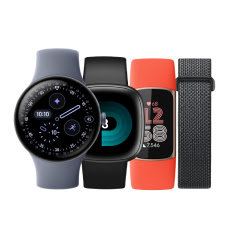
Choose Loss of Pulse Detection if you are looking for a personal safety feature integrated into a wearable device that can automatically alert emergency services in the event of a detected loss of pulse. This tool is best suited for individuals who desire an added layer of security outside of a hospital environment, ensuring that critical events like a sudden cardiac arrest can trigger an automated emergency response if the user is unresponsive.
View Loss of Pulse Detection →Reviewed by Pouyan Golshani, MD — Interventional Radiologist
Quick Comparison
| Feature | Analytic for Hemodynamic Instability (AHI) | Loss of Pulse Detection |
|---|---|---|
| Deployment | Integrates with existing hospital ECGs and can be deployed through platforms like Medical Informatics Corp.'s Sickbay™ and VitalConnect's remote patient monitoring solution. | Unknown |
| BAA Available | Unknown | Yes AI-estimated |
| FDA Status | Cleared AI-estimated | Cleared AI-estimated |
| HIPAA | Yes AI-estimated | Yes AI-estimated |
Head-to-Head
AI-generated assessment across six dimensions based on each tool's documented features and compliance posture. Grounded in public data — not a substitute for hands-on evaluation.
Usability
Analytic for Hemodynamic Instability (AHI)Tool A, Analytic for Hemodynamic Instability (AHI), is designed for seamless integration into existing in-hospital monitoring platforms and offers 'easy-to-interpret visual indicators (red, yellow, green)' to simplify complex data for clinicians. Its stated goal to 'reduce nurse surveillance burden and streamline workflow' directly addresses professional usability in a demanding clinical environment. While Tool B is user-friendly for consumers, Tool A's focus on professional workflow optimization and clear clinical decision support gives it an edge in its specific context.
Clinical Value
Analytic for Hemodynamic Instability (AHI)Both tools are FDA-cleared, indicating validated clinical utility. However, Tool A offers predictive clinical value by providing 'early warnings hours ahead of traditional vital signs' for hemodynamic instability, allowing for proactive intervention and potentially preventing critical events. Tool B provides reactive value by detecting an acute loss of pulse and initiating emergency services, which is crucial but responds to an event already occurring. The ability to predict deterioration hours in advance represents a higher degree of clinical impact through proactive patient management.
Pricing & Value
Loss of Pulse DetectionTool B, Loss of Pulse Detection, offers clear and transparent pricing as it is 'included with device' and 'not sold as a standalone subscription or product.' This provides immediate value to the end-user without additional cost. Tool A's pricing requires contacting the vendor, making its cost and value proposition less transparent and likely involving a significant enterprise-level investment, making direct comparison difficult without more information.
Enterprise Readiness
Analytic for Hemodynamic Instability (AHI)Tool A is explicitly designed as a 'Software as a Medical Device (SaMD) integrated into in-hospital monitoring platforms' and 'integrates with existing in-hospital monitoring platforms (e.g., Sickbay, VitalConnect).' Its focus on reducing nurse burden and streamlining workflow aligns with enterprise needs. Tool B, while FDA-cleared and HIPAA/BAA compliant, is primarily a feature on a consumer wearable device, making Tool A the clear winner for enterprise-level deployment and integration within healthcare systems.
Innovation
Analytic for Hemodynamic Instability (AHI)Tool A demonstrates a higher degree of innovation by leveraging AI and machine learning to 'predict hemodynamic instability earlier than vital signs (up to 26 hours for AHI-PI)' from continuous ECG data. This involves sophisticated predictive analytics for a complex physiological state. While Tool B's automated loss of pulse detection on a wearable is valuable, predicting a nuanced, evolving clinical condition hours in advance represents a more advanced application of AI in healthcare.
Support & Docs
Analytic for Hemodynamic Instability (AHI)As an enterprise-level Software as a Medical Device (SaMD) for hospitals, Tool A would inherently require and provide comprehensive technical support, implementation guides, and clinical documentation for IT departments and healthcare professionals. While Tool B, a consumer wearable feature, would have user-level support through its device manufacturer, the depth and specialization of support and documentation needed for a hospital-integrated system like Tool A are significantly greater.
Feature-by-Feature
Detail beyond the Quick Comparison summary. For pricing, deployment, BAA, FDA, and HIPAA see the Overview tab.
| Feature | Analytic for Hemodynamic Instability (AHI) | Loss of Pulse Detection |
|---|---|---|
| Name | Analytic for Hemodynamic Instability (AHI) | Loss of Pulse Detection |
| Company | Fifth Eye | Fitbit |
| Description | FDA-cleared, AI-driven clinical decision support software that continuously monitors adult in-hospital patients for signs of hemodynamic instability, providing early warnings hours ahead of traditional vital signs. | FDA-cleared feature on compatible wearable devices that uses PPG and accelerometry to detect a potential loss of pulse and can automatically alert emergency services if the user is unresponsive. |
| Key Data Input | Continuous ECG lead II data | PPG and accelerometry sensors |
| Primary Function | Predicts hemodynamic instability earlier than vital signs | Automatic loss of pulse detection and emergency service alerting |
| Target User/Setting | Adult in-hospital patients, healthcare professionals | Wearable device users |
Videos
Demos, reviews, and walkthroughs featuring Analytic for Hemodynamic Instability (AHI) and Loss of Pulse Detection.
Frequently Asked Questions
More Comparisons
More matchups featuring Analytic for Hemodynamic Instability (AHI) or Loss of Pulse Detection
- Analytic for Hemodynamic Instability (AHI) vs Sleepiz One+
- Loss of Pulse Detection vs Sleepiz One+
- Analytic for Hemodynamic Instability (AHI) vs EchoNext
- Analytic for Hemodynamic Instability (AHI) vs Irregular Rhythm Notification Feature (IRNF)
- Loss of Pulse Detection vs Study Watch with Irregular Pulse Monitor
- Analytic for Hemodynamic Instability (AHI) vs Study Watch with Irregular Pulse Monitor