Cardiac Guidance vs Loss of Pulse Detection

AI Verdict
Choose Cardiac Guidance if…
Choose Cardiac Guidance if your healthcare facility aims to democratize access to critical cardiac assessments and empower a broader range of healthcare professionals to perform diagnostic-quality cardiac ultrasounds. This tool is ideal for point-of-care settings where non-expert ultrasound users need real-time AI guidance for image acquisition and automated interpretation, facilitating early disease detection.
View Cardiac Guidance →Choose Loss of Pulse Detection if…
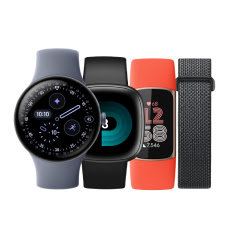
Choose Loss of Pulse Detection if you are seeking a personal safety solution for individuals at risk of sudden cardiac events or those who desire an automated emergency alert system. This feature, integrated into compatible wearable devices, provides continuous monitoring and can automatically alert emergency services with location information if a loss of pulse is detected and the user is unresponsive.
View Loss of Pulse Detection →Reviewed by Pouyan Golshani, MD — Interventional Radiologist
Quick Comparison
| Feature | Cardiac Guidance | Loss of Pulse Detection |
|---|---|---|
| Deployment | Caption Guidance is deployed in acute point-of-care settings, including emergency and anesthesiology departments and critical care units. It is also used in doctors' offices and can be used for at-home care. | Unknown |
| BAA Available | Unknown | Yes AI-estimated |
| FDA Status | Cleared AI-estimated | Cleared AI-estimated |
| HIPAA | Unknown | Yes AI-estimated |
Head-to-Head
AI-generated assessment across six dimensions based on each tool's documented features and compliance posture. Grounded in public data — not a substitute for hands-on evaluation.
Usability
Cardiac GuidanceTool A (Cardiac Guidance) significantly enhances usability by enabling non-expert ultrasound users to acquire diagnostic-quality cardiac images through real-time AI guidance and on-screen instructions. This democratizes a complex medical procedure, making it accessible to a broader range of healthcare professionals. While Tool B is simple for a consumer, Tool A's ability to empower new users with a complex diagnostic skill represents a higher bar for usability in a professional context.
Clinical Value
Cardiac GuidanceTool A (Cardiac Guidance) provides direct diagnostic value by enabling the acquisition and interpretation of high-quality cardiac ultrasound images, crucial for early disease detection and ongoing patient management. This empowers healthcare professionals with essential diagnostic capabilities at the point of care. While Tool B offers critical emergency response, Tool A's contribution to foundational diagnostic information has a broader and more proactive impact on long-term patient care.
Pricing & Value
Loss of Pulse DetectionTool B (Loss of Pulse Detection) offers exceptional value as it is included as a feature with compatible wearable devices, providing a critical safety function at no additional cost beyond the device purchase. Tool A's pricing is opaque, requiring direct vendor contact, and likely represents a significant institutional investment. For the individual user, Tool B's transparent and integrated pricing makes it a clear winner.
Enterprise Readiness
Cardiac GuidanceTool A (Cardiac Guidance) is designed as a software accessory integrated with specific general-purpose diagnostic ultrasound systems, indicating its readiness for deployment within existing clinical workflows and infrastructure in healthcare enterprises. Its explicit HIPAA compliance and BAA availability further solidify its suitability for professional healthcare settings. Tool B, while HIPAA compliant, is primarily a feature on consumer wearable devices, requiring more significant adaptation for enterprise-wide clinical integration.
Innovation
Cardiac GuidanceTool A (Cardiac Guidance) demonstrates significant innovation by leveraging AI to provide real-time, turn-by-turn guidance for cardiac ultrasound image acquisition, enabling non-experts to obtain diagnostic-quality images. This democratizes a highly skilled and complex medical procedure. While Tool B offers an important safety innovation on wearables, the AI-guided image acquisition for a complex diagnostic task represents a more profound and novel application of AI in healthcare.
Support & Docs
Cardiac GuidanceTool A (Cardiac Guidance), as an enterprise-grade medical software integrated with diagnostic equipment, is expected to offer comprehensive professional support, training, and documentation tailored for healthcare providers and IT departments. This level of specialized support is crucial for clinical deployment and ongoing use. Tool B, being a feature on a consumer device, would typically rely on standard consumer support channels and user manuals, which are less specialized for clinical environments.
Feature-by-Feature
Detail beyond the Quick Comparison summary. For pricing, deployment, BAA, FDA, and HIPAA see the Overview tab.
| Feature | Cardiac Guidance | Loss of Pulse Detection |
|---|---|---|
| Core Functionality | AI-guided acquisition and interpretation of diagnostic-quality cardiac ultrasound images. | Detection of potential loss of pulse and automatic alerting of emergency services if unresponsive. |
| Key Technologies Used | Real-time AI guidance for cardiac ultrasound image acquisition, automated quality assessment, auto-capture. | PPG and accelerometry sensors. |
| Automated Actions | Auto-capture of diagnostic-quality images and video clips, automated left ventricular ejection fraction (EF) calculation. | Automatic loss of pulse detection, automated emergency service calling if unresponsive, shares location with emergency services. |
| Target User/Environment | Healthcare professionals, non-expert ultrasound users at the point of care. | Wearable device users for health and safety. |
Videos
Demos, reviews, and walkthroughs featuring Cardiac Guidance and Loss of Pulse Detection.