Loss of Pulse Detection vs Avive Automated External Defibrillator
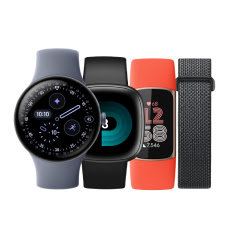

AI Verdict
Choose Loss of Pulse Detection if…
Choose Fitbit's Loss of Pulse Detection if you are an individual seeking a personal, proactive safety net for potential cardiac events, especially when alone or in environments where immediate human assistance might not be present. This feature excels at automatically detecting a loss of pulse and initiating emergency contact if you become unresponsive, providing an early alert system integrated into your daily wearable.
View Loss of Pulse Detection →Choose Avive Automated External Defibrillator if…
Choose the Avive Automated External Defibrillator if you need a portable, accessible device for immediate intervention during an out-of-hospital cardiac arrest in public or private settings. This AED is ideal for locations requiring rapid deployment of defibrillation therapy by trained or untrained bystanders, with advanced connectivity to seamlessly alert emergency services and transfer critical incident data.
View Avive Automated External Defibrillator →Reviewed by Pouyan Golshani, MD — Interventional Radiologist
Quick Comparison
| Feature | Loss of Pulse Detection | Avive Automated External Defibrillator |
|---|---|---|
| Pricing | Unknown | Contact avive solutions for pricing. |
| Deployment | Unknown | Physical device deployment in various public and private settings. |
| BAA Available | Yes AI-estimated | Unknown |
| FDA Status | Cleared AI-estimated | Yes AI-estimated |
| HIPAA | Yes AI-estimated | Unknown |
Head-to-Head
AI-generated assessment across six dimensions based on each tool's documented features and compliance posture. Grounded in public data — not a substitute for hands-on evaluation.
Usability
Loss of Pulse DetectionTool A, Fitbit's Loss of Pulse Detection, offers superior usability due to its largely passive and automated nature. Once activated, it operates in the background on a familiar wearable device, requiring minimal active intervention from the user during a critical event. In contrast, Tool B, the Avive AED, requires active retrieval and operation by a bystander, even with its user-friendly voice prompts.
Clinical Value
Avive Automated External DefibrillatorTool B, the Avive Connect AED, provides a direct, life-saving therapeutic intervention (defibrillation) for out-of-hospital cardiac arrest, aiming to improve survival rates. While Tool A offers crucial early detection and alerts to emergency services, Tool B directly addresses the critical medical event itself. Both are FDA-cleared, but the immediate therapeutic action of an AED gives it a higher clinical impact in the moment of cardiac arrest.
Pricing & Value
Loss of Pulse DetectionTool A's Loss of Pulse Detection is included with compatible devices and is not sold as a standalone product, offering clear and transparent bundled value. Tool B, the Avive Connect AED, requires contacting the company for pricing, making its cost and overall value proposition less immediately apparent to potential buyers.
Enterprise Readiness
Avive Automated External DefibrillatorTool B, the Avive Connect AED, is explicitly designed for deployment in various public and private settings, featuring robust connectivity, remote monitoring, and maintenance capabilities essential for enterprise-scale management of multiple devices. Tool A, while HIPAA compliant, is primarily a consumer-facing feature integrated into personal wearable devices.
Innovation
Avive Automated External DefibrillatorTool B demonstrates greater innovation through its comprehensive integration of advanced connectivity (Cellular, WiFi, GPS, Bluetooth), RealConnect Technology for seamless 911 integration via RapidSOS, and automated remote monitoring for an AED. This represents a significant advancement in connecting a critical medical device directly into the emergency response chain. While Tool A is innovative for a wearable, Tool B's features push the boundaries for its device category.
Support & Docs
Avive Automated External DefibrillatorAvive provides extensive documentation, including owner's manuals and quickstart guides, alongside webinars and training resources for organizations to build effective AED programs. Its REALConnectu2122 platform also offers automated remote monitoring and maintenance, ensuring ongoing support for the device. Fitbit offers user manuals and customer support for its feature, but Avive's specialized and comprehensive support infrastructure for a critical medical device is more robust.
Feature-by-Feature
Detail beyond the Quick Comparison summary. For pricing, deployment, BAA, FDA, and HIPAA see the Overview tab.
| Feature | Loss of Pulse Detection | Avive Automated External Defibrillator |
|---|---|---|
| Name | Loss of Pulse Detection | Avive Automated External Defibrillator |
| Company | Fitbit | Avive Solutions |
| Description | Fitbit's Loss of Pulse Detection is an FDA-cleared feature on compatible wearable devices that uses PPG and accelerometry to detect a potential loss of pulse and can automatically alert emergency services if the user is unresponsive. | The Avive Connect AED is a portable, FDA-cleared automated external defibrillator featuring advanced connectivity (Cellular, WiFi, GPS, Bluetooth) and RealConnect Technology for seamless 911 integration and remote monitoring, designed to improve survival rates from out-of-hospital cardiac arrest. |
| Key Features | Automatic loss of pulse detection, Utilizes PPG and accelerometry sensors, Haptic and audio alerts to the user, Automated emergency service calling if unresponsive, Shares location with emergency services, Opt-in feature for user control, Software-only mobile medical application, Integrated with compatible smartwatches (e.g., Pixel Watch 3) | Handheld and ultra-portable (2.1 pounds), Full suite of connectivity: Cellular, WiFi, GPS, and Bluetooth, RealConnect Technology for 911 integration via RapidSOS partnership, Automated remote monitoring and maintenance of AEDs, Rapid Incident Data Transfer (ECG, usage timestamps, shock analysis) to 911/EMS, Voice prompts and visual indicators for trained and untrained users, Automatic cardiac rhythm analysis and shock delivery, Designed for adult and pediatric use (with Child Mode) |
Videos
Demos, reviews, and walkthroughs featuring Loss of Pulse Detection and Avive Automated External Defibrillator.
Frequently Asked Questions
More Comparisons
More matchups featuring Loss of Pulse Detection or Avive Automated External Defibrillator
- Loss of Pulse Detection vs Sleepiz One+
- Loss of Pulse Detection vs Study Watch with Irregular Pulse Monitor
- Loss of Pulse Detection vs QFR
- Avive Automated External Defibrillator vs Vivid E80
- Avive Automated External Defibrillator vs SOMATOM X.ceed
- AHI System vs Avive Automated External Defibrillator
Backers
Who funded each tool's parent company.